Republican Denarii: From Anonymous Coinage to Symbol of Imperial Power
The history of the Roman denarius reflects the rise and transformation of Rome from a modest republic to a vast empire. What began as a common, anonymous and practical coinage became a powerful propaganda tool that projected the greatness and ambitions of Roman leaders. This evolution can be followed through different stages, each marked by changes in the weight, symbolism and function of the coin. A faithful mirror of the political and social changes in Rome.
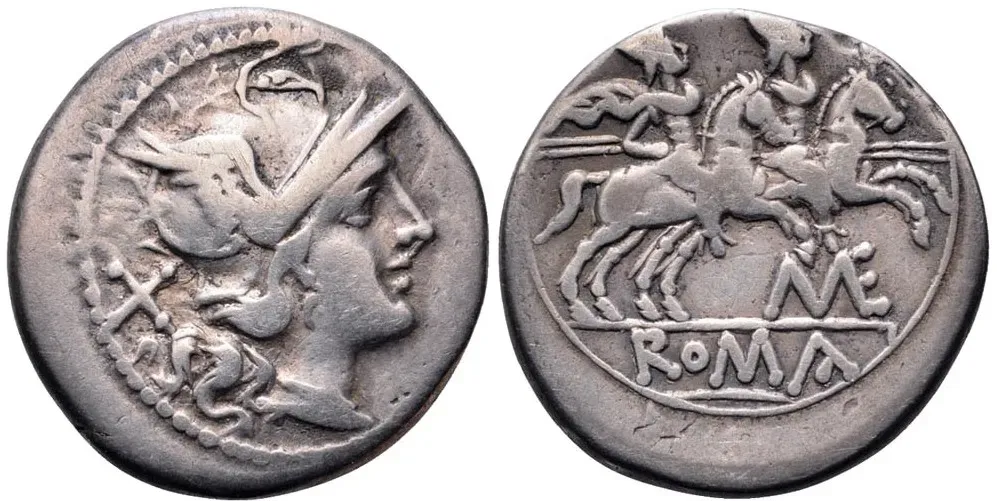
The denarius was born in 211 BC, during the Second Punic War, at a time when Rome needed a stable monetary system to finance its military campaigns, among other things. The first denarii were anonymous: they did not carry inscriptions from any issuer or portraits of living individuals, only figures and symbols that all Romans recognized and shared. On the obverse, the goddess Roma, with her imposing helmet, was a reminder of the power and common identity of the city. On the reverse, the Dioscuri represented the spirit of victory and divine protection.
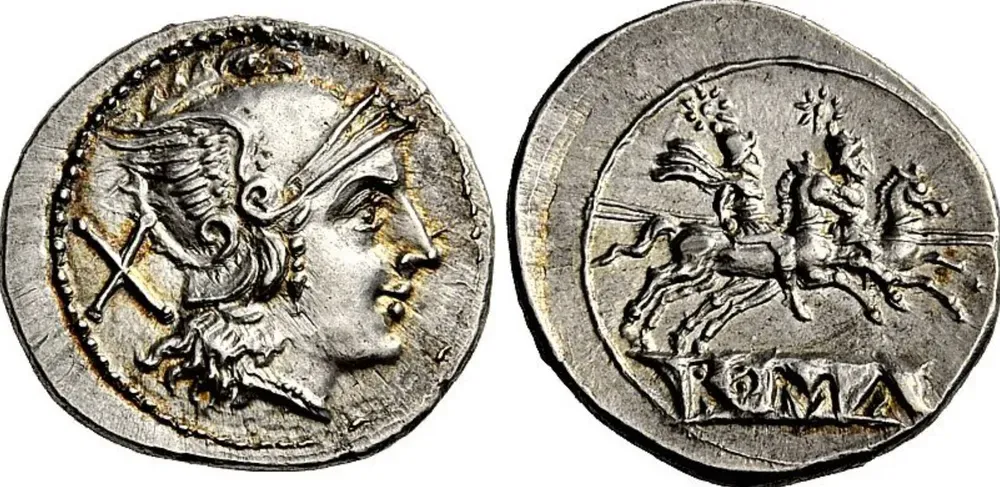
In 141 BC, the denarius underwent an important change when it came to represent 16 bronze asses instead of 10, a measure that reflected the devaluation of bronze and the need for an adjustment in the Roman economy. This change did not alter its weight, which remained 4.5 grams of silver, but it paved the way for future adaptations.
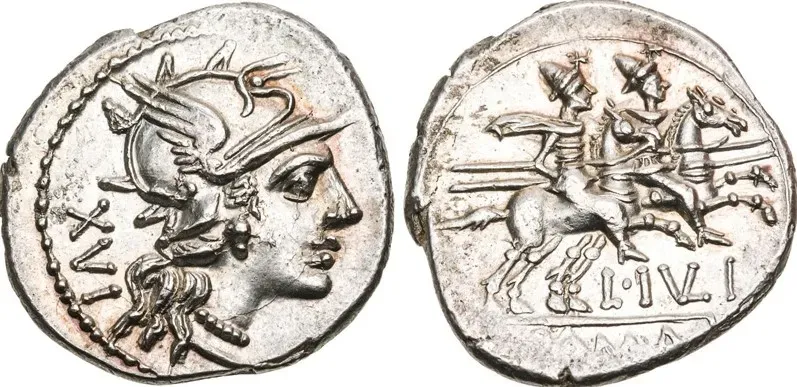
The tresviri monetales were officials who supervised the coinage and worked in groups of three, which gave them the title of triumviri.
The office of moneyer was annual, although there is debate about its method of appointment. Michael Crawford maintains that they were elected by the citizens, even though this did not give them access to the Senate. Andrew Burnett, on the other hand, believes that they were appointed by the consuls, noting family ties between the moneyers and the consuls of the time.
Before the formalization of the office, figures such as Quintus Lutatius Cerco (Crawford 125/1), Terentius Varro (Crawford 126/1) or Caecilius Metellus (Crawford 132/2), among others, already supervised the minting of coins in the 2nd century BC.
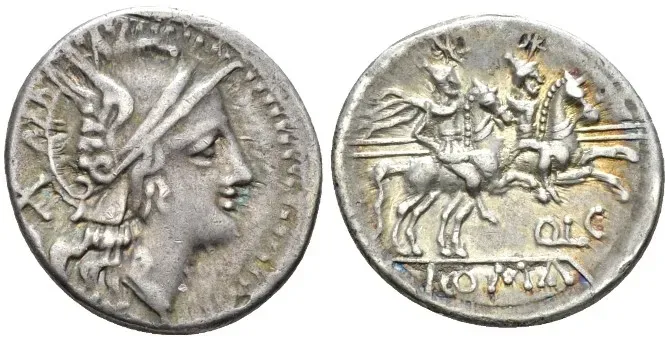
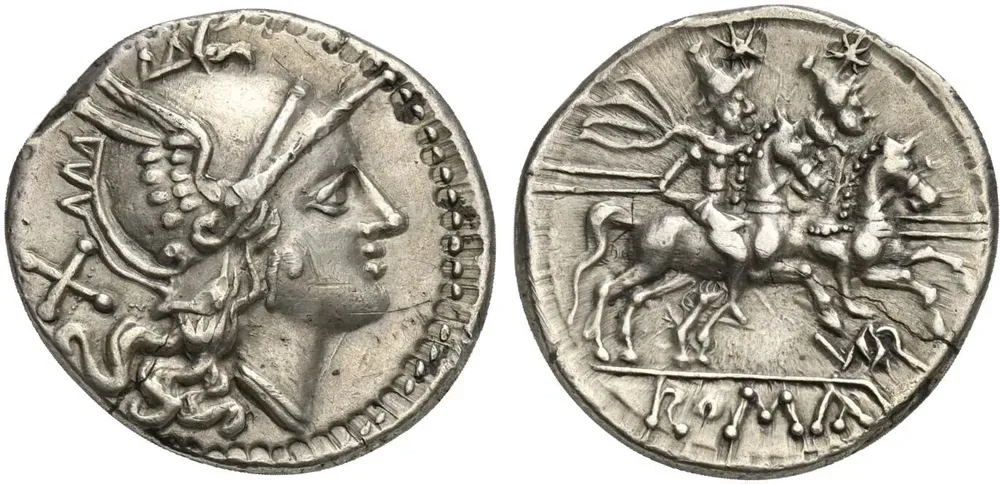
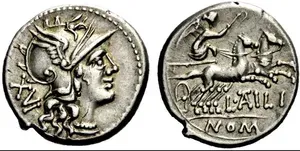
With the institutionalization of the office from 141 BC onward, the practice of including the names of the moneyers on the coins became established, as for example in the issues of Lucius Atilius Nomentanus (Crawford 225/1) or Gaius Titinius (Crawford 226/1). This formalization gave them visibility and established them as a recognized part of the Roman monetary system.
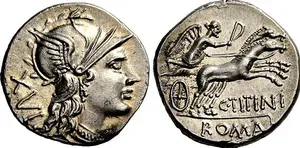
The moneyers not only oversaw production, but also chose the designs, allowing them to highlight their families and achievements.
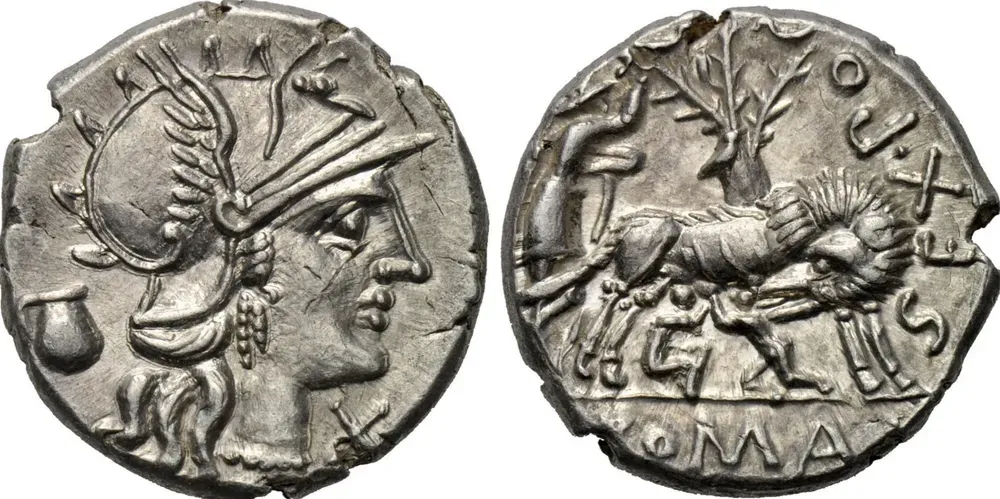
Among the first to use coins to highlight personal or family motifs was the gens Pompeia. In 137 BC, the moneyer Sextus Pompeius struck Crawford 235/1 with the scene of Faustulus, the she-wolf and the twins. According to legend, Faustulus, the shepherd of the royal flock, rescued the twins Romulus and Remus from the Tiber, where they were being suckled by the she-wolf. He took them home, where his wife Larentia raised them. When they grew up, Romulus and Remus founded Rome at the site of their rescue. This suggests that the moneyer was trying to link his lineage to Faustulus, in honor of his role in the mythical founding of Rome.
In 137 BC, after seventy-five years of issues in which Rome on the obverse and the Dioscuri on the reverse were the general appearance, an obverse without Rome was minted for the first time. Instead, Mars figures (Crawford 234/1).
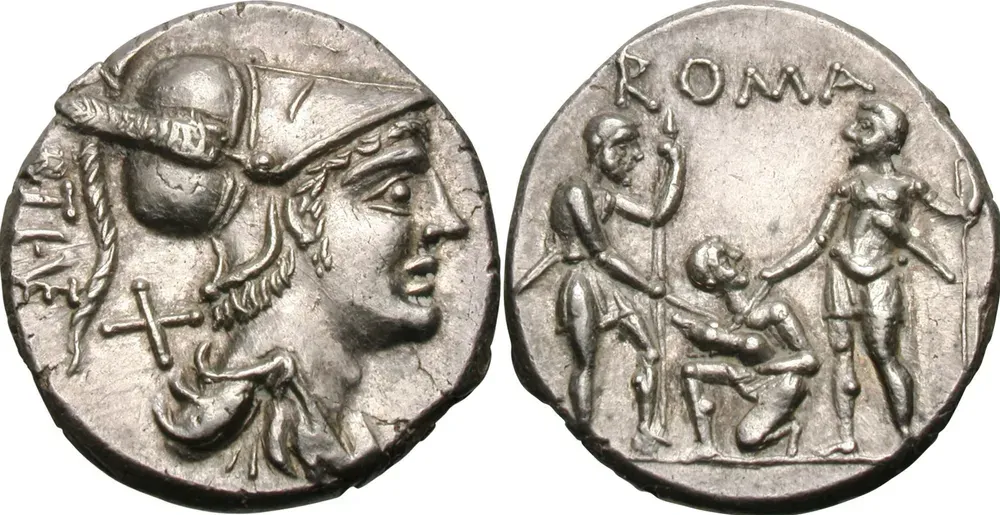
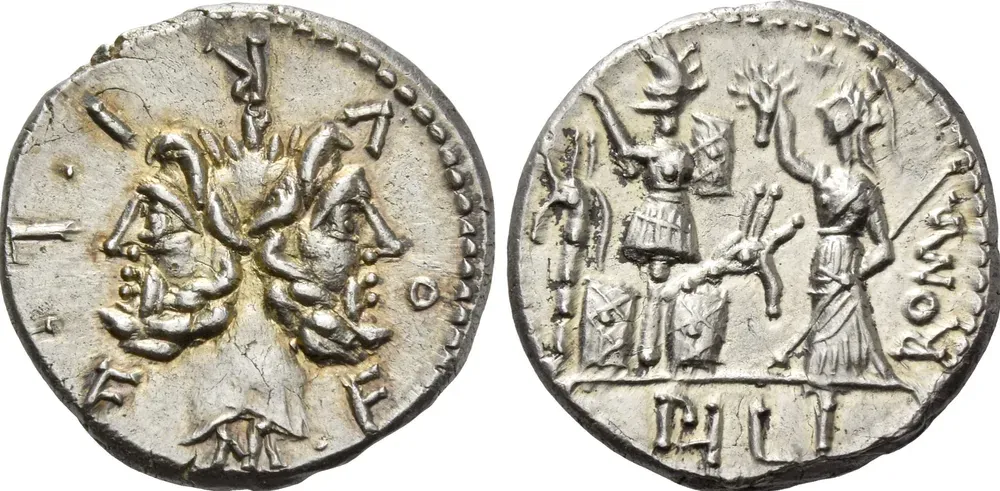
Twenty years later, in 119 BC, Marcus Furius Philus issues a denarius with Janus on the obverse (Crawford 281/1).
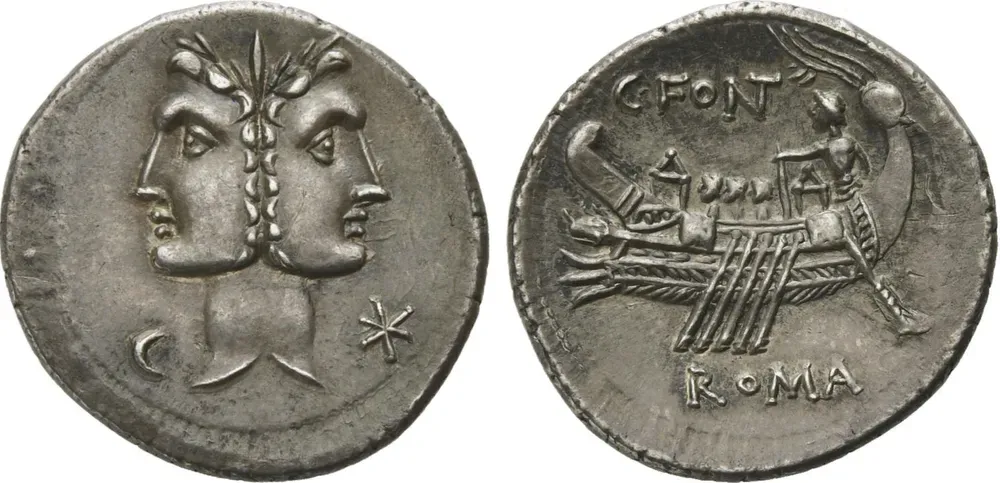
In 114 BC, for the third time, a denarius lacks Rome on the obverse; in this case, Gaius Fonteius introduces Janus with each obverse representing one of the Dioscuri (Crawford 290/1).
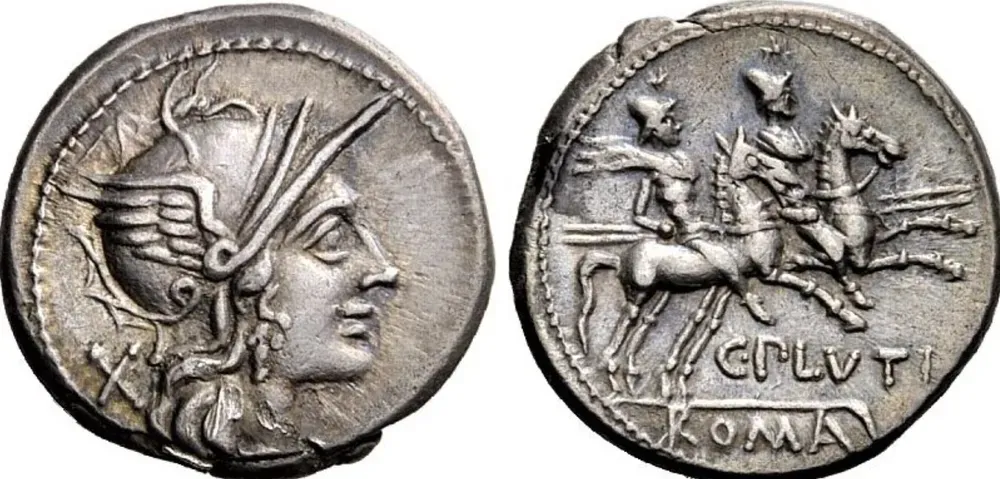
Since then, the denarii with Rome and the Dioscuri begin to disappear. In fact, in 121 BC, Gaius Plautius issues the last of this type (Crawford 278/1).
From then on, for about sixty years, the gods became the protagonists on the obverses of the denarii. Mars, the first to appear, is represented on a total of 29 denarii and is claimed by twelve moneyers. Apollo is the god who appears most often (86), being claimed by thirty-six moneyers. Jupiter, the god of gods, appears in 41 issues by twenty-two different moneyers.
There is an extensive explanation of all this in our article.Gods and deities in the denarii of the Roman Republic.
The Social Wars were a period of upheaval in which Rome’s Italian allies demanded equal rights. During this time, coins were not only a medium of exchange, but also a vehicle for political messages. Some Italian allies began minting their own coins with different iconography, such as Italic gods and symbols of resistance. These coins competed with Roman denarii and reflected the growing tensions and divisions within Italy. For the Romans, coins became tangible reminders of the struggle for power and equality.
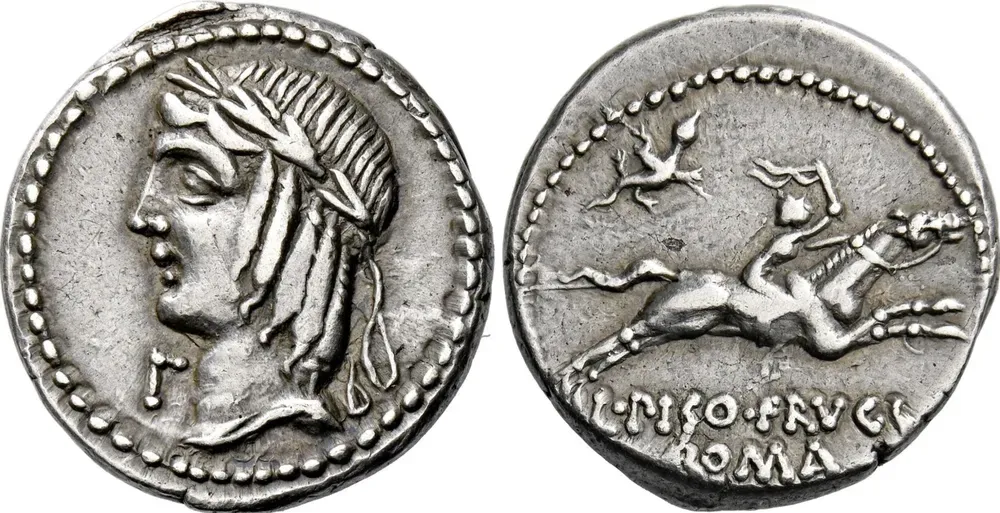
A representative example of this period is the denarius of Lucius Calpurnius Piso Frugi (Crawford 340/1), issued in 90 BC, in the middle of the war. On its obverse, the coin shows the laureate head of Apollo, a symbol of protection and hope amid the crisis. On the reverse, a naked horseman gallops carrying a palm branch, a torch or a whip, symbols of victory, guidance and dominance. The choice of these elements suggests a celebration of Rome’s military prowess and triumph, possibly alluding to confidence in Roman victory and supremacy over its adversaries in war. This iconography functioned as propaganda, reminding citizens and enemies alike that Rome remained strong and victorious, even in times of conflict.
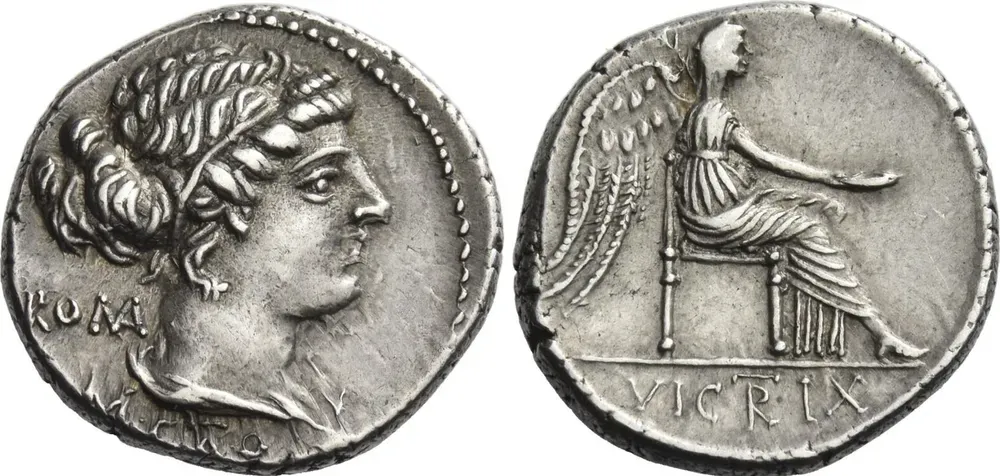
Another example could be Crawford 343/1b, struck by Marcus Porcius Cato. On the reverse appears the figure of Victory, seated and holding a patera in her right hand and a palm branch over her left shoulder. The patera symbolizes an act of sacrifice or gratitude to the gods, while the palm represents triumph. The legend “VICTRIX” reinforces the image of military victory, highlighting the idea that victory and glory are under divine protection, a message of hope and determination in a time of war and crisis.
Sulla’s time was marked by a series of internal conflicts that some consider a type of early civil war. During this period, Sulla used coins to finance his military campaigns and reinforce his authority. This strategic use of denarius minting set a precedent for future leaders who would resort to moneyer propaganda in times of war.
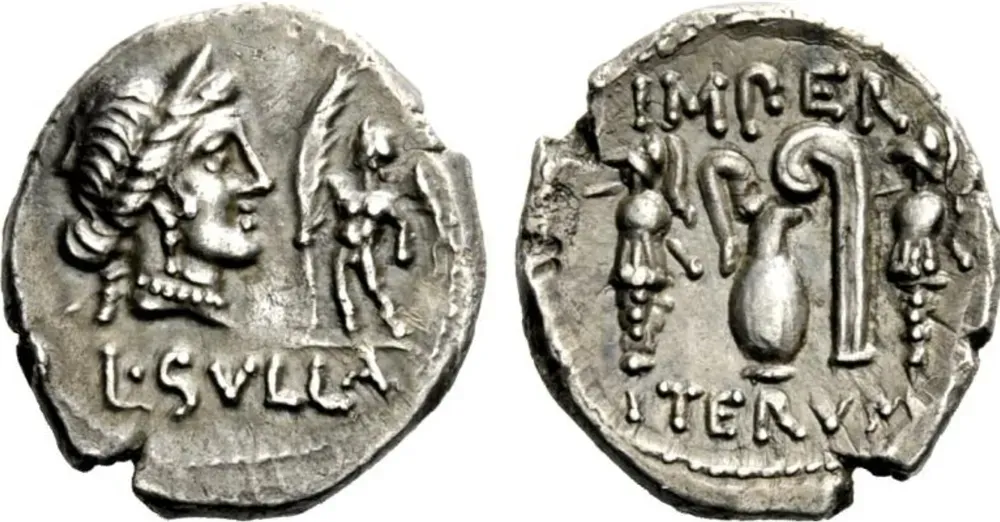
One of the most representative issues is Crawford 359/2, struck between 84 and 83 BC, which bears the legend “IMPER” on the reverse, highlighting his position as a victorious commander. This iconography emphasizes both Sulla’s military authority and his aspiration for more absolute control, projecting his leadership during a period of high instability in Rome.
Another example is Crawford 367/3, issued in 82 BC. On the reverse appears the legend “L•SVLLA•IMP”, beneath a triumphator in a quadriga being crowned by a flying Victory. Obviously, we all know who the represented triumphator could be.
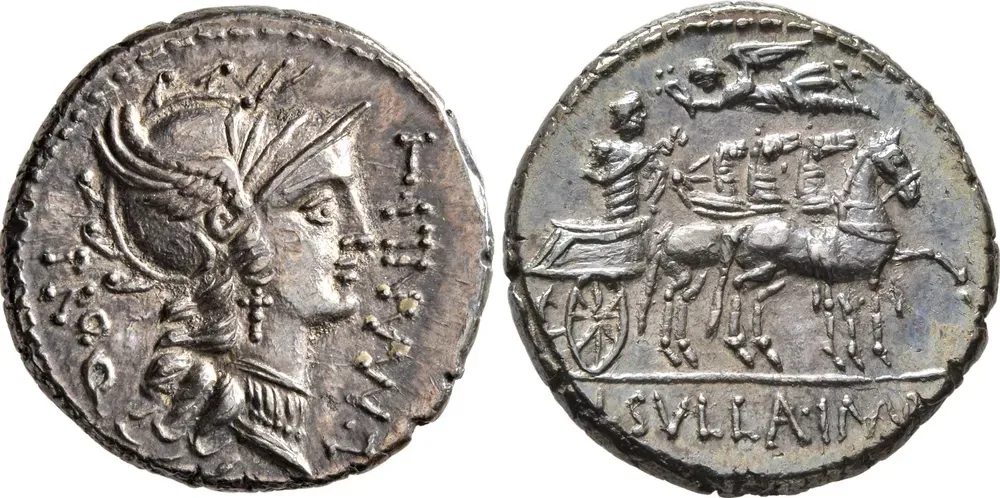
These issues not only celebrated Sulla’s victories, but were also a tangible reminder of his dominance and a precedent in the use of numismatics as a tool of personal and political propaganda.
The 1st century BC brought civil wars that sparked a new era in Roman denarius minting. During the First Triumvirate, composed of Pompey, Crassus and Julius Caesar, coins became key to financing campaigns and consolidating authority. The imperatorial denarii, minted in large quantities and varying in weight and purity, reflected the urgency of these leaders. Military iconography highlighted their achievements, although the use of portraits of living people was not yet common.
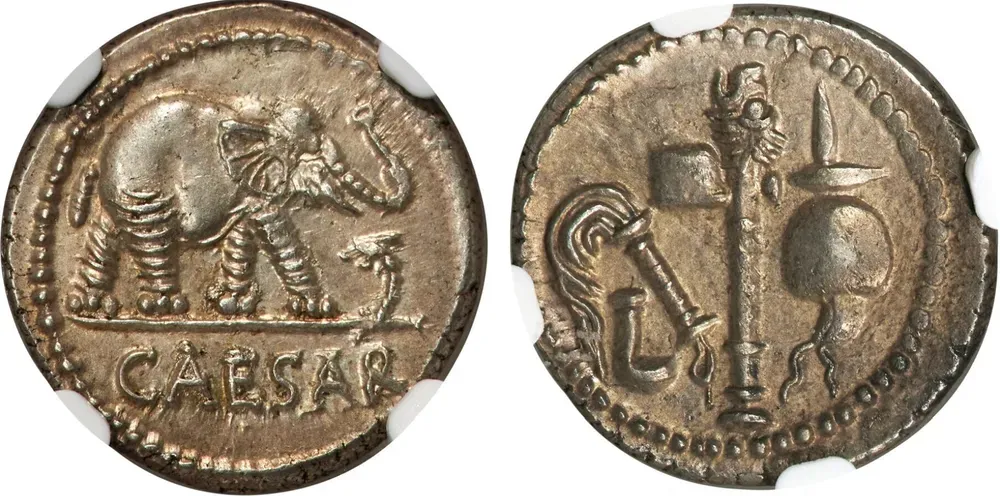
Julius Caesar burst in with his famous elephant denarius, sending a clear military message and about who was the supreme pontiff.
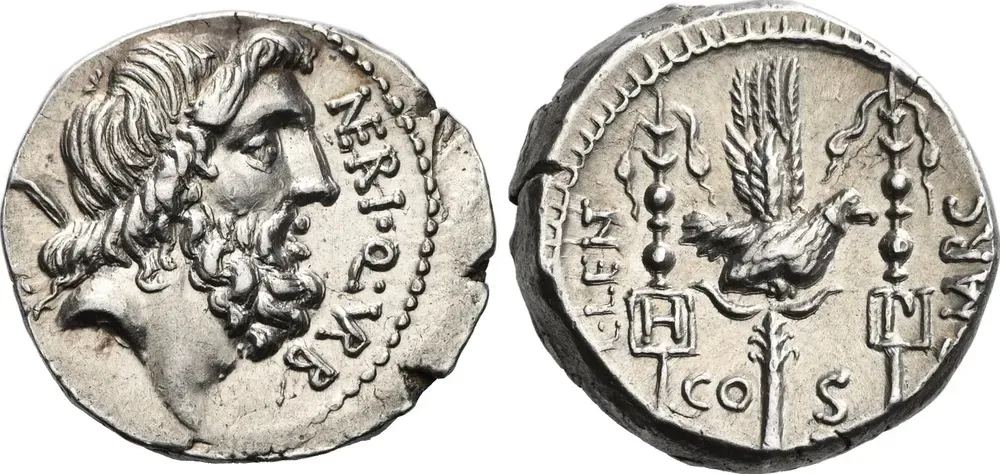
The consuls L.Cornelius Lentulus and C.Claudius Marcellus, clear supporters of Pompey who had to flee to Sicily as Caesar approached Rome with his legions, also did not miss the opportunity to send their military messages with the following denarius
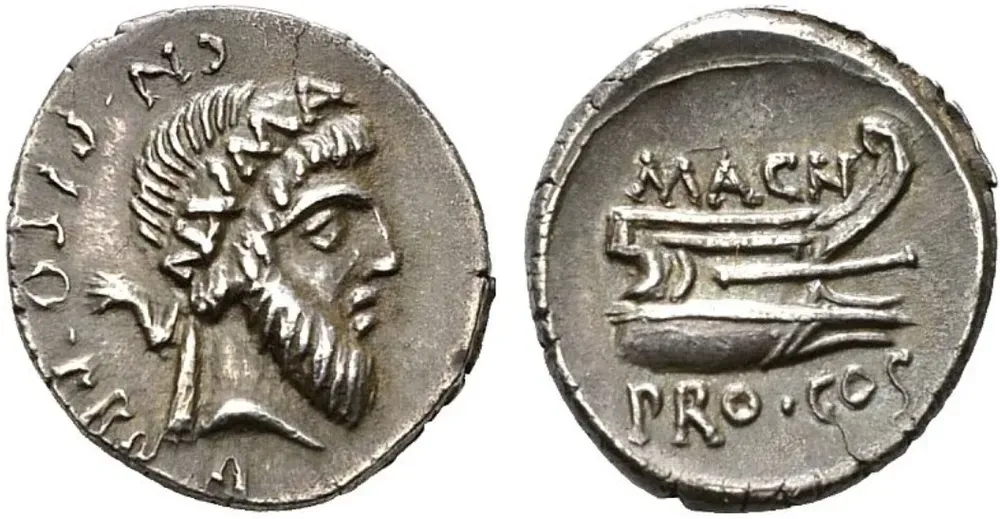
With Pompey’s side, Pompey’s naval victories stand out.
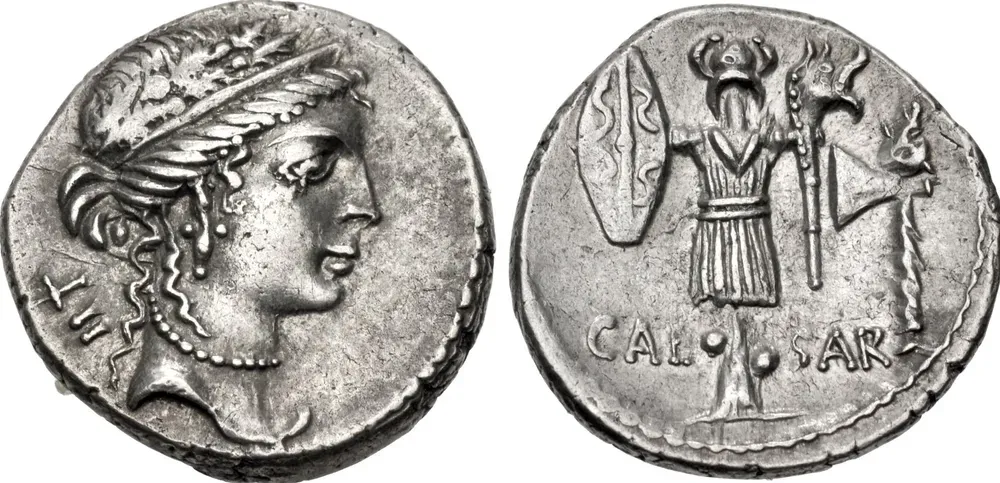
And Caesar’s side does not forget to remember their triumphs in Gaul either.
In 54 BC, Lucius Domitius Ahenobarbus and Appius Claudius Pulcher served as consuls and were known for their positions unfavorable to Julius Caesar. In the same year, the moneyer Quintus Pompeius Rufus struck a denarius that recalled the dictator Sulla.
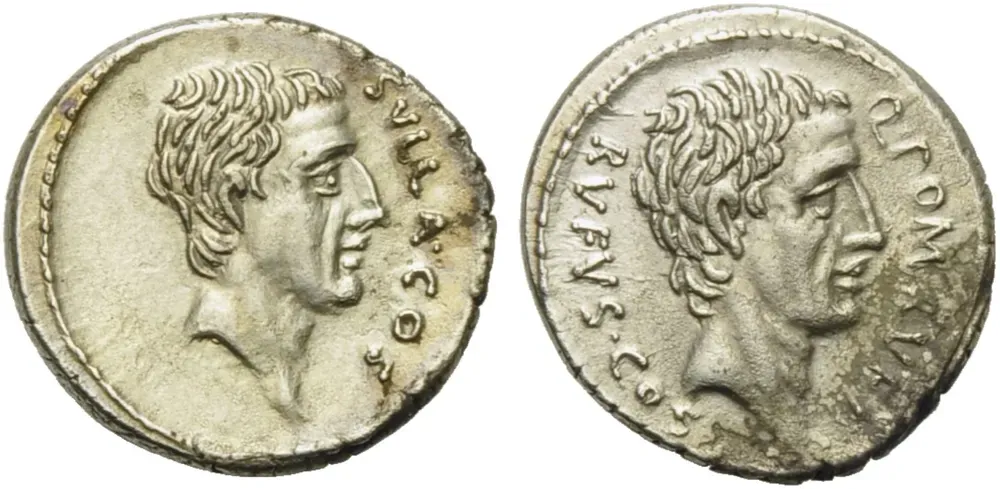
A few years later, Pompey the Great having already died, his bust is remembered in some denarius coinages (Crawfords 470 and 477).
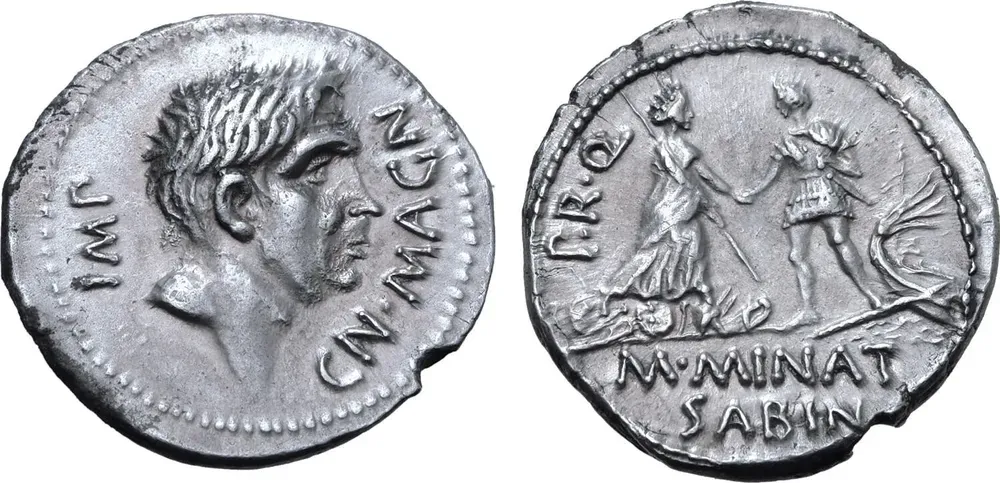
And then it would not take long for what had to happen to happen. Shortly before his assassination, Caesar pressured the Senate to allow his bust to appear on coins. The number of moneyers increased to four (Quattuorviri) and, for the first time in Roman history, the bust of a living individual would appear on the coins.
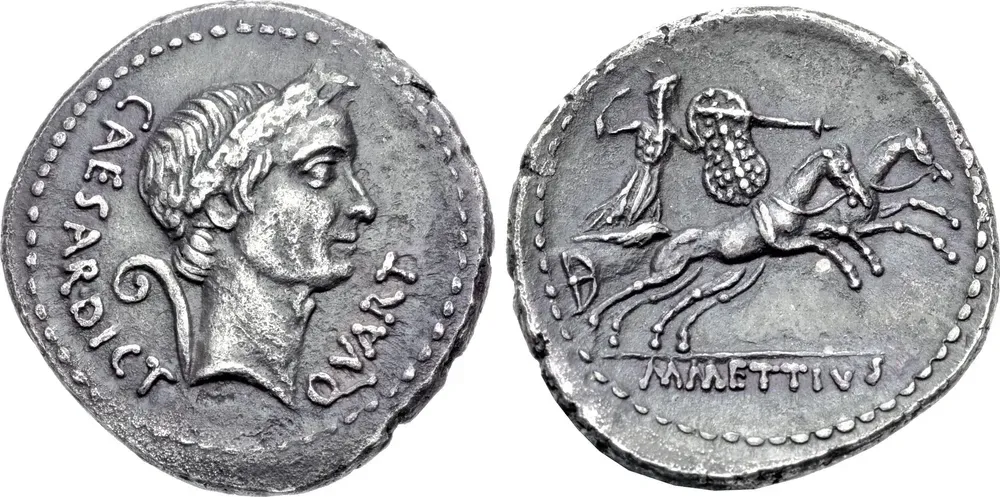
During the Second Triumvirate (43 BC - 31 BC), with Octavian, Mark Antony and Lepidus, coins became tools of political propaganda. Julius Caesar had already broken with tradition by having minted the first denarius with the bust of a living person and this practice began to be adopted by new characters.
Mark Antony is presented with a coinage in which he represents himself as the successor of Caesar, or at least of his policies, since not only did his bust appear on the obverse but that of the murdered dictator also appeared on the reverse of the coin.
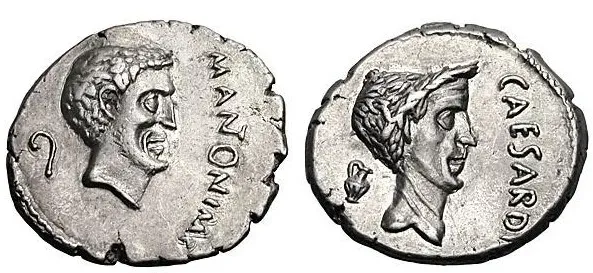
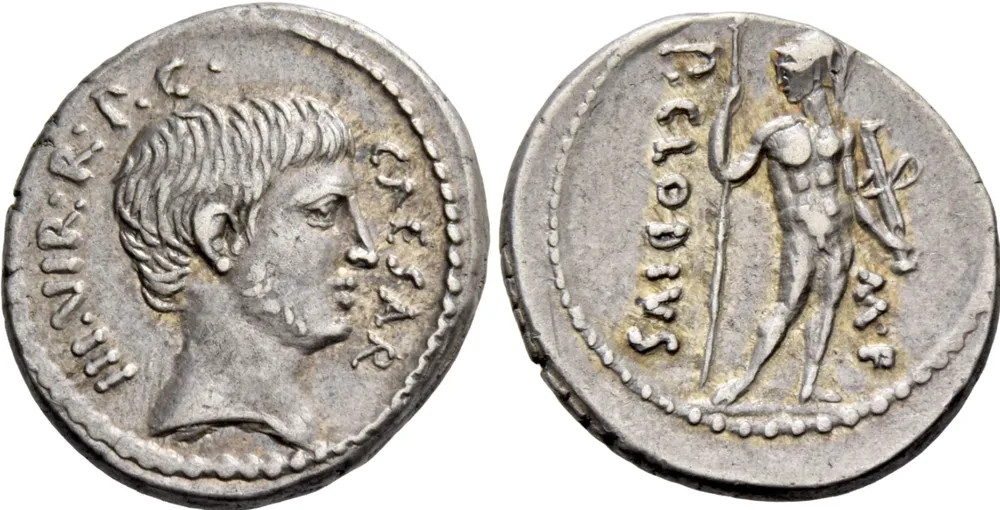
As it could not be otherwise, the moneyer Publius Clodius struck a denarius bearing the bust of Octavian and the legend III VIR R P C, which translates as Triumvir for the Restoration of the Republic.
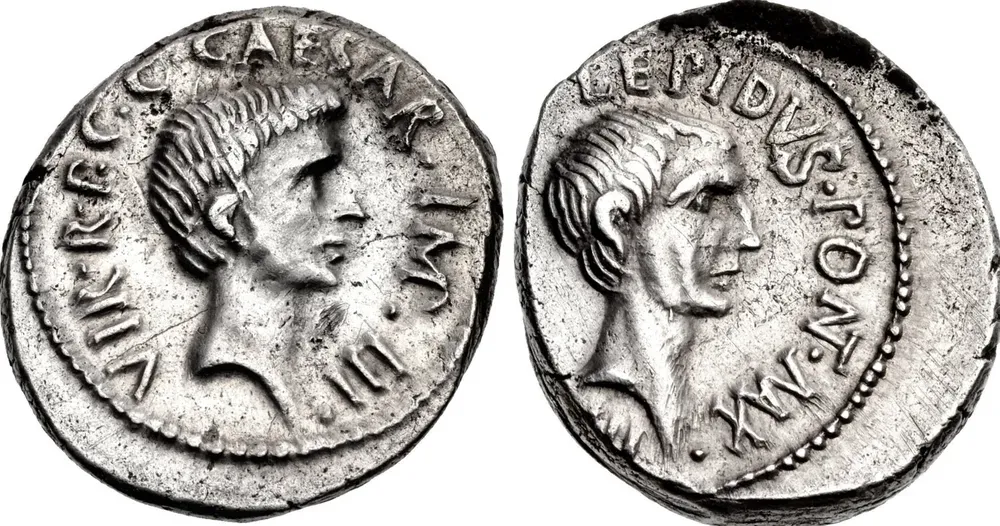
Lepidus, another of Caesar’s generals, also made an appearance. In this case, together with Octavian, transmitting a message of unity between one of Caesar’s generals and Octavian, his adopted son.
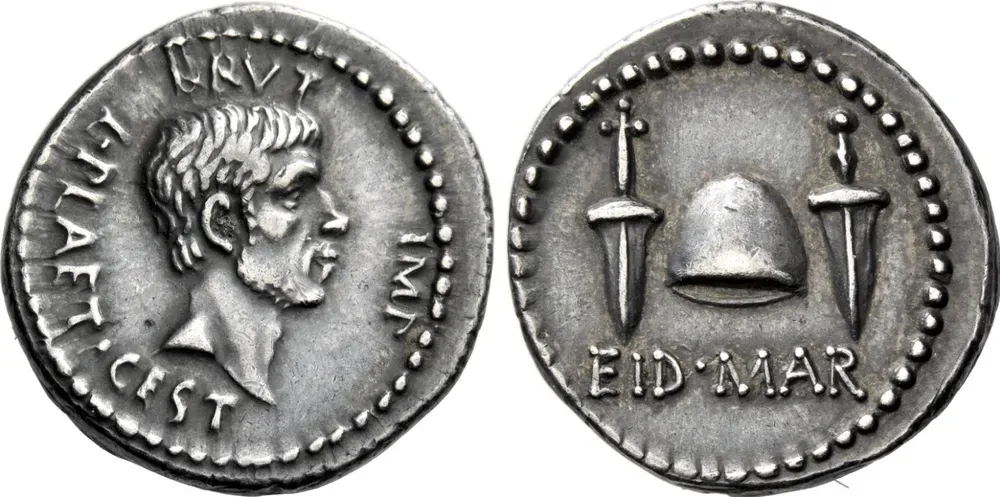
On the other hand, Marcus Junius Brutus intended to remind his troops, and all of Rome, that it was he who freed them from the dictator and, therefore, the one who would save the Roman Republic. To do so, there could be no clearer message than his bust on the obverse and the reference to the Ides of March on the reverse.
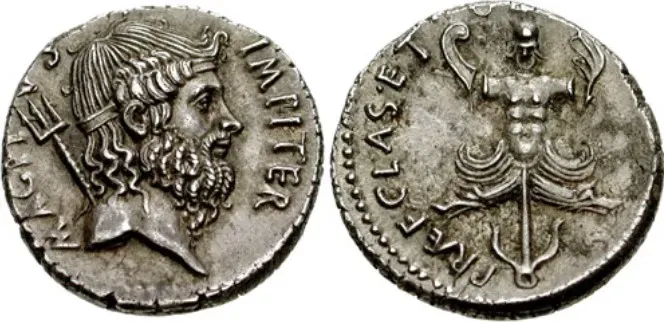
And Sextus Pompey, son of the late Pompey the Great, also hurried to recall what the legends of the following denarius state:
- MAG PIVS IMP ITER Magnus,Pivs, Imperator, again. Underscoring his father’s status as an outstanding commander who had been repeatedly recognized for his victories and loyalty to republican principles.
- PRAEF CLAS ET ORAE MARIT EX S CPraefectus Classis et Orae Maritimae ex SenatusConsulto, which translates as Prefect of the Fleet and the Maritime Coast by Senate Decree.
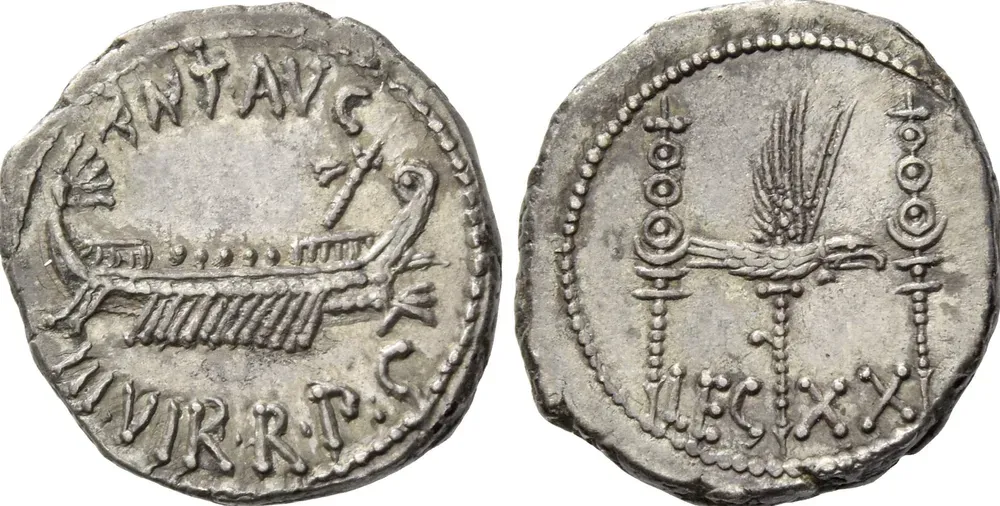
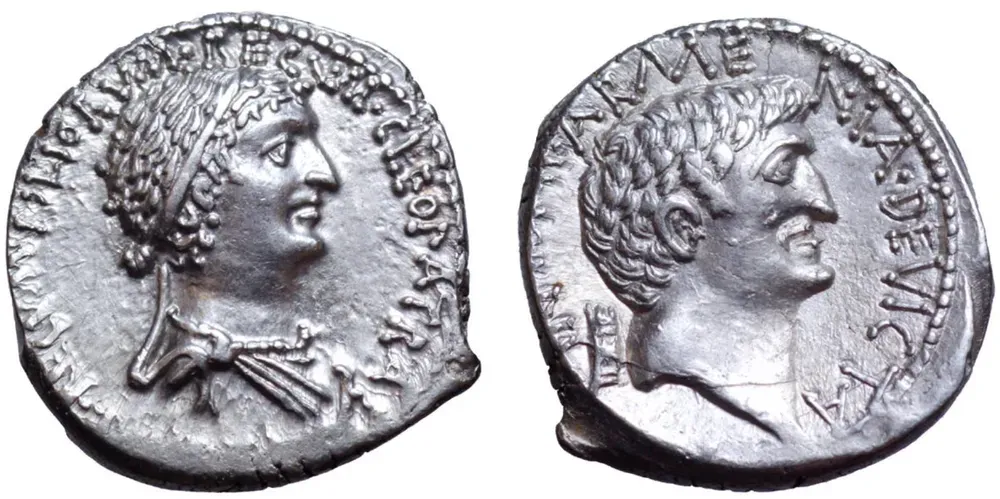
Once the differences between the second triumvirs and Caesar’s assassins had been settled, ending with the victory of the former, the end of denarii in the Republican period was approaching. Before that, Mark Antony did not stop using denarii to broadcast his messages. Notable examples include the denarius he issued with Cleopatra and, above all, the millions of denarii known as the denarii of Mark Antony’s legions
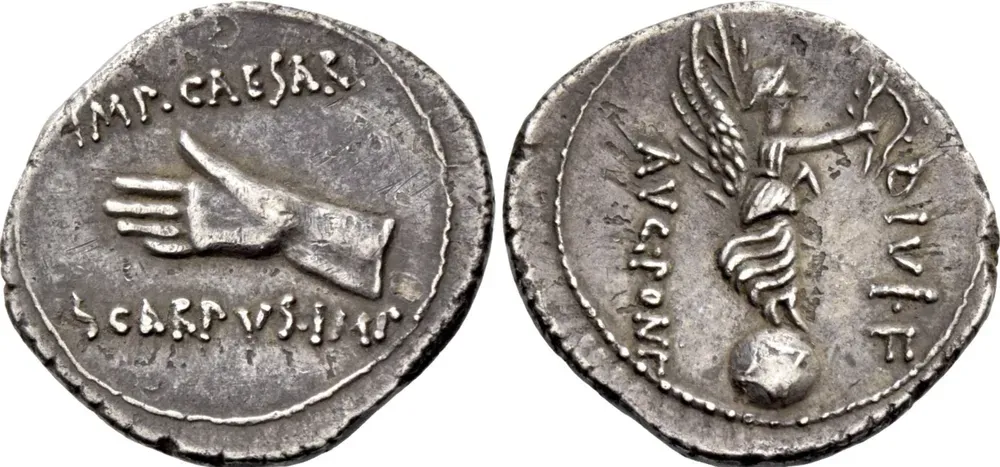
But in the end, after the Battle of Actium in 31 BC, Gaius Octavius had the last word. The following denarius was issued under the authority of Gaius Octavius and Lucius Pinarius Scarpus. Octavian established himself as the most powerful man in Rome, marking the transition to the Empire. Lucius Pinarius Scarpus, loyal to Octavian, played an important role as governor in this decisive period. Scarpus was known for his loyalty to Octavian, especially at a time when loyalty was vital to consolidate power after the betrayals of Mark Antony’s allies. The reverse shows Victory standing on a globe, advancing to the right, holding a wreath tied with a fillet in her right hand and a palm branch over her left shoulder. The legend AVG PONT CAESARI DIVI F refers to Octavian as “Augustus”, “Pontifex Maximus” and “son of the divine Caesar”, reinforcing his legitimacy and divinity in his propaganda. This representation symbolizes the universal dominion of Rome under the direction of Octavian and marks the end of the Republican period, since this denarius is considered by some experts to be one of the last Republican issues before the moneyer reform of the Empire.
With the beginning of the Empire under Augustus, the issuance of coins was centralized and reformed to consolidate imperial power. Augustus stabilized the weight of the denarius at 3.9 grams of silver and used it as a direct propaganda tool. The coins bore his image and achievements, and served to reaffirm the stability and control he had restored after the civil wars.
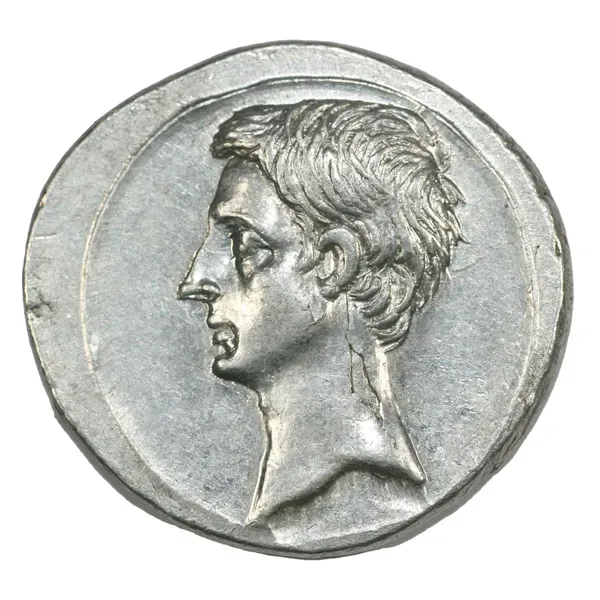
For the Romans, coins became a constant reminder of the new order. The figure of the emperor appeared on each coin, reinforcing his presence in the daily lives of citizens and in the collective image of Rome. This centralization eliminated the figure of the moneyer and consolidated the function of coinage as a symbol of the emperor’s unified authority and power.