Voting in Rome and Its Reflection in Republican Coinage
The typology of denarii minted during the Republic of Rome was very varied from 154 BC. and especially when reaching the 1st century BC. Motifs alluding to historical, political and religious aspects of the most powerful aristocratic families (patricians) in order to exalt the achievements of their ancestors and remind the population of certain events in which their family members had participated.
During the Republic, some denarii were minted that allude to elections and/or laws promoted by ancestors of certain families.
Decisions in Rome were made in the votes of the assemblies, that is, the elections.
In the Roman constitution, the comitias were the assemblies of the people, assemblies convened by a magistrate with the purpose of submitting any issue to a vote by means of a vote. Comitium was the meeting place. Citizens were grouped in different ways: by tribes, which later gave rise to the comitia tributa; by curias (comitia curiata); by centuries (comitia centuriata).
King Servius Tullius (578-534 BC) divided the Roman territory into thirty tribes, which held their meetings in the comitia tributa, an administrative group, according to the place of residence. It elected the lowest-ranking officials and was a means of approving legislation. The Roman people voted organized in curias, initially each curia was made up of ten gens and there were thirty curias. The members of the curias were the citizens with the right to vote, and the votes were called comitia curiata, the curial elections.
Each curia represented one vote, so the positive vote of 16 curias was required for the approval of an important political matter.
In the 4th century BC. Its functions were largely assumed by the comitia centuriata.
Both patricians and plebeians were represented in the comitia centuriata. Originally it was the assembly of representatives of military units, each class was divided into centuries.
The grouping into classes and centuries was fundamentally due to individual fortune. The division into classes was assigned according to the measure of the economic possibilities of the Roman citizens.
There was the equestrian class (equites Romani) so called because they originally had money to go to war with their horse (their function was performed by soldiers recruited outside of these centuries). Remembering the army, it was divided into centuries, in this case 18 centuries, and five classes according to fortune: if it was greater than 100,000 aces (1,000,000 in the year 220 BC) it belonged to the 1st class, 80 centuries; greater than 75,000 (300,000 in the year 220 BC), to the 2nd; the fortune of the 3rd class had to be greater than 50,000 ases (100,000 in the year 220 BC); that of the 4th class to 25,000 (50,000 in the year 220 BC) and to 10,000 (40,000 in the year 220 BC) those of the 5th. The workers and those who had nothing did not belong to any class either. The second, third and fourth class had 20 centuries each, the fifth class 30, and the non-combatants had 5 centuries. In total 193 centuries, each century includes an indefinite and variable number of members. Ninety-eight votes (the majority) were in the hands of the eighteen centuries of the equites and the eighty were in the ownership of the first class.
Initially, voting began with the first classes and voting stopped as soon as the absolute majority was obtained, so in many cases the lower classes did not have the opportunity to cast their vote. Subsequently, the voting order was made by lottery.
From the year 220 BC. C., with the new division by fortune, there were 368 centuries. They met on the Campus Martius outside the city precinct, since the army could not enter Rome.
The comitia centuriata elected the superior magistrates (consuls and praetors), voted on some laws, declared war and peace treaties, approved legislation, and, until the function was transferred to the courts, acted as the Superior Court (to which one could appeal, it had the final say in legal cases or exile).
The saepta or ovile was the place where the centuries and tribes met, the voting place of the Comitia Centuriata and Comitia Curiata. At first, when the committee was created, voting was held in the Forum, later it was moved to the Campus Martius outside the city walls.
The name saepta derives from the verb saepire which means “to surround with a fence.” The saepta was a temporary complex, a rectangular enclosure whose interior was probably subdivided with lines of ropes and timber into plots to accommodate the members of the different classes, tribes or centuries, and corridors for the voters to pass through. It is estimated that each corridor could accommodate 2,000 citizens, which would give space for 70,000 citizens, but the calculations that have been made vary from that figure to 30,000, since it is assumed that a minority of people with the right to vote actually did so. To vote, each member of the curia, tribe or century left their enclosure, went up to a higher area with tables at the ends, a narrow corridor or walkway called pontes that led to the voting basket, cista, a Upon entry, the rogator gave them their voting tablet and then placed the vote in the cist under the supervision of an official called custodes in charge of counting, counting, and informing the presiding magistrate of the result. It is estimated that in the long lines of the saepta the voter did not take more than 2 minutes to vote.
The pontes was perhaps designed to control abuses by trying to influence the voting orientation of voters, candidates or their loved ones. The reverse of the denarius issued by the monetary magistrate P. Licinius Nerva (Craw 292-1) clearly shows this voting process where the pontes is represented and a structure can be guessed behind the characters that possibly reflects the partition with fences of the area to separate the members of the different classes (fig. 1).
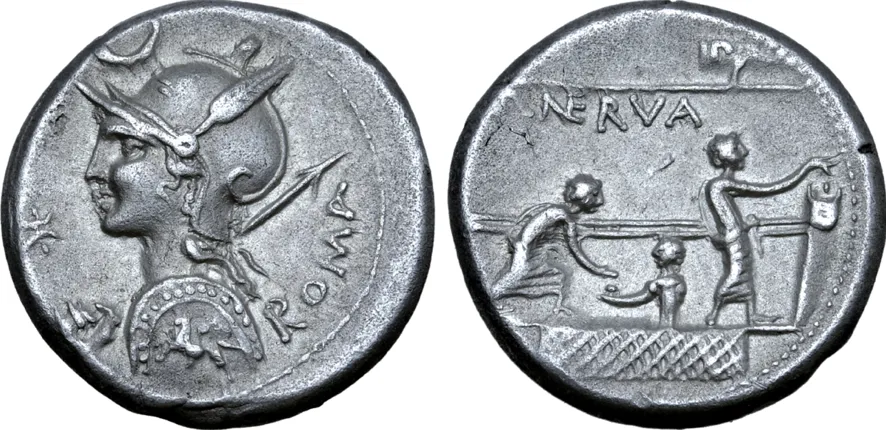
Figure 1. Denarius of P. Liciniu s Nerva (Rome Numismatics Ltd)
We see a voter ascending the pontes, who takes a voting tablet from a man who is on a lower level, the rogator, a magistrate who monitored the electoral process, located behind a lattice or fence, sitting under the pontes and situated in the foreground, the voter presumably has to mark the ballot before reaching the voting basket. A third man on the right is a voter who, after crossing the bridge, is about to deposit a tablet in the voting box at the end of the table on the right. Each voter has to cross this walkway to cast their vote in the ballot box. We see the cist, on a pedestal, with a cover with pointed ends.
In the Roman elections, the urn in which voters cast their votes was a small box or basket, commonly made of wicker, the cista. The cista has frequently been confused with the sitella, which was the urn from which the place where the tribes or centuries voted was drawn by lot.
It should be noted that the characters on the reverse of this denarius wear a toga, not the usual tunic of the common man in Rome. At the top you can see another line on which there is a kind of sign perhaps with traces of letters that P.
Mommsen suggests that this is where the name of the tribe was indicated. On the obverse, the head of Rome on the left with a spear on his shoulder and a shield decorated with a horse. Crescent above, value mark behind (XVI in monogram). Behind legend ROME.
Of uncertain mintage, Crawford and Sear date it between 113 and 112 BC, Babelon gives it 110 BC, Grueber between 99 and 94 BC, and Sydenham at 106 BC. Crawford calculates 73 dies on the obverse and 91 on the reverse.
References: Craw 292-1, Sear 169, FFC 802, Cal 888a, BMC 526, Seaby 7Julius Caesar planned to build a new permanent voting precinct for the Roman people, a marble saepta that was not carried out due to his assassination. It was completed by Agrippa in 26 BC, the Saepta Julia.
The vote was oral, but from the second century B.C. A series of laws seeks to guarantee the citizen’s freedom of choice without intimidation of any kind. This is how the ideal of the secret vote will appear on monetary reverses of the time.
The use in elections of voting on tablets with the name of the candidates for magistrates written on them was introduced in 139 BC, by the Lex Gabinia Tabellaria, proposed by the tribune Gabinius in 139 BC.
At first the rogatores were placed at the entrance to the saepta. and they asked the citizens for the vote of each century of word, hence its name. The Lex Cassia Tabellaria, proposed by the tribune L. Cassius Ravilla in 137 BC, proposes and introduces secret voting in court decisions in a trial through the use of written ballots or ballots (tabellis) and not by voice, with the exception of cases of perduellio (equivalent to high treason such as desertion or attacking the constituted political order)In the denarius issued by the purse C. Cassius (Craw 266-1), son of L. Cassius Longinus Ravilla, we see behind the head of Rome on the right, and below the value mark (XVI in monogram) a voting urn that recalls the introduction of the Lex.
Cassia Tabellaria by L. Cassius Longinus Ravilla as a result of presiding over a special commission in a trial of three Vestals accused of attacking the chastity of a tribune since it is believed that the pontiffs improperly absolved two Vestal virgins, while condemning one. On the reverse we see Libertas in a quadriga on the right, carrying pileus and scepter, the Libertas and pileus which together with the urn on the obverse reminds us of the freedom that the achievement of the secret vote entails. Below legend C. CASSI. In exergue ROME (fig.2)
Minted in Rome dated 126 BC, Crawford gives us 88 dies on the obverse and 110 on the reverse. References: Craw 266-1, Sear 142, FFC 554, Cal 408, Seaby 1.
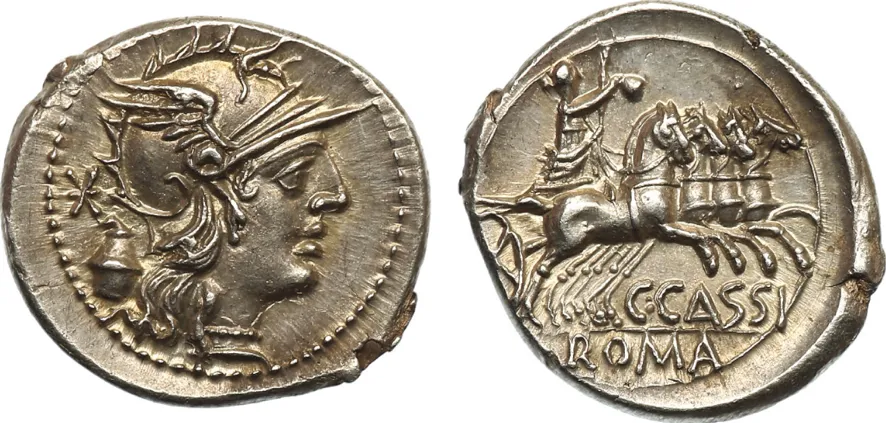
Figure 2. Denarius of C. Cassius (Baldwin’s Auctions)
Wunder (Codex Erfutensis, p. clxvii. & C.), however, has shown that long before the approval of the Leges Tabellariae, stones or pebbles were used for voting, and that each elector received two stones, one white and the other black, the first to be used in case of approval and the last in case of rejection of a measure.
The result of verbal voting appears to have been adopted in elections and trials, and the use of stones was limited to the enactment and repeal of laws.
In thelegislative assemblies, the two tablets that were given to voters in the legislative assemblies, one was marked with the letter “V” for Vti Rogas (as you indicate), to express their approval of the proposal and another with the “A” for Antiquo (I keep things as they are), to express their disapproval.
On the denarius minted by L. Cassius Longinus (Craw 413-) we see a toga-wearing voter depositing his voting tablet (tabella) with the letter “V” (Vti Rogas) in a voting box (Babelon believes that the citizen is voting in a basket and not in a ballot box). LONGIN IIIV legend (fig. 3) On obverse, veiled bust of Vesta to the left, behind cup with two handles, in front letter C.
Taken in conjunction with the bust of Vesta on the obverse, the type on the reverse of this denarius again alludes to the law of 113 BC. by L. Cassius Longinus Ravilla (see denarius Craw 266-1)
Issued in 63 BC. In the mint of Rome, regarding the rarity of the denarius, Crawford notes 94 dies on the obverse and 104 on the reverse.
References: Craw 413-1, Sear 364, FFC 561, Cal 415, Seaby 10.
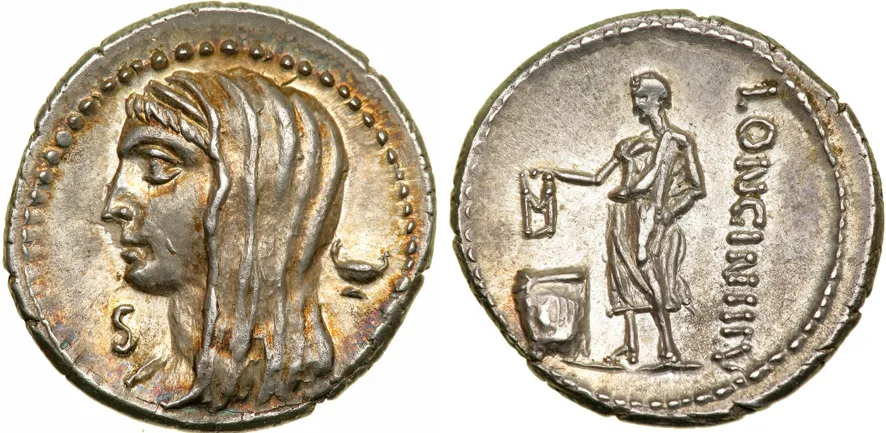
Figure 3. Denarius of L. Cassius Longinus (Ira & Larry Goldberg Coins)
In the denarius shown in figure 4, from the C. Calpurnius Piso Frugi purse (Craw 408-1a), on the obverse we see behind the laureate head of Apollo on the right a monetary control mark that is a tablet (tabella) marked with the letter “V”.
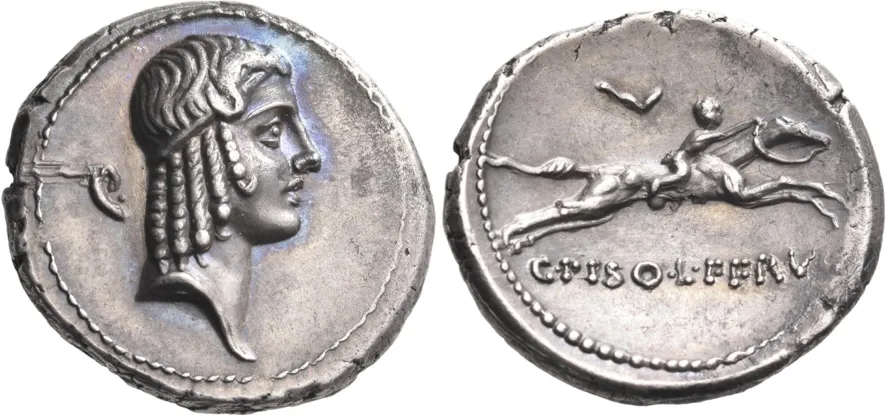
Figure 4. Denarius of C. Calpurnius (Nomos AG)
On the reverse, a horseman galloping to the right with a naked head carrying a palm, above it is a Greek letter and below it is the legend C. PISO L. F. FRUGIA minted in Rome in 64 BC, Crawford gives us 53 stamps on the obverse and 59 on the reverse. References: Craw 408-1a, FFC 405, Cal 342 b
In thejudicial assemblies, each citizen received two tablets, one marked with the letter “A” for Absolvo and another with the “C” for Condemno, it is possible although it is not known with certainty that there was a third tablet with the letters “NL” (non liquet), it is not clear.
Others believe that they were given a single waxed tablet with the two letters, “A” and “C”, the voter had a stylus to mark, and had to cross out the letter that did not correspond with the blunt tip of said instrument.
This last hypothesis agrees with the reverse of two denarii issued by the coiner Q. Cassius Longinus with a different obverse where a single tablet with the inscription AC is represented on the reverse, in the center a curule chair under the temple of Vesta with a dome, and crowned by a standing figure with a scepter and patera, and on the left a ballot box (fig. 5).
As in the denarii of C. Cassius (Craw 266-1) and L. Cassius Longinus (Craw 413-1) they also remember the investigation that took place in 113 BC. in the judgment of the vestals. A denarius has a veiled and diademed head of Vesta on the right and the legend Q.CASSIVS VEST, there is another with a variant of the legend Q. CASSIVS VESTA (FFC 558 and 559; Craw 428-1)
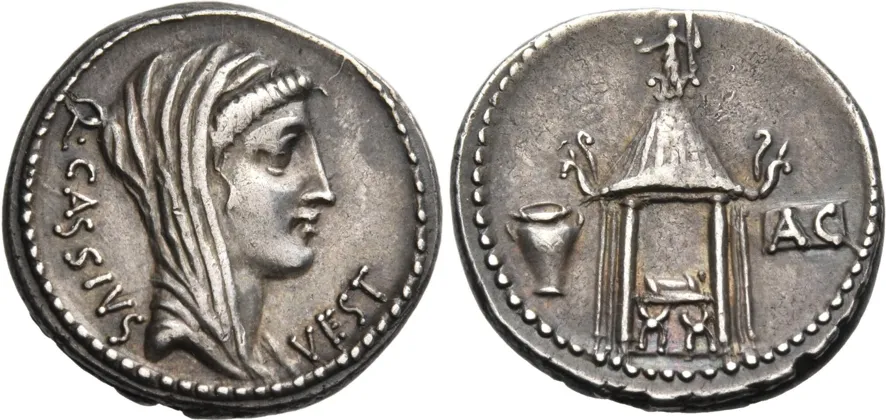
Figure 5. Denarius of Q. Cassius Longinus. Craw 428-1. Nomos AG
A second denarius with the head of Liberty on the right and the legend Q. CASSIVS LIBERT. Craw 428-2. (fig. 6)
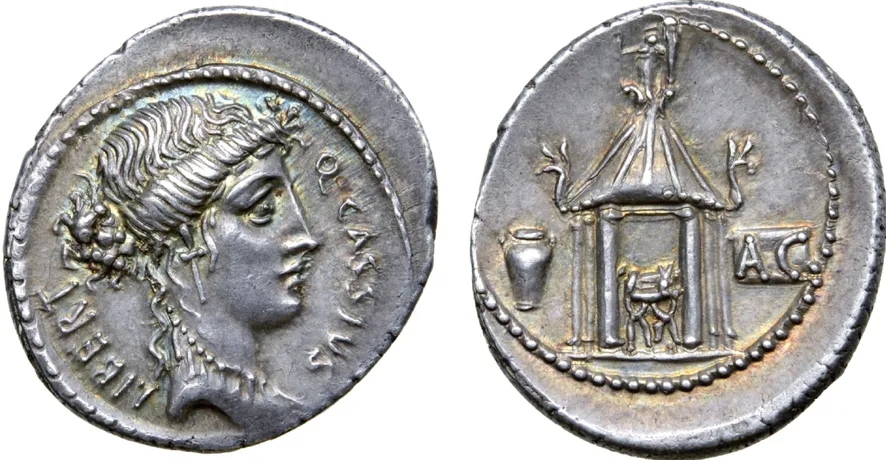
Figure 6. Denarius of Q. Cassius Longinus. Craw 428-2. (Nomos AG)
Minted in Rome in 55 BC.
The Crawford 428-1 denarius (includes the variants FFC 558 and 559) gives us 36 dies on the obverse and 40 on the reverse. The Crawford 428-2 denarius (FFC 560) gives a figure of 60 coins on the obverse and 67 on the reverse 11
References: Craw 428 (1 and 2) and 429; Sear 389 and 390; FFC 558, 559 and 560; Cal 412,413 and 414; Seaby 8, 9 and 9a.
C. Coelius Caldus in 107 BC, proposed a law that was put to vote in cases of perduellio, which had been excepted in the Cassian law, the Lex Coelia Tabellaria. In case of high treason “L” or “D”, Libero or Damno, the voter had to cross out the letter that did not correspond to their decision.
The tablet used in this case is represented on a coin issued by the monetary magistrate C. Coelius Caldus, grandson of the consul C. Coelius Caldus, who in 107 BC. He promoted a law by introducing secret voting in cases of perduellio in the Comitia Centuriata. Behind his grandfather’s head on the obverse we can see a tablet marked, in this case, with “L” for Libero, and “D” for Damno; in front legend C. COEL. CALDVS, below COS (fig. 7) On the reverse the radiated head of the Sun to the right, behind it an oval shield with the drawing of a lightning bolt and below the chin a round shield; in front legend CALDVS III VIR.
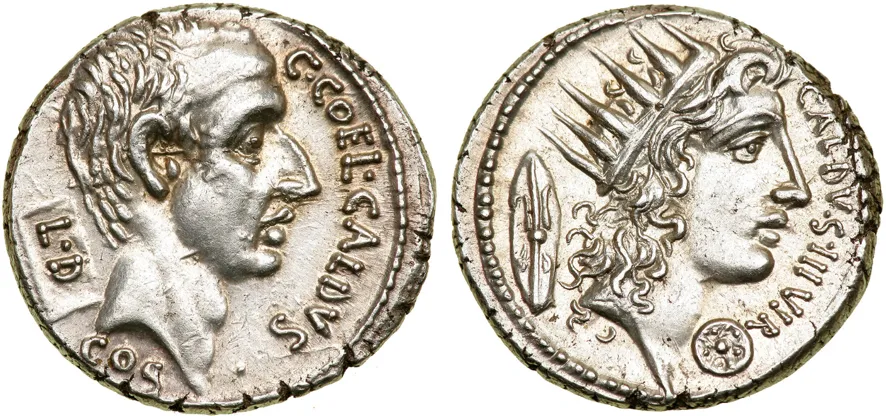
Fig. 7. Denarius of C. Coelius Caldus (Ira & Larry Goldberg Coins)
Minted in Rome in 51 BC, Crawford gives us 33 obverse dies and 37 reverse dies. References: Craw 437-1a and b, Sear 403, FFC 583 and 584, Cal 450 and 451, Seaby 4 and 5
In theelective assembliesDuring the elections, citizens were given blank tablets where they could write the name of the candidate they wanted to vote for. If several tablets were written with the same handwriting, it constituted proof of fraud.
We can also remember those denarii that represent public spaces related to elections on their backs, in this case other places related to voting and meetings.
The ComitiumIt was an open space in the Roman Forum, adjacent to the Curia (Senate chamber), which was used as an assembly place for the citizens of Rome, for elections and voting, and as a court of appeal. It was later used to make deals and commercial agreements.
Originally, the space was a circular area that was a few steps lower than the Forum pavement, and was very closely related to the rostra, reflecting its curved shape.
The faceIt was the speakers’ platform where they tried to persuade citizens to favor someone in an election or to vote for or against a bill.
On the reverse of the denarius minted by Lollius Palikanus we can see the rostra decorated with ship prows on which the tribune bench (subsellium) is located. Above legend PALIKANVS (fig. 8)
In this denarius the arches of the face are insufficiently represented; it is assumed that there are stairs on either side. On the obverse, the diademed head of Liberty on the right. Behind legendLIBERTATIS.
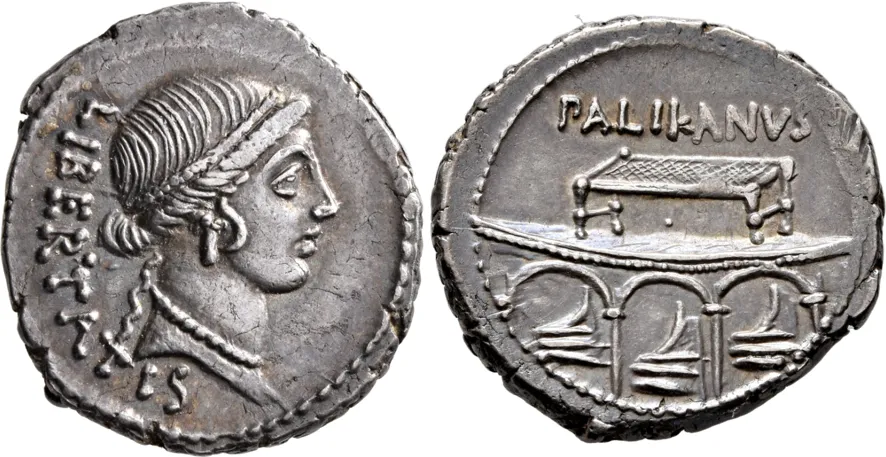
Figure 8. Denarius of Lollius Palikanus (Leu Numismatik AG)
Minted in Rome in 45 BC, Crawford calculates 39 dies on the obverse and 43 on the reverse. References: Craw 473-1, Sear 465, FFC 818, Cal 906, Seaby 2
ThePublic VillaIt served for various celebrations, from hosting election meetings to public solemnities such as the reception of foreign ambassadors.
Built by the censors Furius Pacilus and M. Geganius Macerinus, Titus Didius (consul in 98 BC who received the title of Imperator thanks to his successes in Hispania) restored it upon his return to Rome.
On the reverse of the denarius of Titus Didius Imperator and P. Fonteius Capito the Villa Publica is shown represented from its façade with a two-story structure, the lower one with a row of arches, the upper floor with a roof sloping to the right (there is another variant with a roof sloping to the left). Legend on the left T. DIDI, below IMP and on the right VIL PVB.
On the obverse the diademed and veiled head of Concordia on the right, a head that bears a great resemblance to that of Vesta from the denarius of Q. Cassius Longinus. With legend P. FONTEIVS CAPITO III VIR CONCORDIA (fig. 9) Minted in Rome in 55 BC, Crawford calculates 39 obverse dies and 43 References: Craw 429-2a, Sear 393, FFC 678, Cal 541, Seaby 1ª
Figure 9. Denarius by T. Didius and P. Fonteius Capito (www.denarii.org)
As we have seen, this series of denarii has provided us with information, sometimes very precise, about a decision-making process, a system of participation that is not new, elections, through the representation on their front and back of tribunes, walkways, rows of voters, ballot boxes, votes, until the achievement of the secret vote.
Baker, S. Rome. Rise and Fall of an Empire. 2006
Goldsworthy, A. Caesar. The Life of a Colossus. 2006
Morstein-Marx, R. Mass Oratory and Political Power in the Late Roman Republic. 2004
Mouritsen, H. Plebs and Politics in the Late Roman Republic. 2001
Lintott, A. Imperium Romanum: Politics and Administration. 1993
Taylor, L. R. Roman Voting Assemblies from the Hannibalic War to the Dictatorship of Caesar. 1966
Thurston Peck, H. Dictionary of Classical Antiquities. 1898
Calicó, X. The Roman denarii Before J. C. 2001
Crawford, M.H. Roman Republic Coin Hoards. 1969
The Roman Comitia. MSN Encarta. (Consulted March 2008). Available inhttp://es.encarta.msn.com/