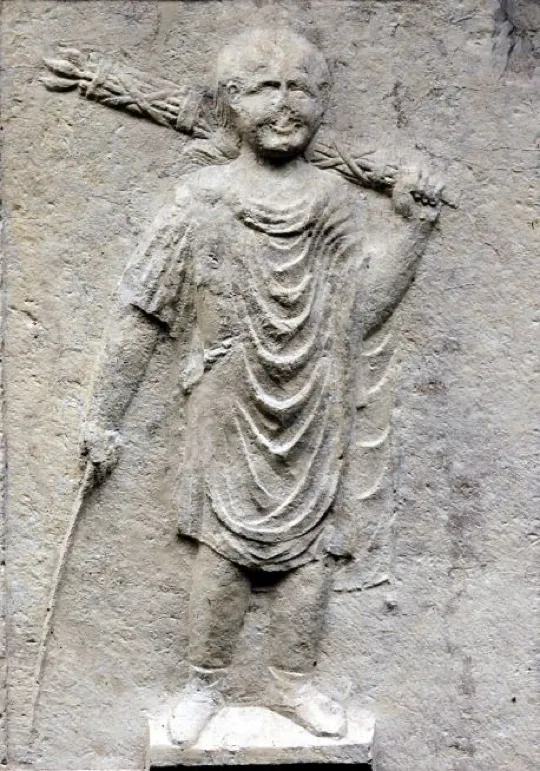
The Gens Porcia and the Provocatio: Defending Liberty in Rome
Numismatics has been a valuable historical tool, providing unique evidence about events, places and conditions from past periods. This denarius of the gens Porcia is a clear example, showing on its reverse a symbolic scene: three figures — a man with rods, a soldier raising his arm and a togate man — beside the word “PROVOCO”.
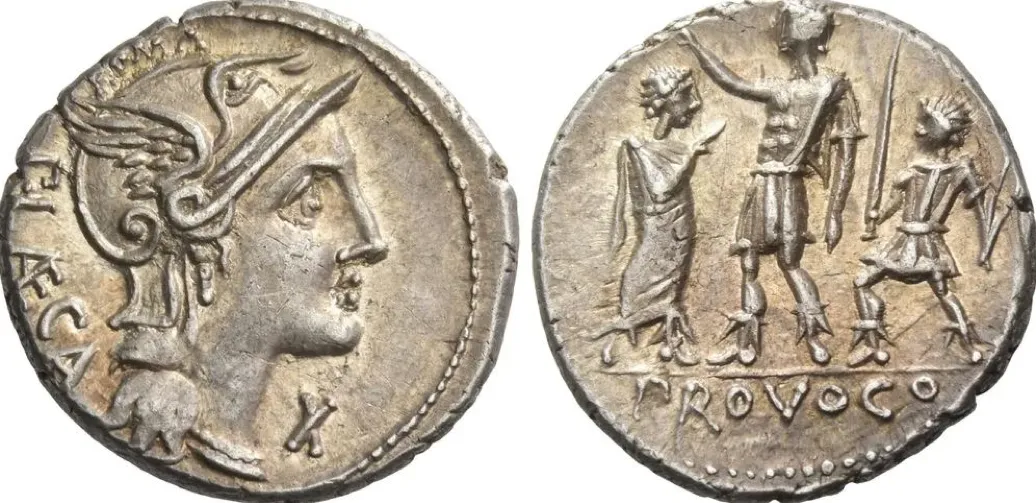
This denarius reflects one of the principles of the Porcian law, the provocatio, which granted citizens the right to appeal. During the Republic, patricians, magistrates and consuls could impose the penalty of flogging (verberatio) on citizens or slaves through the lictors, a punishment that sometimes ended in death. Originally, the law prohibited these executions within the Pomerium — sacred Rome — but over time the restrictions were relaxed and these punishments became an abuse of power, until one of the Porcian laws imposed limits, introducing coercitio through the assembly of the people.
Livy and Cicero refer to these laws (Cic. De Republica II, 31-54 and Pro Rabirio, 12; Liv. Ab Urbe Condita), where their existence is cited and up to three Porcian laws are mentioned.
- “What a tribune of the plebs, friend of the people, guardian and defender of right and liberty! The Porcian law removes the rods from the body of every Roman citizen; this merciful man restores the whips. The Porcian law took the citizens’ liberty away from the lictor; Labienus, a man of the people, handed it over to the executioner…”
Cicero, Pro Rabirio, 12
The Porcian laws are frequently mentioned in ancient texts, although without precise details about their enactment, only that they were promoted by members of the gens Porcia in the early years of the 2nd century BC. They stand out as defenders of citizens’ rights against inhuman punishments. Cicero, in his defense of Rabirius, mentions those who fought to protect the Roman people.
- ”… But such glory belongs first of all to our ancestors, Quirites, who, after the expulsion of the kings, preserved in a free people no vestige of royal cruelty; and secondly, to many courageous citizens, who wished your liberty not to become hateful because of the cruelty of punishments, but to be protected by the mildness of the laws.”
Cicero, Pro Rabirio, 10
Three Porcian laws were developed to protect citizens against disproportionate punishments such as flogging. These edicts also extended the territorial scope of the law and established sanctions for offenders. The sources recognize three members of the Porcian family in this work: M. Porcius Cato (Cato the Elder), L. Porcius Licinius and Publius Porcius Laeca. Although the details are scarce, this denarius of the gens Porcia offers clarity regarding the family of P. Laeca and its date, 110-109 BC.
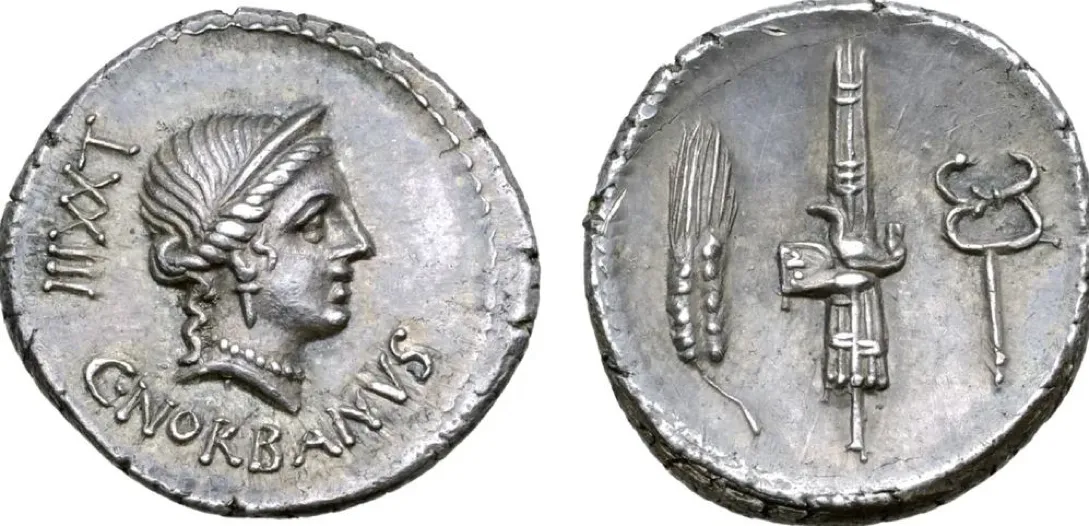
Generally, the lictor’s fasces included an axe tied with a red ribbon that symbolized the union of power; however, within the Pomerium the axe was excluded, since executions were prohibited there. Even so, extreme punishments by flogging continued without the axe. On another denarius, the fasces appears with an axe, indicating its use outside Rome’s sacred area.
Roman soldiers faced severe punishments more than other citizens, with verberatio often ending in death. This military discipline remained even after the Porcian laws, and Tacitus notes that, 140 years later, decimatio was still in use as an example of military harshness:
- Lex Porcia (56 BC): Proposal by C. Porcius Cato in which Milo and Lentulus were accused.
- Lex Porcia (uncertain date): Limited the power of magistrates in relation to free cities.
- Lex Porcia adversus fenatores (118 BC): Regulated debt matters.
- Lex Porcia de imperio P. Lentuli abrogando (56 BC): Removed the imperium from Lentulus Spinther.
- Lex Porcia de provocatione (c. 199 BC): Extended the provocatio ad populum to citizens and soldiers.
- Lex Porcia de tergo civium (195 BC): Prohibited the scourging of Roman citizens, with punishment for the magistrate if the citizen suffered harm.
- Lex Porcia Pompeia (99 BC): Joint law of Cato and Pompeius for the return of L. Caecilius Metellus Numidicus.