Vespasian
RIC II Vespasian 356
Series: Empire - Vespasian
Reference: RIC II Vespasian 356
 |  |
Gens and monetary:Flavia - Vespasian
Year and mint:From 72 AD to 73 AD - Rome
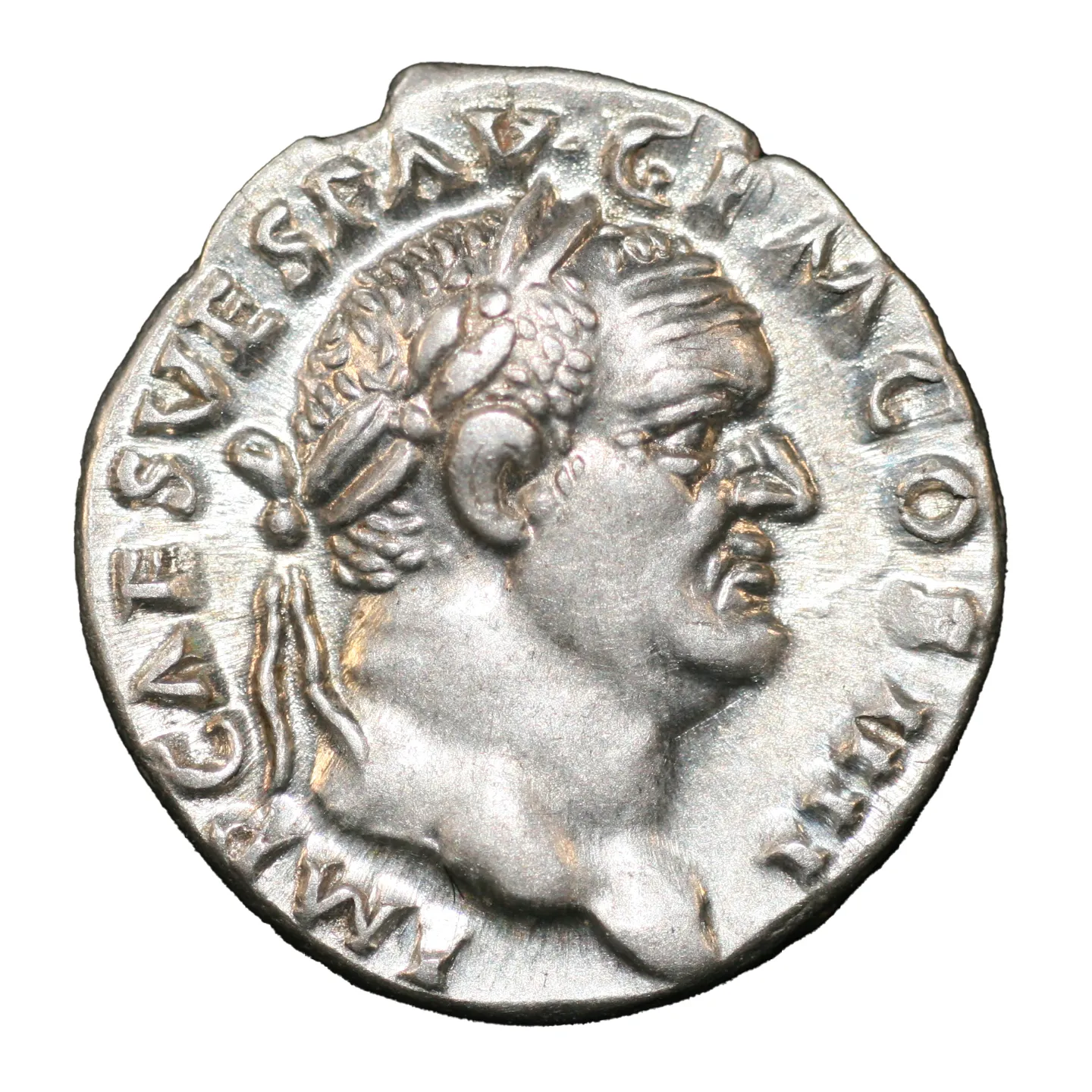
Obverse:Head of Vespasian, laureate, to the right. IMP CAES VESP AVG P M COS IIII
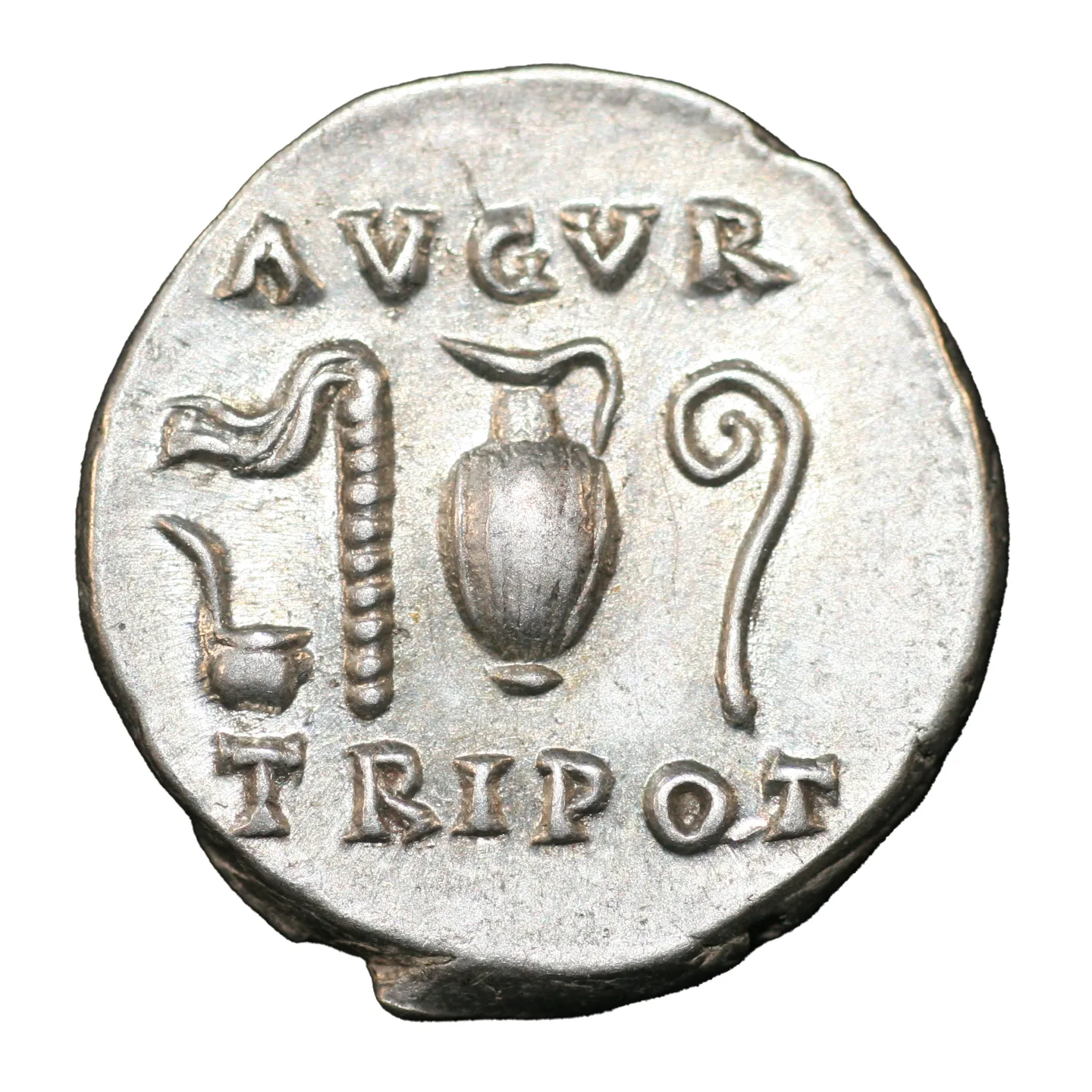
Reverse:Sumpulum, aspergillum, guttus and lituus. AVGVR TRI POT
Grade:SC 3.46 g - 7h
Origin:Tauler & Fau 2023
Comment:
Vespasian was the founder of the Flavian dynasty, which arose after the chaos of the Year of the Four Emperors. Coming from a family of modest origins, he consolidated power after a series of military victories and his proclamation as emperor in 69 AD.
He came to power after quelling the Jewish revolt and was key in stabilizing Rome after civil conflicts. As Emperor, he focused on restoring the Empire’s finances, taxing the use of certain services, such as public latrines. His pragmatic and austere approach to administration allowed him to resume major public works, such as the construction of the Colosseum and the Temple of Peace. His reign marked the beginning of a period of stability after the chaos of 69 AD.
This denarius was minted at a time when Vespasian was seeking to consolidate his power after defeating his rivals during the Year of the Four Emperors. Between 72 and 73 AD, Rome experienced a phase of military expansion, including the end of the First Jewish-Roman War with the capture of Jerusalem in 70 AD.
The obverse shows Vespasian laureate, reflecting his power and authority as emperor. The reverse features religious instruments, Sumpulum: spoon used to make libations, pouring liquids on sacrifices; Aspergillum: Instrument used to sprinkle holy water during religious rites; Guttus: Small vessel used to pour liquids at sacrifices; Lituus: Curved staff used by augurs to mark the limits of the sky during divination ceremonies. The legend “AVGVR TRI POT” alludes to his status as maximum pontiff and head of the Roman religion.