Titus
RIC II Tito 112
Series: Empire - Titus
Reference: RIC II Tito 112
 |  |
Gens and monetary:Flavia - Titus
Year and mint:From 80 AD to 80 AD - Rome
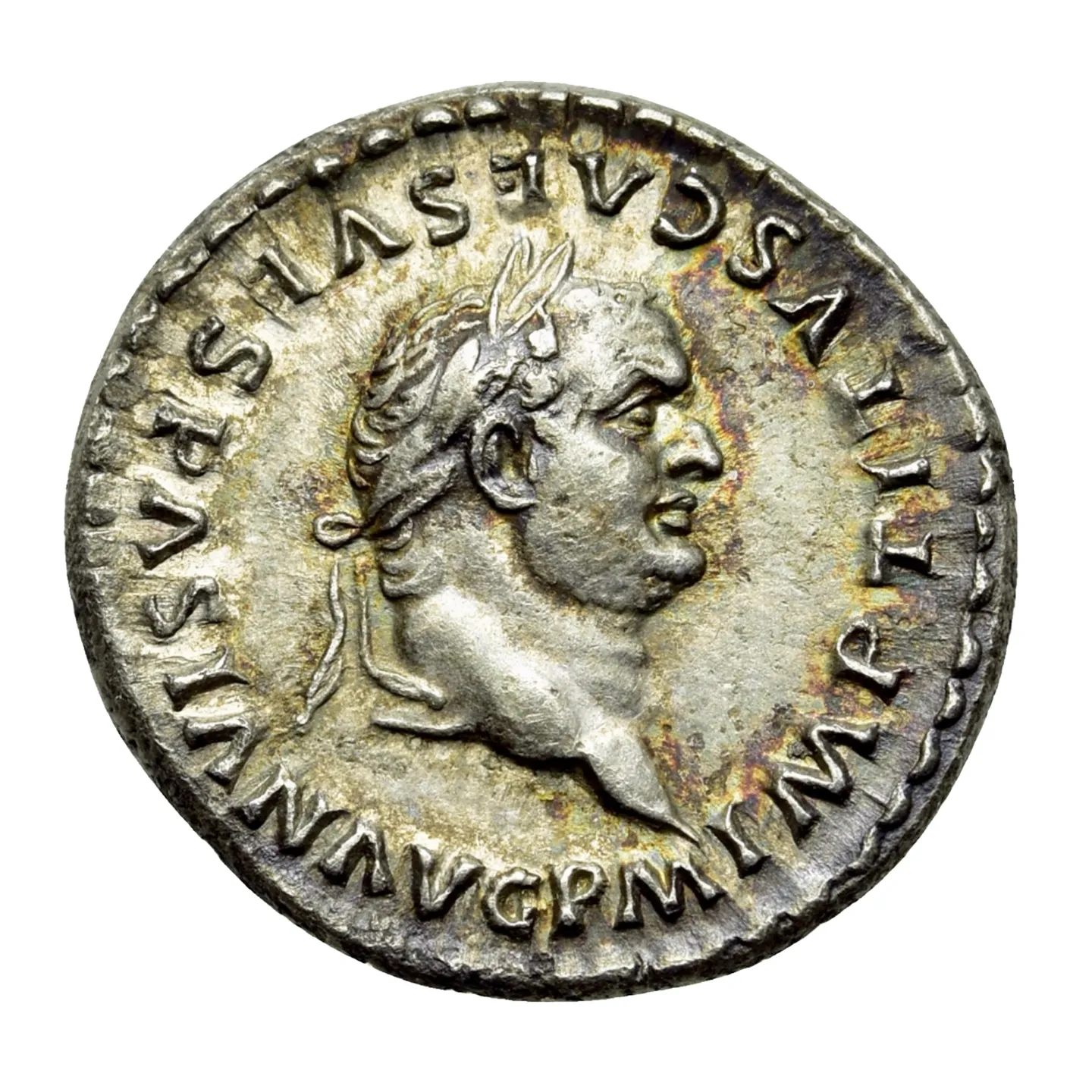
Obverse:Head of Titus, laureate, to the right. IMP TITVS CAES VESPASIAN AVG P M
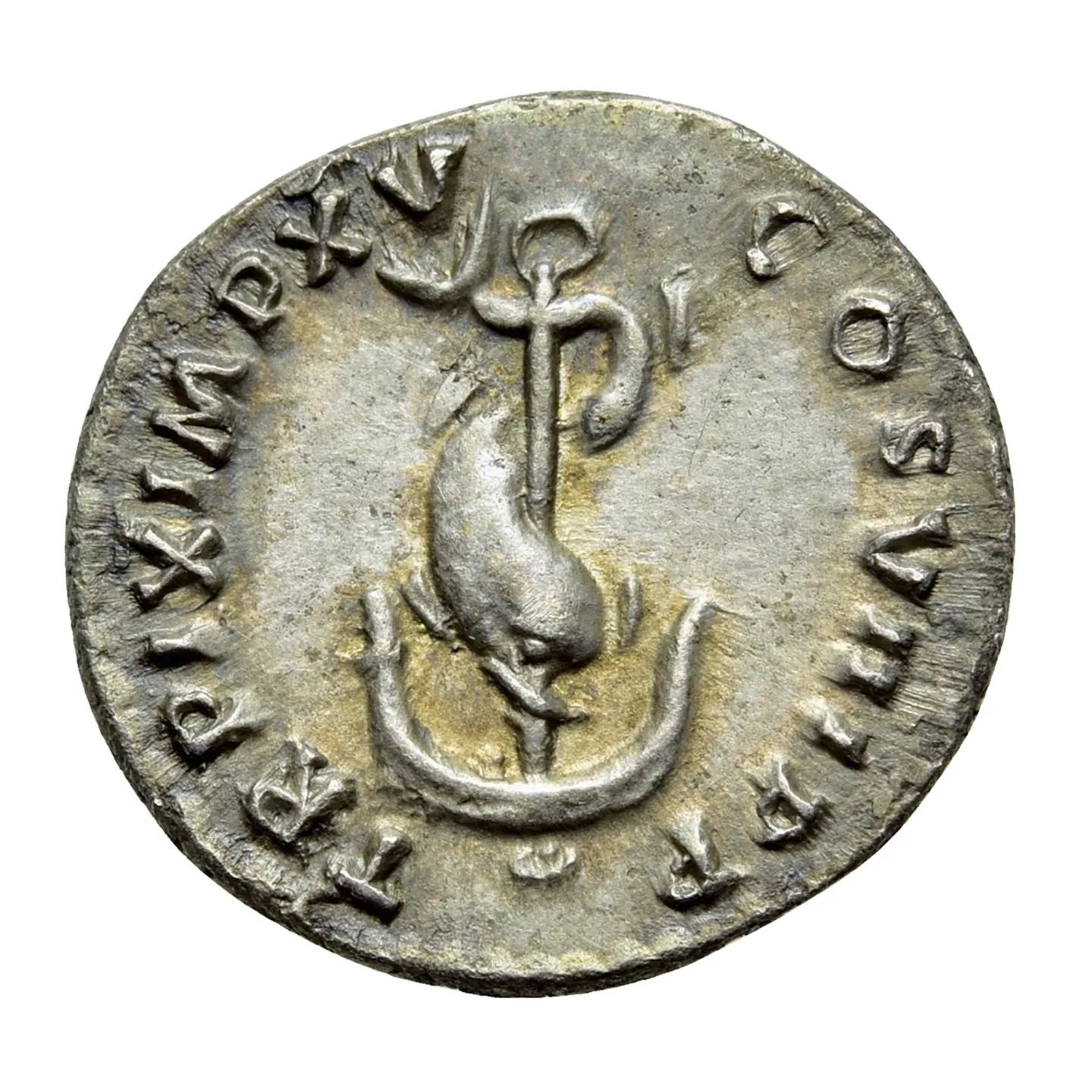
Reverse:Dolphin around an anchor. TR P IX IMP XV COS VIII P P
Grade:EF 3.29 g - 5h
Origin:Naumann Numismatics 2023
Comment:
The Flavian dynasty originated with Vespasian, and after his death in 79 AD, his son Titus assumed power. The Flavian family consolidated the Empire after the chaos of the civil war, establishing a firm government that allowed Rome to recover from political unrest. Under Titus, the dynasty maintained its reputation for stability and control, with its rule being brief but significant, marked by events such as the completion of the Colosseum and the eruption of Vesuvius.
Titus Flavius Vespasian, before becoming emperor, stood out as a general in the Jewish campaign, concluding the First Jewish-Roman War with the taking of Jerusalem in 70 AD. As emperor, his leadership was tested by two major natural disasters: the eruption of Vesuvius in 79 AD, which destroyed Pompeii and Herculaneum, and a great fire in Rome in 80 AD. Titus managed both crises effectively and generously, providing aid to victims and organizing reconstruction. These acts reinforced his image as a compassionate leader capable of facing adversity.
The year 80 AD It was significant for Rome because of the inauguration of the Colosseum, a symbol of the power and greatness of the Empire. Titus organized lavish inaugural games that lasted 100 days, full of spectacles that strengthened his popularity among the population. This event, in addition to other political and social measures, helped consolidate the internal stability of the Empire. During this time, Rome was also enjoying a period of relative peace, allowing Titus to focus on rebuilding areas affected by the recent Great Fire of Rome and other crises. His government marked a brief but important period of transition before the arrival of his brother Domitian to power.
On the obverse, the laureate head of Titus, with the inscription highlighting his imperial titles, is a clear reflection of his authority and position as emperor. As for the reverse, the dolphin around the anchor could have several interpretations. This combination of nautical symbols was common in Roman iconography, and was generally associated with naval power and mastery of the seas, crucial elements for the expansion and defense of the Empire. The dolphin was a symbol of speed and grace, while the anchor could represent stability and security.