Apollo
RIC I - 272
Series: Empire - Apollo
Reference: RIC I - 272
 |  |
Gens and monetary:Julia - Octavian
Year and mint:From 30 BC to 29 BC - Italy
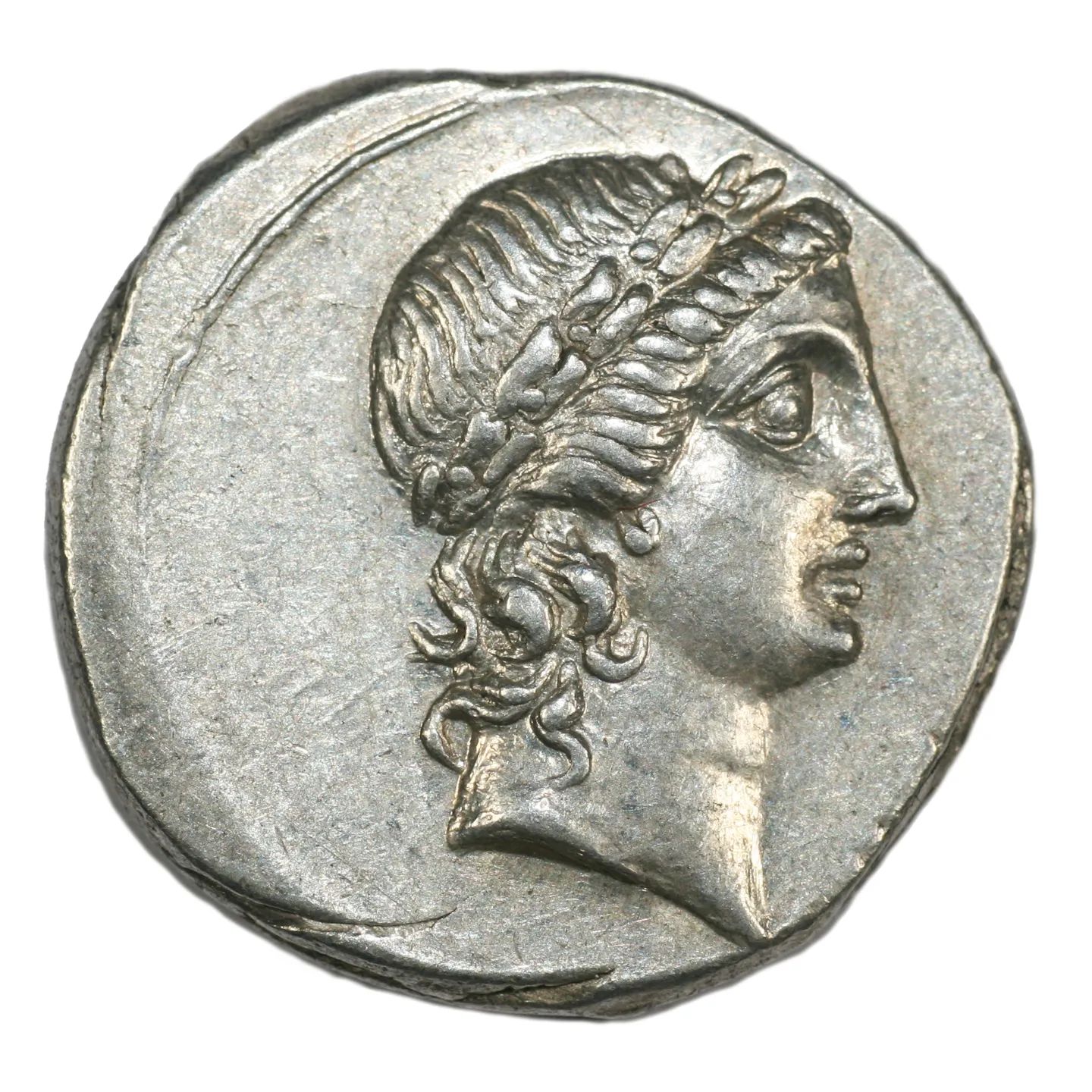
Obverse:Laureate head of Apollo of Actium on the right, with features reminiscent of Octavian. -
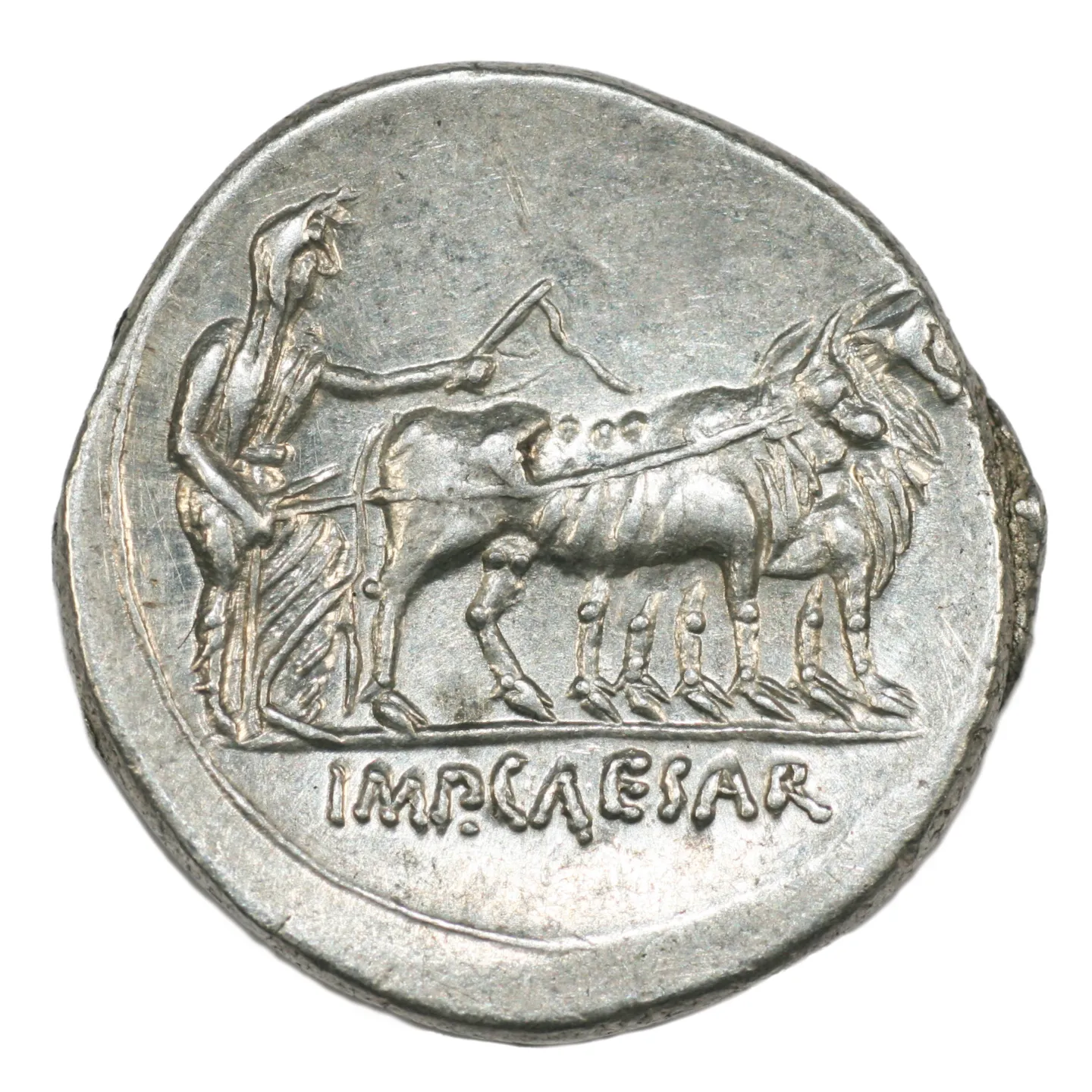
Reverse:Octavian, as founder of the city, holding a whip and plow handle, plowing on the right with a team of oxen. IMP CAESAR
Grade:EF 3.92 g - 7h
Origin:CNG 2023
Comment:
The gens Julia was one of the most important patrician families in Rome, with a lineage that connected them to Aeneas and the goddess Venus. Gaius Julius Caesar elevated the family to power, and his heir, Octavian, later Augustus, consolidated the Roman Empire, raising the Julius to divine status.
Octavian, known as Caesar Augustus after his victory at the Battle of Actium in 31 BC, was in charge of this broadcast. Although he had not yet adopted the title of Augustus in the period in which this coin was minted (30-29 BC), Octavian was already the undisputed ruler of Rome after the defeat of Mark Antony and Cleopatra.
Following the decisive victory at the Battle of Actium in 31 BC, Octavian established himself as the sole leader of the Roman world, eliminating Mark Antony and Cleopatra, who represented the last great resistance to his power. Octavian focused on reorganizing the Roman state, returning some nominal authority to the Senate, but maintaining absolute control for himself.
Obverse: The laureate head of Apollo, the god of light, arts and reason, is presented with features reminiscent of Octavian, underlining the divine connection that Octavian was trying to project. Apollo was also seen as Octavian’s protector at the Battle of Actium, making this depiction have a strong connotation of victory and divine protection.
Reverse: The image of Octavian plowing with a team of oxen refers to the tradition of ritual plowing used to mark the boundaries of a new city. According to Sear, this type could be related to the founding of Nicopolis in Epirus, near Octavian’s camp during the Battle of Actium. The use of a team of oxen to found a city was a common motif on many Roman colonial coins of this period, symbolizing the act of establishing a new order. Although plausible, this interpretation should be considered with caution, as the symbolism could also represent the refounding of Rome following the civil wars.