Elephant
Crawford 443/1
Series: Imperatorial- Elephant
Reference: Crawford 443/1
 |  |
Gens and monetary:Julia - Julius Caesar
Year and mint:From 49 BC to 48 BC - Italy
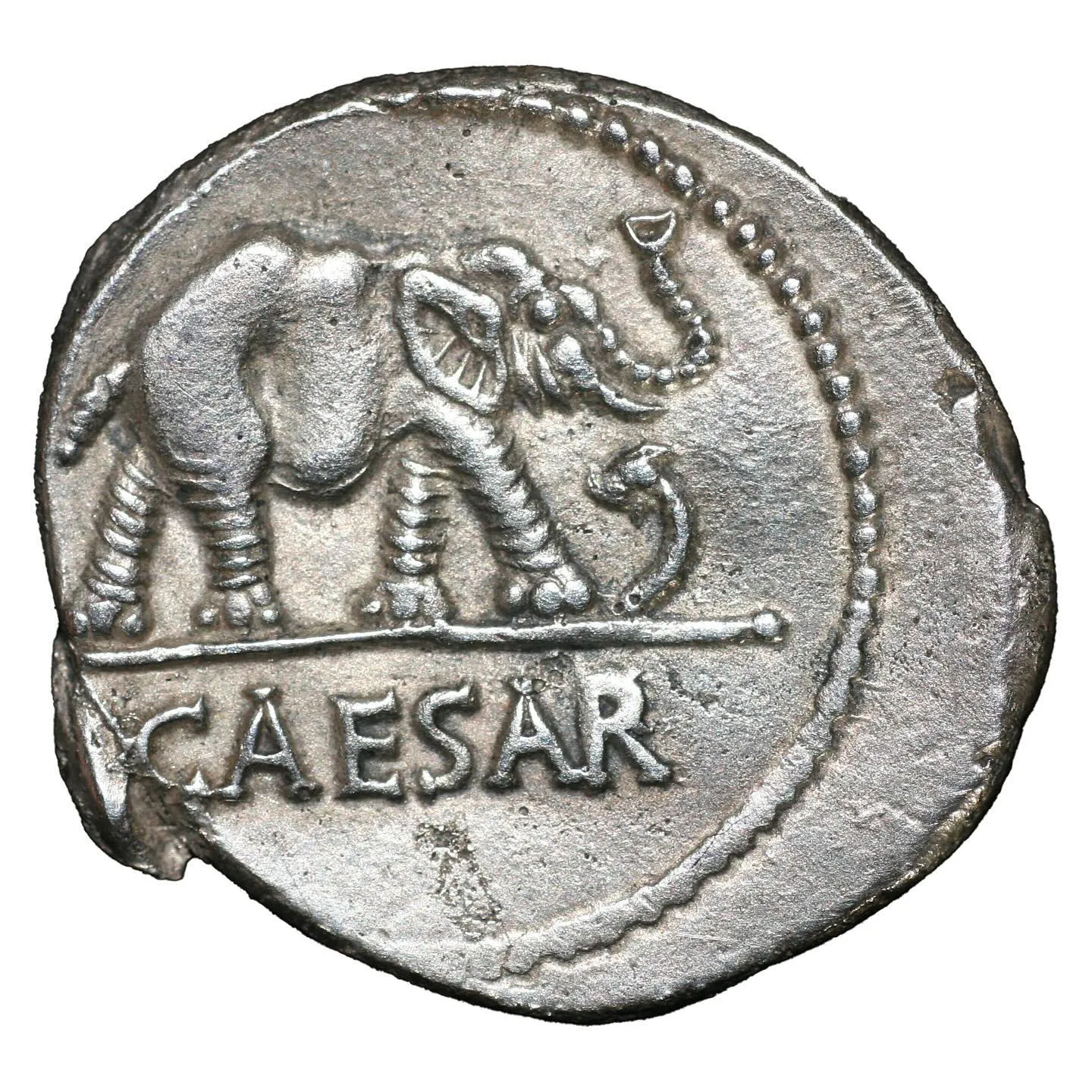
Obverse:Elephant on the right, in front a snake. Dotted border. CAESAR
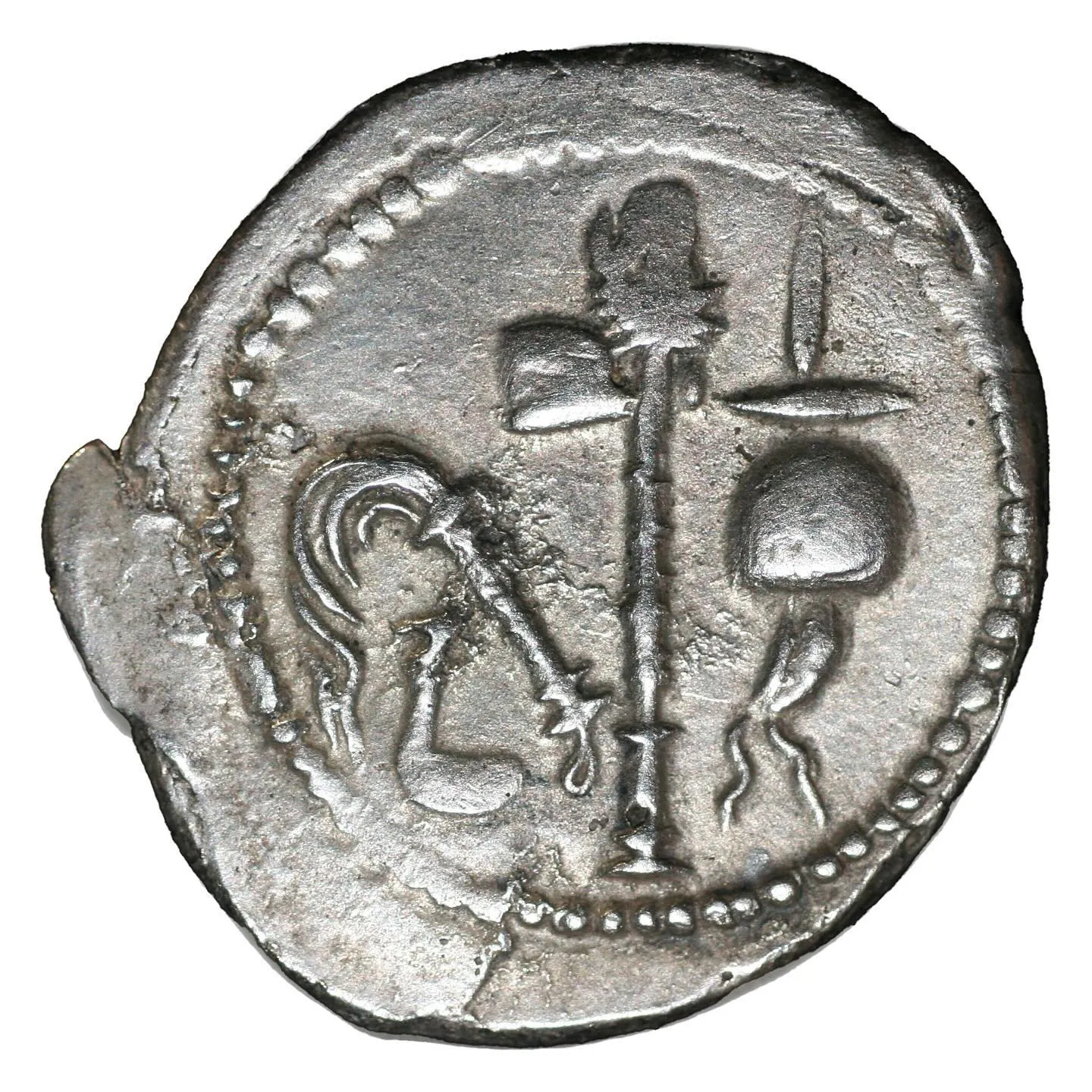
Reverse:Pontifical emblems. simpulum, aspergillum, ax and apex. . Dotted border. -
Grade:EF- / VF+ 3.79 g - xh
Origin:Tauler & Fau 2023
Comment:
Gens Julia: The gens Julia was one of the most influential patrician families in Rome, claiming descent from Aeneas and the goddess Venus. Gaius Julius Caesar, as the most prominent member of the family, was the leader who led the transition from the Republic to the Empire. Through his successful military and political career, he consolidated the power of the Julii and left a lasting legacy in Roman history.
There are two theories regarding the date of minting of this denarius: some authors point to the period from 54 – 51 BC, in the middle of the Gallic War. Although at that time all legal coinage was produced under senatorial control, and the salaries of the troops under Caesar’s orders were paid for from the public treasury, so Caesar had no need to mint currency.
However, with the beginning of hostilities between Caesar and Pompey, when Caesar crossed the Rubicon, 49 – 48 BC, the Senate’s control over the coinage effectively disappeared and Caesar did need an abundance of denarii to pay his legions. Later, he had to face Pompey and his followers, which led to the Battle of Pharsalia in 48 BC.
Obverse: The elephant crushing a snake represents the victory of the forces of good (Caesar) over evil (his enemies). The elephant, a symbol of strength and power, is an allusion to Caesar’s military capabilities, while the snake can symbolize chaotic forces, senatorial resistance, or even the Gauls…
Reverse: The pontifical emblems (symple, aspersorium, ax and apex) refer to the position of Pontifex Maximus that Caesar held since 63 BC. Simpulum: A small bowl used in ceremonies to pour liquids during sacrifices to the gods; Aspergillum: To sprinkle holy water during purification rituals, ensuring the cleanliness of participants and altars; Axe: For the sacrifice of animals during religious ceremonies; Apex: Distinctive cap of Roman priests, especially Pontifex Maximus, symbolizing their religious authority.