Bacchus
Crawford 494/36
Series: Republican deities - Bacchus
Reference: Crawford 494/36
 |  |
Gens and monetary:Vibia - C. Vibius Varus
Year and mint:From 42 BC to 42 BC - Rome
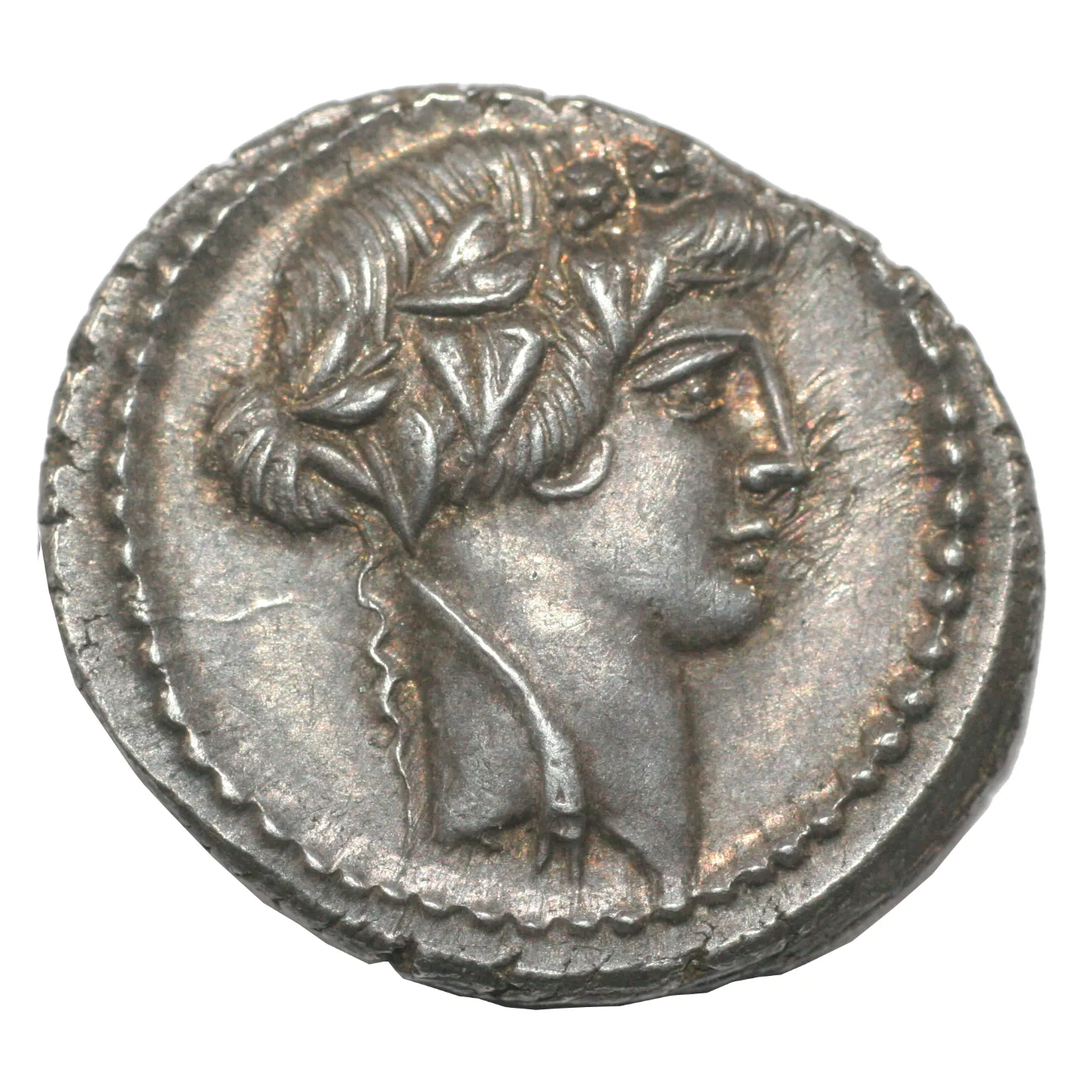
Obverse:Bust of Liber, right, with ivy crown. Dotted border. -
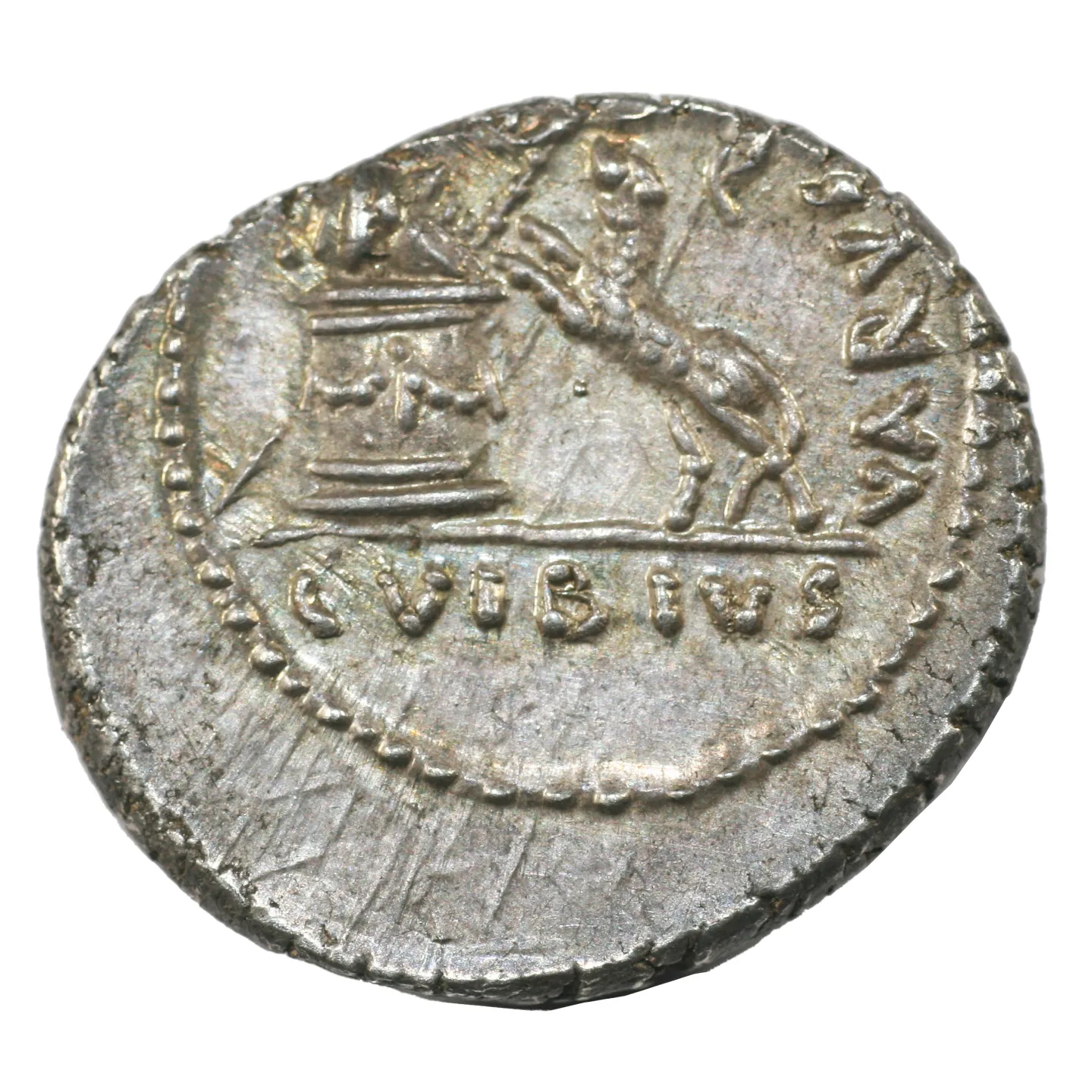
Reverse:Garlanded altar, on which the mask rests and against which the thyrsus rests; On the right, panther leaping towards the altar. Dotted border. C VIBIVS VARVS
Grade:EF+ / EF 4.07 g - 12h
Origin:Tauler & Fau 2023
Comment:
The Vibia gens was a plebeian family that achieved some relevance in the late Republic without being a family with much influence. The first known member of this family was C. Vibius Pansa Caetronianus, who achieved the consulship in 43 BC. He was an ally of Julius Caesar and actively participated in the politics of the time, standing out in the civil struggles after Caesar’s assassination.
C. Vibius Varus, the person responsible for this issue in 42 BC, is not well known beyond his role as a monetary.
The year 42 B.C. It was a period of great political and military upheaval in Rome. After the assassination of Julius Caesar in 44 BC, Rome was immersed in a new phase of civil war. The leaders of the Second Triumvirate, Mark Antony and Octavian, were preparing to confront Caesar’s assassins, Brutus and Cassius, in the crucial battle of Philippi.
Obverse: The bust of Liber, also known as Bacchus or Dionysus, is known as the god of wine, fertility and debauchery, symbolizing the transforming power of nature and human emotions. Its presence on the coin may reflect the desire to convey a message of liberation and renewal in turbulent times.
Reverse: The garlanded altar, accompanied by a mask and a thyrsus (a staff associated with Bacchus), along with a panther leaping towards the altar, is full of references to the cult of Liber/Bacchus. The panther was one of the god’s sacred animals, representing both wild power and the ability to change. This iconography may be linked to the idea of sacrifice, celebration and transformation, important concepts in a Rome that was undergoing profound political and social changes.