Women on Denarii of the Roman Empire
In the Republican era (between 211 BC and 27 BC) coins usually represented allegorical figures and deities. Representations of real women on denarii were practically non-existent, the main motifs revolved around male symbology and political-military themes. However, a special case is that ofCleopatra VII Philopator, who appeared on a denarius next to Mark Antony, also symbolizing a political-military message relevant to the time.
With the establishment of the Empire under Augustus, the Julio-Claudian dynasty (27 BC – 68 AD) marked a turning point, and denarii began to include some portraits of women of the imperial family. However, it was not until the arrival of Caligula that the bust of Agrippina the Elder appeared on the reverse of a denarius. Livia Drusilla, wife of Augustus, one of the most important women of the dynasty and of the time, never appeared with the complete bust on a denarius, although, it is assumed, that Tiberius alludes to her on the reverse of the well-known “biblical denarius.”
During the Flavian dynasty (69 – 96 AD), coinage continued to include female figures of the imperial family. An example is Flavia Domitilla, wife of Vespasian and mother of Titus and Domitian, who Domitian had represented on some coins to highlight the importance of the imperial lineage.
The era of the Adoptive Emperors and the Antonine dynasty (96 – 192 AD) is notable for the presence of women on the denarii. Wives and mothers of the emperors, such as Plotina, Sabina, the Faustinas, were commemorated on these coins, surely to reinforce the stability and benevolent image of the regime.
The Severan dynasty (193 – 235 AD) was especially relevant in terms of female representation in the denarii. Figures such as Julia Domna, wife of Septimius Severus, and other women in his family appeared frequently on these coinages, underlining their power and influence in court politics and the administration of the Empire.
During the crisis of the 3rd century (235 – 284 AD) and in the periods that followed, representations of women on denarii declined as the Empire faced instability and coinage underwent changes in quality and frequency.
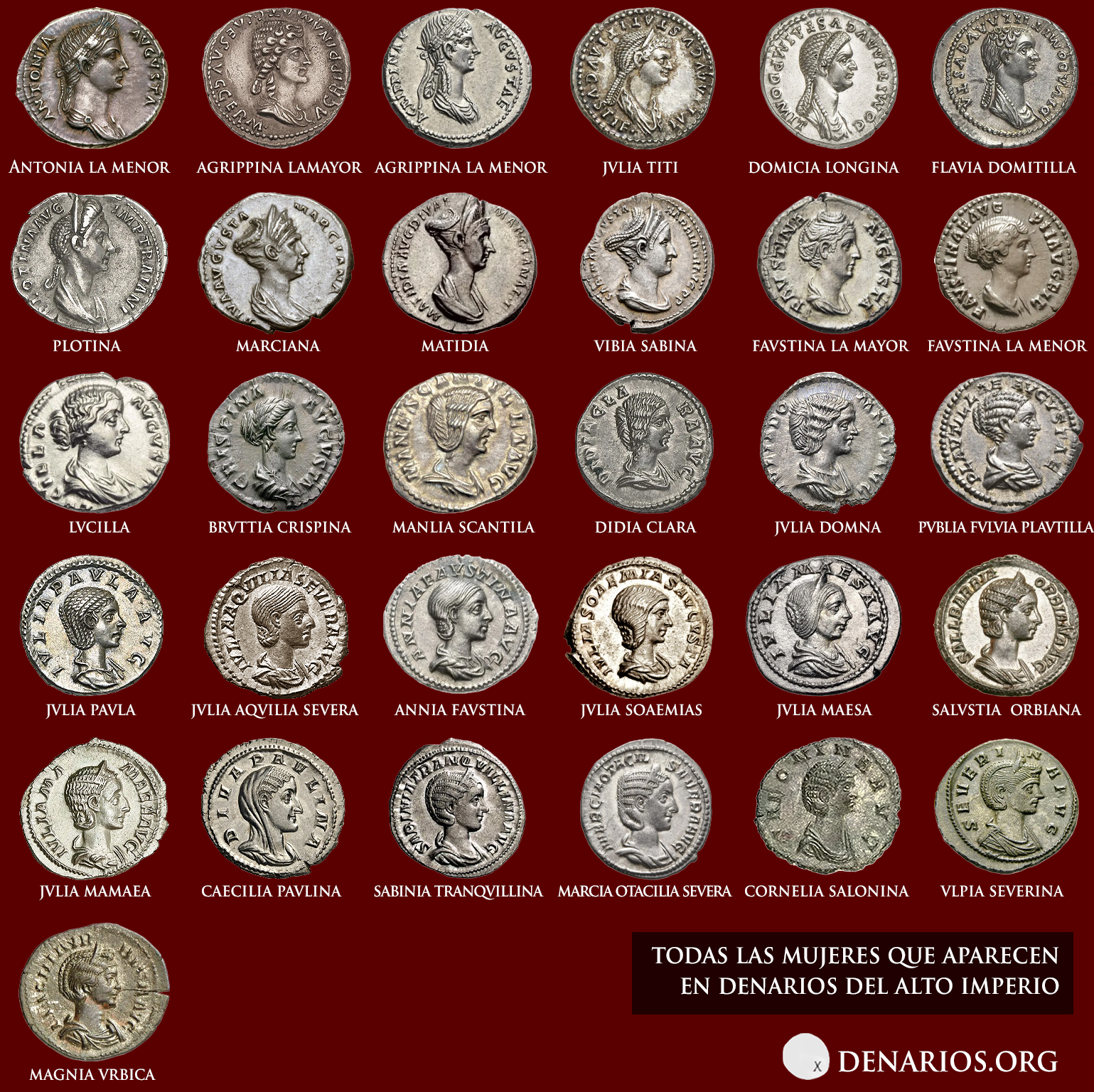
All the women who appeared on denarii of the High Roman Empire.
I - Antonia the Younger
Identity and relationship: Antonia the Lesser (January 31, 36 BC – May 1, 37 AD) was a prominent Roman lady, youngest daughter of Mark Antony and Octavia the Minor, sister of the Emperor Augustus. She married Drusus the Elder, brother of the emperor Tiberius, with whom she had three children who reached adulthood: Germanicus, Livilla and Claudius, the latter the future emperor of Rome. In addition, she was the grandmother of Caligula and great-grandmother of Nero, which places her at the center of the Julio-Claudian dynasty.
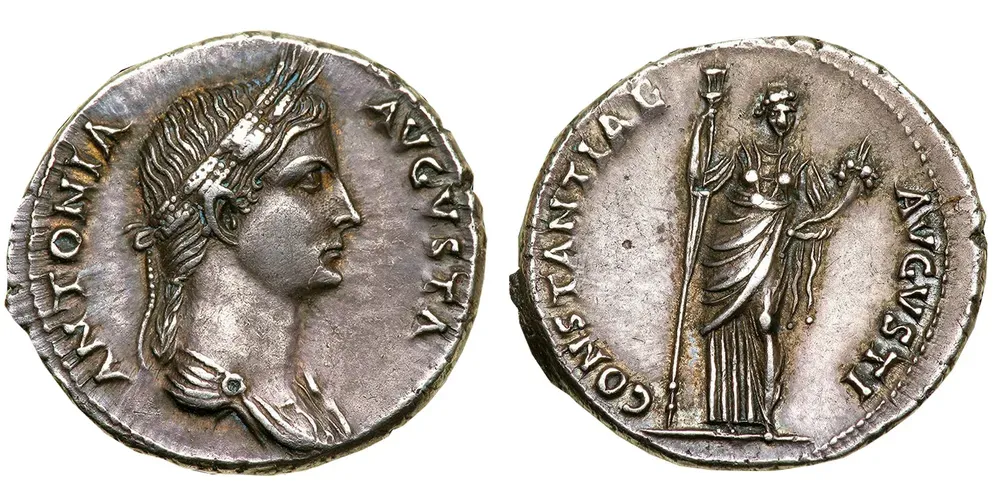
Historical context: Antonia the Younger lived in a time of profound transformations in Rome, marked by the consolidation of the Empire and the political intrigues of the Julio-Claudian dynasty. After being widowed in 9 BC, she refused to remarry, dedicating herself to raising her children and grandchildren. Her life was marked by family tragedies, such as the death of her son Germanicus in AD 19 and the involvement of her daughter Livilla in a conspiracy with Sejanus, praetorian prefect, to assassinate the emperor Tiberius. Antonia discovered and exposed this plot, leading to the execution of Sejanus and the punishment of Livilla, who, according to some sources, was handed over to her mother and died of starvation in her custody.
During the reign of her grandson Caligula, Antonia was honored with the title of Augusta, although her relationship with him was strained. She is believed to have died in AD 37, possibly on the orders of Caligula or by suicide due to family misfortunes. Her son Claudius, upon ascending the throne, paid her posthumous honors and deified her, recognizing her influence and legacy in the imperial family.
II - Agrippina the Elder
Identity and relationship: Agrippina the Elder, whose full name was Vipsania Agrippina, was born in 14 BC. and died in 33 AD. She was the daughter of Marcus Vipsanius Agrippa, a general and close friend of Augustus, and Julia the Elder, Augustus’ daughter. This placed her as the granddaughter of Rome’s first emperor, Augustus. Agrippina married Germanicus, a general much loved by the Roman people and nephew of Tiberius, the second emperor of Rome. Nine children were born from their marriage, including Caligula, who would become emperor, and Agrippina the Younger, mother of Nero. Agrippina the Elder is remembered for her role as a protective mother and figure of power in the imperial court.
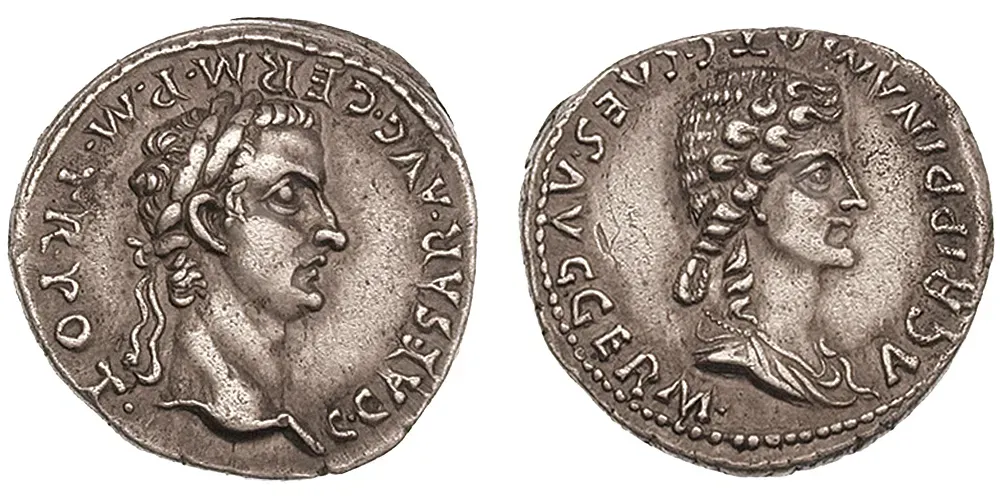
Historical context: Agrippina lived in a time of great change and consolidation of imperial power. Following the death of Augustus in AD 14, Rome experienced a period of relative stability under Tiberius, although marked by mistrust and conspiracies. The death of her husband Germanicus in AD 19 was a time of great tension at court, as Tiberius, jealous of Germanicus’s popularity, was suspected of orchestrating his death. Agrippina, known for her firm character and refusal to submit, openly confronted Tiberius, leading to her banishment in AD 29 and finally to her death in exile on the island of Pandataria in AD 33. Her resistance and courage made her a symbol of integrity and the fight against the oppression of absolute power.
III - Agrippina the Younger
Identity and relationship: Agrippina the Younger, formally known as Julia Agrippina, was born in AD 15 and died in AD 59. She belonged to the influential Julio-Claudian dynasty. Daughter of Germanicus, a highly respected general, and Agrippina the Elder, her lineage connected her to Augustus, the first emperor of Rome, and to important figures in Roman politics. She was the sister of Emperor Caligula and wife of her uncle, Emperor Claudius, with whom she had her son Lucius Domitius Ahenobarbus, better known as Nero, who would become emperor. Agrippina is remembered for her ambition and her ability to consolidate her son’s power.
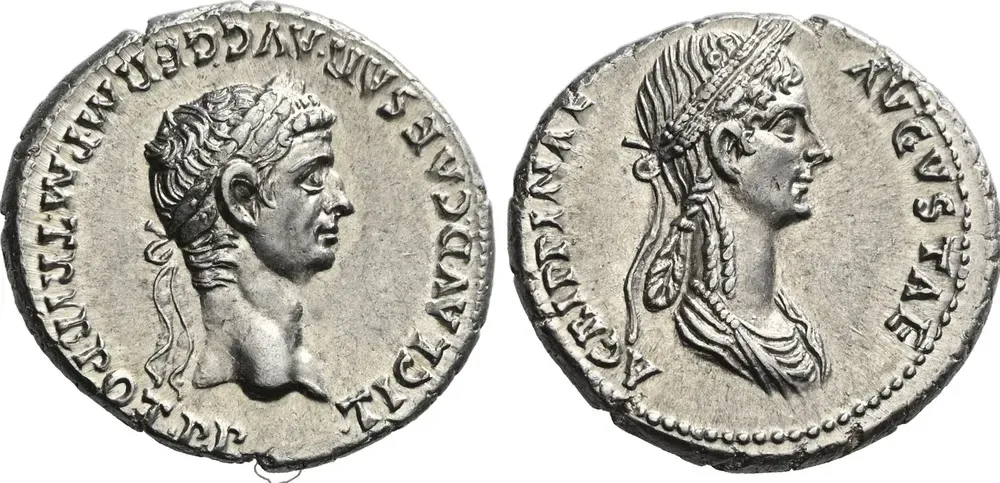
Historical Context: During Agrippina the Younger’s life, Rome was in constant flux and faced a number of political and social challenges. Imperial power, consolidated by Augustus, was going through a period of tension and political maneuvering, especially under the reigns of Caligula and Claudius. Agrippina played a crucial role in securing Nero’s accession to the throne in AD 54, using her position and alliances to strengthen her influence at court. However, her control and ambition brought her into conflict with her son, resulting in her downfall and murder in AD 59, under orders of Nero, who sought to consolidate his power without his mother’s intervention.
IV - Julia Titi
Identity and relationship: Julia Titi, also known as Julia Flavia, was born on September 13, AD 64 and died in AD 91. She was the daughter of Emperor Titus and his second wife, Marcia Furnila. Her paternal grandfather was Vespasian, founder of the Flavian dynasty. Julia married her cousin, Titus Flavius Sabinus, who served as consul in AD 82. There is no evidence that she had children.
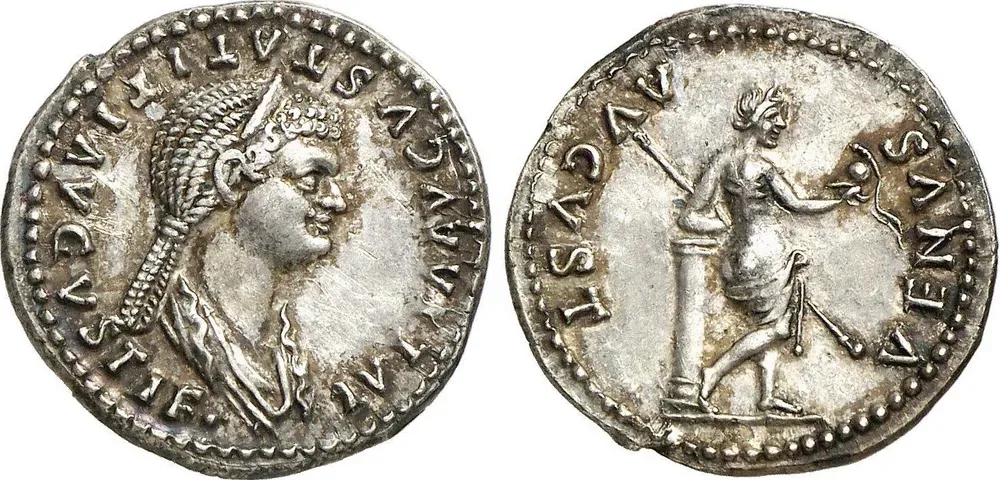
Historical context: During Julia Titi’s lifetime, Rome was under the rule of the Flavian dynasty, with her father Titus as emperor from AD 79 to 81, and later her uncle Domitian until AD 96. After being widowed, Julia resided in the imperial palace and, according to ancient sources, maintained a relationship with her uncle Domitian, which generated controversy at court. Her death in AD 91 was followed by her deification, and her ashes were placed in the Flavian Temple.
V - Domitia Longina
Identity and relationship: Domicia Longina (ca. AD 50 - 130) was a Roman noblewoman who became empress as the wife of Emperor Domitian, a member of the Flavian dynasty. Daughter of the general and senator Gnaeus Domitius Corbulo, her marriage to Domitian joined her to one of the most influential families of her time. Although she was not descended from the Julio-Claudian imperial family, her parentage and position ensured her a prominent role at court.
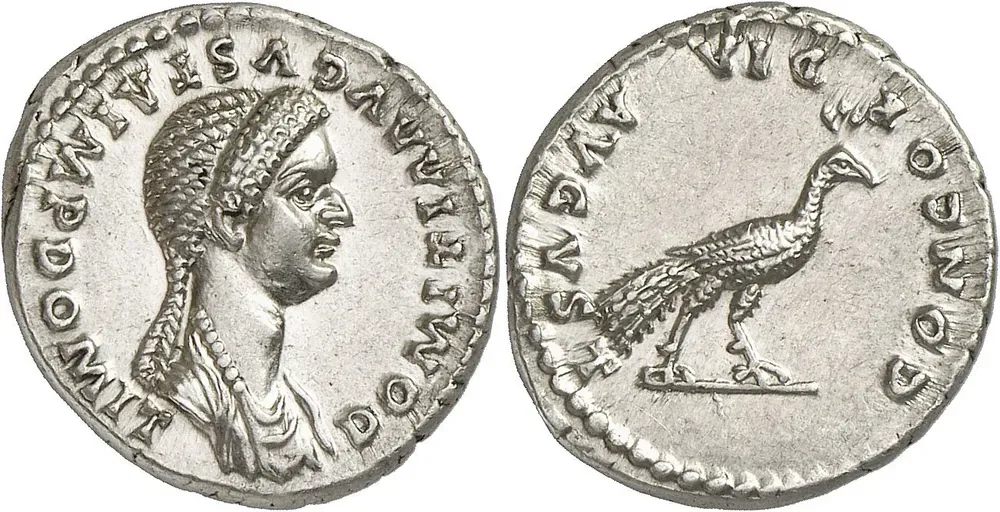
Historical context and role in Rome: Domitia lived in a period characterized by the consolidation and eventual decline of the Flavian dynasty. She married Domitian before he ascended the throne, and their marriage had an impact on both politics and her social position. As empress, Domitia was recognized for maintaining a significant presence at court, and is credited with influencing the emperor’s decisions. Her relationship with Domitian went through ups and downs, including a brief period of separation, but she remained by his side until his assassination in AD 96. After the fall of Domitian, Domitia survived the purges and continued to be respected, living several more years during successive reigns.
VI - Flavia Domitilla
Identity and relationship: Flavia Domitilla was the wife of Vespasian and mother of the emperors Titus and Domitian, placing her as a central figure in the Flavian dynasty. Her exact date of birth is unknown, but she is known to have died before Vespasian came to power in AD 69. She came from a lower-ranking family, being the daughter of Flavius Liberalis, a freedman. They had three children who survived: Titus, Domitian and Domitilla the Younger. Her position as the mother of two future emperors and grandmother of successive members of the imperial family made her an important figure in the history of imperial Rome.
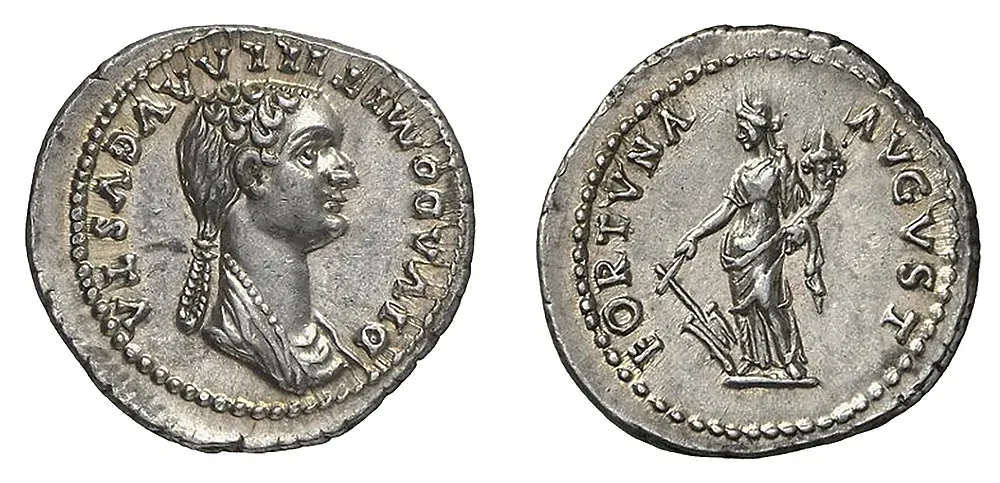
Historical Context: Flavia Domitilla lived during a period marked by political instability and power struggles that culminated in the rise of her husband Vespasian as emperor and the beginning of the Flavian dynasty. Domitilla’s life reflected the social rise of the family, which went from being relatively modest to dominating imperial power. Although she did not witness her sons’ reign, her memory was honored, and her influence on the Flavian lineage was recognized. The figure of Domitilla the Younger, her daughter, also stood out in history for her connection with early Christianity.
VII - Plotina
Identity and relationship: Plotina, whose full name was Pompeia Plotina Claudia Phoebe Piso, was probably born around AD 70 and died in AD 121. She came from an aristocratic Roman family, although not directly related to the preceding imperial dynasties. She married Trajan, who would become emperor in AD 98, and, although they had no children, Plotina was instrumental in adopting Hadrian, who succeeded Trajan as emperor.
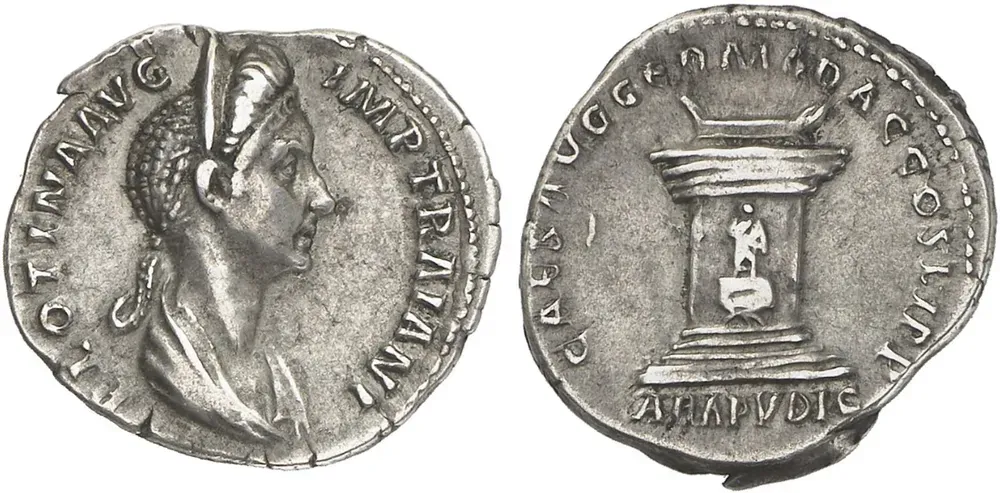
Historical Context: Plotina lived in a time of great expansion and consolidation of Roman power under the rule of Trajan, who is remembered for his successful military campaigns and effective administration. She was known for her intellect, moderate character, and her commitment to social reforms, promoting the education and well-being of the Roman people. Plotina was respected for her humility and simplicity, rejecting the luxuries of power and always seeking the common good. Upon her death in AD 121, she was deified, reflecting the high esteem in which she was held by both the people and her successor, Hadrian, who recognized her influence on his career and accession to the throne.
VIII - Marciana
Identity and relationship: Ulpia Marciana was born in AD 48 and died in AD 112. She was the sister of Emperor Trajan and daughter of Marcus Ulpius Traianus, an important general and senator. Marciana married Gaius Salonius Matidius Patruinus, a senator and suffect consul, with whom she had a daughter, Salonina Matidia, who later became an influential figure at the imperial court. Marciana was a notable figure in the imperial family, and her closeness to Trajan ensured her a relevant role in the political life of Rome.
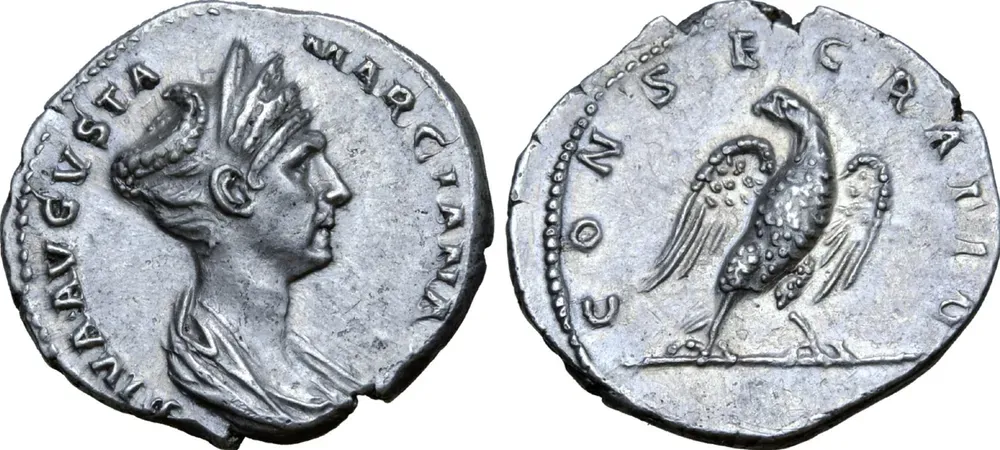
Historical context: The time in which Marciana lived was marked by the expansion of the Roman Empire and the strengthening of its administration under the government of her brother Trajan. Although Marciana did not play an active political role, her presence at court and her influence on Trajan and Matidia were notable. In AD 105, Marciana received the title Augusta, a recognition of her status and symbolic contribution to imperial power. Upon her death in AD 112, she was deified, reflecting the respect and esteem she had from both her brother and the Roman people.
IX - Matidia
Identity and relationship: Salonia Matidia, known simply as Matidia, was born in AD 68 and died in AD 119. She was the daughter of Marciana and Gaius Salonius Matidius Patruinus, making her the niece of Emperor Trajan. Matidia married three times and had several daughters, including Vibia Sabina, who would later marry the Emperor Hadrian, which linked her closely to the Antonine dynasty. Matidia was recognized for her influence and proximity to power, being one of the most respected women of her time.
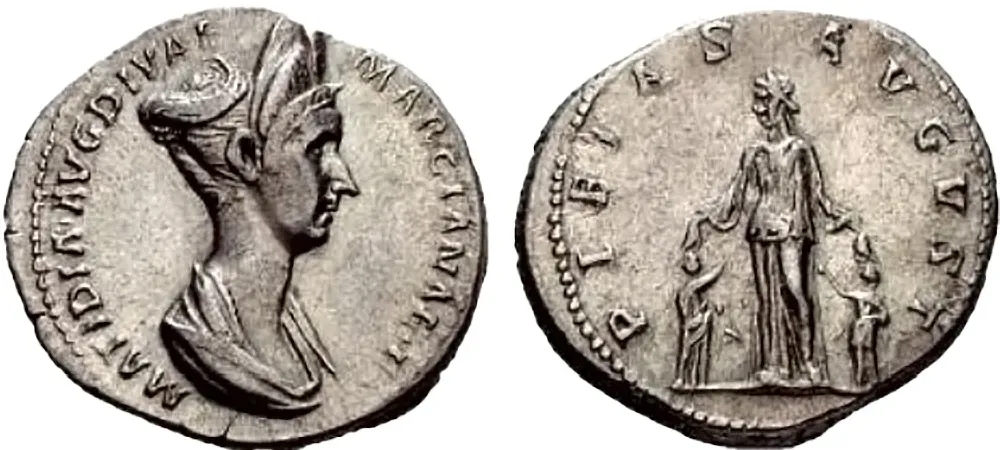
Historical context: Matidia lived during the rise of the Roman Empire under the reign of Trajan and the early years of Hadrian. Her role at the imperial court was significant, as she was a close advisor to her uncle Trajan and a liaison figure between the Flavian and Antonine dynasties. In AD 112, upon the death of her mother Marciana, Matidia received the title of Augusta, which strengthened her position at court. Her presence helped legitimize the succession of Hadrian, who notably honored her after her death in AD 119, arranging for her deification and highlighting her loyalty and contribution to the imperial lineage.
X - Vibia Sabina
Identity and relationship: Vibia Sabina was born around AD 83 and died in AD 136 or 137. She was the daughter of Matidia, niece of Emperor Trajan, and Lucius Vibius Sabinus, a senator of Rome. Through her mother, she was closely related to the imperial family and, by marriage, became the wife of Emperor Hadrian, establishing her as Augusta. There is no evidence that Sabina had children, although her marriage to Hadrian lasted several decades and was politically important.
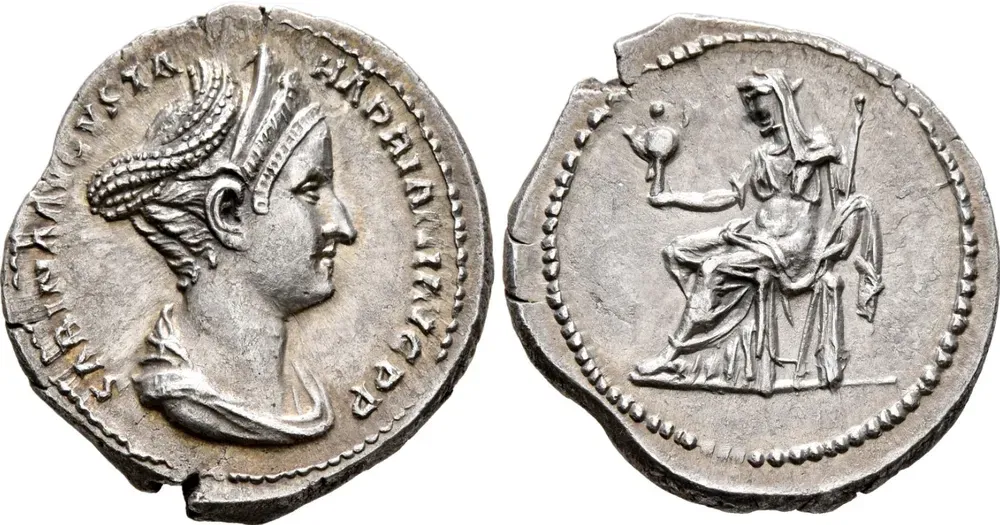
Historical Context: Sabina lived during a time of consolidation and expansion of the Roman Empire under the reign of her husband Hadrian. The period was characterized by administrative reforms, the construction of notable monuments, and relative peace in the Empire. Although her relationship with Hadrian was known to be distant and at times strained, Sabina maintained her position as empress and was respected for her role at court. She received the title of Augusta, reinforcing her importance in the political apparatus of the Empire. After her death, she was deified by Hadrian, reflecting a recognition of her status and the continuity of imperial power through the female figures of the family.
XI - Faustina the Elder
Identity and relationship: Faustina the Elder, also known as Annia Galeria Faustina, was born around AD 100 and died in AD 140. She came from a noble Roman family and married Emperor Antoninus Pius, making her Augusta during his reign. She was the mother of four children, including Faustina the Younger, who would also become empress when she married Marcus Aurelius. Her marriage to Antoninus Pius was known for its stability and contributed to the image of a prosperous and peaceful government.
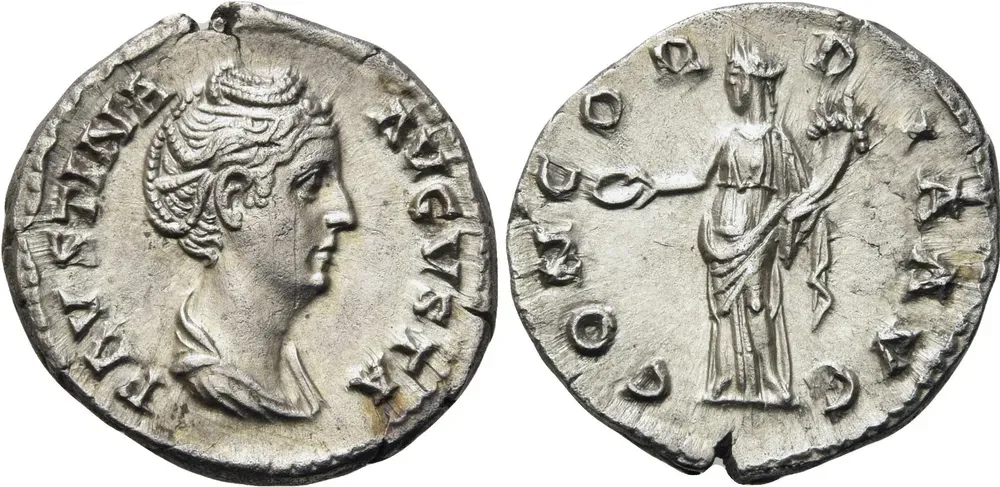
Historical Context: Faustina the Elder lived during a period of relative peace and prosperity in the Roman Empire, known as the reign of the Five Good Emperors. Her husband, Antoninus Pius, ruled stably and fairly, consolidating the legacy of his predecessor, Hadrian. Faustina played an important role as a mother figure and benefactor at court, participating in charity work and promoting education. After her death in AD 140, Antoninus Pius deified her and dedicated temples and statues to her, underscoring her crucial role in the stability of the imperial family and the continuity of power.
XII - Faustina the Younger
Identity and relationship: Annia Galeria Faustina the Younger, known as Faustina the Younger, was born in AD 130 and died in AD 175. She was the daughter of Faustina the Elder and the Emperor Antoninus Pius, which linked her to one of the most prominent families of the period of the Five Good Emperors. She married Marcus Aurelius, who was also her cousin. Together they had several children, some of whom lived to adulthood, including Commodus, who became emperor.
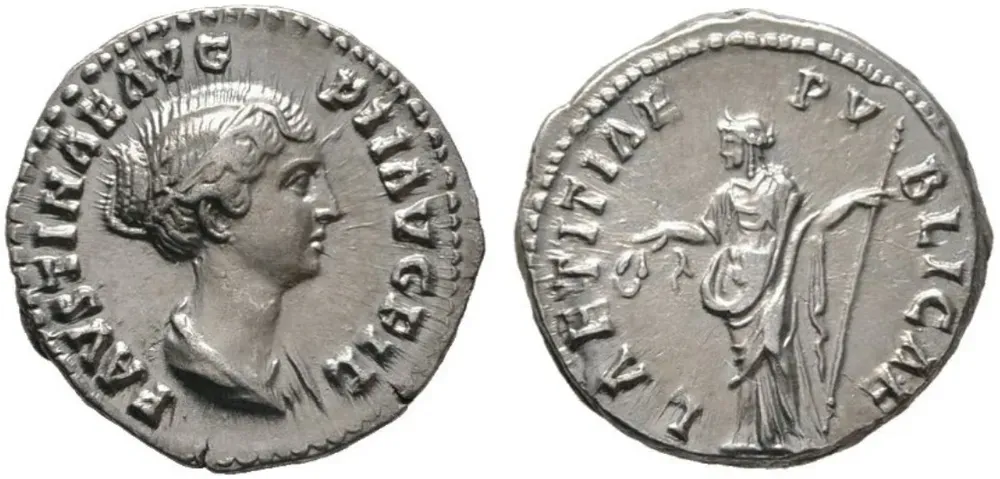
Historical context: Faustina the Younger lived during a period of military and philosophical challenges for Rome. As the wife of Marcus Aurelius, the philosopher emperor, she was an important figure at court and accompanied him on various military campaigns. Her participation in these expeditions made her popular among the legions, who appreciated her as a symbol of strength and unity. Although ancient sources sometimes mention rumors about her conduct, Marcus Aurelius always defended her and, after her death in AD 175, deified her, perpetuating her memory with monuments and coin issues in her honor.
XIII - Lucilla
Annia Aurelia Galeria Lucila, known as Lucilla, was born in AD 148 and died in AD 182. She was the daughter of Emperor Marcus Aurelius and Faustina the Younger, which placed her at the heart of the Antonine dynasty. Lucilla married Lucius Verus, co-emperor with her father, consolidating a political union that strengthened the legitimacy of imperial power. After the death of Lucius Verus, Lucilla remained at court and had several children, although most did not survive to adulthood.
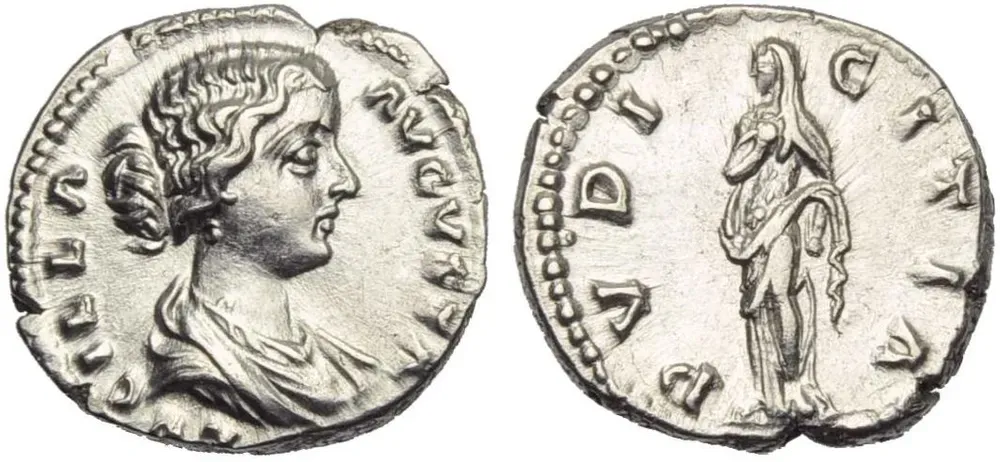
Historical context: Lucilla lived in a Rome marked by wars and the rise of Stoic philosophy, defended by her father. Although her marriage to Lucius Verus sought to reinforce the stability of power, the court was a place of intrigue and struggles for control. After becoming a widow, Lucilla plotted against her brother, Emperor Commodus, whose government had become unpopular due to his authoritarian and extravagant behavior. Lucilla’s participation in a conspiracy to overthrow him resulted in her arrest and execution in AD 182, ordered by her own brother. Her death symbolized the growing instability in the Antonine dynasty and the internal conflicts that wore it down.
XIV - Bruttia Crispina
Identity and relationship: Bruttia Crispina was born around AD 164 and died in AD 191. She belonged to the prominent Bruttius family, whose lineage enjoyed influence in Rome. She was the wife of Emperor Commodus, whom she married in AD 178, receiving the title of Augusta. Although there are no known records of her having children, her marriage was politically significant, cementing important family alliances at the height of imperial power.
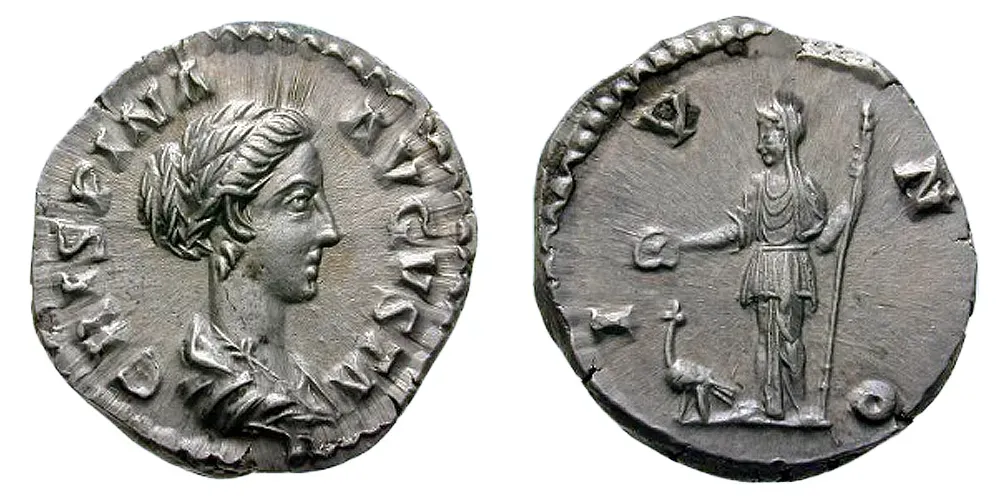
Historical context: Bruttia Crispina lived during the last stage of the reign of the Antonines, at a time when Rome enjoyed relative stability after the achievements of previous emperors, but decadence began to be seen under Commodus. Her husband was known for his erratic administration and disinterest in serious politics, leaning toward spectacle and extravagance. In AD 188, Crispina was accused of adultery—although the details may have been magnified by political rivalries—and exiled to Capri, where she was subsequently executed. This event marked one of the first manifestations of the internal tensions that would characterize the fall of the Antonine dynasty.
XV - Manlia Scantila
Identity and relationship: Manlia Scantila was the wife of the Roman emperor Didius Julianus, who ruled briefly in AD 193. Her name suggests that she belonged to the Manlia gens, a patrician family of ancient Rome. However, some historians consider that she could have been a descendant of a freedman from that family. Together with Didius Julianus, she had a daughter named Didia Clara, recognized for her beauty.
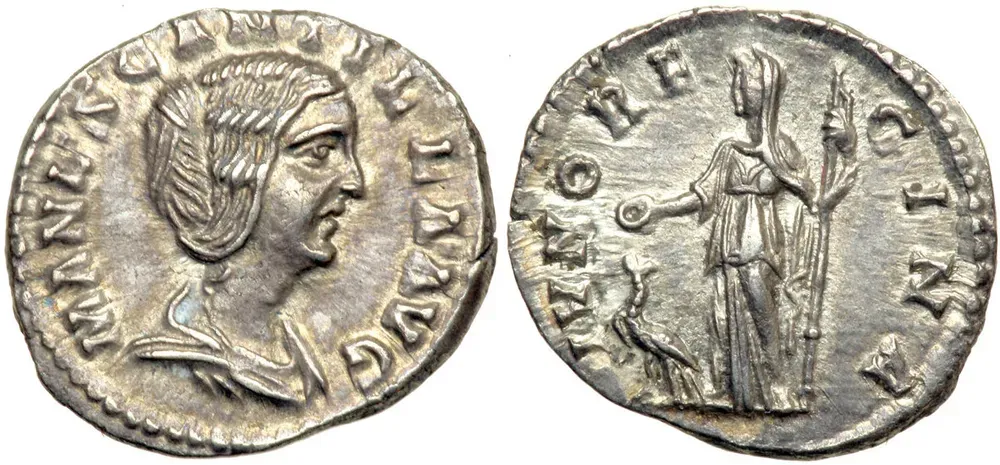
Historical context: On March 28, AD 193, after the death of Emperor Pertinax, Didius Julianus acceded to the throne through an auction held by the Praetorian Guard. That same day, the Roman Senate granted Manlia Scantila and her daughter the title of Augusta. However, Julian’s reign was short-lived; On June 1, AD 193, he was executed by order of Septimius Severus, who assumed power. After the death of her husband, Manlia Scantilla lost her imperial status, but was allowed to bury Julian’s body next to her great-grandfather. The subsequent fate of Manlia Scantilla and her daughter Didia Clara is unknown.
XVI - Didia Clara
Identity and relationship: Didia Clara was the only daughter of the Roman emperor Didius Julianus and the empress Manlia Scantila. Born around AD 153, she belonged to the Didia gens, a family of the Roman aristocracy. In 193 AD, upon her father’s ascension to the throne, Didia Clara received the title of Augusta, granting her imperial status. She married Sextus Cornelius Repentinus, who was appointed prefect of Rome during the brief reign of her father-in-law. There are no records that Didia Clara had children.
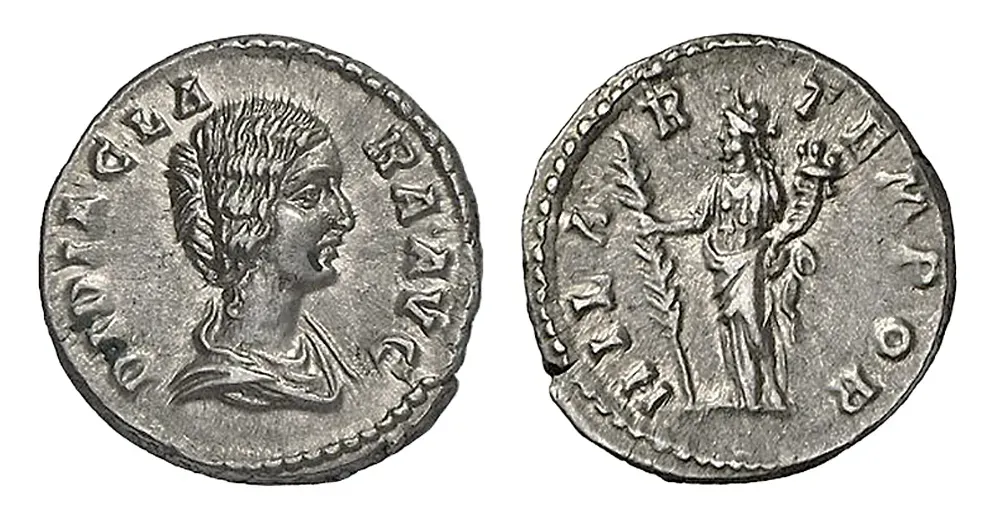
Historical context: The year AD 193, known as the “Year of the Five Emperors”, was a period of great instability in the Roman Empire, characterized by rapid successions to the throne and internal conflicts. Didius Julian came to power after purchasing the imperial title at an auction organized by the Praetorian Guard, which generated discontent among the legions and the Senate. His reign lasted just 66 days, ending with his execution on June 1, AD 193. Following the death of her father, Didia Clara and her mother were stripped of their titles and property by the new emperor, Septimius Severus. Didia Clara’s later life is unknown, as she disappears from historical records after these events.
XVII - Julia Domna
Identity and relationship: Julia Domna was born around AD 160 in Emesa (present-day Homs, Syria). She came from a powerful priestly family; her father, Julius Bassianus, was high priest of the sun god El-Gabal. Julia married Septimius Severus, who ascended the imperial throne in AD 193, making her Augusta. She was the mother of two emperors, Caracalla and Geta, and played a fundamental role in the political and social life of the Empire, consolidating her position as one of the most influential women of the Severan dynasty.
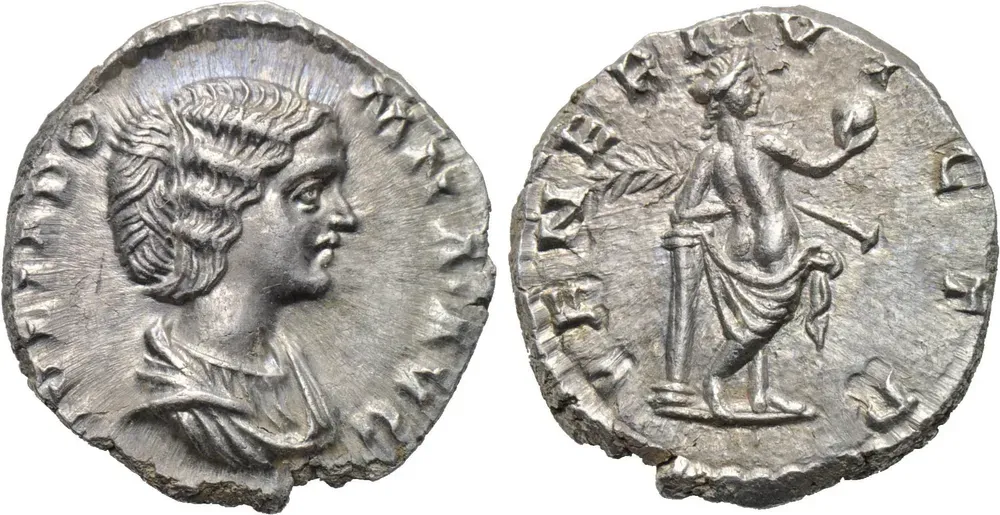
Historical context: Julia Domna lived in a time of intense military activity and consolidation of power in the hands of her husband, Septimius Severus. During her reign, she accompanied the emperor on his military campaigns and exerted a strong influence on the administration of the Empire. After Severus’ death in AD 211, his sons Caracalla and Geta shared power, but rivalry between them led to Geta’s death. Julia remained at Caracalla’s side, supporting him until his assassination in AD 217. During her life, she promoted the arts and philosophy, turning her court into a center of intellectual activity. Her end came shortly after Caracalla’s death; some accounts mention that she committed suicide or died of grief and disappointment, closing an important chapter in Roman history.
XVIII - Publia Fulvia Plautilla
Identity and relationship: Publia Fulvia Plautilla was born around the year 185 AD. in Rome. She was the daughter of Gaius Fulvius Plautianus, an influential praetorian prefect and close ally of the emperor Septimius Severus. In 202 AD, Plautilla married Caracalla, eldest son of Septimius Severus, becoming Augusta. This marriage was a political alliance intended to strengthen Plautian’s position at the imperial court. However, the relationship between Plautilla and Caracalla was tense and without known offspring.
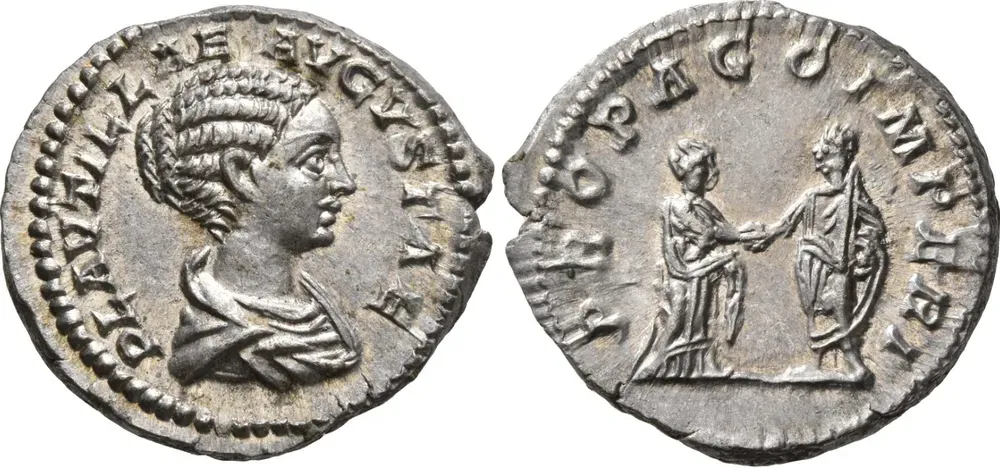
Historical context: Plautilla’s marriage to Caracalla occurred during a period of consolidation of power by Septimius Severus. In AD 205, her father, Plautianus, was accused of plotting against the emperor and executed. As a consequence, Plautilla was banished to the island of Lipari. Following Caracalla’s accession to the throne in AD 211, he ordered her execution in AD 212, thus eliminating any potential threat to his authority.
XIX - Julia Paula
Identity and relationship: Julia Cornelia Paula was a Roman noblewoman of the 3rd century AD, originally from Syria. Her father, Julius Cornelius Paulus, served as prefect of the Praetorian Guard in Rome. In AD 219, Julia Paula married the Emperor Elagabalus, becoming empress and receiving the honorary title of Augusta. There are no children registered from this union.
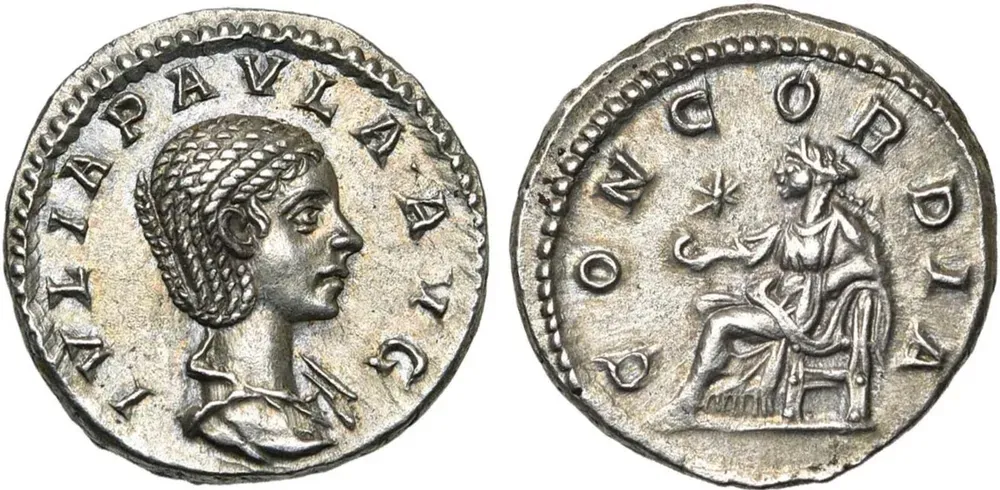
Historical context: During the brief reign of Elagabalus (218-222 AD), known for his attempts to introduce Eastern religious practices to Rome, Julia Paula held the role of empress consort. However, in early AD 220, Elagabalus decided to divorce her to marry the Vestal Julia Aquilia Severa, an action that generated controversy due to the sacred status of the Vestals. Following the divorce, Julia Paula was stripped of her Augusta title and retired from public life. Her further fate remains unknown.
XX - Julia Aquilia
Julia Aquilia Severa was a Roman Vestal Virgin, daughter of Quintus Aquilius Sabinus, who served as consul twice during the reign of Caracalla. In AD 220, Emperor Elagabalus married her, granting her the title of Augusta. This marriage was highly controversial due to the vestal vow of chastity, the breaking of which was traditionally punished by death. There are no children registered from this union.
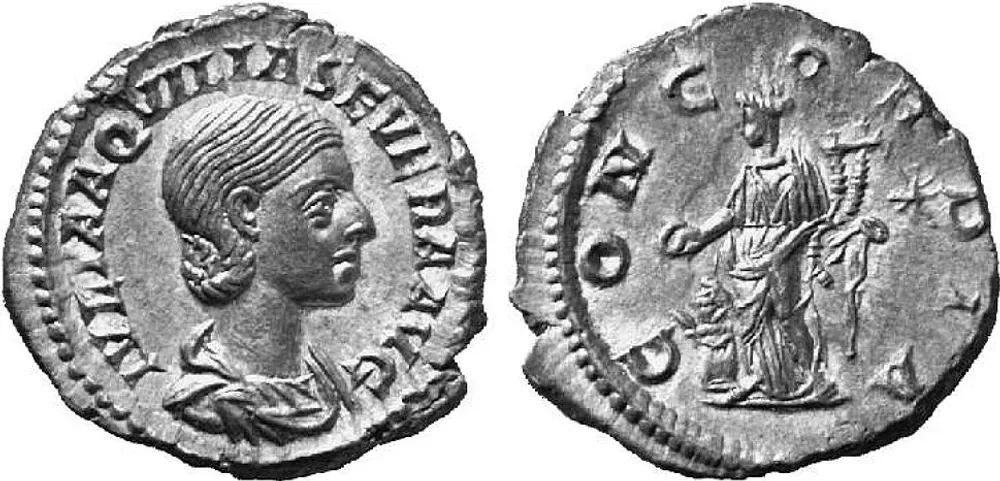
This episode occurred in the last year of Elagabalus’ turbulent reign, characterized by his eccentricities and conflicts with the Roman elite. In 222 AD, the emperor was assassinated along with his mother, but Annia Faustina disappears from the sources without her fate being known.
XXI - Annia Faustina
Annia Faustina was a Roman noblewoman, descendant of Marcus Aurelius, who in AD 221 married the emperor Elagabalus as part of a strategy to link him to the prestigious Antonine dynasty and gain legitimacy before the Senate. However, the marriage was short-lived, as shortly afterwards the emperor repudiated her to marry Aquilia Severa, a Vestal, which generated a great scandal in Rome.
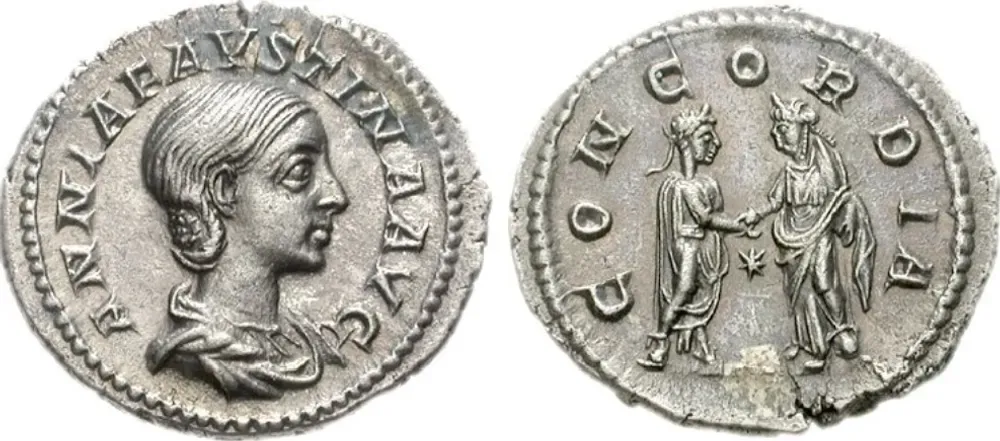
This episode occurred in the last year of Elagabalus’ turbulent reign, characterized by his eccentricities and conflicts with the Roman elite. In 222 AD, the emperor was assassinated along with his mother, but Annia Faustina disappears from the sources without her fate being known.
XXII - Julia Soaemias
Identity and relationship: Julia Soaemias Bassiana was born around AD 180 in Emesa, Syria. She was the daughter of Julia Maesa and Gaius Julius Avitus Alexianus, which linked her to the influential Severan family. Her mother, Julia Maesa, was the sister of Julia Domna, wife of the emperor Septimius Severus, which made Soaemias the niece of this emperor. She married Sextus Varius Marcellus, a Roman equestrian of Syrian origin, with whom she had a son, Varius Avitus Bassianus, later known as the Emperor Elagabalus. Her younger sister, Julia Mamaea, was the mother of the Emperor Alexander Severus.
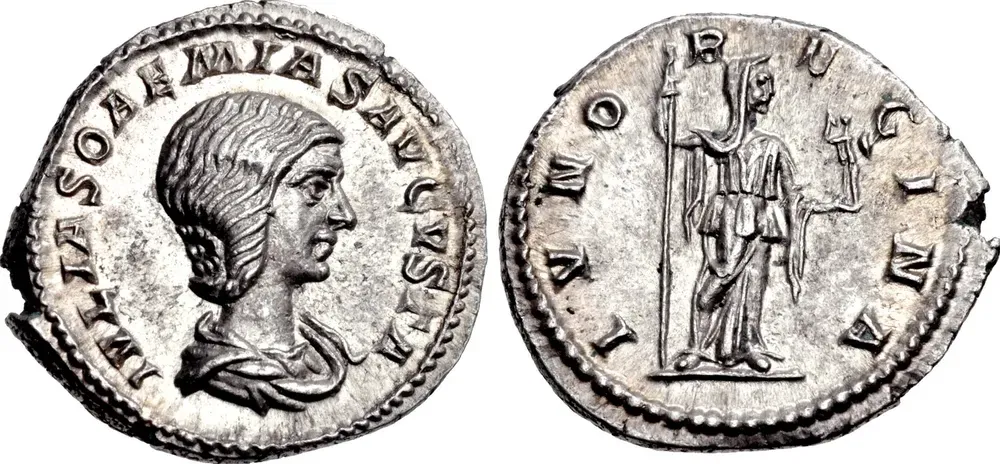
Historical Context: Julia Soaemias lived during a time of instability in the Roman Empire. After the assassination of Emperor Caracalla in 217 AD, Macrinus assumed power, but his rule was brief. Julia Maesa, mother of Soaemias, promoted the ascension of her grandson Elagabalus to the throne, claiming that he was the illegitimate son of Caracalla. In 218 AD, Elagabalus was proclaimed emperor, and Soaemias received the title of Augusta, exercising notable influence in the government due to his son’s youth. However, Elagabalus’s reign was marked by controversies and religious practices that generated discontent. In March 222 AD, a revolt led by the Praetorian Guard resulted in the murder of Elagabalus and Soaemias. Both were victims of “damnatio memoriae”, a sentence that sought to erase their memory from Roman history.
XXIII - Julia Maesa
Identity and relationship: Julia Maesa was born around AD 165 in Emesa, Syria (present-day Homs). She was the daughter of Julius Bassianus, high priest of the sun god El-Gabal, and older sister of Julia Domna, who was the wife of Emperor Septimius Severus. Julia Maesa married Gaius Julius Avitus Alexianus, a Roman senator of Syrian origin, with whom she had two daughters: Julia Soaemias and Julia Mamaea. Her grandsons, Elagabalus and Alexander Severus, became Roman emperors, consolidating the influence of their lineage in the Severan dynasty.
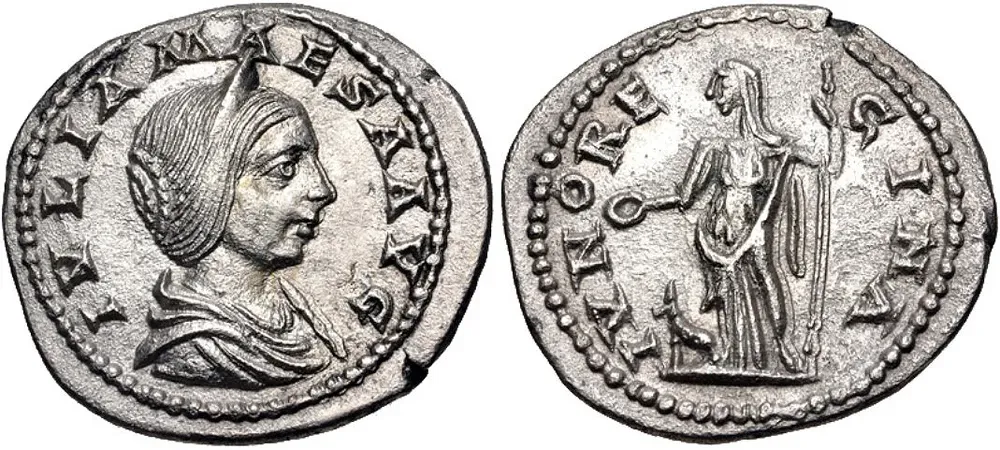
Historical context: After the assassination of Emperor Caracalla in AD 217 and the ascension of Macrinus to the throne, Julia Maesa, taking advantage of her vast fortune and connections, promoted the proclamation of her grandson Elagabalus as emperor in AD 218. During the reign of Elagabalus, and later that of Alexander Severus, Julia Maesa exerted a significant influence on imperial politics, ensuring the continuity of the Severan dynasty. She died around 224 AD, being deified in recognition of her role in the restoration and maintenance of the dynasty.
XXIV - Salustia Orbiana
Identity and relationship: Gnaea Seia Herennia Sallustia Barbia Orbiana, known as Sallustia Orbiana, was a Roman empress of the 3rd century AD. She was the daughter of Lucius Seius Herenius Sallust, an influential Roman senator. In August 225 AD, at the age of 16, she married Emperor Alexander Severus, who was approximately the same age. After the marriage, Orbiana received the title of Augusta, consolidating her position at the imperial court. There are no children registered from this union.
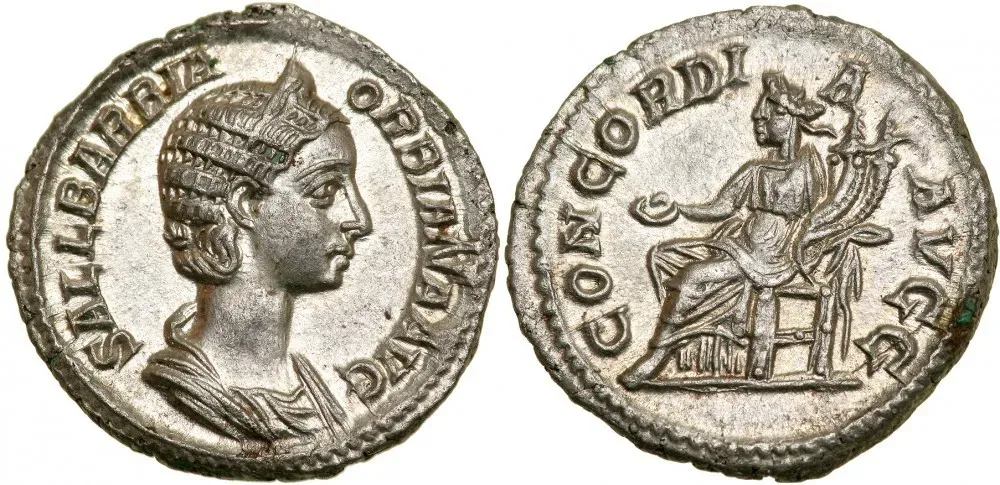
Historical Context: During the reign of Alexander Severus (222-235 AD), the Roman Empire experienced relative stability, although with border challenges and internal tensions. The emperor’s mother, Julia Mamaea, exerted a strong influence on her son and on state affairs. Orbiana’s presence as Augusta generated jealousy in Julia Mamaea, who saw her position at court threatened. In AD 227, Julia Mamaea accused Lucius Seius Herenius Sallust of plotting against the emperor, which resulted in his execution. Orbiana was banished to Libya, where she lived out the rest of her days, disappearing from later historical records. Her brief time as empress and her tragic fate reflect the complex power dynamics and political intrigues of imperial Rome.
XXV - Julia Mamaea
Identity and relationship: Julia Avita Mamaea was born around AD 180 in Emesa, Syria (present-day Homs). She was the daughter of Julia Maesa and Gaius Julius Avitus Alexianus, which linked her to the influential Severan dynasty. Her older sister, Julia Soaemias, was the mother of the Emperor Elagabalus. Julia Mamaea married Marcus Julius Gesius Marcianus, a Roman knight of Syrian origin, with whom she had a son, Marcus Aurelius Severus Alexander, known as Alexander Severus, who became Roman emperor. No other children of this union are recorded.
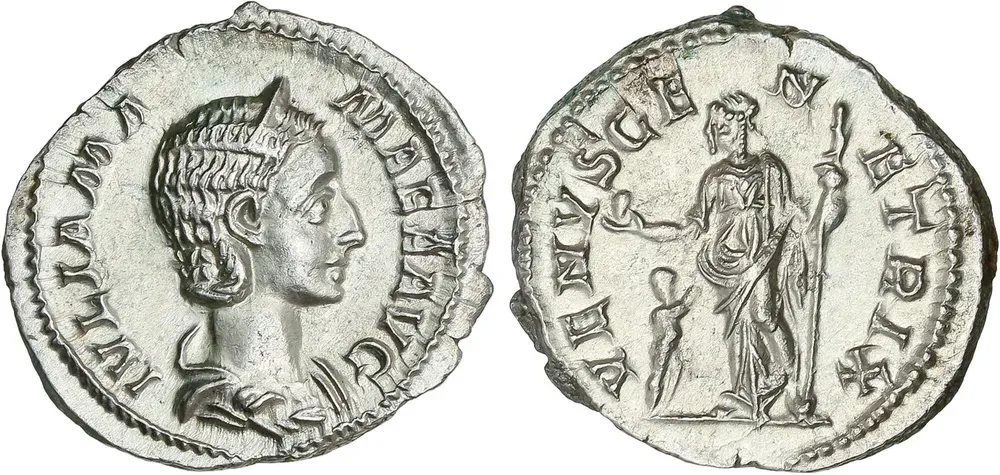
Historical context: Following the assassination of Elagabalus in AD 222, Alexander Severus, son of Julia Mamaea, ascended the imperial throne at the age of 13. Due to her youth, Julia Mamaea assumed a prominent role in the government, acting as regent and exerting significant influence on the political and administrative decisions of the Empire. During her regency, she promoted reforms aimed at restoring military discipline and public morality, seeking to stabilize the Empire after the excesses of the previous reign. However, her control over the emperor and the policies implemented generated discontent among the legions. In AD 235, during a military campaign in Germania, Alexander Severus and Julia Mamaea were murdered by their own troops, marking the end of the Severan dynasty and the beginning of a period of instability known as the Crisis of the 3rd century.
XXVI - Caecilia Paulina
Identity and relationship: Caecilia Paulina was the wife of the Roman emperor Maximinus the Thracian, who ruled between 235 and 238 AD. Although little information is available about her life and family history, it is known that she was the mother of Gaius Julius Verus Maximus, who held the title of Caesar during his father’s reign. After her death, around 235 or 236 AD, Paulina was deified by order of Maximinus, receiving the title “Diva Paulina”.
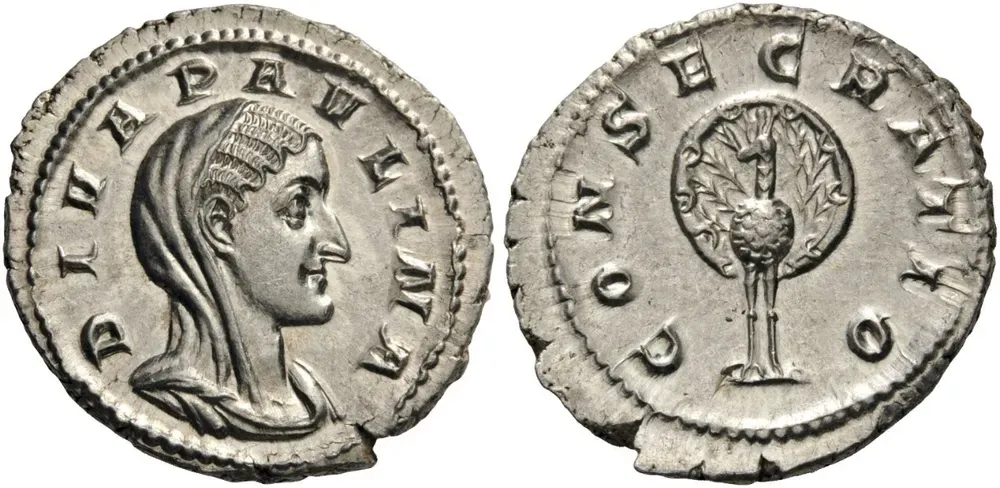
Historical context: The period in which Caecilia Paulina lived was marked by the political and military instability of the Roman Empire, known as the Crisis of the 3rd century. Her husband, Maximinus the Thracian, rose to power after a military revolt that overthrew Emperor Alexander Severus. During his brief reign, Maximinus focused on military campaigns and faced distrust from the Senate and the Roman elite. The deification of Paulina, reflected on coins with the inscription “DIVA PAULINA”, was a common practice to legitimize and consolidate imperial authority. However, the lack of detailed mentions of her life in historical sources suggests that her role was more symbolic than active in the affairs of the state.
XXVII - Sabinia Tranquillina
Identity and relationship: Furia Sabinia Tranquillina, known as Sabinia Tranquillina, was the wife of the Roman emperor Gordian III, who ruled between 238 and 244 AD. She was the daughter of Gaius Furius Sabinius Aquila Timesitheus, a prominent praetorian prefect. Her marriage to Gordian III in AD 241. This strengthened her father’s political position and consolidated alliances within the empire.
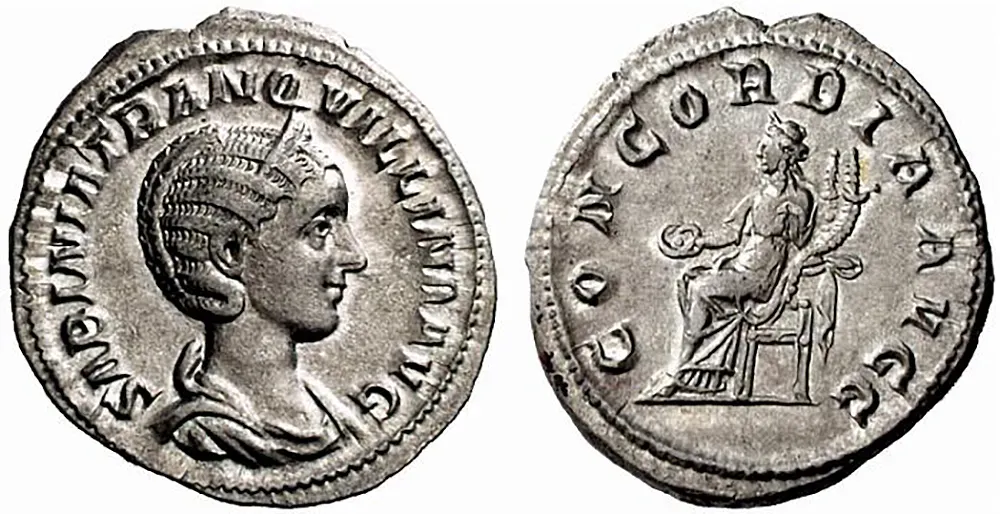
Historical context: Tranquillina lived during the Crisis of the 3rd century, a time of political and military instability in the Roman Empire. Her father, Timesitheus, exerted significant influence on the government of Gordian III, especially in military affairs. In 243 AD, during a campaign against the Sassanian Empire, Timesitheus died, and was succeeded by Philip the Arab as prefect of the praetorium. The following year, Gordian III died under unclear circumstances, and Philip ascended the throne. After these events, trace of Tranquillina is lost in historical sources, and her subsequent fate is unknown.
XXVIII - Marcia Otacilia Severa
Identity and relationship: Marcia Otacilia Severa was the wife of Emperor Marcus Julius Philip, known as Philip the Arab, who ruled the Roman Empire from 244 to 249 AD. She came from the Otacilia gens, a family of consular and senatorial rank. Her father, Otacilius Severus (or Severianus), served as governor of Macedonia and Moesia. Otacilia Severa married Philip in AD 234, when he was serving in the Praetorian Guard under Emperor Alexander Severus. The couple had at least one son, Marcus Julius Philip Severus, known as Philip II, who was named co-emperor in 247 AD.
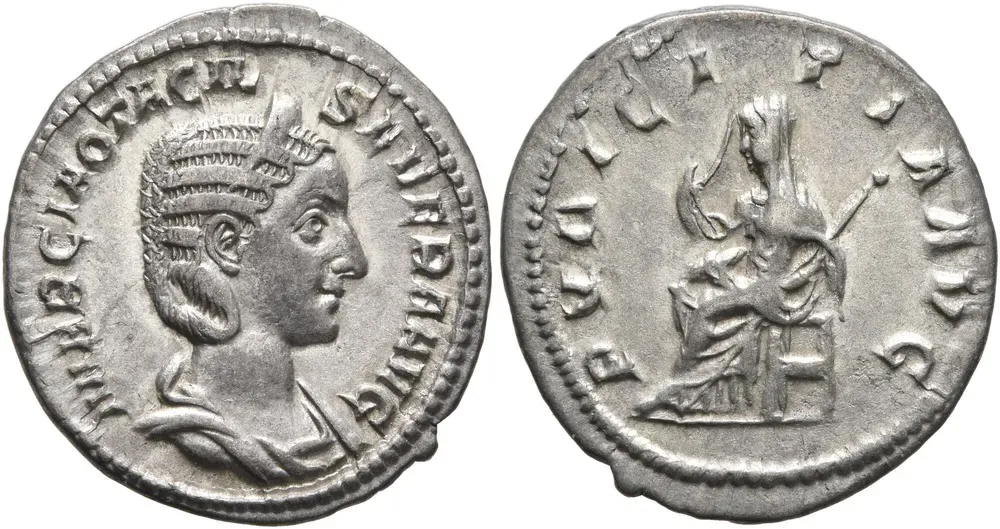
Historical context: Otacilia Severa lived during the Crisis of the 3rd century, a time characterized by internal conflicts, rebellions, and external threats to the Roman Empire. Following the death of Emperor Gordian III in 244 AD, her husband Philip ascended the throne, and Otacilia was honored with the title Augusta. During Philip’s reign, it is speculated that the couple may have shown some sympathy towards Christians, reflected in the policy of religious tolerance, although this has not been conclusively proven. In 249 AD, Philip was killed in a battle against Decius, who proclaimed himself emperor. Severa, who was in Rome during these events, also lost her son Philip II, murdered by the Praetorian Guard. Subsequently, her fate is blurred in history, and it is unknown what happened to her after these events.
XXIX - Cornelia Salonina
Cornelia Salonina was the wife of Emperor Gallienus (253-268 AD) and Augusta during his reign. Possibly of eastern origin, she received the title Mater Castrorum, indicating her role in court and military campaigns. She was empress in the middle of the Third Century Crisis, while her husband faced invasions and usurpations. It is believed that she influenced his policy of religious tolerance. In AD 268, after the assassination of Gallienus, she was probably executed. Her image appears on numerous coins with symbols of peace and stability, reflecting her importance in imperial propaganda.
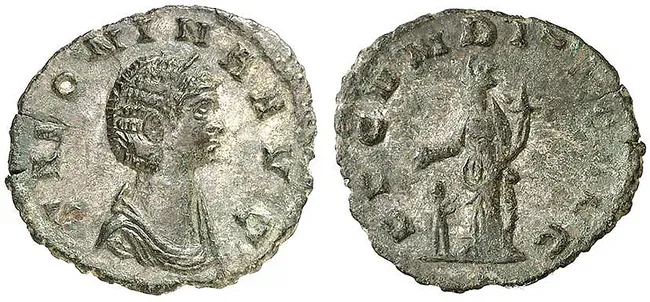
Gallienus’s government attempted to contain the collapse with military reforms and religious tolerance, but was marked by the continued appearance of usurpers. In AD 268, Gallienus was assassinated by his own generals at Mediolanum (Milan), and after his death, Salonina’s fate is uncertain, although it is believed that she may have been executed along with other members of her family.
XXX - Ulpia Severina
Severina was a Roman empress of the 3rd century AD, wife of Emperor Aurelian (270-275 AD). Her full name, Ulpia Severina, suggests a possible noble origin, perhaps linked to the city of Dacia or an influential senatorial family. She appears on numerous coins with the title Augusta, indicating her official status as imperial consort. Unlike many other empresses, Severina appears to have played a more prominent role in government, and some historians speculate that she may have temporarily exercised authority after the assassination of Aurelian in AD 275, during the brief interregnum before the election of Probus. Her figure is enigmatic, but coins with her portrait, some bearing the inscription Concordia militum (harmony of the army), suggest that she may have maintained a supportive relationship with the legions.
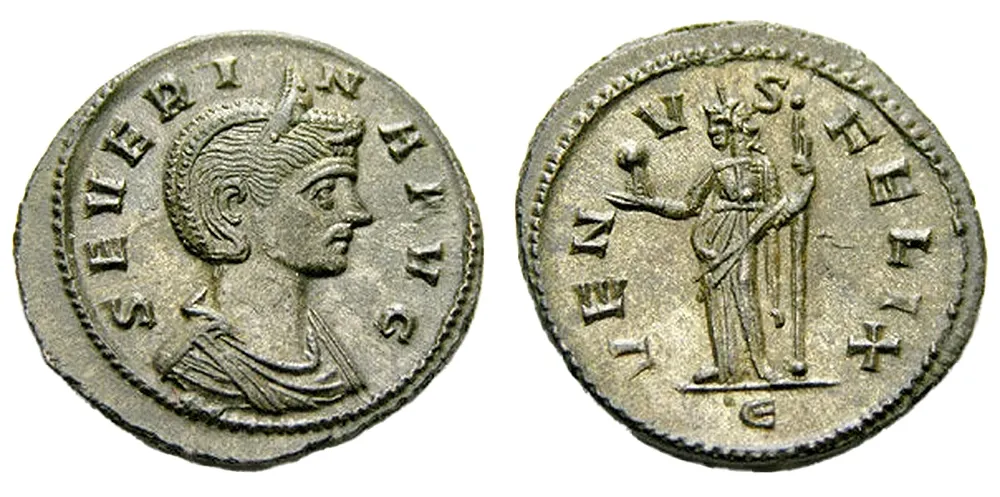
The period in which Severina was empress was marked by the military and administrative reforms of Aurelian, who managed to reunify the empire after the fragmentation caused by the Crisis of the 3rd century. During Aurelian’s reign, he defeated the Gallic Empire in the West and the Kingdom of Palmyra in the East, restoring Rome’s rule over its ancient provinces. However, despite these successes, stability remained fragile, with constant border threats and internal problems. Following Aurelian’s death in AD 275, Rome experienced a brief power vacuum, and some evidence suggests that Severina may have assumed a transitional role in the imperial administration until the proclamation of the new emperor. Her final fate is unknown, and after the rise of Probus, she disappears from historical records.
XXXI - Magnia Urbica
Magnia Urbica was a Roman empress of the late 3rd century AD, wife of Carinus, one of the last rulers before the rise of Diocletian. Her life is enigmatic, since there are hardly any historical references about her origin or her role in the imperial court. Her existence is attested primarily through coins that depict her with the title Augusta, indicating her official recognition as empress. Although no political decisions or major influence are attributed to her, her presence in imperial iconography suggests that she played the traditional role of consort, reinforcing the image of dynastic stability and continuity in a turbulent period. After the defeat and death of Carinus in AD 285, her fate is uncertain, as she disappears from historical records.
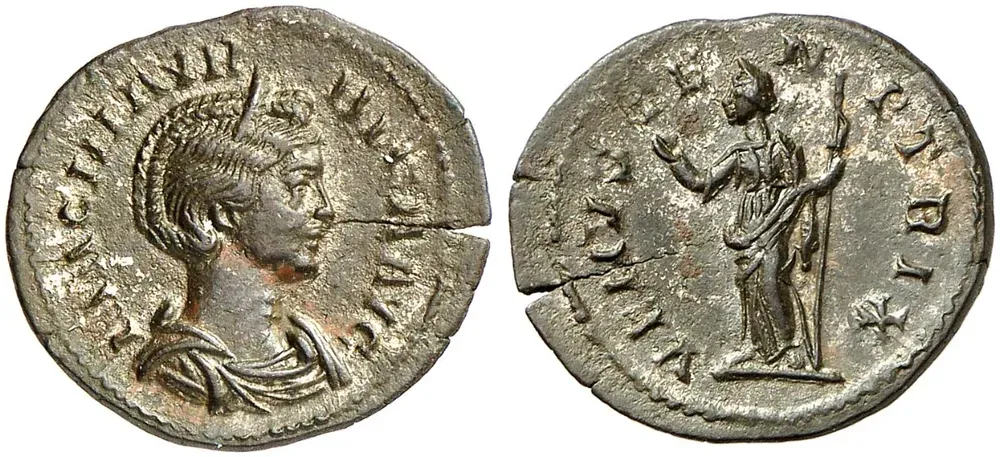
The context of her time was marked by the political and military instability of the Roman Empire. Her husband, Carinus, ruled at a time of deep crisis, characterized by frequent civil wars and threats on the borders. After the death of Emperor Carus, Carinus’ father, power was divided between him and his brother Numerianus. While the latter led a campaign in the East, Carinus remained in the West, where he faced constant rebellions. In AD 285, the general Diocletian proclaimed himself emperor and marched against Carinus, defeating him at the Battle of the River Margus. This conflict marked the end of the dynasty and the beginning of a new era, in which Diocletian would reorganize the empire to end decades of chaos.
JPG - ALL WOMEN IN IMPERIAL DENARII
Click on the image if you want to download it in higher resolution