The 26 Faces of Hadrian
For more than two decades, from AD 117 to 138, Hadrian ruled the Roman Empire, leaving a legacy that still fascinates historians and numismatists today. Known for his inclination towards Hellenic culture, his administrative reforms and his love of travel, Hadrian also has a peculiar record: he is the emperor with the most references in the catalogue of the RIC, Roman Imperial Coinage (specifically 1,019 references), the standard catalogue of imperial numismatics. No other emperor minted so many different types of denarii, reflecting the complexity and diversity of his reign.
One of the reasons behind this impressive number could be the practice of combining one reverse design with several variations on the obverse. Thus, an imperial message could be repeated on the reverse—celebrating victories, promoting virtues, or reaffirming the emperor’s power—while the obverse displayed a variety of busts of Hadrian: laureate, cuirassed, draped, or even from different angles. This diversity, which might seem excessive at first glance, reflects both the art and creativity of the engravers and the propaganda machinery of the Empire.
The extraordinary variety of busts on his denarii not only shows the artistic talent of the time, but also invites us to reflect on the political intention behind each design. Here we will explore in detail the 26 known obverse types, unraveling their meaning and historical relevance.
Main Features
Head alone. Coins depicting the head alone were common in Rome since the Republic. This simplified design highlighted the emperor’s facial features, facilitating visual recognition and mass production. It was a symbol of authority and legitimacy.
Full bust. The coins with a full bust added details such as the laurel wreath, the cuirass or the draping, communicating specific roles of the emperor: military, civil or religious. These images were used for more elaborate and commemorative messages.
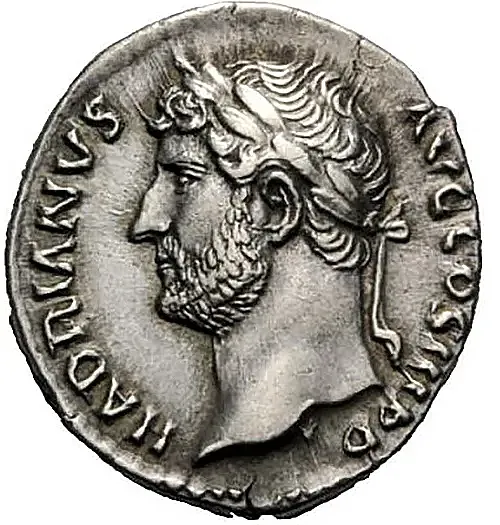
Laureate. The laurel wreath symbolized victory and divinity in ancient Rome. Representing the emperor with it highlighted his triumph and connection with the gods.
Draped. Drapery, such as a toga or military cloak, conveyed dignity, status and civil authority. It was a symbol of cultural refinement and power.
Cuirassed. The cuirass (armor) emphasized the emperor’s military role as supreme commander, highlighting his ability to protect and expand the Empire.
Bare-chested. The bare chest, inspired by Hellenic influences, evoked ideals of strength, beauty and divinity. It represented nobility and a connection to heroic values.
Bust direction (right or left). Portraits facing right are the most common, possibly for aesthetic reasons or coinage techniques. Portraits facing left are less frequent and could indicate special issues or artistic decisions.
View orientation. Variations in the poses of Hadrian’s busts, such as “seen from behind or from the side” and “seen from the front”, reflect more stylistic decisions by the engravers than specific symbolism. These differences could show the technical skill of the artists or distinguish workshops and issues.
Note: These interpretations combine numismatic, historical and artistic data. Although it is not always possible to ensure that every detail had a symbolic message, it is evident that many of these elements were recognizable in Roman society at the time.
Below we present a visual and descriptive list of the 26 obverses on Hadrian’s denarii. The final number in parentheses indicates how many RIC references there are for each type, ordered from most common to least frequent.
I - Bust of Hadrian, cuirassed, right, seen from the front.
Example image: RIC2_3-3098, AD 128 to 130.
Years minted: from AD 128 to 138.
Total references in RIC: 5.
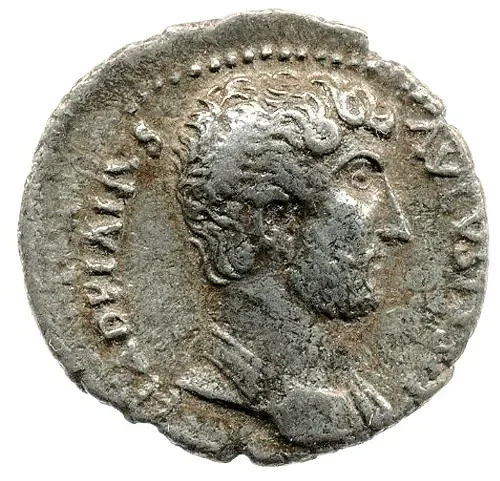
II - Bust of Hadrian, draped and cuirassed, right, seen from the front.
Example image: RIC2_3-2203, AD 136.
Years minted: from AD 130 to 136.
Total references in RIC: 3.
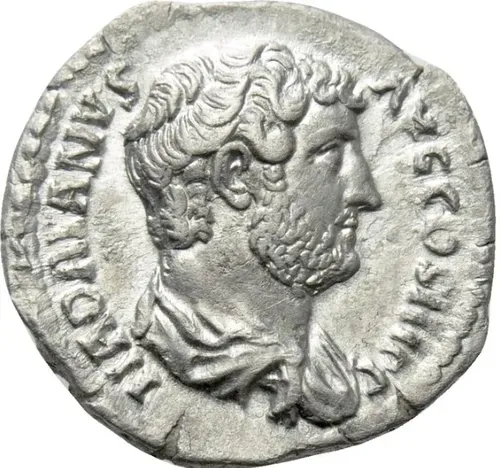
III - Bust of Hadrian, draped and cuirassed, right, seen from behind or from the side.
Example image: RIC2_3-1044, AD 129 to 130.
Years minted: from AD 129 to 136.
Total references in RIC: 16.
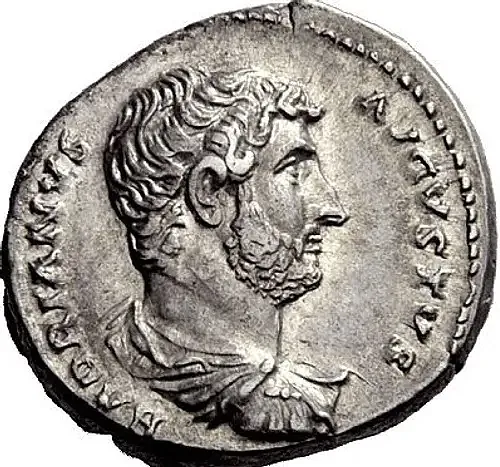
IV - Bust of Hadrian, draped and cuirassed, left, seen from the front.
Example image: RIC2_3-1023, AD 129 to 130.
Years minted: from AD 129 to 130.
Total references in RIC: 1.
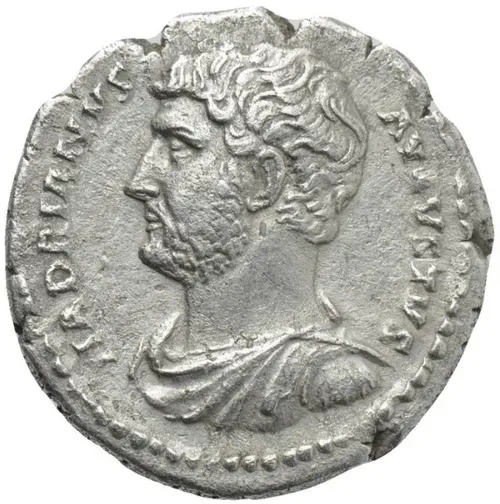
V - Bust of Hadrian, draped and cuirassed, left, seen from behind or from the side. (3)
Example image: RIC2_3-1084, AD 129 to 130.
Years minted: from AD 129 to 138.
Total references in RIC: 3.
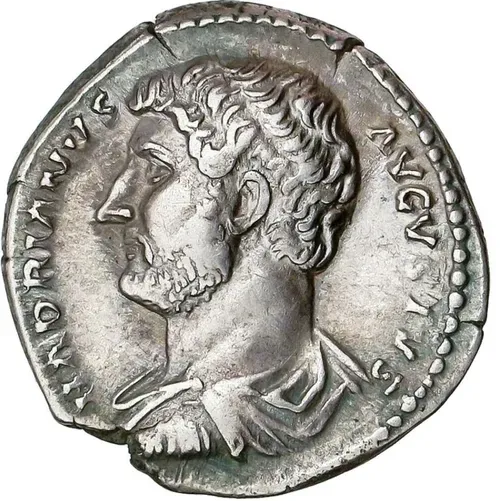
VI - Bust of Hadrian, draped, right, seen from the front.
Example image: RIC2_3-3031, AD 128 to 130.
Years minted: from AD 128 to 130.
Total references in RIC: 1.
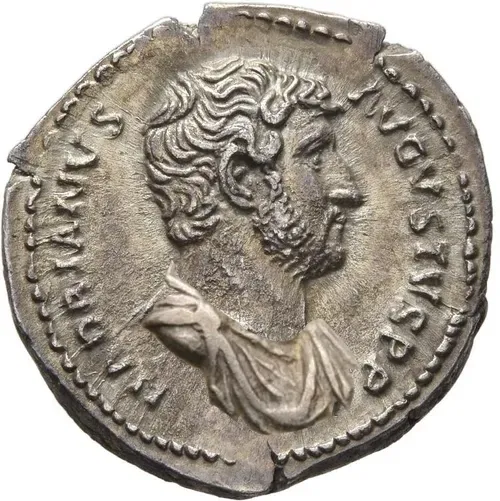
Note: This image above is not real because it has not been found. Instead, the TYPE VII was taken and the shoulders have been modified so that they appear when seen from the front.
VII - Bust of Hadrian, draped, right, seen from behind or from the side.
Example image: RIC2_3-957, year 128 to 129.
Years minted: from AD 128 to 138.
Total references in RIC: 57.
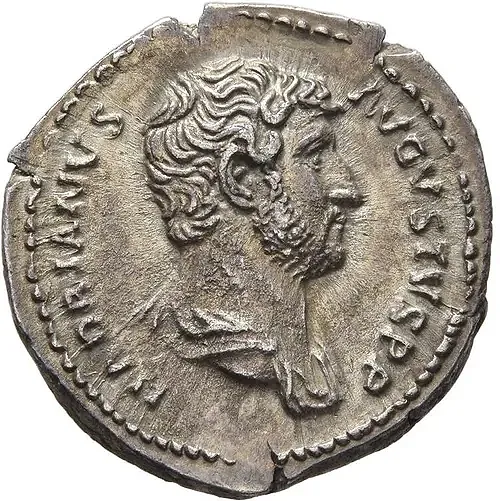
VIII - Bust of Hadrian, draped, left, seen from behind or from the side.
Example image: RIC2_3-2330, AD 137 to 138.
Years minted: from AD 137 to 138.
Total references in RIC: 14.
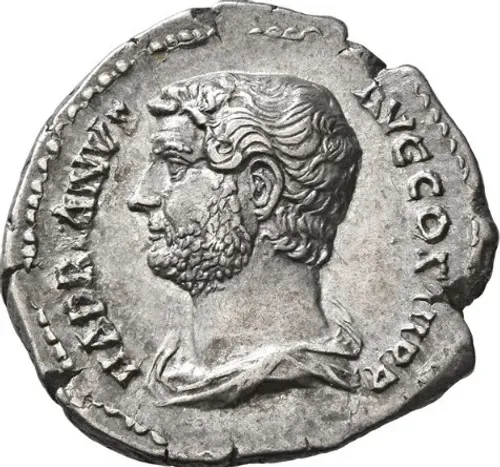
IX - Bust of Hadrian, laureate, cuirassed, right, seen from the front.
Example image: RIC2_3-20, AD 117.
Years minted: from AD 117 to 138.
Total references in RIC: 55.
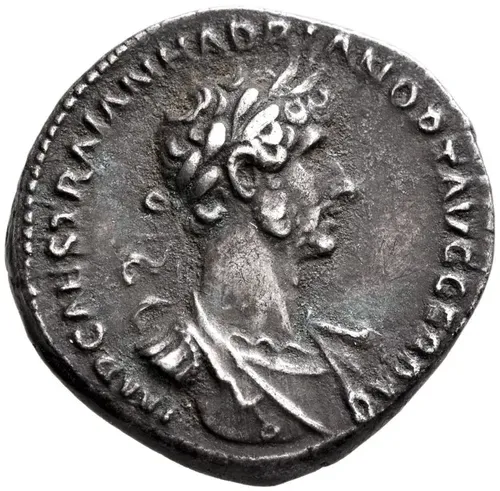
X - Bust of Hadrian, laureate, cuirassed, with pteryges visible, right, seen from the front.
Example image: RIC2_3-366, AD 120 to 121.
Years minted: from AD 120 to 123.
Total references in RIC: 18.
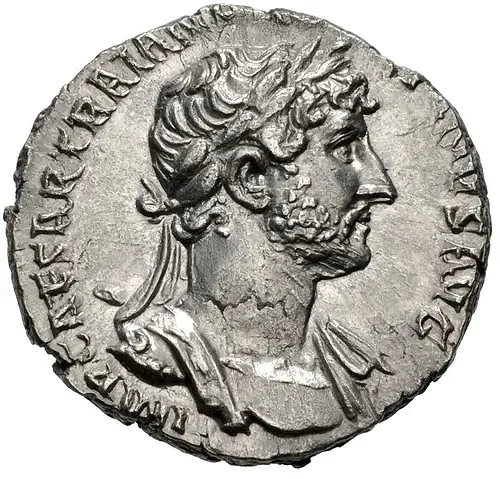
XI - Bust of Hadrian, laureate, cuirassed, with pteryges visible, left, seen from the front.
Example image: RIC2_3-377, AD 120 to 121.
Years minted: from AD 120 to 121.
Total references in RIC: 1.
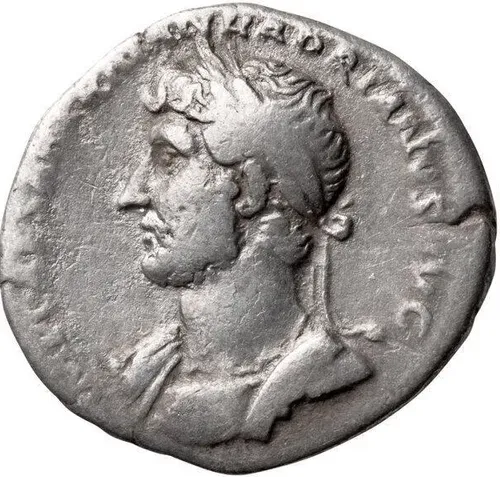
XII - Bust of Hadrian, laureate, draped and cuirassed, right, seen from the front.
Example image: RIC2_3-6, AD 117.
Years minted: from AD 117 to 136.
Total references in RIC: 43.
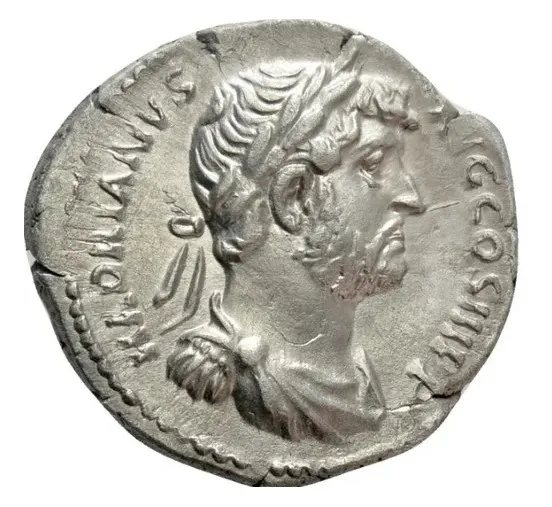
XIII - Bust of Hadrian, laureate, draped and cuirassed, right, seen from behind or from the side.
Example image: RIC2_3-1525, AD 130 to 133.
Years minted: from AD 117 to 138.
Total references in RIC: 49.
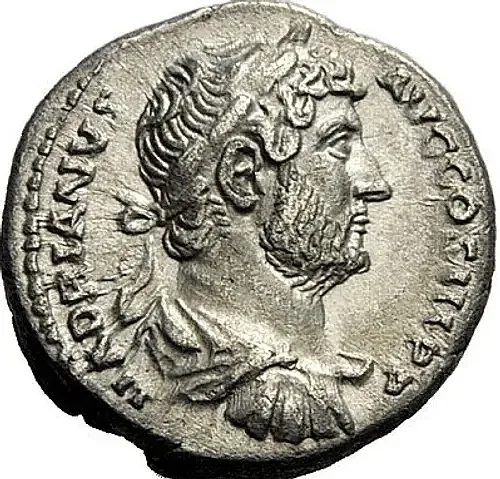
XIV - Bust of Hadrian, laureate, draped and cuirassed, left, seen from the front.
Example image: RIC2_3-1098, AD 129 to 130.
Years minted: from AD 121 to 138.
Total references in RIC: 12.
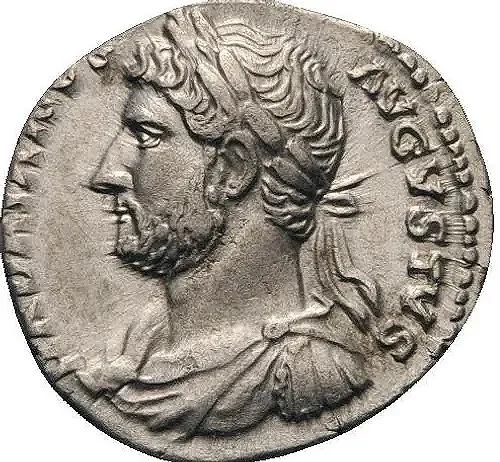
XV - Bust of Hadrian, laureate, draped and cuirassed, left, seen from behind or from the side.
Example image: RIC2_3-566, AD 121 to 123.
Years minted: from AD 121 to 135.
Total references in RIC: 4.
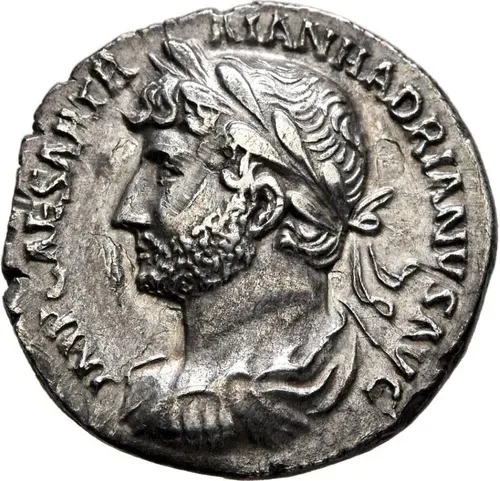
XVI - Bust of Hadrian, laureate, draped, right, seen from the front.
Example image: RIC2_3-519, AD 121 to 123.
Years minted: from AD 119 to 138.
Total references in RIC: 43.
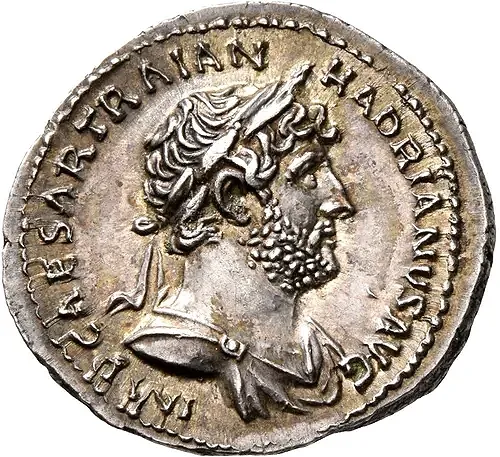
XVII - Bust of Hadrian, laureate, draped, right, seen from behind or from the side.
Example image: RIC2_3-966, year 128 to 129.
Years minted: from AD 120 to 138.
Total references in RIC: 56.
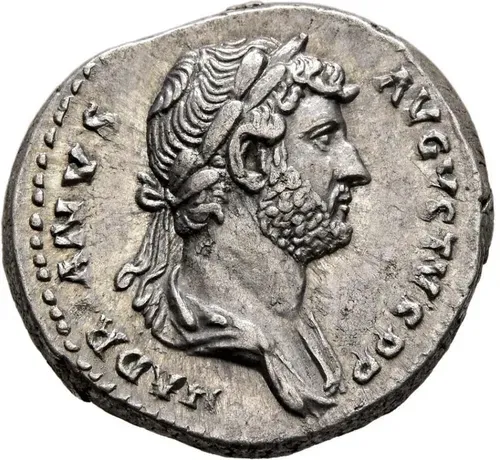
XVIII - Bust of Hadrian, laureate, draped, left, seen from behind or from the side.
Example image: RIC2_3-1404, AD 130.
Years minted: from AD 129 to 130.
Total references in RIC: 2.
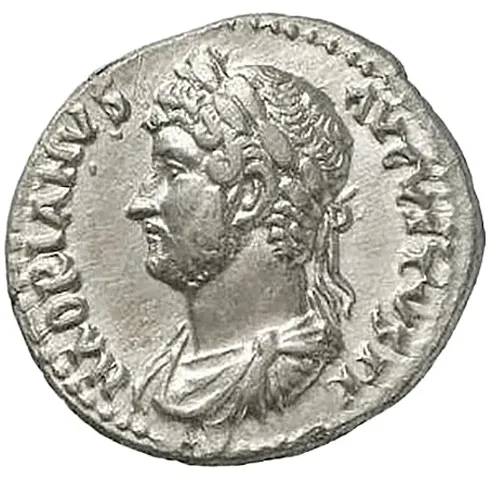
XIX - Bust of Hadrian, laureate, bare-chested, traces of drapery on the opposite shoulder generally visible, right.
Example image: RIC2_3-17, AD 117.
Years minted: AD 117 to 138
Total references in RIC: 88
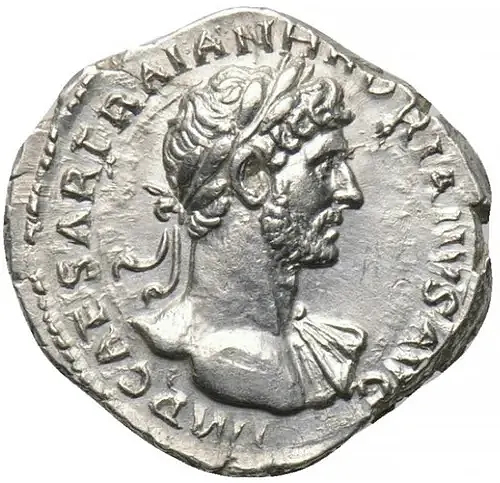
XX - Bust of Hadrian, bare-chested, traces of drapery on the opposite shoulder generally visible, right.
Example image: RIC2_3-1498, AD 130 to 133.
Years minted: from AD 130 to 135.
Total references in RIC: 2.
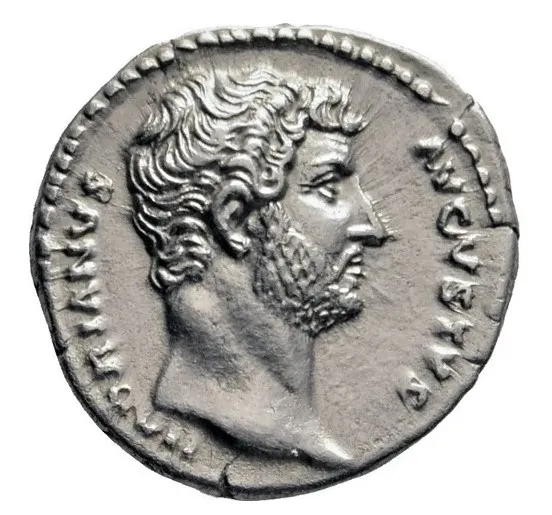
XXI - Bust of Hadrian, bare-chested, traces of drapery on the opposite shoulder generally visible, left.
Example image: RIC2_3-1484, AD 130 to 133.
Years minted: from AD 129 to 133.
Total references in RIC: 3.
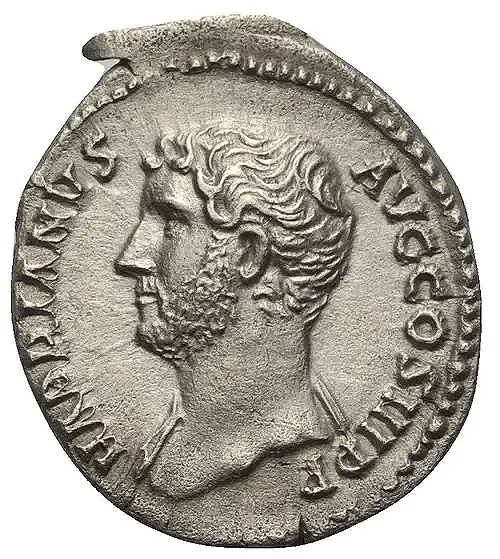
XXII - Head of Hadrian, right.
Example image: RIC2_3-1482, AD 130 to 133.
Years minted: from AD 124 to 138.
Total references in RIC: 109.
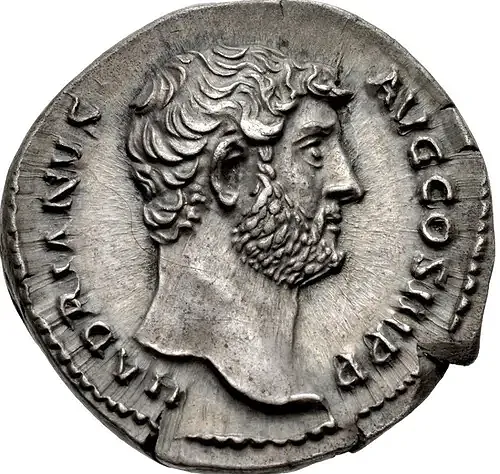
XXIII - Head of Hadrian, left.
Example image: RIC2_3-1111, AD 129 to 130.
Years minted: from AD 121 to 138.
Total references in RIC: 27.
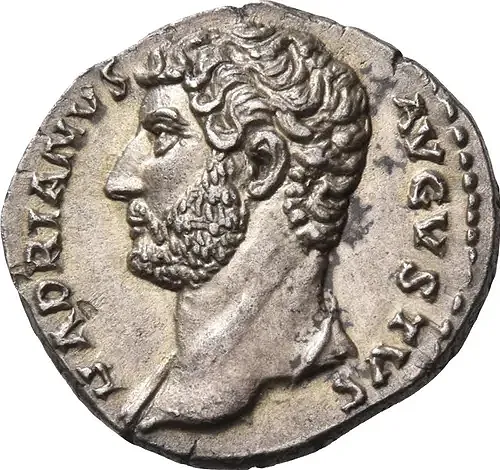
XXIV - Head of Hadrian, laureate, right. The most common.
Example image: RIC2_3-497, AD 121 to 123.
Years minted: from AD 119 to 138.
Total references in RIC: 281.
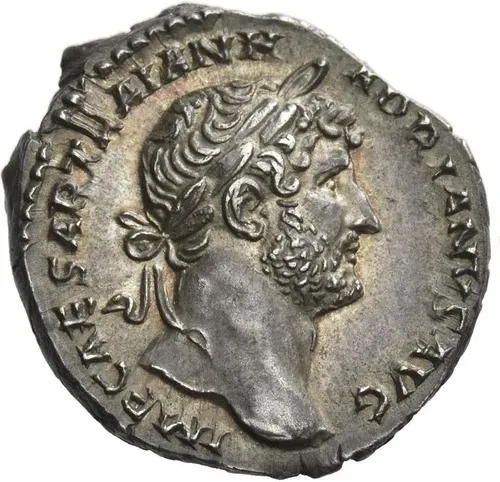
XXV - Head of Hadrian, laureate, left.
Example image: RIC2_3-1572, AD 130 to 133.
Years minted: from AD 119 to 138.
Total references in RIC: 31.
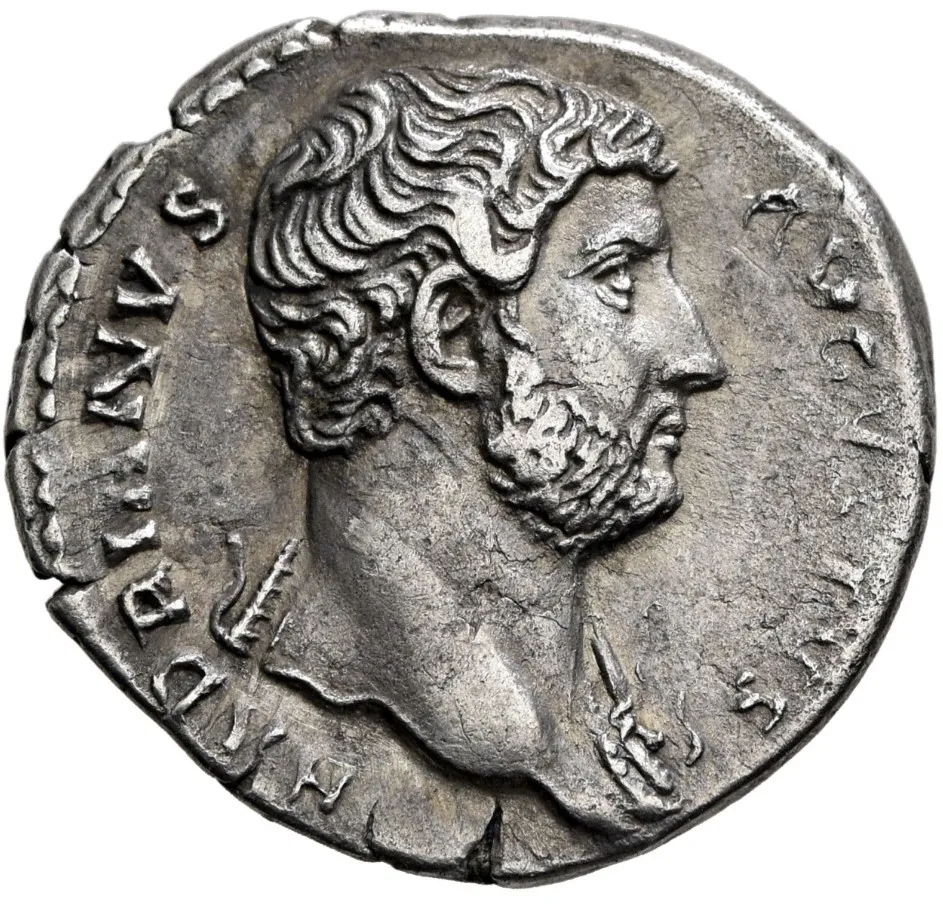
XXVI - Head of Hadrian, to the right, with aegis on the left shoulder.
Example image: RIC pl. 26, 1096, AD 129 to 130.
Years minted: from AD 129 to 130.
Total references in RIC: 1
If Hadrian’s denarii were the social media of their time, each bust and design would be like a carefully crafted post intended to convey a message to the entire Empire. From military pride to civic values, these coins were much more than simple means of exchange: they were small works of propagandistic art, circulating with a clear purpose. Today, by analyzing their diversity and detail, we not only discover the vision of an emperor, but also the tools with which power connected with the people. Each coin is, in essence, a fragment of history that continues to speak to us through the centuries.