GENS TITIA Crawford 341-2
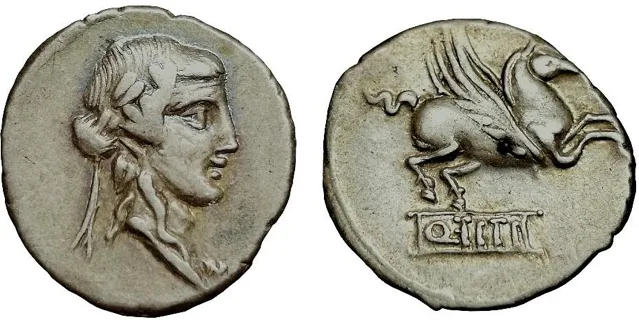
Legend ./below: Quintus. TITIus., inside a tablet.
The Titia family of plebeian origin was, however, very ancient, with members identified from at least the 7th century BC. The gens is rarely mentioned in the republican period, and did not emerge from obscurity until very late [1]. Its members did not obtain the consulship until the end of the Republic, and the first person from this gens to hold this position was Marcus Titius in 31 BC. C[2].
The nomen Titius is a patronymic surname, based on the praenomen Titus, which must have belonged to the ancestor of the gens. Titus was approximately the sixth most common Latin praenomen during Roman history. However, it is believed that it was introduced to the Latins through Titus Tatius, a Sabine king who, after confronting the Romans, ruled alongside Romulus, bringing many of his subjects to Rome. If Titus was originally a Sabine praenomen, the Titii may also have been Sabine. But it is also possible that Titus was a common name in the Latin and Oscan languages.
The Titii used a wide variety of praenomina, including Gaius, Quintus, Sextus, Lucius, Publius, Marcus, and Titus. All very common. During the later years of the Republic, some of the Titii appear with the cognomen Rufus, and Strabo. Numerous cognomina appear in imperial time, including Sabinus, Proculus, Aquilinus, and Gemellus, among others [2].
The coins only name one member of this gens, Quintus Titius, a character who, as in other Roman-Republican coins, is practically unknown to us. Only certain authors such as E. Babelon, H. A. Grueber, etc., following Plutarch, venture to identify him with Q. Titius, a businessman who associated with Sulla (Silla) after the battle of Chaeronea in 86 BC [3].
The date of minting generates fewer doubts than the moneyer itself. Following the chronology proposed by M. H. Crawford, we can date the issue to the year 90 or 89 BC, together with C. Vibius Pansa, both clearly belonging to the same college of coiners taking into account the bronze and silver types they issued, and which must have been agreed upon. The author leans towards the first date cited based on several facts; He does not believe it is possible that the tribunate of M. Livius Drusus in the year 91 BC was not accompanied by a coinage, in addition, it would require the movement of the issue of C. Allius Bala to other dates, generating greater chronology problems in the decade of 100-90 BC; It is also more plausible that a school full of purses would have minted in 90 BC, the first year of the social war, than in 89 BC, when reserves would be scarcer. Taking into account the above, we will follow the criterion established by Crawford, setting the date of this issue in the year 90 BC, therefore being the triumvirii monetalis of that year L. Piso Frugi, Q. Titius and C. Vibius Pansa [4].
The administration and, above all, the tax system of the provinces was in the hands of the equestrian publicani. Their extortions were a scourge for the provincials, powerless against the actions of the knights. The senatorial governors could do little against the plunder carried out by the powerful companies, even less so when the equestrian order controlled criminal matters. Upon the return of an official legation from Asia, chaired by Scaurus, he denounced the situation and proposed sending a governor to establish the necessary reforms to end the abuses. The choice fell on Q. Mucio Scévola, linked as Scaurus, to the factio Metella, to whom the legate P. Rutilio Rufus was assigned.
After the return of Rutilius in 92 BC, the legate was taken to court under the unfounded accusation of extortion of the provincials. He was condemned to exile, choosing as his destination the same province in which he had acted, Asia. Rutilio’s scandalous conviction put the spotlight on the equestrian Gracchani iudices.
It was in this context when M. Livio Druso, a young aristocrat supported by the factio Metella, entered the scene with the purpose of reforming the courts in the power of the knights. The tribune executed popular measures that were contested by the equestrian order and by the senate, but with the support of the factio Metella, he managed to maintain the viability of the project.
At some point during his tribunate, Livy Drusus included in his program the granting of citizenship to the Italian allies. The tribune knew the problems and frustrations of the allies first-hand from the princeps italicorum Popedio Sidon. The inclusion of the Italic socii in the Roman citizen body was one of the most urgent and difficult tasks faced by a reluctant state, which ended up withdrawing any possible support that Livy Drusus might have had. The Senate invalidated his laws and a few days later he was murdered.
The elimination of the tribune represented the last opportunity for the allies for dialogue with the Roman state. The culmination of Roman clumsiness came from the hand of the praetor Q. Servilius, with his provocation to the inhabitants of Asculum, which led to the death of the ambassador and all the Romans in the city. The senate held the Italic communities responsible and, when a commission of them tried to present the old allied aspirations, it was realized that the positions were irreconcilable. The road to war was clear. It was at this beginning of the Allied War, bellum marsicum or italicum, when Q. Titius coined the issue in question [5].
As in other republican issues, there are many theories that try to explain the reasons chosen by the moneyer for its issues. The god Mercury according to Borghesi, Somnus according to the identification of D’Ailly and Betti, and even Tithonus, son of Laomedon, king of Troy and husband of Aurora, who could allude to the supposed Trojan origin of the moneyer, etc [1].
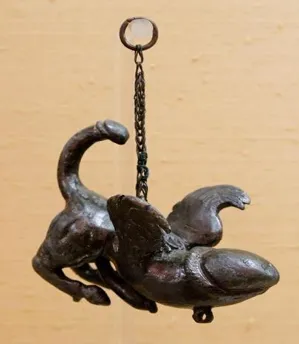
Fig 1. Phallic amulet. Symbol of fertility and protector against jealousy, evil eye and envy.
Currently, the most accepted theory identifies and relates both denarii. Craw 341-2 depicts the head of Liber on the obverse, a god of fertility, viticulture, wine and freedom who was part of the triad of agricultural divinities along with Ceres and Libera. The establishment of the cult of the triad on the Aventine occurred in the year 496 BC by A. Postumius, following a plague epidemic in Rome.
This triad, associated with the plebs, was clearly opposed to the patrician of the Capitol formed by Jupiter, Mars and Quirinus. The agrarian triad Ceres, Liber and Libera finds its Greek analogues in Demeter, Dionysus and Korah or Kore. Liber, who will later be called Liber Pater, will be assimilated as Dionysus/Bacchus, adopting his visual features, cults and functions, with some nuances. The festival in honor of Father Líber was the Liberalia, celebrated on March 17, with sacrifices, processions, songs, etc [6].
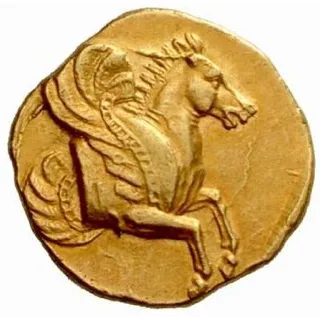
Fig 2. Representation of Pegasus in a Lampsacus statera.
The assignment of the obverse to Liber or beardless Bacchus is based on the close relationship between this issue and the one issued by the coiner in the same period with a different obverse and the same reverse that represents, in principle, Mutinus Titinus (Craw 341-1). This god, autochthonous Roman or di indigete, was a phallic deity invoked as a protector of jealousy, envy and the evil eye, which is usually represented in the form of a huge phallus or fascinus [7]. The presence of a winged diadem on the head of the obverse and of Pegasus on the reverse, allude to the Greek Priapus of Lampsacus [8], a deity of fertility represented as a man in perpetual erection, comparable in certain aspects to Mutinus Titinus [9]. This deity, especially revered in said city in the region of Mysia, was one of the main motifs reflected on their coins along with Pegasus [10]. Liber or Bacchus, is also a frequent figure on the coins of Lampsacus. The close link between these 3 gods is evident in Janiform busts that present, on the one hand, Bacchus or beardless Liber and, on the other, the god Mutinus Titinus or Priapus, elements that were reflected by the moneyer Q. Titius in the two denarii he issued. The convergence of these elements implies the presence of communities that worshiped these divinities, both in Greece and Italy [1].
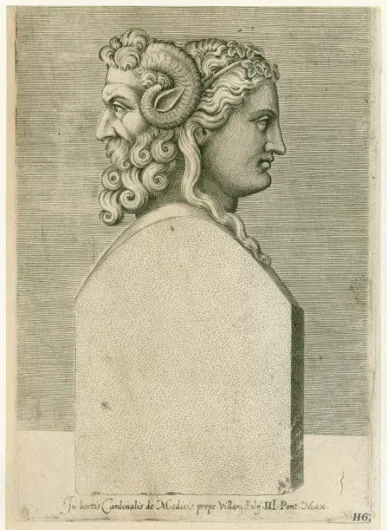
Fig 3. Illustration of a Janiform bust that represents, on one of its faces, a god of fertility.
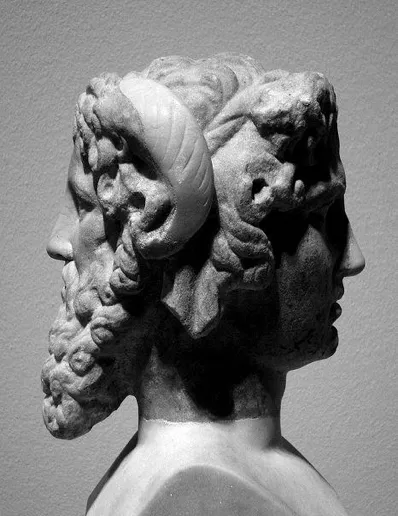
Fig 4. Janiform bust that represents, on one of its faces, a god of fertility.
According to Babelon, the appearance of these elements on the coins of the moneyer allude to the nomen Titius, since Titinus was a slang word used to refer to the penis, as was Muto, related to Mutunus or Mutinus. Therefore, the denarii would make a double allusion to the Titia family, on the one hand, the tablet on the reverse on which Pegasus rests, which includes the name of the moneyer and, on the other hand, the representations of the phallic divinities, which would also refer to the gens with a play on words.
[1] Babelon E. Description Historique Et Chronologique Des Monnaies de la République Romaine. Vol 2. 1885.
[2] https://es.wikipedia.org/wiki/Gens_Titia
[3] Grueber H. A. A Catalog of The Roman Coins in The British Museum. Vol 1. 1910.
[4] Crawford M. H. Roman Republican Coinage. Vol 1. 1974.
[5] Roldán J. M. History of Rome. The Roman Republic. 1982.
[6] https://es.wikipedia.org/wiki/Liber
[7] https://es.wikipedia.org/wiki/Mutuno_Tutuno
[8] https://es.wikipedia.org/wiki/Priapus
[9] https://terraeantiqvae.com/m/blogpost?id=2043782:BlogPost:394692
[10] https://en.wikipedia.org/wiki/Lampsacus