Diocletian's Edict on Maximum Prices

Gaius Aurelius Valerius Diocletianus
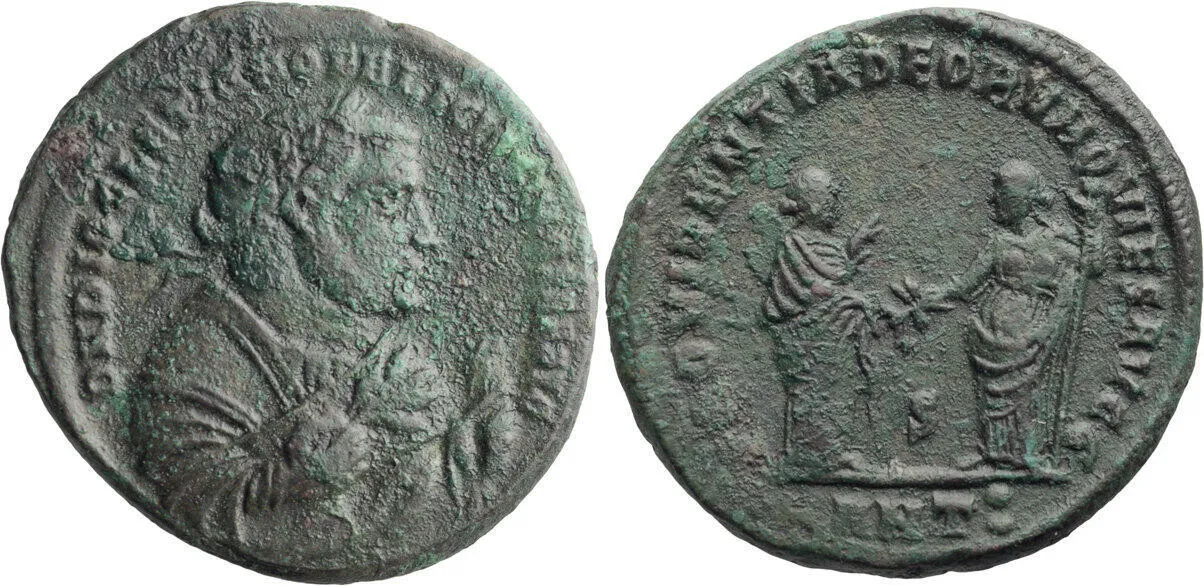
When Diocletian came to power, the Roman monetary system was in crisis. Confidence in the denarius had fallen, and the emperor tried to revitalize the economy by introducing new, more stable coins, such as the argenteus (of purer silver) and the follis (a bronze coin coated with silver). These monetary reforms aimed to replace the denarius and restore economic stability.
-
- Displacement of the denarius: Although the edict used the denarius as a price reference, in practice other coins, such as the follis, were replacing it. The decision to continue using the denarius contributed to confusion in the market, since merchants had less confidence in this coin.
-
- Impracticality of the denarius as a medium of exchange: Although it continued to be used nominally, the loss of value of the denarius made the edict difficult to apply. Merchants did not want to accept debased denarii, preferring to turn to the black market or to more stable coins.
-
- Monetary reforms: Diocletian tried to introduce new coins, such as the argenteus (a purer silver coin) and the follis (a bronze coin coated with silver). The edict represented, de facto, the “last breath” of the denarius, since Diocletian’s monetary reforms tried to establish a more stable system.
-
- Confusion in the economy: Using the degraded denarius as the reference unit in the edict contributed to greater economic confusion, causing many merchants to hide their products or carry out transactions outside the official system.

(Translation: “The insatiability of human greed cannot find sufficient punishments to restrain immoderate desire, which has no limit. At this time, when the prices of goods for sale have increased enormously and the poor face hunger, it has seemed necessary to regulate the commonwealth so that, under our providence, the prices of goods may be controlled in defined ways.”)
- Superior-quality wheat: 100 denarii per modius (approximately 8.75 liters).
- Barley: 60 denarii per modius.
- Oats: 40 denarii per modius.
- Beans: 100 denarii per modius.
- Medium-quality wine: 8 denarii per sextarius (0.5 liters).
- Common wine: 8 denarii per sextarius.
- Egyptian beer: 4 denarii per sextarius.
- Olive oil: 40 denarii per sextarius.
- Milk: 10 denarii per sextarius.
- Honey: 40 denarii per pound.
- Good-quality wheat bread: 2 denarii per pound.
- Beef: 8 denarii per Roman pound (327 grams).
- Pork: 12 denarii per pound.
- Lamb: 6 denarii per pound.
- Large fish: 16 denarii per pound.
- Small fish: 8 denarii per pound.
- Cheese: 24 denarii per pound.
- Eggs: 2 denarii per egg.
- Stone bricks: 150 denarii per 1000.
- Roof tiles: 50 denarii per 100.
- Gypsum: 150 denarii per 1000 pounds.
- Gold: 50,000 denarii per Roman pound.
- Silver: 6,000 denarii per Roman pound.
- Copper: 100 denarii per pound.
- Common wool tunic: 2000 denarii.
- Egyptian linen handkerchief: 100 denarii.
- Embroidered silk tunic: 6000 denarii.
- Leather sandals: 150 denarii.
- Daily wage of a carpenter: 50 denarii per day.
- Agricultural laborer: 25 denarii per day.
- Lawyer: 250 denarii per case.
- Barber: 2 denarii per shave.
- Teacher of grammar and rhetoric (per pupil per month): 250 denarii.
- Specialist physician: 150 denarii per consultation.
- Midwife: 100 denarii per birth.
- Glass cup: 1000 denarii.
- Silver mirror: 5000 denarii.
- Common perfume: 300 denarii per pound.
- Fare for 1 Roman mile in a carriage drawn by 4 horses: 20 denarii.
- Transport by ship of 1 modius of wheat for every 10 nautical miles: 8 denarii.
- Delivery of letters over 100 Roman miles: 150 denarii.
(Translation: “To make all things more tolerable for our peoples, we have fixed prices: so that no one, with an inhuman desire for money, may seem to trample upon human needs.”)
Although it failed in its application, it remains an important example of the challenge of managing a centralized economy. The denarius, which had been key to the Roman economy for centuries, became obsolete after this period and was replaced by more stable coins, such as the gold solidus.
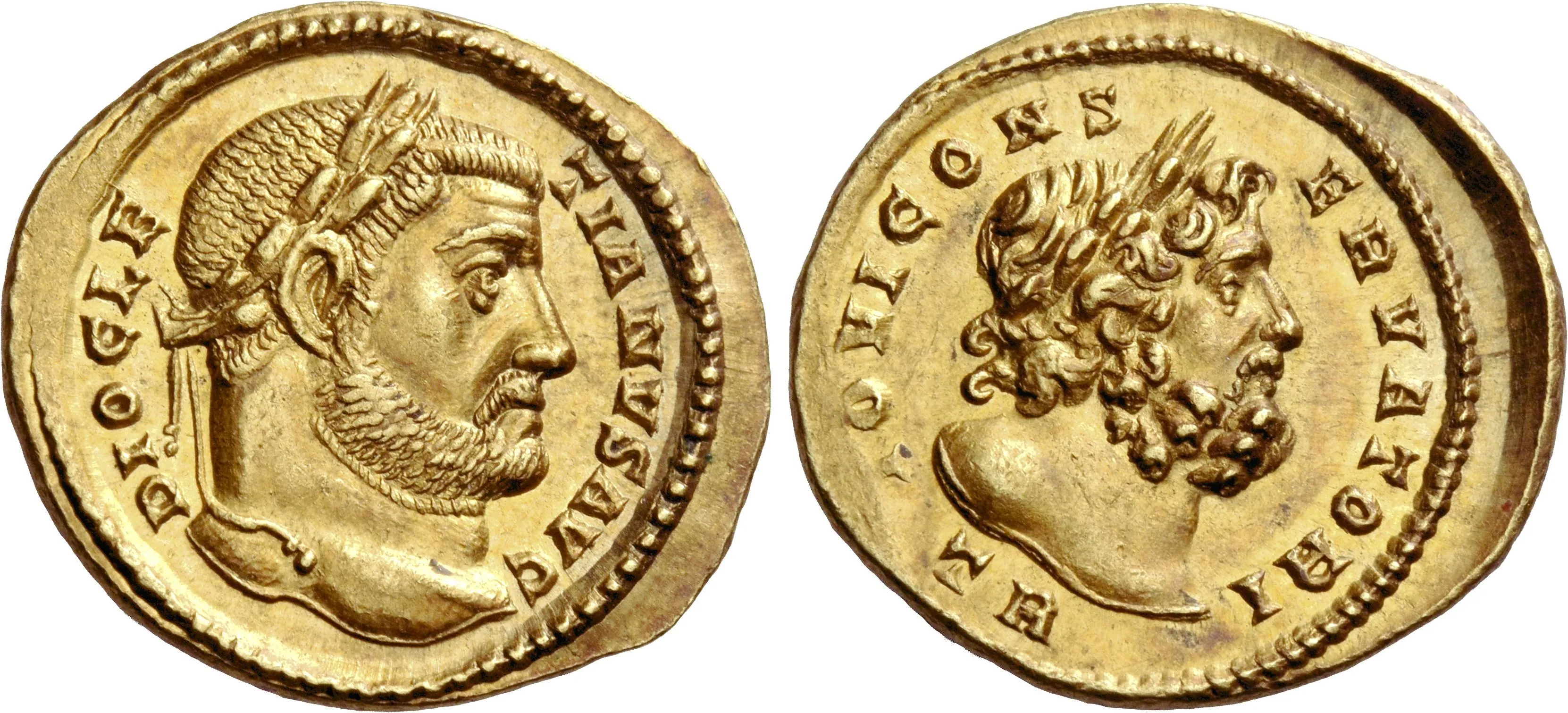
Diocletian’s aureus was a pure gold coin, weighing approximately 5.45 grams and with a purity close to 99%. Although it had already been used before his reign, Diocletian maintained and adjusted the aureus in his reformed monetary system in order to stabilize an economy that had suffered decades of inflation and devaluation.
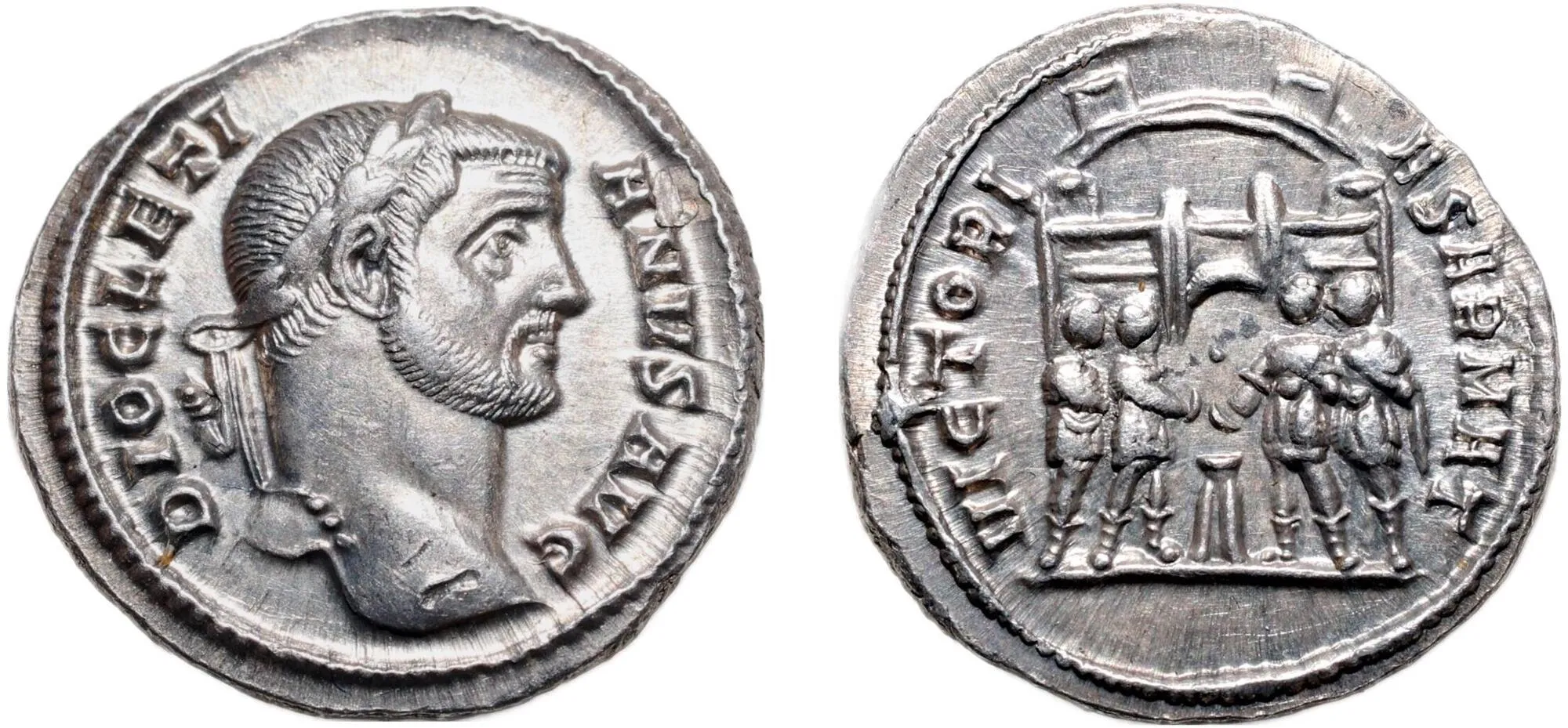
The argenteus was a silver coin with a purity of 95 to 97%. It was designed to be reliable and solid, in contrast to the denarius, which by that time had suffered a severe degradation in its silver content.
The follis was a bronze coin with a small amount of silver on the surface (a very thin coating), representing between 4% and 5% of its total weight. This silver layer was very superficial, giving the coin a silvery shine at first, although it quickly wore away with use.