A Denarius with History and Pedigree: Drusus and Its Journey from Aquae Flaviae
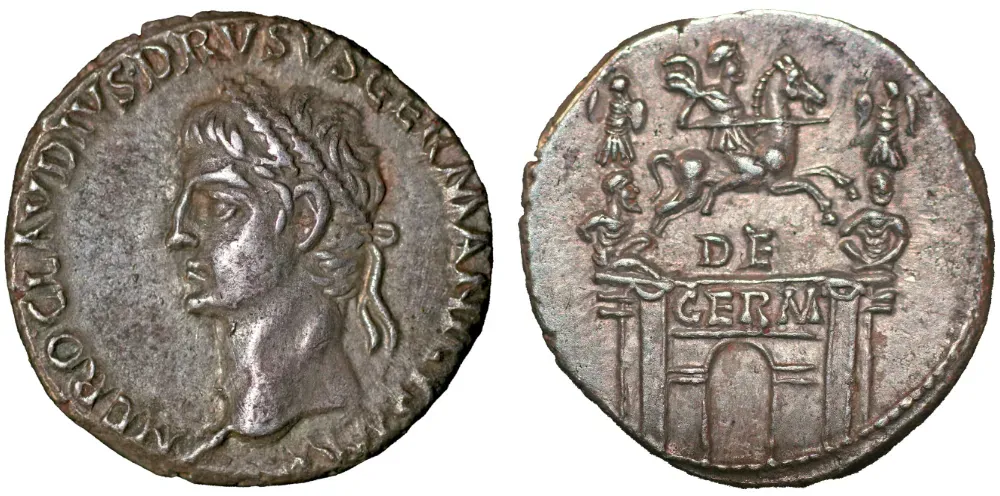
“Under the streets of today’s Chaves, a small but charming city in the north of Portugal, lies a Roman past full of historical richness. In 1878, in the heart of this ancient city, known in Roman times as Aquae Flaviae, a hoard of 700 Roman coins emerged, among which a Drusus denarius stood out. This coin, as part of an exceptional find, not only testifies to the imperial legacy, but also carries with it a fascinating numismatic pedigree that connects generations.”
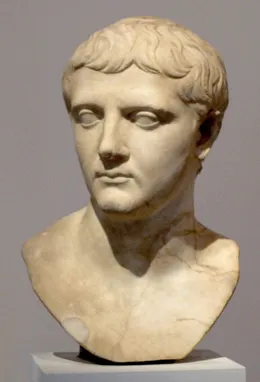
Nero Claudius Drusus Germanicus,
Drusus, whose full name was Nero Claudius Drusus Germanicus, was a key figure in the expansion of the Roman Empire under his stepfather, Emperor Augustus. Tiberius’ younger brother, Drusus stood out as a brilliant general in the campaigns against the Germanic tribes. His military legacy includes the construction of fortifications along the Rhine River and the first Roman incursion into Germania.
Son of Livia Drusilla and Tiberius Claudius Nero, Drusus was part of the Julio-Claudian dynasty: son of Empress Livia, stepson of Augustus, brother of Emperor Tiberius and father of Emperor Claudius. His political and military career was always at the service of Augustus, who symbolically adopted him as part of his imperial family. Despite his promising future, Drusus died prematurely in 9 BC, at the age of 29, after falling from his horse during a campaign in Germania.
Drusus’ legacy lived on through imperial memory, honored with posthumous titles such as “Germanicus” and monuments in his honor.
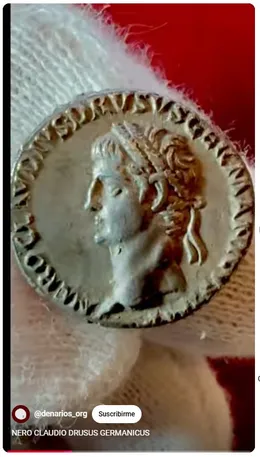 see video
Among the most evocative pieces of Roman legacy is the RIC Claudius 70 denarius, a coin that transcends its material value to tell a story of conquest and power. This denarius, minted during the reign of Claudius (41-54 AD), pays homage to his father, Drusus the Elder, a brilliant general whose memory lived on in the Roman imagination as a hero who expanded the borders of the Empire.
On the obverse, the coin features the laureate bust of Drusus, turned to the left, accompanied by the inscription NERO CLAVDIVS DRVSVS GERMANICVS IMP. The image, idealized and solemn, reflects the greatness of Drusus as a military commander and member of the Julio-Claudian dynasty. This portrait is not only a personal recognition, but an affirmation of the continuity and legitimacy of the imperial family.
The reverse completes the narrative with a majestic military trophy. The design includes a set of armor, shields and spears arranged in a central trophy. At its feet, two figures capture the essence of Roman victory: on the left, a defeated Germanic warrior, seated with his hands tied; on the right, a woman, symbol of the conquered lands, shown in a posture of resignation. The DE GERMANIS inscription reinforces the theme, celebrating Drusus’ victories over the Germanic tribes.
This denarius is not only a tribute to Drusus, but also a propaganda tool designed by Claudius. By highlighting his father’s achievements, Claudius exalts the glory of his lineage and consolidates his position as legitimate emperor. In an Empire that valued conquest and order, the message was clear: Rome is invincible, and the Julio-Claudian family is the heart of that invincibility.
The RIC Claudius 70 denarius is more than a coin; it is a fragment of history, a tangible testimony of how Rome forged its narrative of power and permanence. Its symbolism transcends time, reminding us of the lasting impact of military campaigns and imperial memory.
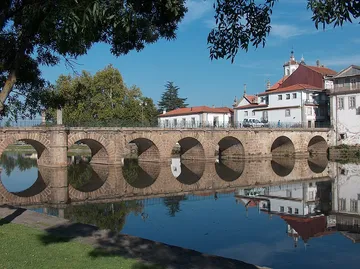
Today known as Chaves, this city has approximately 40,000 inhabitants and is famous for its imposing Roman bridge over the Támega River, Trajan’s Bridge, one of the best preserved on the peninsula. Its Roman baths, still visitable, and its historic center full of charm make Chaves a tourist destination that combines history, culture and well-being. It was in this context of deep connection with its Roman past that this denarius appeared, bringing with it a story that deserves to be told.
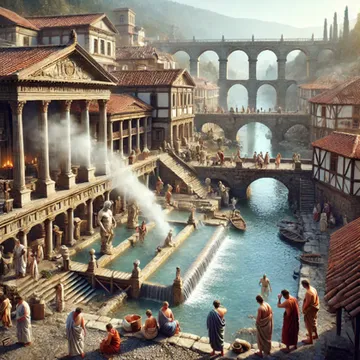
Aquae Flaviae owes its name to Emperor Vespasian, who refounded it as an important Roman municipality during the 1st century AD. However, the Romans had already arrived long before in these lands rich in thermal waters and of enormous strategic value. In the time of Augustus, these lands were key to the pacification campaigns in the northwest of the Iberian Peninsula, placing it as a vital enclave in communications and territorial control of the province of Lusitania.
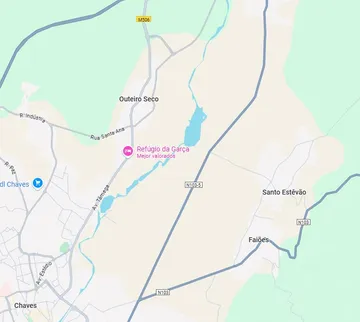
During the winter of 1878, the intense rains that fell near San Estêvão, about 7 kilometers from Chaves, caused the formation of small streams that eroded the land. In one of them a leather sack full of Roman copper coins appeared.
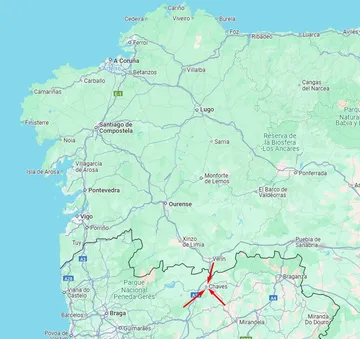
The following year, the Támega River, overflowing after a large flood, exposed the remains of an old mill on its left bank. Among the unearthed objects was a clay container containing approximately 700 silver coins from the Republican era. Among these coins, the Drusus denarius that concerns us here stands out.
The first known owner of some of the coins in the hoard, Antonio Sarmento, was a 19th-century Portuguese general, widely recognized for his interest in numismatics and archaeology. His name was especially linked to the discovery of a hoard of approximately 700 Roman coins in 1878, near Chaves, Portugal. Part of these coins were “acquired” by Sarmento, who catalogued and analyzed them meticulously. Two years later, in 1880, he published the results of his study in the magazine O Universo Ilustrado, a contribution that marked a milestone in the numismatic documentation of his time.
Sarmento’s analysis stood out for its precision and rigor, focusing not only on the physical characteristics of the coins, such as inscriptions and iconography, but also on their historical context. His work provided valuable information on monetary circulation in the Lusitania region during Roman times, evidencing the impact of military campaigns and trade in the northwest of the peninsula.
In addition to his numismatic legacy, Sarmento had a notable military career and showed a deep interest in the history and archeology of Portugal. He was actively involved in promoting cultural heritage, helping to preserve key finds and stimulating interest in the study of the Roman past in regions such as Trás-os-Montes.
General Antonio Sarmento was not only a prominent military man, but also a pioneer in the field of Portuguese numismatic archaeology. His meticulous work continues to be a reference for researchers and collectors, leaving a legacy that connects the present with the historical wealth of ancient Aquae Flaviae.
General Sarmento himself wrote this article in 1880 in the magazine O Universo Ilustrado:
ROMAN COINS FOUND IN THE CHAVES VALLEY IN THE YEARS 1878/1879
In the place, where the modest town of Chaves is today, the famous Aquae Flaviae of the Romans once flourished.
Neither the time that consumes everything, nor the invasion of the barbarians, which reduced the vast Roman Empire to a pile of ruins, nor the bloody wars, which were subsequently fought on the peninsula, managed to completely erase the numerous vestiges that the passage of the Roman eagles left behind, as in many other parts of our country.
A truly great people, such as the Roman people, either through the civic virtues of their children or through the indomitable efforts of their heroes, leaves the traces of their civilization indelibly etched everywhere.
Here is a monument that, defying the gale of passing centuries, attests to future generations of the unbreakable solidity of its constructions.
There a coin that, either due to the greater or lesser perfection of the seals, or due to the drawings that engrave them, gives a sure indication of the state of advance of their arts and even more of their customs, religious beliefs, superstitions, virtues and vices.
In addition to an inscription that, commemorating some of the most brilliant events in its history, transmits to posterity the sacred price of recognition of a people: to the merit of its heroes, and is like the consecration, before future centuries, of its most violent passions, its most dear feelings and its most grandiose aspirations.
There are indeed in that part of the country monuments, milestone marks, coins, inscriptions and many other objects of very high historical importance, to elevate to the present generation the immense power of that dominant people who, with superhuman effort, managed to ignite throughout the world, then known, the most brilliant light of their civilization.
At every moment, chance exposes new historical gems to light, worthy of capturing the attention of the wise man and the sympathies of the curious.
We know that coins have appeared quite a few times, if not at two or three times, but at hundreds and thousands.
It was the harsh winter of 1878 when on a hillside near the town of San Estêvão, about 7 kilometers from the town of Chaves, the rain waters, gathering in the lower parts of the land, formed streams of ephemeral existence that, despite their insignificance, destroyed a wall here, undermined a stone there, opened a furrow beyond, decelerating at this point to land on that one.
It was in one of those grooves excavated by the waters, just over a meter deep, where a leather sack appeared containing an enormous amount of copper coins from the time of the Roman emperors.
In the following winter, the Tâmega River, rising proudly above its usual channel, flooded the marginal lands and, by dragging away the surface layer of earth, exposed on its left bank the foundations of a construction that, from the objects found in it, appears to have been a mill. Among the finds were stone wheels approximately 0.5 meters in diameter with a central hole, bricks and clay containers, one of which contained about 700 silver coins from the time of the Roman Republic.
It would be interesting, from the perspective of the history of the hydraulic motor milling industry, to study the construction of this mill and investigate the era of its establishment. Unfortunately, this is no longer possible, as the unbridled greed of the rural people, as news of the discovery spread, unleashed an unprecedented act of vandalism. Nothing escaped his fury; Everything was destroyed: stone wheels, clay containers, bricks, and even the foundations themselves were completely removed. Therefore, we limit ourselves to describing the coins found in both 1878 and 1879, trusting that this description will be of interest to readers dedicated to the study of numismatics.
Even for those not initiated into this important branch of archaeology, this description should not be completely indifferent.
Our soul, upon crossing this “Rubicon” of science, experiences a mixed feeling of nostalgia and sympathy when contemplating the remains of the past: nostalgia for not being able to cross the ocean of centuries that separate us from those generations, to contemplate their warrior bearing, attend their festivals, share their joys and pains, embrace their aspirations and participate in their glory.
It is a feeling that, although nebulous, is born from the soul’s mysterious tendency to overcome the obstacles of space and time that separate it from the objects of its most ardent desires. For the wise, this feeling becomes the stimulus for the search for perfection and knowledge of the highest.
At the same time, sympathy for past generations inspires us with the identity of destiny, since soon we will be, like them, fatally submerged by the cataract of time in the abysses of the past.
The same feeling is experienced by the soul when, in the silence of the night, it contemplates the starry vault and thinks of the immensity of worlds that populate space and that it, poor slave of the Earth, can only visit by diving into the calm of the ethereal sea in the fragile vessel of the imagination.
He still experiences the same feeling when, letting himself be carried away by the grandiose law of evolution and indefinite progress and thinking about the brilliance of the centuries to come, he hears the echo of the immortality of men.
Such is the destiny of death!
And we rightly call this feeling saudade, since this is nothing more than that mysterious tendency of the soul to overcome the obstacles, both of space and time, that separate it from the objects that are the target of its most ardent desires or its most dearest aspirations.
This feeling, which for the common people is nothing more than a vague and indefinite aspiration, becomes for the wise man the ardent desire to know, which is the most powerful stimulus for perfection.
The feeling of sympathy for the generations that preceded us is inspired by the identity of destiny, since soon we will be, like them, fatally submerged by the cataract of time in the abysses of the past.
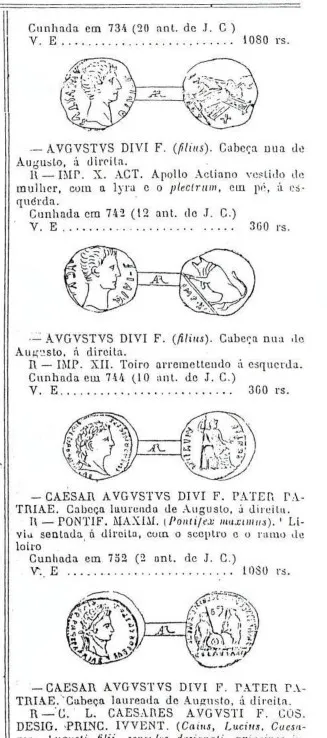
He also made a detailed description of all the coins in the form that we can see in the following part:
The second known owner of part of the hoard, Fernando Cantista Pizarro Bravo (O NUMISMATA PIZARRO), was born on December 17, 1933 in the city of Chaves, Portugal. Son of José Homem de Lacerda Pizarro da Silveira Bravo and Licinia da Alegria Teixeira Cantista, he grew up in an environment marked by tradition and learning. He completed his primary studies in his homeland and continued his secondary education in Chaves, Coimbra and Vila Real, later specializing in Agricultural Engineering at the Higher Institute of Agronomy.
After completing his military service, Pizarro Bravo joined the Fiscal Guard, where he developed an outstanding professional career that led him to occupy the rank of Captain before retiring in 1982. At the same time, he played an important role in agricultural cooperatives and regional development, topics that he also addressed through his writings in the press and radio programs, always showing a commitment to the improvement of his community.
The passion for numismatics came into his life through a collection of Portuguese coins inherited from his father. This legacy marked the beginning of a deep interest in the collecting and study of coins, a field in which he would become a leading figure. During the last two decades of his life, he focused especially on Roman coins, acquiring valuable pieces, including those from archaeological finds in the Flavian region.
An active member of the Portuguese Numismatic Society, the Portuguese Numismatic Association and the Spanish Numismatic Association, Pizarro Bravo left an indelible mark in the numismatic field. He was the author of fundamental studies and contributions, such as his work Moedas Romanas: Achados no Alto Tâmega e Barroso, which documents finds of Roman coins in the Alto Tâmega region, consolidating his reputation as a meticulous and passionate researcher.
With intelligence, dedication and wisdom, Pizarro Bravo not only enriched numismatic knowledge, but also inspired generations of collectors and researchers. His legacy lives on in numismatic circles, where he is remembered as the “Magnificent Pizarro Bravo”, a figure whose contribution to the cultural heritage and history of Portuguese numismatics will always be appreciated.
The Portuguese Numismatic Society (SPN) is a cultural institution that has played a crucial role in promoting the study and preservation of coins and medals in Portugal. With a community of 600 members, the SPN not only acts as a research and dissemination center, but also maintains a specialized library and a museum space that displays its valuable collection.
Furthermore, its outstanding editorial work, with publications such as the NVMMVS magazine and the exchange catalogues, has been essential for the development of Portuguese numismatics since the mid-20th century. The SPN also provides exclusive services to its members, facilitating access to numismatic novelties and promoting collecting with advantageous conditions.
In short, the SPN is a reference in the numismatic field, uniting professionals and amateurs around a common purpose: protecting and valuing Portugal’s monetary heritage.
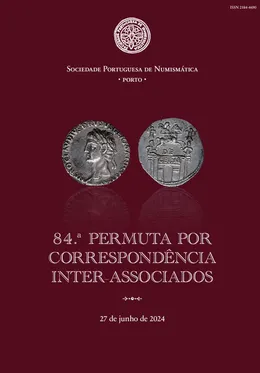
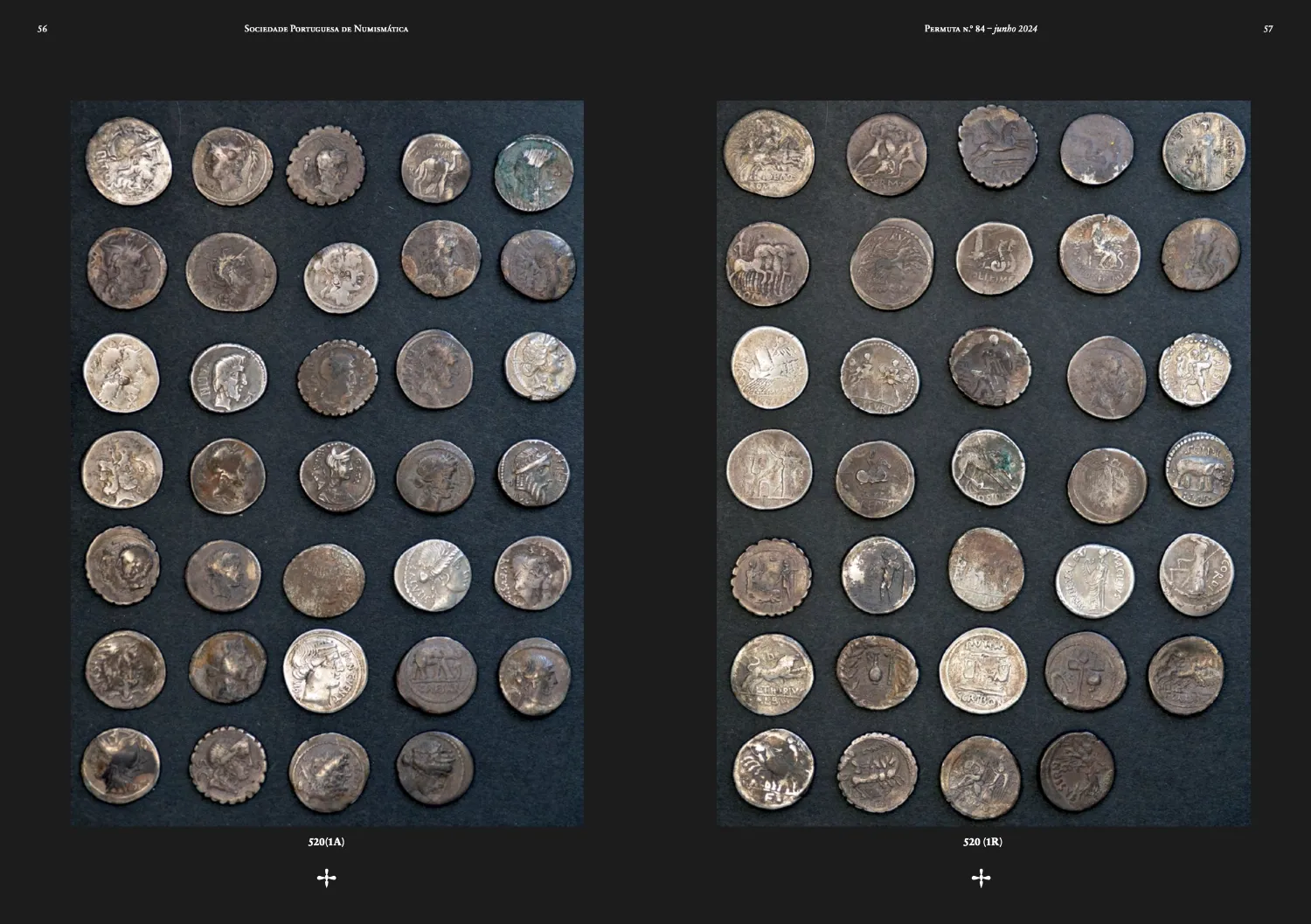
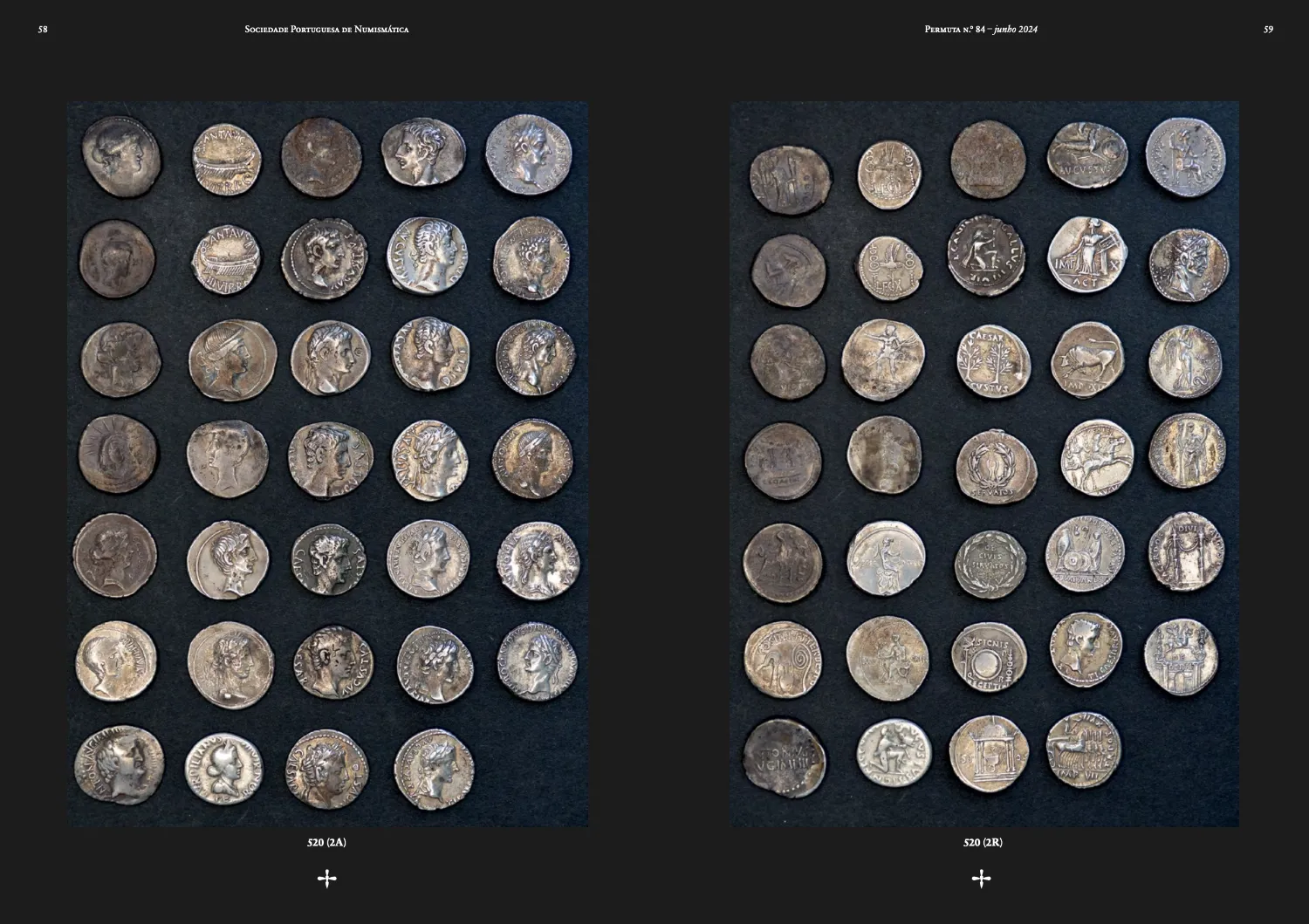
In its 84th correspondence exchange, on June 27, 2024, LOT 520 appeared with 68 denarii from the collection. The lot was described as follows:
TREASURE FOUND IN THE CHAVES VALLEY IN 1878/1879
This Roman monetary assemblage appeared in the winter of 1879, when the rising waters of the Tâmega River revealed, on the left bank, a Roman-period construction where, among various materials, a ceramic jar containing about “700 silver coins from the time of the Republic and the beginning of the Empire” was discovered (A. Moraes Sarmento in the magazine O Universo Ilustrado, Volume IV, 1880, p. 238).
General António Moraes Sarmento, author of the news of this discovery, examined the coins found and acquired a part for his numismatic collection. In the aforementioned article, he published 75 denarii, one of each type represented in the hoard or in the lot he had purchased.
In the aforementioned article, entitled Roman coins found in Chaves in the years 1878-1879, published in volumes IV and V of the newspaper O Universo Ilustrado between July 1880 and October 1883, General Sarmento presents the description and drawings of the 75 denarii that he studied. These were arranged alphabetically by the families represented, as was customary in republican numismatic publications of the time, resorting to the classic work of H. Cohen, Description générale des monnaies de la République Romaine […] (Paris/London, 1857).
There is no precise information on the total number of denarii acquired by General Sarmento, but it is likely that the number was higher. However, we have been able to consult a handwritten list by Moraes Sarmento where 155 denarii from the so-called “consular families” are recorded. A reference to Ernest Babelon also appears in the document on the first page, suggesting that this cataloging was prepared after 1886, given that the two volumes of the work of the great French numismatist, Description historique et chronologique des monnaies de la République Romaine […], were published in Paris/London in 1885 and 1886, some years after the publication of the 75 denarii in O Universo Ilustrado.
On the other hand, the analysis carried out so far on the denarii from the Moraes Sarmento collection has not confirmed whether some additional specimens belong to the 1879 hoard. However, specimens have been identified that would not be part of that monetary deposit.
Unfortunately, the absence of seven published denarii in the collection has been confirmed (according to the catalog numbering presented below): No. 44, 50, 63, 64, 68, 69 and 70. Although it is not possible to determine with certainty the causes of these losses, it is worth noting that the collection of General Moraes Sarmento, who died on April 31, 1929, was integrated into the collection of Captain Pizarro Bravo, heir of his wife and descendant of the general, many decades later.
It is known that the illustrious Honorary Associate of the SPN always made an effort to keep the collection entrusted to him intact. In 1987, based on the original publication by General Moraes Sarmento, an updated catalogue was prepared of this denarius hoard with the chronology of the issues and bibliographical references (R. Centeno, Circulación monetaria en el noroeste de Hispania hasta 192, Oporto, 1987, p. 48-49, no. 33).
The oldest denarius (no. 1), by L. Sempronius Pythius, dates from 148 BC, while the most recent (no. 75), by Claudius I, was issued in Rome between the years 44-45 AD. The latter has the particularity of being in an almost perfect state of preservation (“mint state”). This level of conservation, also observed in three specimens from the same reign, suggests a very brief period of circulation before being hoarded, probably before the end of the AD 40s.
A similar chronology can be observed in another hoard of denarii discovered in the Castro de Monte do Senhor dos Perdidos (Felgueiras, Porto) (R. Centeno and M. Mendes Pinto, “Novos dados sobre o tesouro do Monte do Senhor dos Perdidos (Penacova, Felgueiras)”, Portugalia, Nova Série, XV, 2004, pp. 133-140). This assemblage also concludes with a coin of Claudius I (in the name of Nero Claudius Drusus), dated between AD 41-45, a specimen represented in the Flavian hoard (no. 75).
Given that silver and/or gold coin hoards ending with Claudian issues are extremely rare (D. Martínez Chico, Los Tesoros Imperiales de Hispania, Valencia, 2020, pp. 88-98), the San Esteban hoard, along with that of the Monte del Señor de los Perdidos, is among the few hoards hidden during this reign that have been partially preserved.
Despite having been found in 1879, this set retains signs of significant previous circulation, with coins from the Republican and Augustan periods noticeably worn, many of them marked on the obverse to verify the quality of the metal. This type of marks gradually disappears after Nero’s reform and the end of the Princeps’ reign.
We are, without a doubt, facing an exceptional find, of enormous heritage value and with an invaluable pedigree. This hoard includes denarii of extremely high rarity and value, making it a set that deserves to be preserved, preferably in a museological institution.
LIST OF DENARII
- L. Sempronius Pythius, Rome 148 BC, RRC 216/1
- M. Vargunteius, Rome, 130 BC, RRC 257/1
- M. Papirius Carbo, Rome, 122 BC, RRC 276/1
- M. Furius L.f. Philus, Rome, 119 BC, RRC 281/1 S. C. Sulpicius C.f., Rome, 106 BC, RRC 312/1 (serratus)
- L. Thorius Balbus, Rome, 105 BC, RRC 316/1
- C. Coelius C.f. C.n. Caldus, Rome, 104 BC, RRC 318/1b
- Q. Minutius M.f. Thermus, Rome, 103 BC, RRC 319/1
- M. Lucilius Rufus, Rome 101 BC, RRC 324/1
- L. Titurius Sabinus, Rome, 89 BC, RRC 344/1a
- P. Crepusius, Rome, 82 BC, RRC 361/1c
- L. Marcius Censorinus, Rome, 82 BC, RRC 363/1d
- Q. Caecilius C.f. L.n. Metellus Pius, Northern Italy, 81 BC, RRC 374/2
- C. Naevio Balbus, Rome, 79 BC, RRC 382/1b
- L. Papius, Rome, 79 BC, RRC 384/1 (serratus)
- M. Volteius M.f., Rome, 78 BC, RRC 385/3
- Min. Aquillius Mn.f. Mn.n., Rome, 71 BC, RRC 401/1
- C. Hosidius C.f. Geta, Rome 68 BC, RRC 407/2
- L. Aemilius Lepidus Paullus, Rome, 62 BC, RRC 415/1
- L. Scrobonius Libo, Rome, 62 BC, RRC 416/1a
- M. Nonius Sufenas, Rome, 59 BC, RRC 421/1
- M. Aemilius Scaurus and P. Plautius Hypsaeus, Rome, 58 BC, RRC 422/1b
- C. Memmius, Rome, 56 BC, RRC 427/2
- M. Iunius Brutus, Rome, 54 BC, RRC 433/2
- L. Vinicius, Rome, 52 BC, RRC 436/1
- Mn Acilius (Glabrio?), Rome, 49 BC, RRC 442/1b
- C. Julius Caesar, Italy, 49-8 BC, RRC 443/1
- L. Hostilius Saserna, Rome, 48 BC, RRC 448/1b
- L. Hostilius Saserna, Rome, 48 BC, RRC 448/3
- C. Vibius C.f C.n. Pansa Caetronianus, Rome, 48 BC, RRC 449/4
- C. Julius Caesar, Africa, 47-6 BC, RRC 458/1
- Q. Caecilius Q.f C.n. Metellus Pius Scipio, Africa, 47-6 BC, RRC 459/1
- Min. Cordius Rufus, Rome, 46 BC, RRC 463/1b
- T. Carisius, Rome, 46 BC, RRC 464/5
- P. Clodius M.f., Rome, 42 BC, RRC 494/23
- L. Livineius Regulus, Rome, 42 BC, RRC 494/30
- C. Vibius Varus, Rome, 42 BC, RRC 494/36
- L. Mussidius Longus, Rome 42 BC, RRC 494/43a
- C. Clodius C.f. Vestalis, Rome, 41 BC, RRC 512/2
- Octavian, Gaul, 37 BC, RRC 539/1
- M. Antonius, East, 33 BC, RRC 542/2
- M. Antonius, East, 33 BC, RRC 544/14
- M. Antonius, East, 33 BC, RRC 544/24
- M. Antonius, East, 33 BC, RRC 544/27 (missing)
- Octavianus, Italy, c. 32-29 BC, RIC 251
- Octavianus, Italy, c. 32-29 BC, RIC 254b
- Octavianus, Italy, c. 32-29 BC, RIC 257
- Octavianus, Italy, c. 32-29 BC, C.29-27
- Augustus, Rome, c. 19 BC, RIC 288
- Augustus, Rome, c. 19 BC, RIC 322 (missing)
- Augustus, Rome, c. 13 BC, RIC 407
- Augustus, Rome, c. 12 BC, RIC 416
- Augustus, Colonia Patricia (?), 20-19 BC, RIC 51
- Augustus, Colonia Patricia (?), 19 BC, RIC 75a
- Augustus, Colonia Patricia (?), 19 BC, RIC 77a
- Augustus, Colonia Patricia (?), 19 BC, RIC 86a
- Augustus, Colonia Patricia (?), 18 BC, RIC 119
- Augustus, Colonia Patricia (?), 18-17/6 BC, RIC 130
- Augustus, Lugdunum, 15-13 BC, RIC 171a
- Augustus, Lugdunum, 11-10 BC, RIC 178a
- Augustus, Lugdunum, 8 BC, RIC 199
- Augustus, Lugdunum, 2-1 BC, RIC 207
- Augustus, Lugdunum, 13-14, RIC 220 (missing)
- Augustus, Lugdunum, 13-14 RIC 222 (missing)
- Augustus, Lugdunum, 13-14, RIC 226
- Tiberius, Lugdunum, 15-16, RIC 4
- Tiberius, Lugdunum, 31-37, RIC 30
- Gaius, Rome, 37-38, RIC 14 (missing)
- Gaius, Rome, 40, RIC 26 (missing)
- Gaius, Lugdunum, 37, RIC 2
- Claudius I, Rome, 41-42, RIC 12 (missing)
- Claudius I, Rome, 44-45, RIC 28
- Claudius I, Rome, (Antonia), 41-45, RIC 66
- Claudius I, Rome, (Antonia), 41-45, RIC 68
- Claudius I, Rome, (Nero Claudius Drusus), 41-45, RIC 70
- (missing) = They belong to the collection but are not in the auction.
-
Long circulation of denarii:
These coins, thanks to their silver content, could remain in circulation for decades. Their value was determined by the weight and purity of the metal, rather than by the date of minting or the ruler represented. -
Burial time:
The fact that the most recent coins date from the reign of Claudius suggests that the hoard was hidden between 41 and 54 AD. If buried later, it would include coins of later emperors such as Nero, Galba, Otho, Vitellius or Vespasian. -
Possible origin of the hoard:
According to General Antonio Sarmento, the discovery occurred near the ruins of an old mill. This suggests that it could be the savings of a miller, who probably hid his income to protect it. The amount found, approximately 700 denarii, is consistent with the salaries of the time: a Roman legionary earned around 250-300 denarii annually, and the income of a miller would not differ significantly.
This Drusus denarius, as the latest of the set, not only marks the chronological end of the hoard, but also connects us with an era of profound social, political and economic changes. Beyond its value as a historical object, this coin invites us to reflect on the daily lives of those who inhabited the ancient Aquae Flaviae, rescuing their stories of survival, savings and daily life from oblivion.