Denarii of Suetonius' Twelve Caesars
The Twelve Caesars are known as such due to the work De Vita Caesarum, written by the historian Suetonius in the 2nd century AD. This biographical account covers the lives of the first twelve rulers of Rome, from the beginning of Julius Caesar (49 BC) to the end of Domitian (96 AD), offering a mix of personal, political and military anecdotes.
It should be noted that of the twelve Caesars described by Suetonius, all were emperors except the first, Julius Caesar. Although his power was absolute and he was named perpetual dictator, he never held the official title of emperor, since the Principate was later established by his nephew and heir, Augustus. On the other hand, they were all called “Caesars” precisely because of Julius Caesar. After his death, his name became an honorific title adopted by his successors. Augustus, his heir, was the first to use it officially, and later, “Caesar” became synonymous with emperor in the Roman Empire.
From Julius Caesar to Domitian, his denarii reflect not only the image of each ruler, but also the political discourse and propaganda used to consolidate his authority. This post is focused on the 12 Caesars from a numismatic point of view and we will briefly analyze their coinage.
THE TWELVE CAESARS OF SUETONIUS
I – JULIUS CAESAR (49-44 BC)
Ambitious and charismatic, he obtained absolute power and was declared perpetual dictator. Suetonius describes him as a magnanimous but ruthless leader, surrounded by intrigue and feared by the Senate, eventually leading to his assassination on the Ides of March. For Tacitus, his murder was the inevitable consequence of his concentration of power and his contempt for republican institutions.
Rome in his era: End of the Republic, civil wars and fight between senatorial and popular factions. Caesar’s reforms undermined the power of the Senate and established the foundations of the Empire, but his assassination sparked a new civil war.
Coinage: Up to 10 denarii minted by Julius Caesar are known, starting with the popular elephant denarius. Later, other moneyers minted denarii where his portrait appeared, being the first Roman to appear on coins while he was alive, and breaking with republican tradition. His denarii with the inscription CAESAR DICT PERPETVO reflect his absolute authority.
In total, 50 denarii of Julius Caesar are known: 10 denarii minted by himself, 38 minted by Octavian, Mark Antony, Agrippa and different moneyers, in which his bust appears, and 2 more in which his bust does not appear.
Selected denarii:
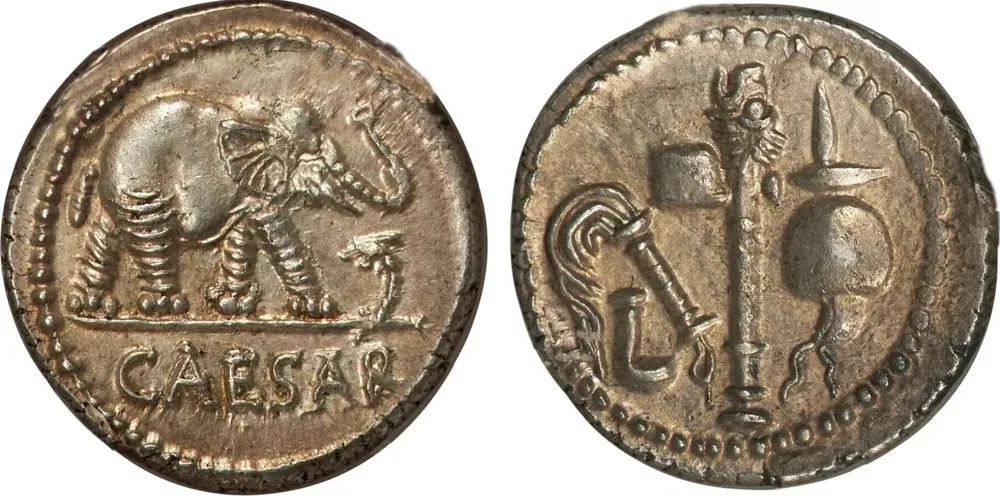
The Crawford 443/1 is the first denarius minted by Julius Caesar.
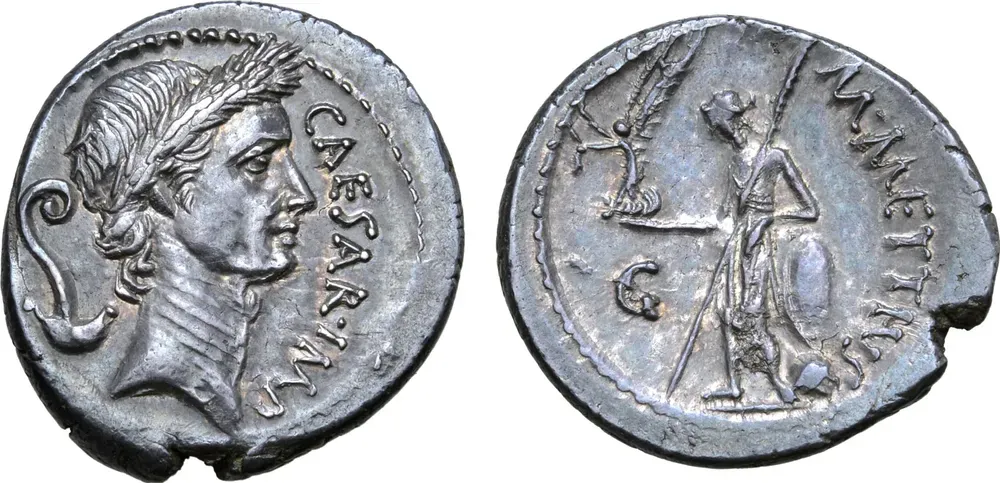
The Crawford 480/3 is one of the first in which the portrait of Caesar appears, during his lifetime.
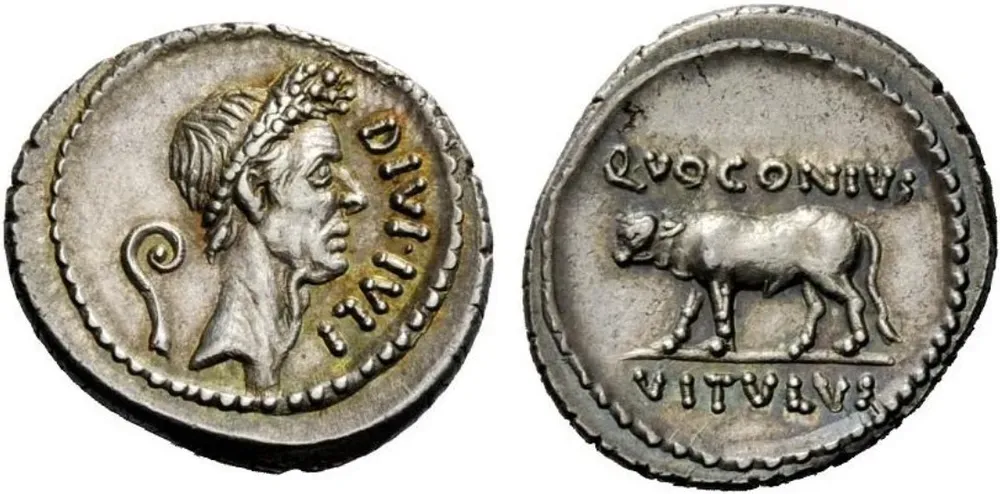
The Crawford 526/2 is a DIVI IVLI, posthumous and referring to his divinity.
II - AUGUSTUS (27 BC - 14 AD)
Astute and calculating, he consolidated the Empire under a republican façade. Suetonius portrays him as a moderate and pragmatic ruler, although not exempt from cruelty and personal weaknesses. Dio Cassius presents him as a skilled politician who used propaganda to consolidate his authority.
Rome in his era: Beginning of the Principate, Pax Romana and reorganization of the imperial system. Augustus consolidated his power through institutional and military reforms, guaranteeing stability after decades of conflict.
Coinage: Augustus’s first coins reinforced his image as Caesar’s adopted son, with inscriptions such as DIVI F (son of the divine). He introduced the standard imperial portrait and depictions of the Pax Romana, emphasizing his role as a restorer of order. His denarii also commemorated his victories and his relationships with gods such as Apollo and Mars.
In total, there are 281 Crawford references with denarii of Augustus that evolved over a period of four decades.
Selected denarii:
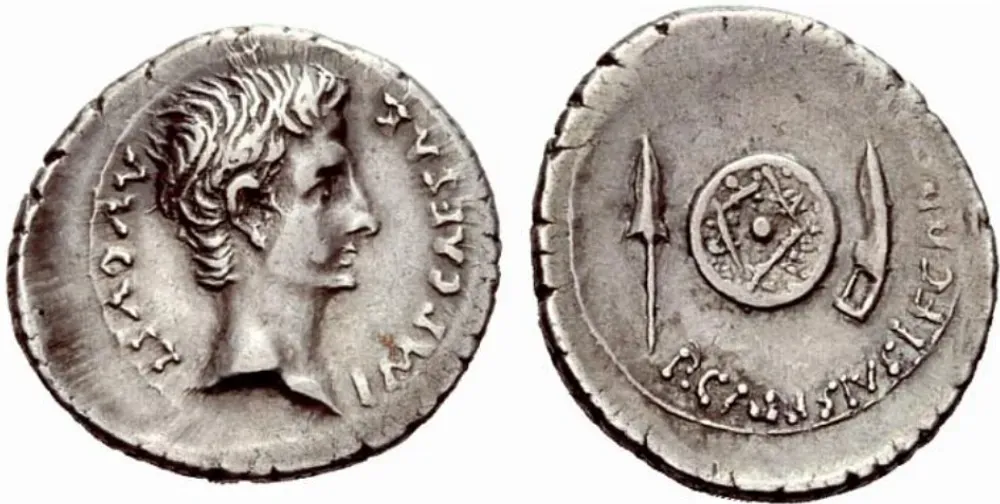
In RIC I-SE Augustus 2a, we have one of the first denarii of Augustus, already as emperor. In this case, minted in Emerita Augusta (Mérida).
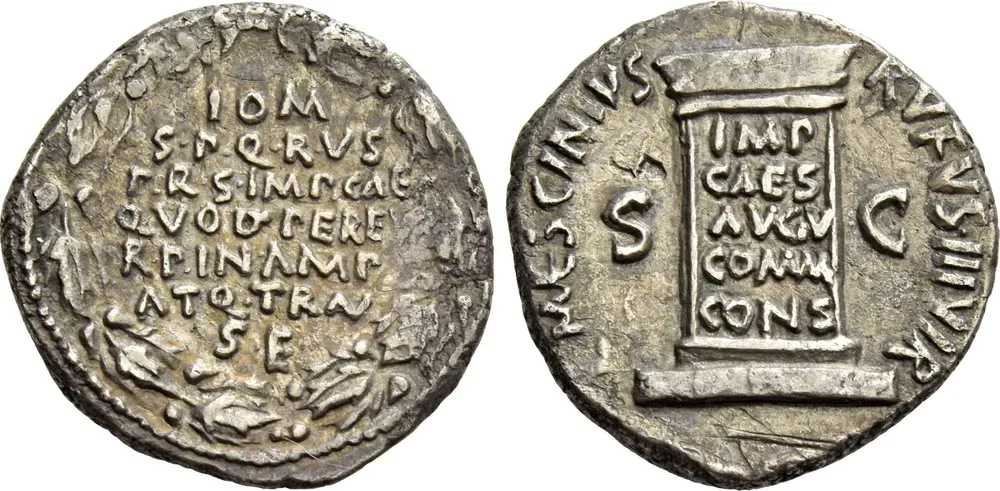
In RIC I (SE) Augustus 358, the senate makes wishes for Augustus’ health on the obverse and recognizes the achievements and stability he provided to the empire.
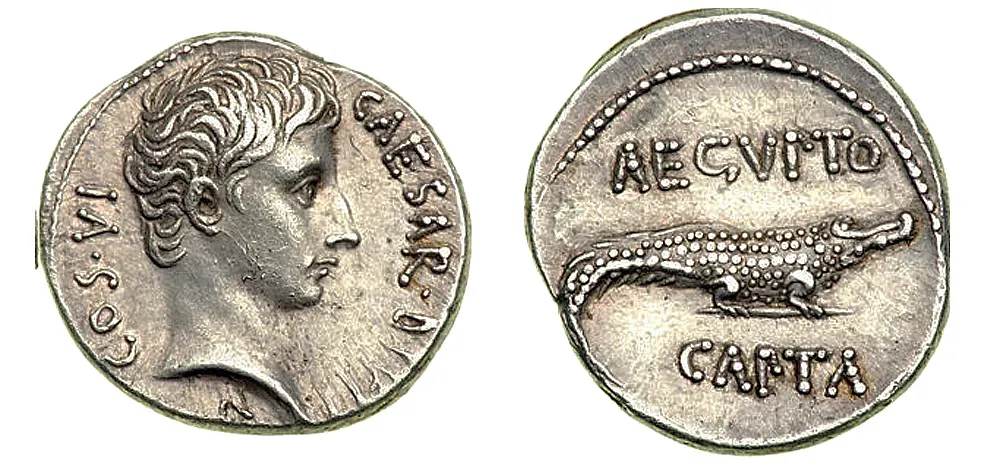
In RIC I (SE) Augustus 545, we have a denarius that highlights the capture of Egypt.
III - TIBERIUS (14-37 AD)
A secretive and distrustful emperor, Suetonius describes him as an initially competent ruler, but who became cruel and paranoid in his later years. Tacitus portrays him as a man of great military and administrative capacity, but increasingly reclusive and dependent on his advisors.
Rome in his era: Consolidation of the Empire, growing power of the Praetorians and isolation of the emperor on Capri. Tiberius’s distrust of the Senate and his physical retirement left the administration in the hands of ambitious advisors.
Coinage: Tiberius only issued two types of denarii and the best known is the so-called “Tribute Penny”, tribute denarius, associated with the evangelical quote of “Render to Caesar what is Caesar’s”. His coins present an austere image, with his sober portrait and reverses with Livia representing Peace, at least according to different experts.
Selected denarii:
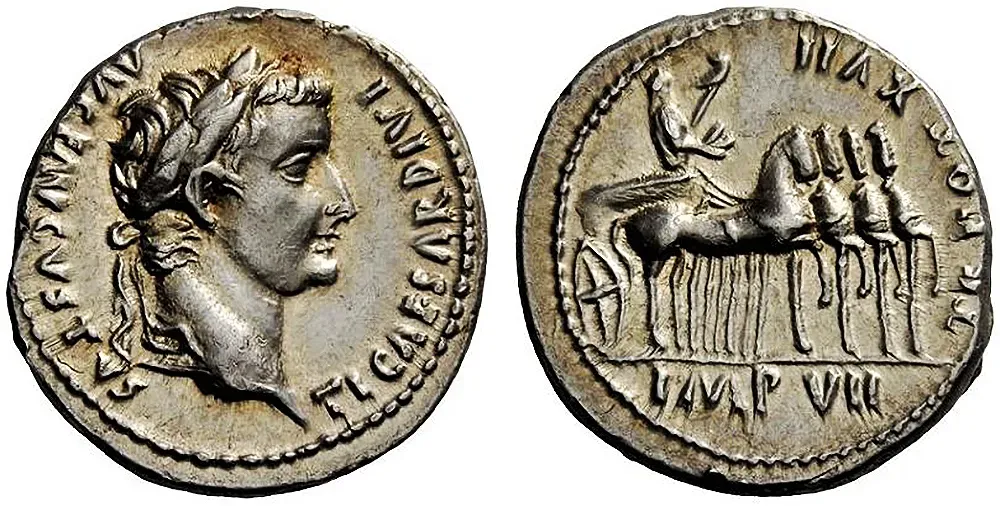
RIC I (SE) Tiberius 4, the first denarius minted by Tiberius
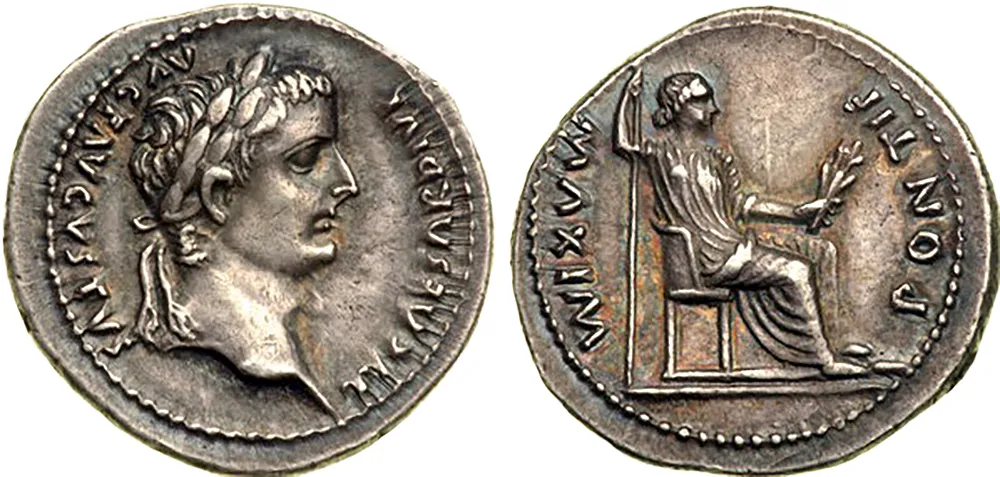
RIC I (SE) Tiberius 26, the second, most minted and most popular, known as the Tribute Penny, tribute denarius.
IV - Caligula (37-41 AD)
Excessive and capricious, he went from being a promising young man to a delusional tyrant. Suetonius accuses him of atrocities, incest and absurd extravagances. Dio Cassius, while confirming his cruelty, suggests that his madness was exacerbated by illness and betrayal within his inner circle.
Rome in his era: Financial crisis, break with the Senate and excessive imperial worship. The abuse of public resources for personal projects and political violence destabilized the relationship between the emperor and the elites.
Coinage: Crawford has 16 references with coins minted in the four years of Caligula’s reign. They show his idealized image and his strong connection with the imperial cult, highlighting coinages in honor of his deified sisters, as well as Augustus, Germanicus and his mother Agrippina the Elder.
Selected denarii:
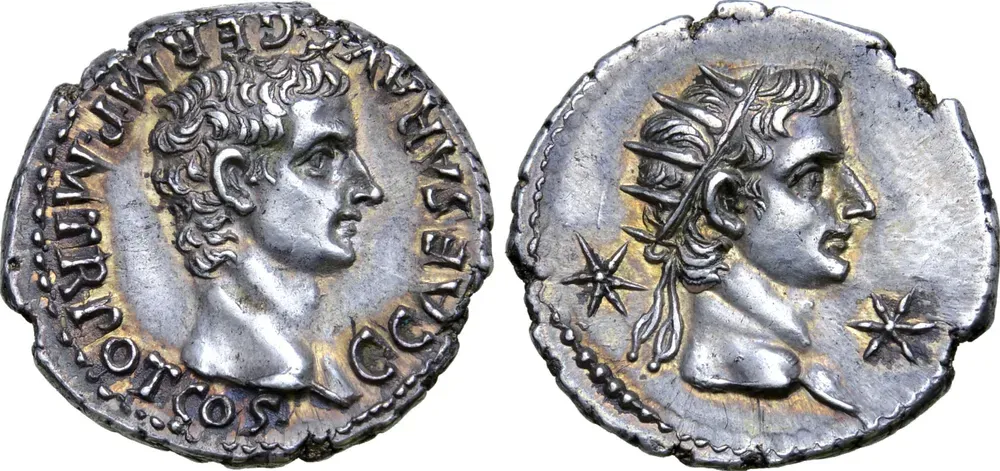
As in the RIC I (SE) Gaius/Caligula 2 with Augustus irradiated and deified on the reverse.
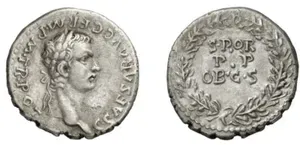
In RIC I (SE) Gaius/Caligula 19, one of two cases where there was no imperial family member on the reverse.
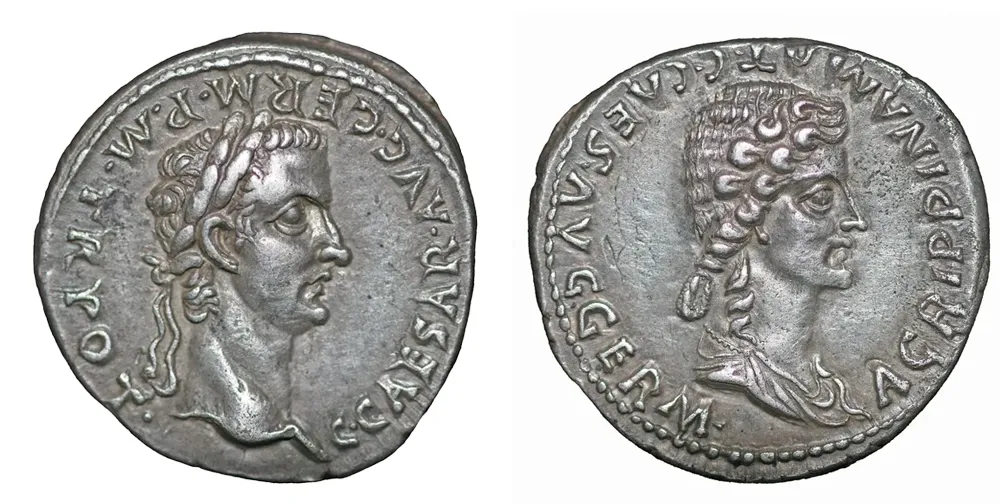
In RIC I (SE) Gaius/Caligula 14, in this case exemplary of the IOVIS Collection, he appears with his mother Agrippina the Elder on the reverse.
V - CLAUDIUS (41-54 AD)
Considered clumsy and ridiculed by his family, he turned out to be an efficient administrator. According to Suetonius, he was easily influenced by his wives and freedmen. Tacitus, on the other hand, describes him as a man with vision of government, although lacking the character to control his court.
Rome in his era: Imperial expansion, annexation of Britain and administrative reforms. Claudius promoted great public works and strengthened the imperial bureaucracy, despite the influence of his wives and freedmen.
Coinage: Crawford registers 38 references of denarii from the reign of Claudius. His coins convey a message of stability and territorial consolidation, highlighting in particular his successes in Britain. Among his most representative coinages are the denarii with the inscription TI CLAVDIVS CAESAR AVG, which allude to his victory in Britain, as well as Peace (PAX) and Constancy (CONSTANTIA).
Claudius also reinforced his dynastic legitimacy by dedicating issues to key figures of his lineage such as his father Drusus and his mother Antonia the Less. Likewise, he minted denarii with the portrait of his niece and later wife, Agrippina the Younger, and his adopted son Nero.
Some coinages:
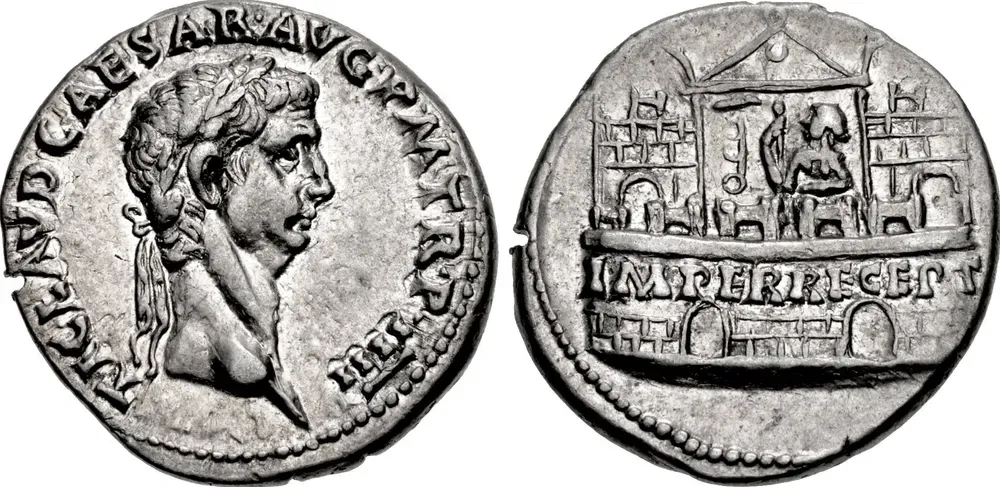
On the reverse of RIC I (SE) Claudius 20, a praetorian camp stands out and the legend IMPER RECEPT, showing that he received the power of the army that named him and is at his side.
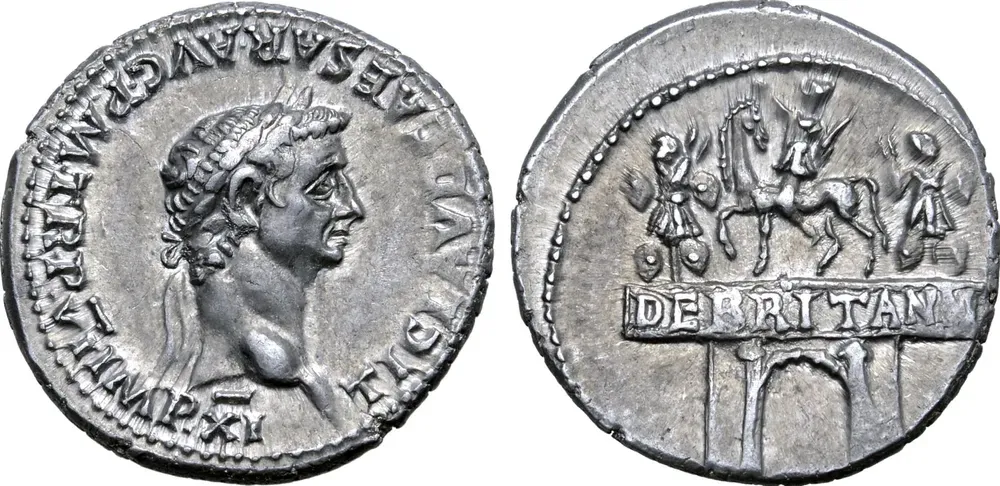
On the reverse of RIC I (SE) Claudius 34, Claudius appears on a triumphal arch highlighting his victory in Britain.
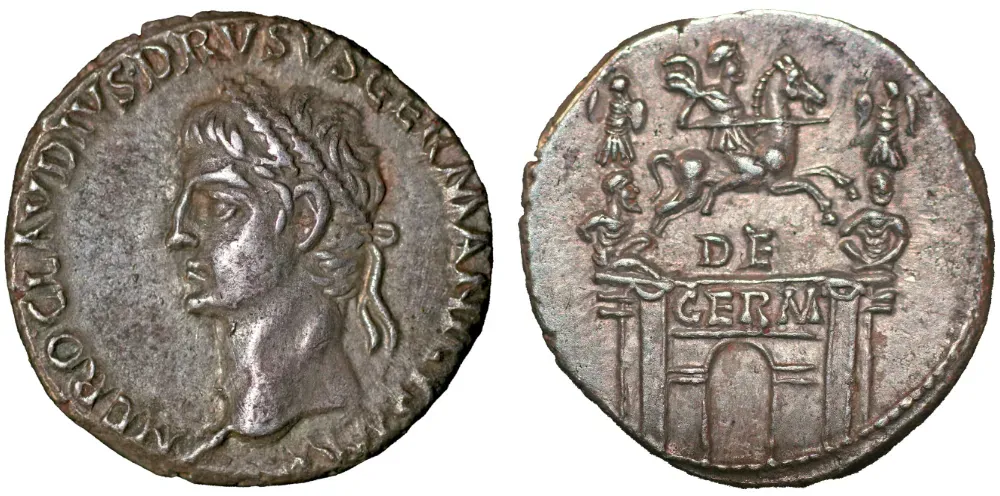
In RIC I (SE) Claudius 70, Claudius does not appear; instead, Nero Claudius Drusus appears, son of Livia, brother of Tiberius, father of Germanicus and of the emperor Claudius himself.
VI - NERO (54-68 AD)
A frustrated artist and despotic ruler, Suetonius presents him as an extravagant and cruel emperor. Tacitus and Dion Cassius recognize his initial popularity among the people, although they highlight his growing megalomania and his indifference to the crisis of the Empire.
Rome in his era: Great Fire of Rome, persecution of Christians and senatorial conspiracies. Nero promoted art and architecture, but his growing despotism led to the discontent of the aristocracy and the military.
Coinage: Crawford registers 37 references of denarii issued during the reign of Nero. In the early years of his rule, he minted coins with the portrait of his mother, Agrippina the Younger, reinforcing his dynastic legitimacy.
One of the most common denarii from his reign shows Jupiter enthroned on the reverse, holding a thunderbolt in his hand, accompanied by the inscription IVPPITER CVSTOS (Jupiter the Guardian), a message of divine protection and stability for the emperor.
Another notable change in their numismatics was the reduction of the weight and purity of silver in denarii, marking the beginning of the deterioration of the Roman monetary system.
Selected denarii:
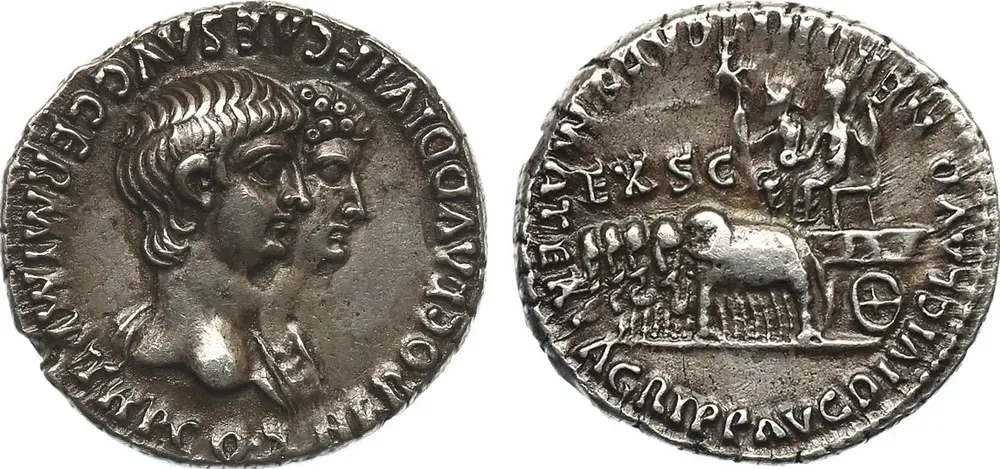
In RIC I (SE) Nero 7, we have a somewhat special coinage, on the obverse appears the bust of Nero with that of his mother Agrippina the Younger. It also has an attractive reverse with the figures of Claudius and Augustus, deified, on a chariot pulled by elephants.
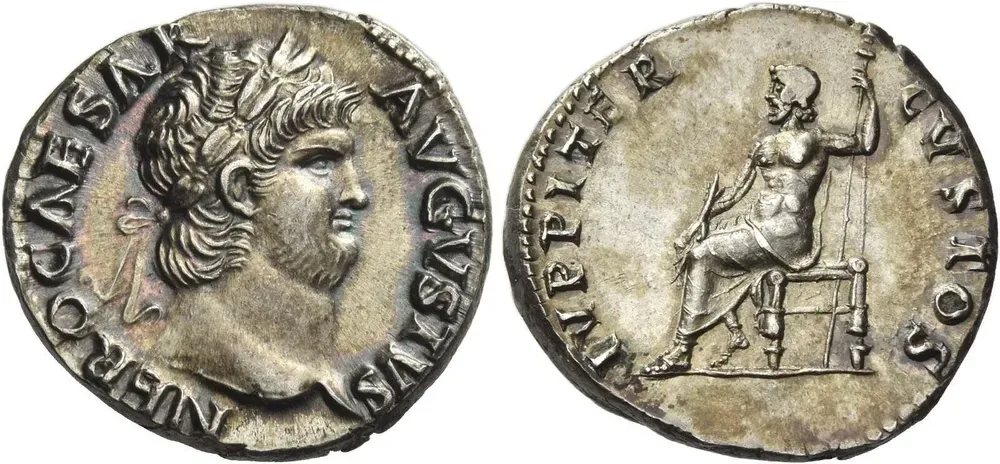
In RIC I (SE) Nero 53, it is one of Nero’s most classic denarii, the one that most often appears at international auctions. The reverse stands out for the image of Jupiter, god of all gods.
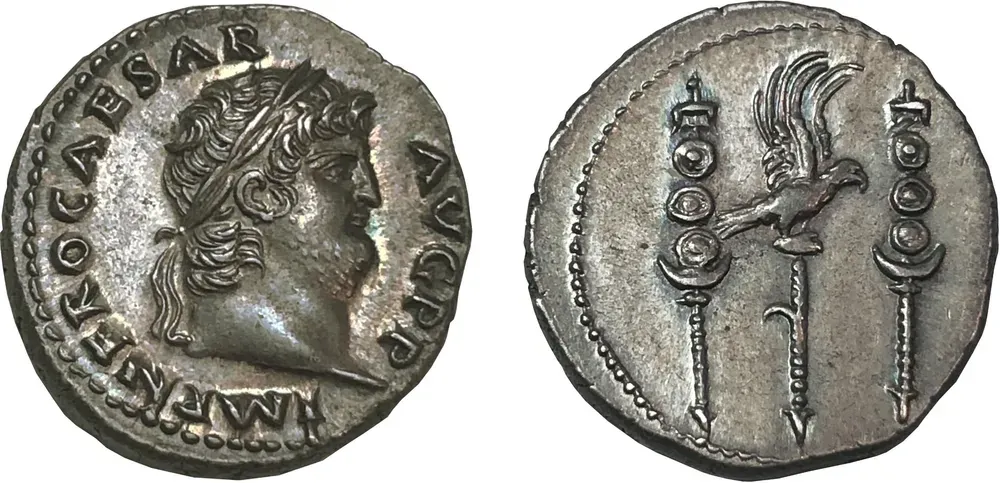
In RIC I (SE) Nero 68, he looks quite “robust”. The reverse is quite rare, with the eagle and military standards reminiscent of the popular denarii of the legions of Mark Antony.
VII - GALBA (68-69 AD)
An older and stern man, Suetonius describes him as a greedy and ruthless emperor. Tacitus notes that he attempted to restore discipline to the Empire’s army and finances, but his lack of charisma and generosity sealed his fate.
Rome in his era: Year of the Four Emperors, political chaos and clashes between legions. The lack of clear succession led to a civil war, with different military factions vying for the throne.
Coinage: Crawford registers 152 references issued in Galba’s brief reign (68-69 AD), a remarkable figure considering his short time in power, no more than seven months! His coins reflect his need for legitimation in an unstable period, with inscriptions such as IMP SER GALBA AVG, emphasizing his authority.
Their most common denarii show Rome on the reverse with the inscription ROMA RENASCENS, symbolizing the restoration of order after Nero.
Despite his short-lived reign, the great diversity of his coinage demonstrates the importance of numismatic propaganda in his attempt to consolidate power.
Selected denarii:
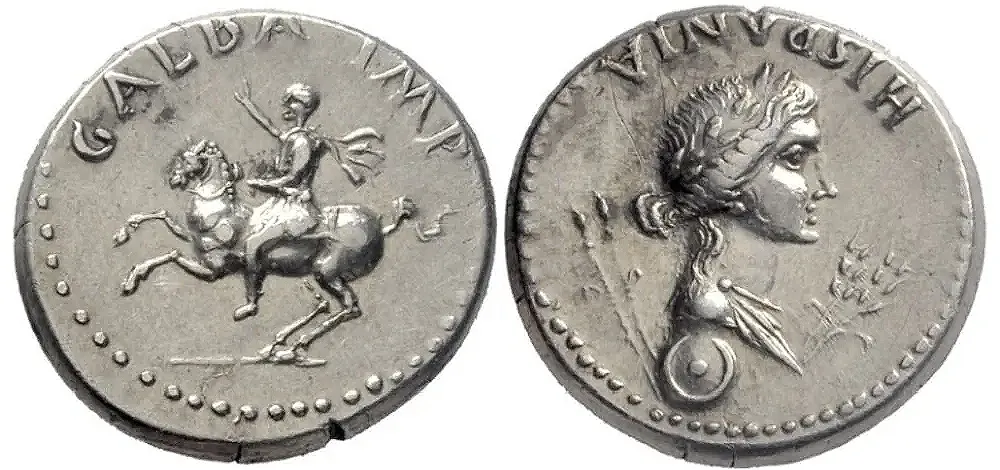
RIC I (SE) Galba 2 Interesting specimen in which Galba is seen on a horse on the obverse and the Bust of Hispania on the reverse.
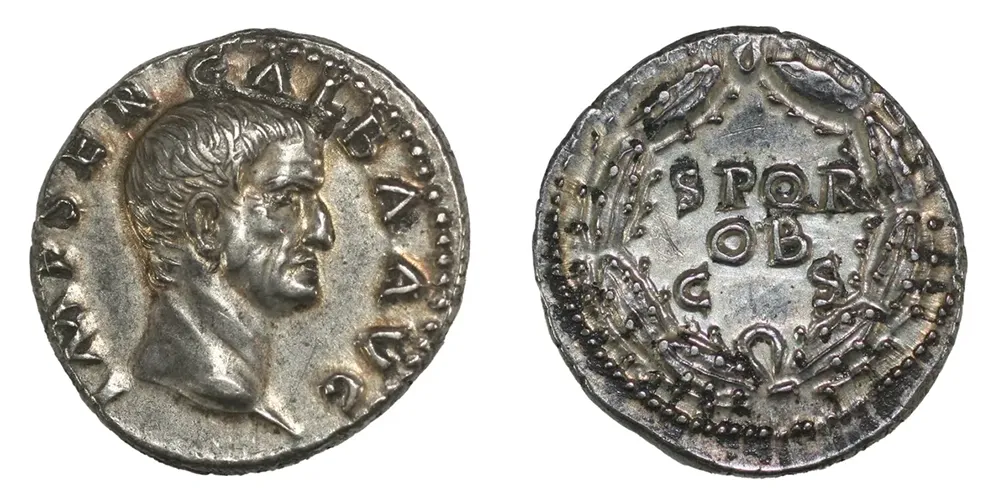
The RIC I (SE) Galba 167 features a nice portrait of Galba on another coin from the IOVIS Collection.
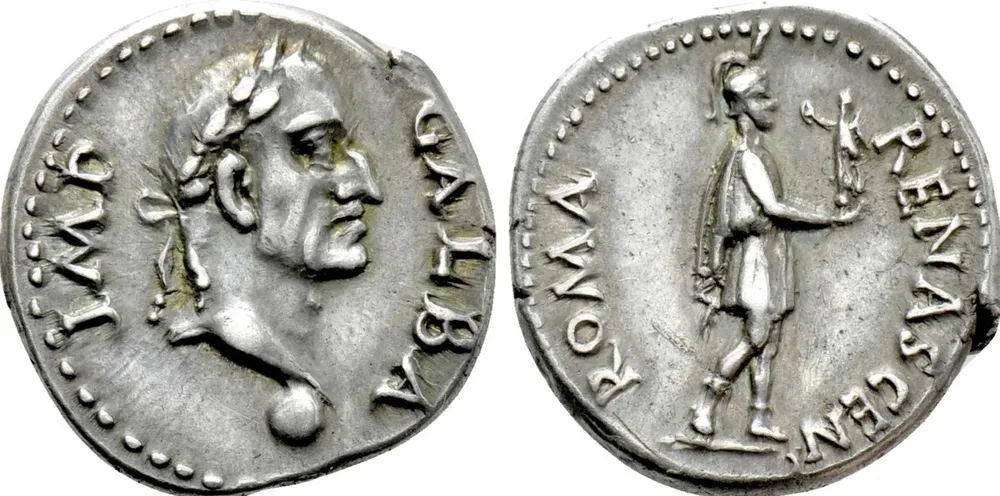
The RIC I (SE) Galba 27, minted in Tarraco, with one of his “favorite” reverses with ROMA RENASCENS.
VIII - OTHO (69 AD)
Excessively vain and ambitious, Suetonius presents him as a man willing to do anything for power. Tacitus, however, describes him as surprisingly dignified in his death, committing suicide to avoid a prolonged civil war.
Rome in his era: Civil war between its followers and those of Vitellius. Otho attempted to legitimize his rule with moderate reforms, but the legions’ loyalty to his rival generals precipitated his downfall.
Coinage: Crawford registers 16 references of denarii issued during the short-lived reign of Otho (69 AD), which lasted just three months. His coinage is scarce compared to that of his predecessors, reflecting the instability of the Year of the Four Emperors.
His coins feature the inscription IMP M OTHO CAESAR AVG TR P, highlighting his imperial title. Allusions to gods such as Ceres, Pax, Securitas, Vesta, Jupiter, Victoria and Aequitas predominate on the reverses, symbols of stability, prosperity and legitimacy.
One of the most representative types is the one that bears the inscription PAX ORBIS TERRARVM, which alludes to the world peace that it was trying to establish in the midst of the succession crisis. Despite their brevity, Otho’s coinage reflects his intention to consolidate his image as a legitimate ruler in a context of civil war.
Selected denarii:
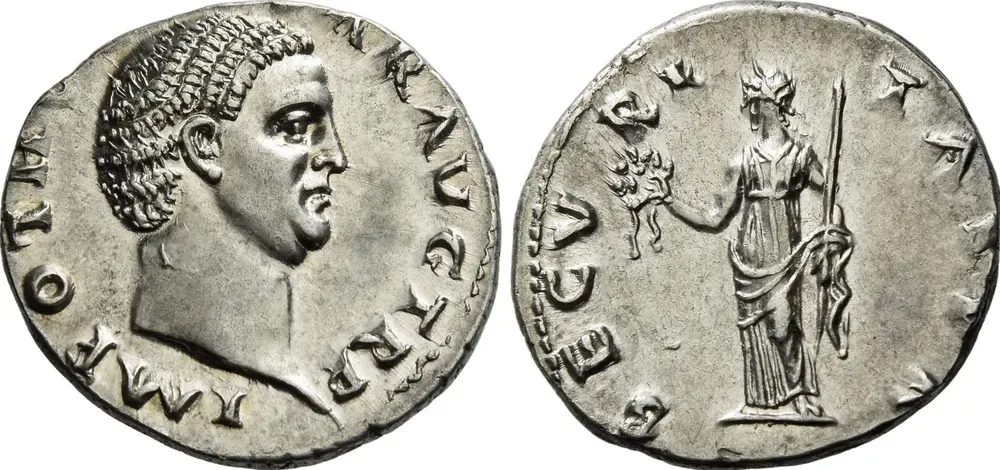
RIC I (SE) Otho 10 A good portrait to see the original haircut
IX - VITELIUS (69 AD)
Described by Suetonius as a man given over to gluttony and pleasure, his brief reign was marked by corruption and waste. Tacitus adds that his lack of vision and leadership made him unable to sustain his government against Vespasian.
Rome in his era: Year of the Four Emperors, total instability. The rise and fall of Vitellius showed the dominance of the legions in imperial politics, with Rome in chaos.
Coinage: Crawford registers 58 references of denarii from the brief reign of Vitellius (69 AD) that lasted less than eight months. His coinage emphasizes military support, making it clear that his legitimacy depended on the support of the legions. A large part of his denarii bear the inscription CONSENSVS EXERCITVVM (“Consensus of the Armies”), reinforcing the idea that his authority derived from the loyalty of the troops. Another key inscription on his coinage is FIDES EXERCITVM (“Loyalty of the Armies”), with which Vitellius sought to project the loyalty of his soldiers and his control over the legions, a necessity in a period marked by constant revolts and changes in power.
Despite these propaganda efforts, his reign was short-lived and ended with his defeat by Vespasian, who would finally consolidate imperial power.
Selected denarii:
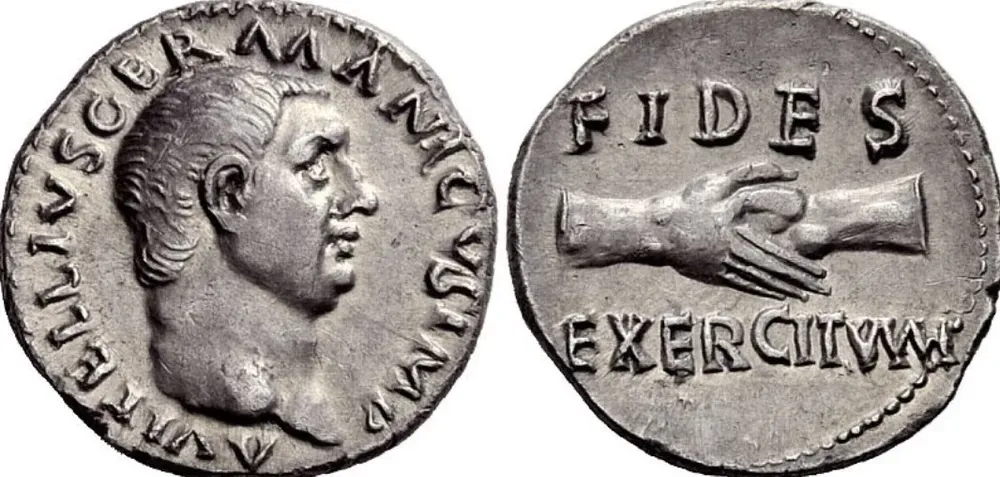
RIC I (SE) Vitellius 67 with a clear allusion to the loyalty that the army has to him.
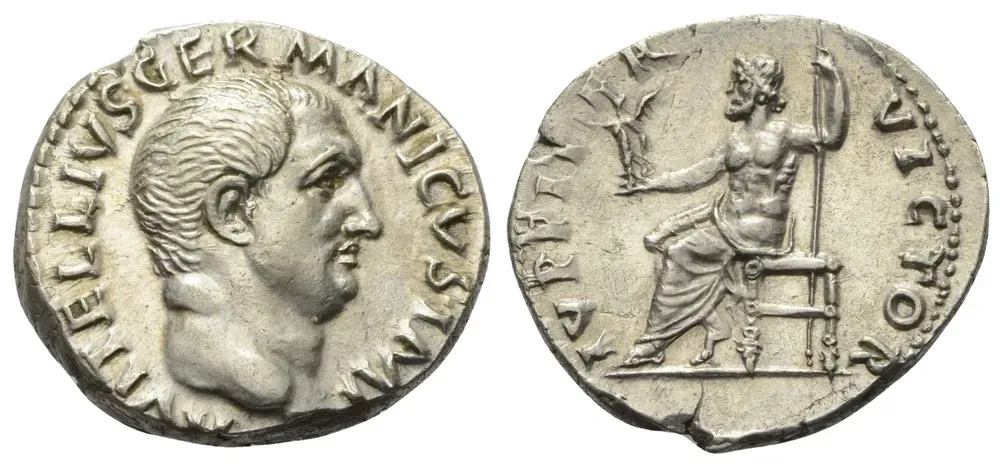
RIC I (SE) Vitellius 68 In this image we have one of the best known portraits of Vitellius. The reverse, one of the most classic of Nero with Jupiter enthroned.
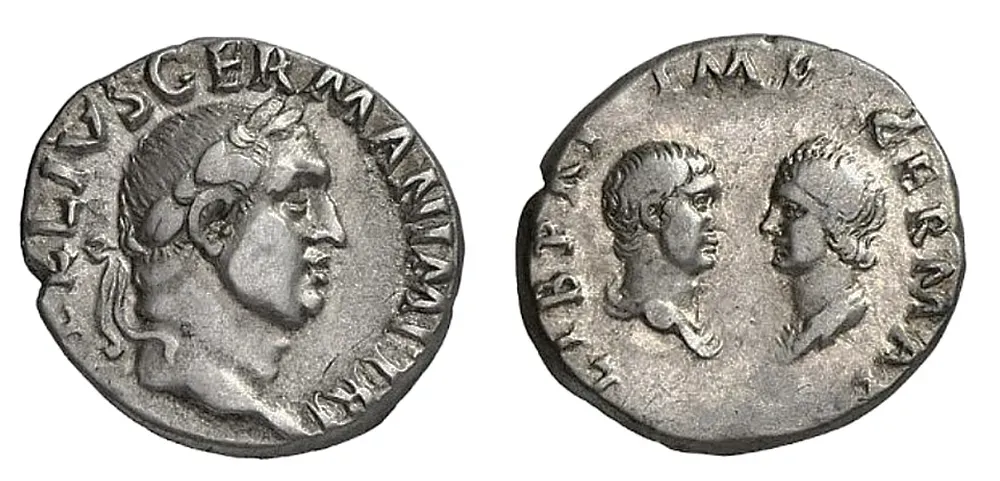
RIC I (SE) Vitellius 79 Here, on a reverse showing his children, perhaps he wanted to convey that, with him, the succession was assured.
X - VESPASIAN (69-79 AD)
A pragmatic man of modest origin, Suetonius portrays him as a hard-working ruler with a sense of humor. Dio Cassius emphasizes his role in restoring the stability of the Empire and consolidating the Flavian dynasty.
Rome in his era: Restoration of order, construction of the Colosseum and strengthening of the State. Vespasian reorganized finances, controlled the legions, and strengthened imperial authority, establishing the Flavian dynasty.
Coinage: Crawford registers 330 references of denarii issued during the reign of Vespasian (69-79 AD), a remarkable figure for a reign of only 10 years. His coinage reflects an enormous diversity of types, used both to consolidate his legitimacy and to commemorate his military successes.
Among his most representative issues are the denarii of the IVDAEA CAPTA series, commemorating the victory over Judea and the destruction of Jerusalem in 70 AD, one of the most sought-after coinages of his reign. He also issued coins with references to Jupiter, Rome and Fortuna, reinforcing the idea of his command as divine will.
The variety of its reverses includes imperial allegories, tributes to the Flavian dynasty and representations of deities linked to power and stability. With such an extensive and varied production, Vespasian’s coin not only fulfilled an economic function, but was a fundamental pillar of his imperial propaganda.
Selected denarii:
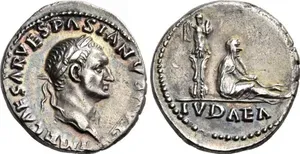
RIC II, Part 1 (SE) Vespasian 2, IVDAEA CAPTA. One of his first messages.
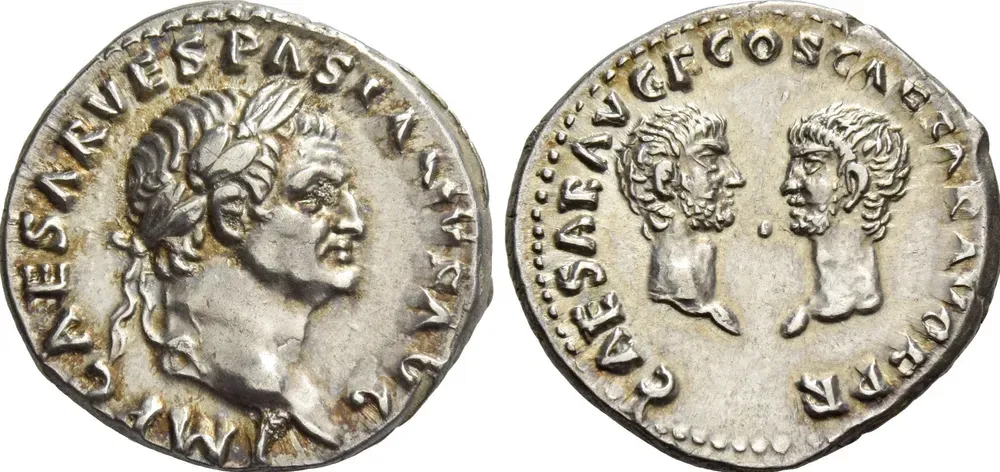
RIC II, Part 1 (SE) Vespasian 16, his descendants. Another important message.
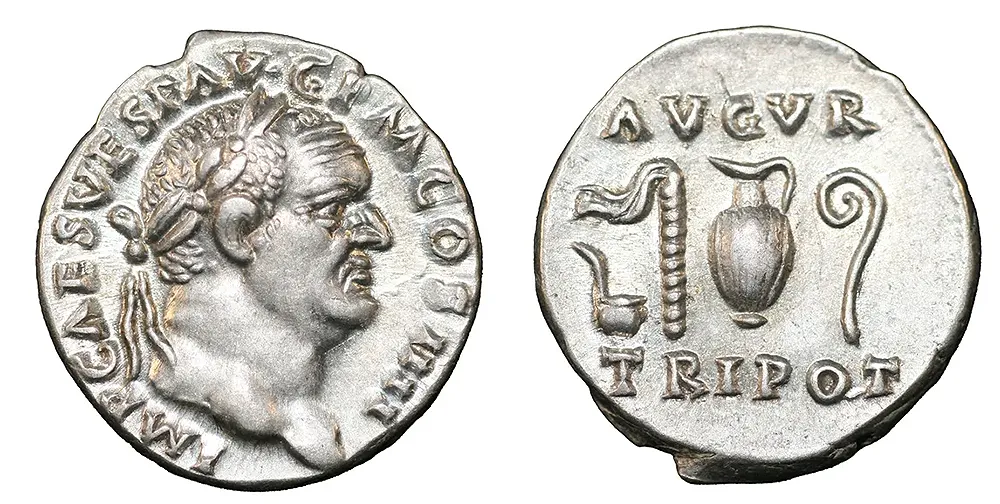
RIC II, Part 1 (SE) Vespasian 356 An interesting portrait of Vespasian from the IOVIS Collection
XI - TITUS (79-81 AD)
Popular and generous, Suetonius describes him as a prince loved by all. Tacitus praises him as a benevolent ruler, highlighting his quick response to the Vesuvius catastrophe and his ability to curry favor with the Senate and the people.
Rome in his era: Eruption of Vesuvius, completion of the Colosseum and imperial stability. Titus effectively handled natural disasters and cemented his image as a fair and compassionate leader.
Coinage: Crawford registers 76 references of denarii issued during the reign of Titus (79-81 AD). His coinage reflects the continuity of Flavian propaganda and maintains the theme of his father, Vespasian. Also notable, as with his father, are the issues that exalt the victory over Judea, reaffirming the military success and the conquest of Jerusalem in 70 AD.
Beyond military propaganda, his denarii include representations of gods highlighting values such as stability and divine protection.
Selected denarii:
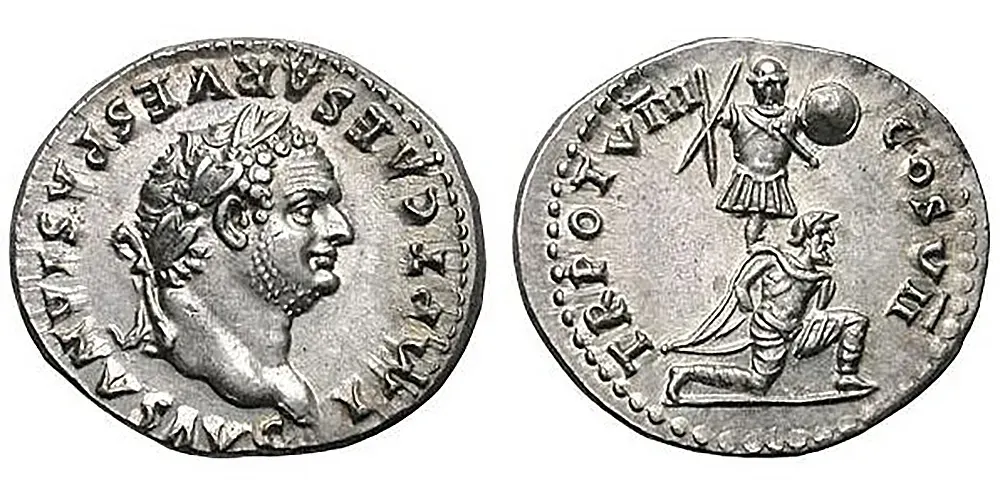
RIC II, Part 1 (SE) Titus 1, one of his first denarii already highlighting military victories
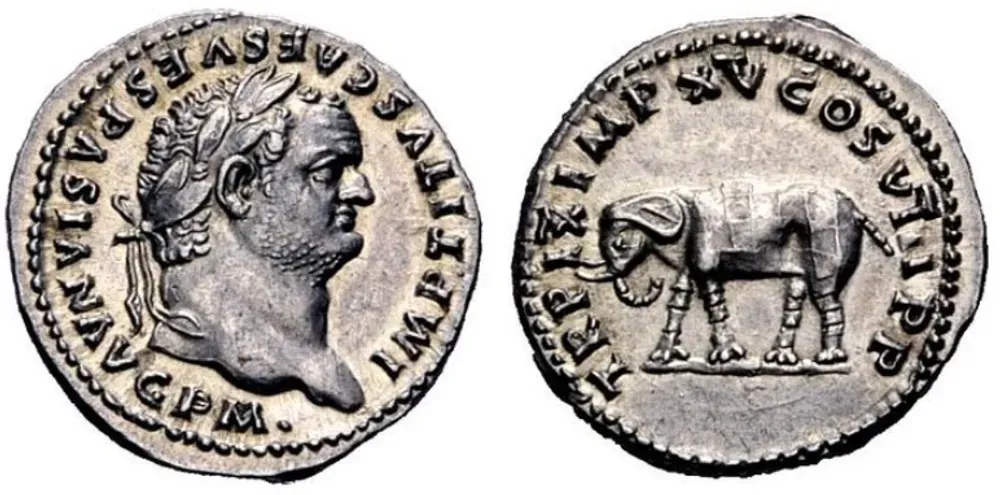
RIC II, Part 1 (SE) Titus 115, a good portrait and an interesting armored elephant on the reverse.
XII - Domitian (81-96 AD)
Described as cruel and paranoid, Suetonius presents Domitian as a despot. Dio Cassius offers a more balanced view, noting that, despite his authoritarian rule, he modernized the administration and strengthened the economy of the Empire.
Rome in his era: Authoritarianism, conflicts with the Senate and the conspiracy that led to its assassination. Despite his unpopularity among the elite, Domitian improved administration and the economy, preparing the ground for his successors.
Coinage: Crawford records 289 references of denarii issued during the reign of Domitian (81-96 AD), of which 193 feature Minerva on the reverse. His relationship with Minerva was so close that, in addition to having temples erected in her honor, he maintained a chapel dedicated to her in his bedroom and founded the Legio I Minervia. In Domitian’s numismatics, Minerva appears in multiple poses and attributes, reflecting the different aspects of her cult:
- Standing with a spear and shield, in a warrior attitude.
- Carrying an olive branch, linked to her role as protector.
- In a chariot pulled by four horses, emphasizing its majesty.
- With a victoriola (small figure of Victoria), associating it with the imperial triumph.
This intensive use of Minerva in his monetary iconography reinforces the image that Domitian wanted to project of himself: an emperor guided by wisdom, military strategy and divine protection, values embodied in his favorite goddess.
The Twelve Caesars Collection: A Numismatic Challenge
Assembling a complete collection of the denarii of the Twelve Caesars is a challenging task due to the scarcity of some specimens, such as those of Otho or Vitellius. The most accessible are usually those of Vespasian, Titus and Augustus. The greatest difficulty lies in finding well-preserved coins with reasonable prices. In the following tables we have made a composition of complete collections in different qualities and indicating the price of the sum of all the pieces sold between 2022 and 2024.
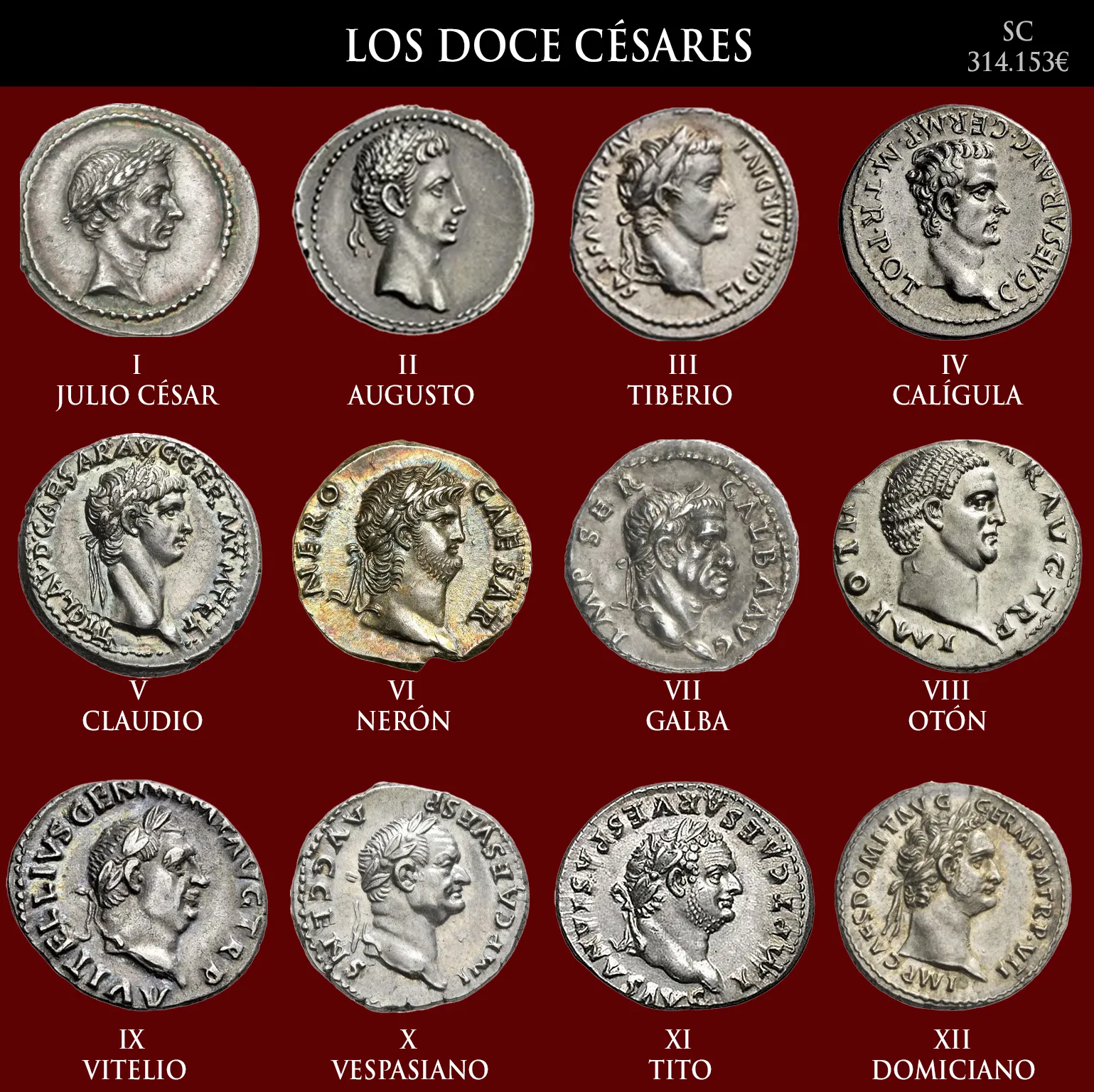
SC - Uncirculated. Completely new although it may have somewhat soft reliefs.
The sum of the prices of these twelve denarii, which were sold between 2022 and 2024, amounted to 314,153 euros:
€111,000 Julius Caesar + €33,000 Augustus + €8,215 Tiberius + €28,375 Caligula + €32,855 Claudius + €27,900 Nero + €24,000 Galba + €13,695 Otho + €20,270 Vitellius + €7,215 Vespasian + €4,422 Titus + €3,206 Domitian
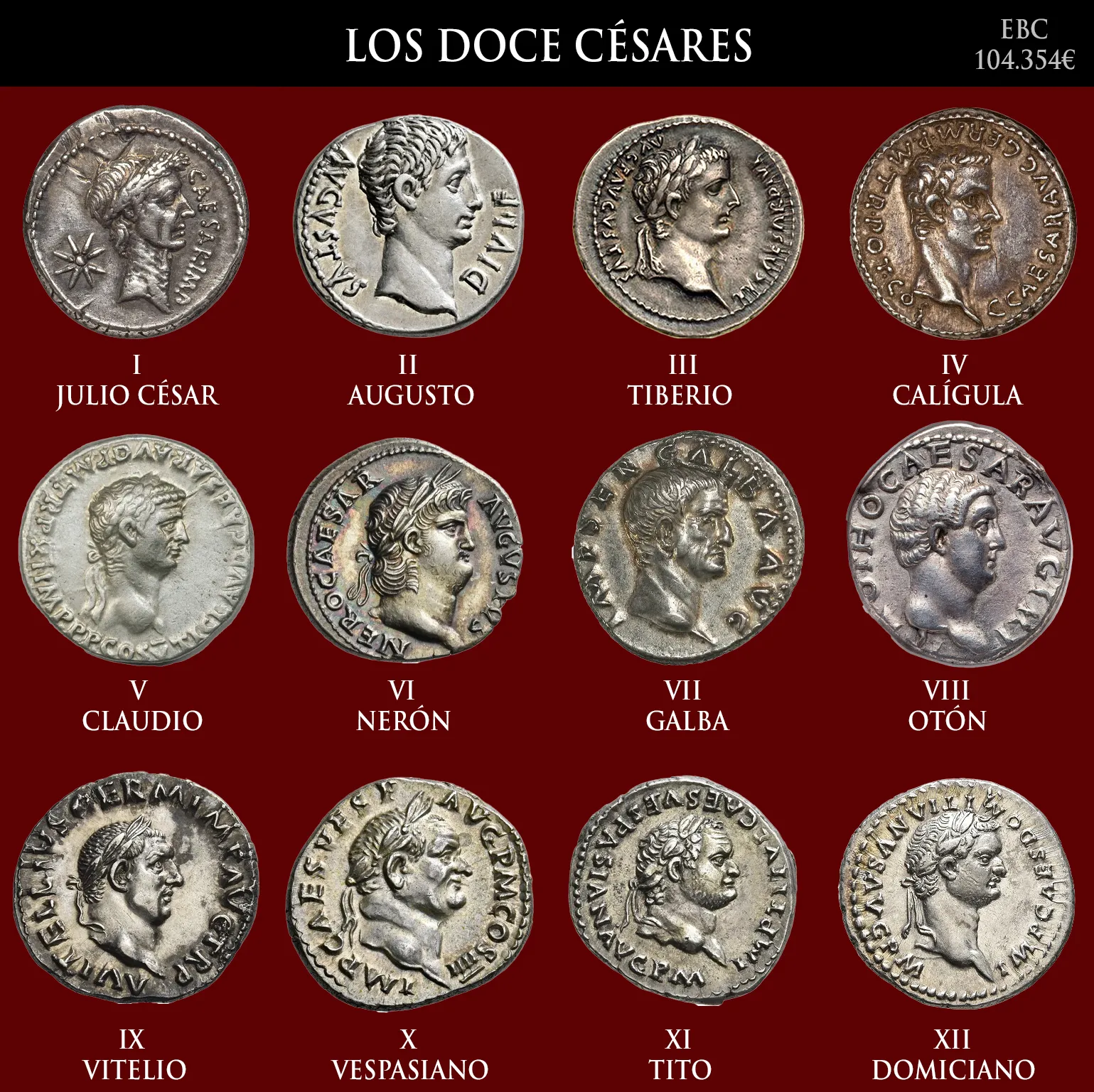
EBC - Extremely fine preservation. Very slight traces of wear in areas of greater relief.
In this case, the total price is 104,354 euros:
€13,325 Julius Caesar + €3,015 Augustus + €3,171 Tiberius + €9,000 Caligula + €7,900 Claudius + €13,660 Nero + €2,800 Galba + €5,272 Otho + €11,282 Vitellius + €3,880 Vespasian + €3,466 Titus + €1,058 Domitian
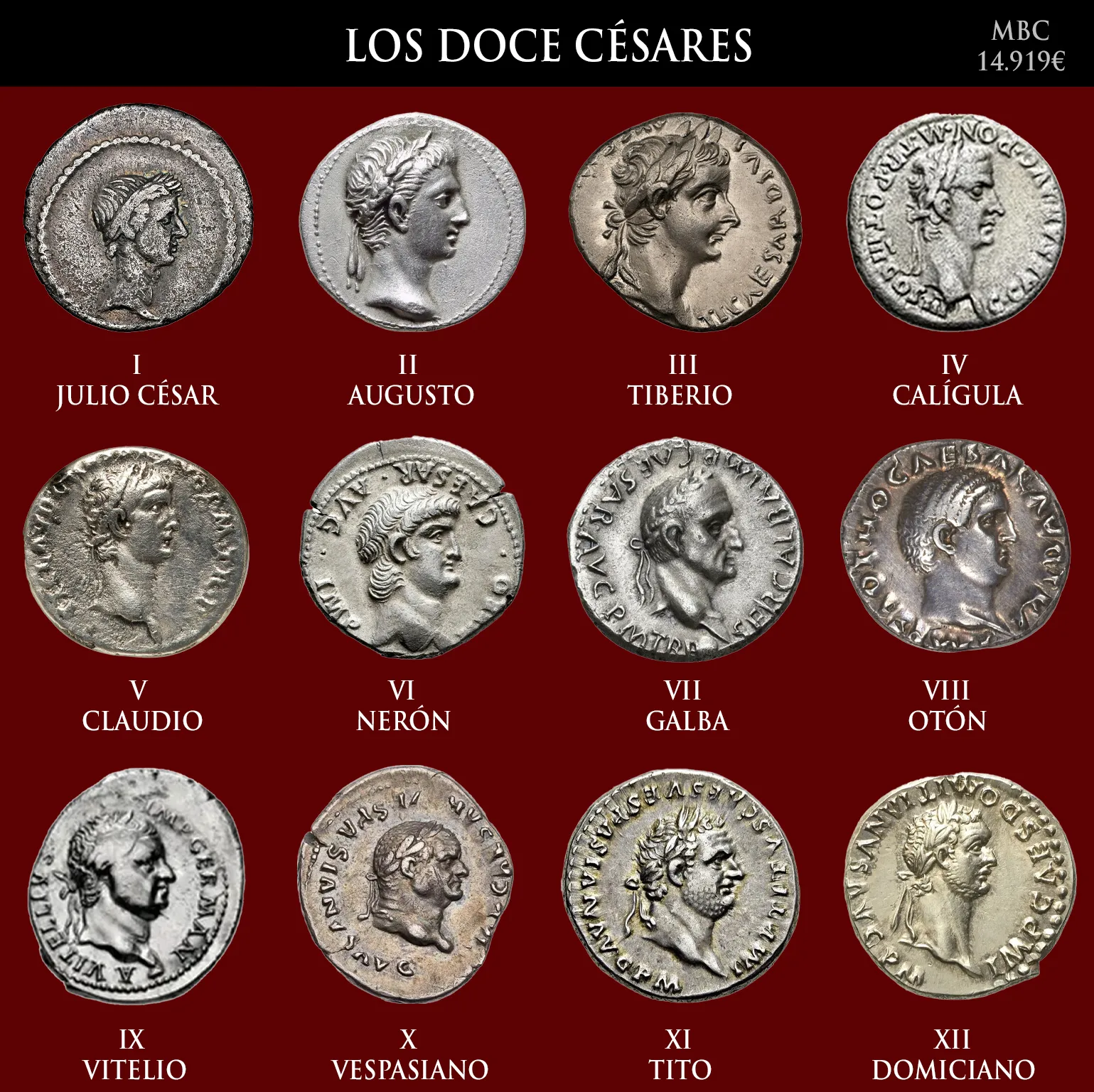
MBC - Very fine preservation. Visible traces of wear on the edge and/or relief but in perfect general condition.
The total price in MBC grade is 14,919 euros:
€1,400 Julius Caesar + €600 Augustus + €1,185 Tiberius + €2,300 Caligula + €1,684 Claudius + €1,100 Nero + €1,800 Galba + €1,800 Otho + €800 Vitellius + €300 Vespasian + €1,100 Titus + €850 Domitian
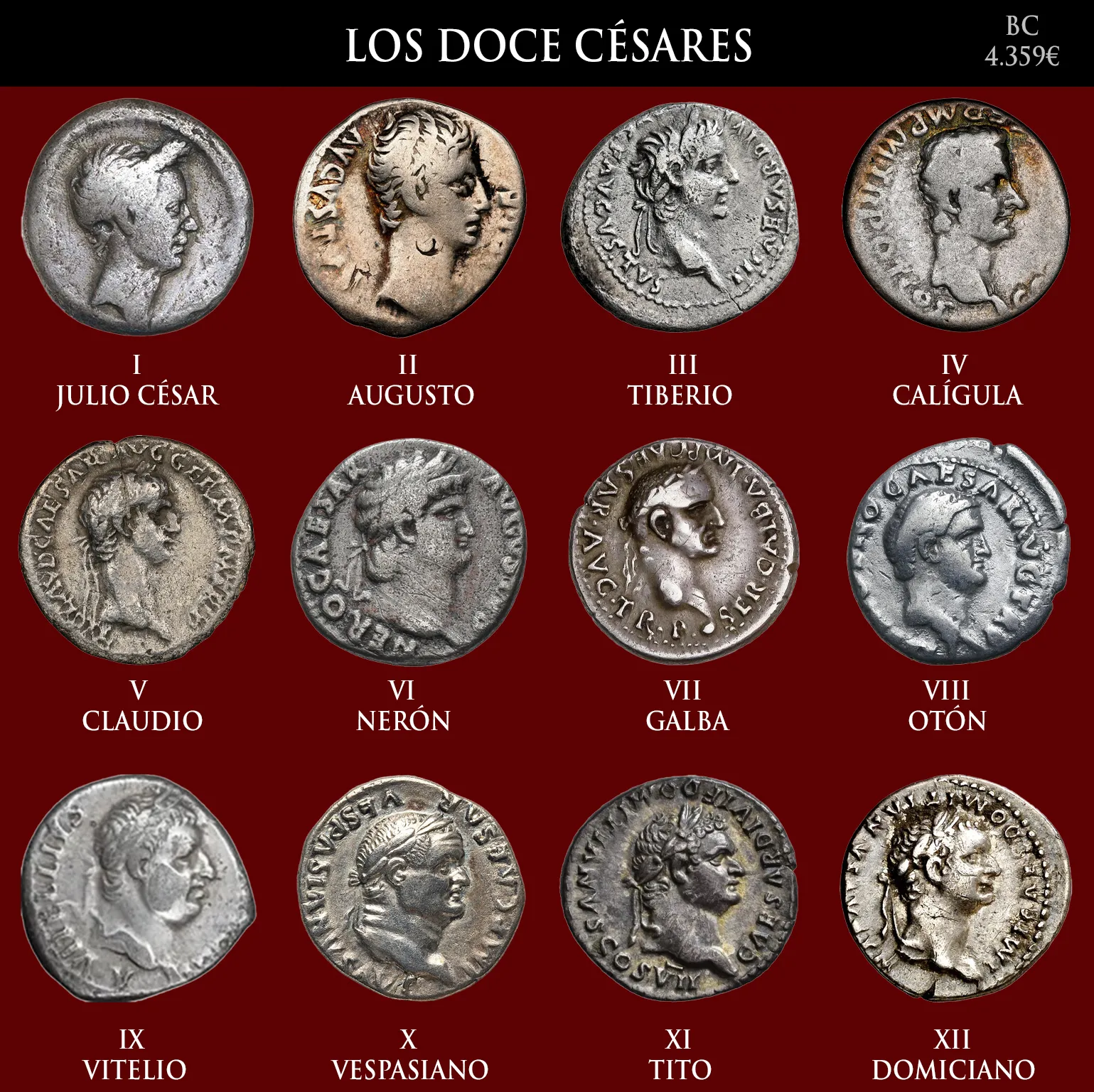
BC - Good preservation. Very worn and with inconspicuous but recognizable features
The total price in BC grade is 4,359 euros:
€270 Julius Caesar + €170 Augustus + €200 Tiberius + €1,600 Caligula + €506 Claudius + €169 Nero + €450 Galba + €342 Otho + €375 Vitellius + €81 Vespasian + €130 Titus + €66 Domitian
Conclusion: The dream collection of any collector
This series, known as such thanks to the work of Suetonius, covers the lives of the first twelve rulers of Rome, remembering that only Julius Caesar, the first of them, never officially held the title of emperor, although his figure started it all.
Completing this collection is a major challenge, not only because of the difficulty of obtaining some pieces, such as those of Otho or Vitellius, but because the price can fluctuate enormously depending on the grade of preservation. From more than 300,000 euros for a series in Uncirculated, to less than 5,000 euros for more modest qualities, which makes it clear that, with patience and a good eye, it is possible to adapt this dream to almost any budget.
But beyond the money, what really makes this collection special is the direct connection to the men who built, enjoyed and, in many cases, suffered absolute power in Rome. To hold a denarius of Nero, Augustus or Vespasian in your hands is to touch a real piece of history, and that sensation is, without a doubt, what makes this series one of the greatest trophies for any lover of numismatics.