DR-351 | Crawford: 342/3a
Caius Vibius Pansa
Caius Vibius Pansa
Gens: Vibia
Moneyer: Caius Vibius Pansa
Date and mint: 90 BC - Rome
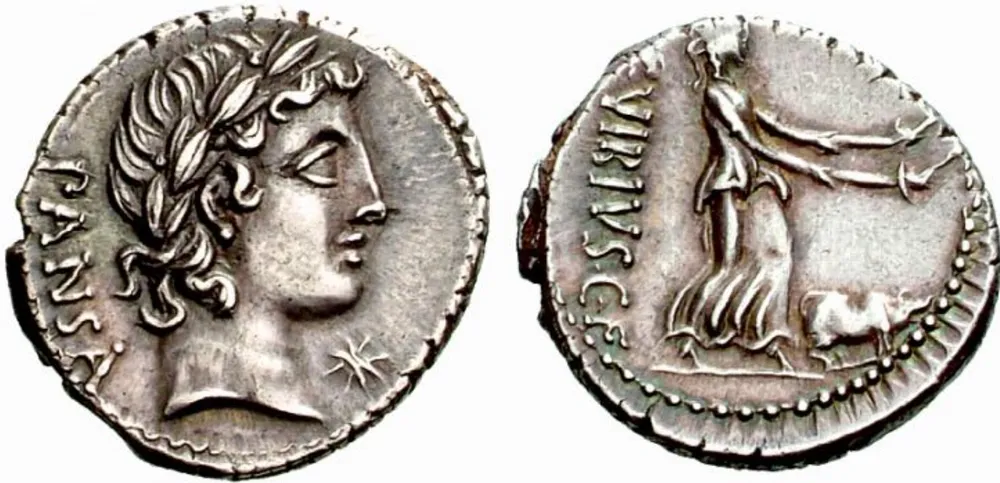
Obverse: Laureate bust of Apollo, right. Dotted border.
Legend: PANSA
Symbols: Obverse before, control mark
Reverse: Ceres walking to the right, holding a torch in each hand; before, pig. Laurel wreath border. | Ceres walking to the right, holding a torch in each hand; before, pig. Dotted border.
Legend: C VIBIVS C F
Comment: The Vibia gens, of plebeian origin, made its way into Romen politics at the end of the Republic, achieving relevance with characters such as Gaius Vibius Pansa, moneyer in the year 90 BC, and his homonymous descendant, who would reach the consulate in 43 BC. The issuance of this denarius is part of the social war, when Roma needed large amounts of cash to support military expenses, but also to reinforce confidence in victory with religious and traditional images.
The obverse shows the laureate bust of Apollo, god of light, prophecy and harmony, very present in the coinage of this time as a guarantor of divine protection against crisis. The PANSA legend identifies the magistrate, repeating the resource of turning the currency into a vehicle for family propaganda.
The reverse represents Ceres advancing with a torch in each hand, iconography that refers to the story of the search for her daughter Proserpina, kidnapped by Pluto. A pig appears before the goddess, which is not part of the original myth, but must be understood as an addition of ritual meaning: the pig was the sacrificial animal par excellence in the cults of Ceres and in solemn ceremonies (suovetaurilia). In this way, the coin fuses the mythical scene of the goddess with a symbol of Roman agricultural religiosity, transmitting a message of regeneration, fertility and continuity of the community in the midst of the crisis of the social war.
Two variants of this denarius are known, differentiated by the control marks: in one, the scene appears surrounded by a laurel wreath; in the other, simply by a dotted border. These differences are testimony to a broad and diversified issue, in which multiple dies were used to sustain the strong moneyer demand of the time.
Provenance: Numismatica Ars Classica (2007)
Price: 605 €
Other references
| Crawford: | 342/3a |
| DR: | 351 |
| BMCRR (Grueber): | Roma 2242, 2243 |
| B (Babelon): | Vibia 7 |
| RSC (Seaby): | Vibia 7 |
| FFC (Fdez., Fdez., Calicó): | 1210, 1211 |
| RC / RCV (D. Sear): | 241 |
| CRI (Sear Imperators) 49 - 27 BC: | |
| CRR (Sydenham): | 683b |
| Cal (Calicó): | 1364, 1364a |
| RBW: | |
| Other authors: |
• Read the article about catalogues of Roman Republican coinage on our blog