PUPIENUS
RIC IV Pupienus 5
Series: Empire - RIC IV Pupienus 5
Reference: RIC IV Pupienus 5
 |  |
Gens and monetary:Crisis of the 3rd century - PUPIENO
Year and mint:From 238 AD to 238 AD - Rome
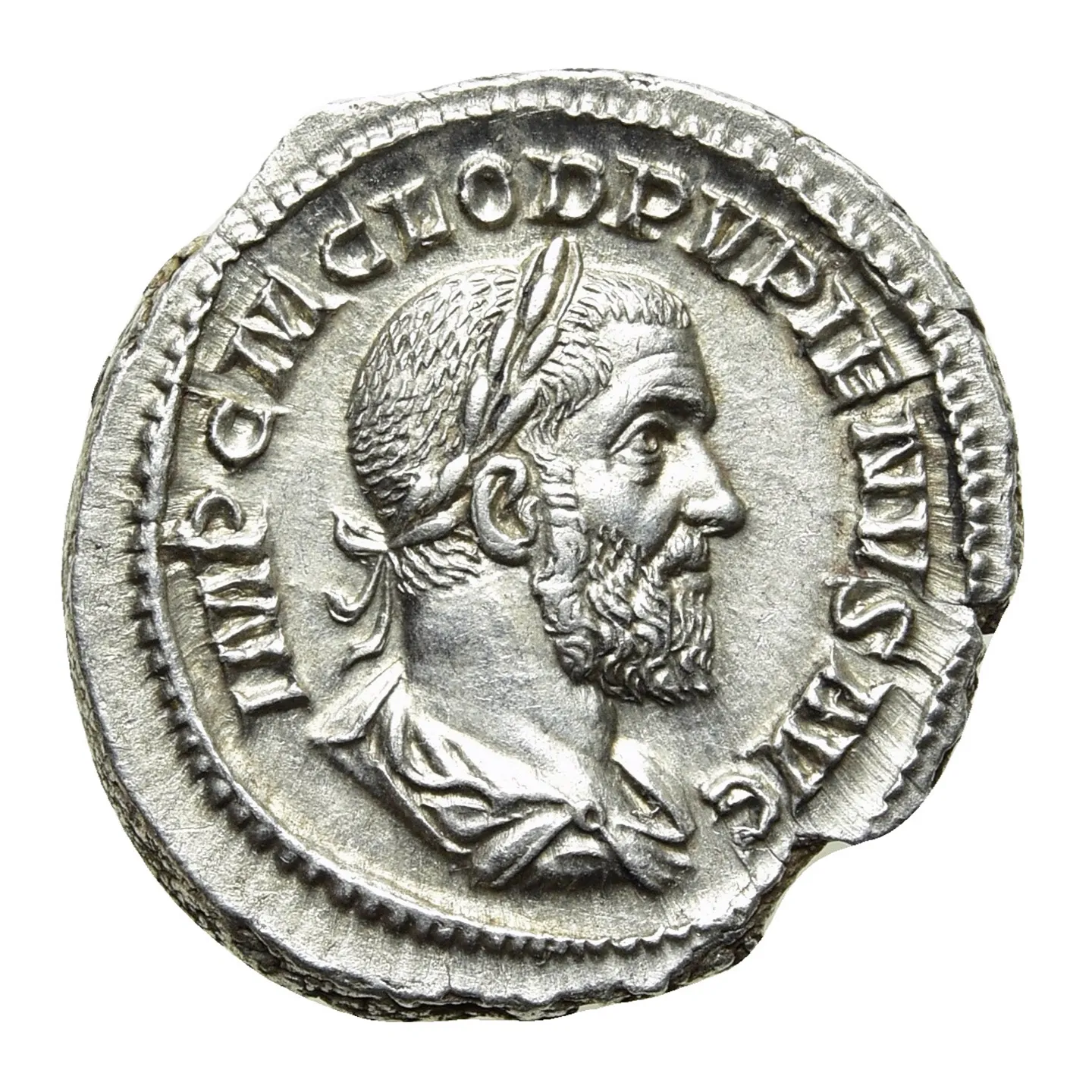
Obverse:Bust of Pupienus, laureate, draped, with cuirass, right. IMP C M CLOD PVPIENVS AVG (Imperator Marcus Clodius Pupienus Augustus)
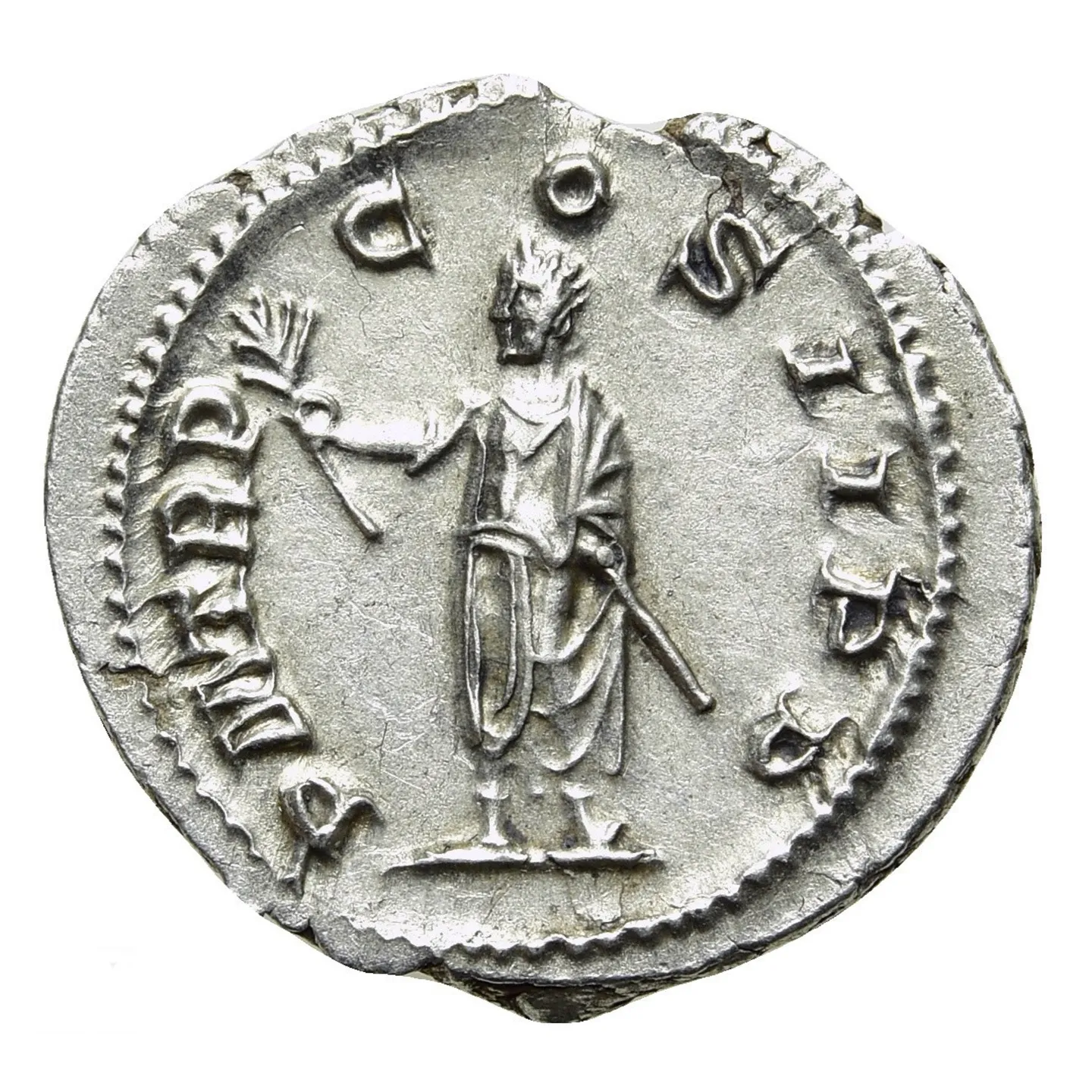
Reverse:Pupienus, robed, standing left, holding a branch in his outstretched right hand and a parazonium in his left hand. P M TR P COS II P P (Pontifex Maximus, Tribunicia Potestas, Consul for the second time, Father of the Nation).
Grade:EF+ 3.43 g - 7h
Origin:Naumann 2025
Comment:
Marcus Clodius Pupieno Maximus was a senator with a long administrative and military career—probably of modest origin—who became prefect of the city of Rome and governed several provinces. In the context of the open crisis against Maximinus the Thracian, the Senate proclaimed him collegiate emperor together with Balbinus in April 238 AD. C.. To reinforce the popular consensus, the young Gordian III was associated as Caesar.
Pupienus was entrusted with military command: he marched to northern Italy, organized the defense and maintained the siege of Aquileia until Maximinus’ own troops murdered him in front of its walls. The victory momentarily stabilized the situation, but upon his return to Rome conflict broke out with the Praetorian Guard. In July 238, the Praetorians stormed the palace and murdered Pupienus and Balbinus, leaving only Gordian III as Augustus. His reign, which lasted just a few months, is remembered for the defeat of the usurper Maximinus and for the predominance of the Senate over the army, ephemeral but significant in the midst of the crisis of the 3rd century.
This denarius summarizes, in a silver module, the Senate’s commitment to restore order against the power of the army… a commitment that lasted just a few months. The relative rarity of Pupienus compared to long-reigning emperors makes his denarii highly sought after, and even more so if they present a good portrait and complete legends.
238 d. C. – The Year of the Six Emperors
In March, in Africa, Gordian I and Gordian II rose up, with the support of part of the Senate and the people of Rome. The revolt failed after a few weeks, but the Senate, determined to put an end to Maximinus the Thracian, proclaimed Pupienus and Balbinus as new Augusti in April. Maximinus marched against Italy, but was blocked at Aquileia and killed by his own troops.
The situation in Rome remained very tense: the population idolized the Gordians, the Praetorian Guard distrusted the new emperors, and the Senate tried to maintain control. Finally, in July 238, the Praetorians assassinated Pupienus and Balbinus, leaving Gordian III as sole emperor.
This year marked the visible beginning of the Crisis of the 3rd century: civil war, direct intervention of the Senate in the election of emperors, weakening of the Praetorian Guard as guarantor of power and growing political, economic and border instability.
The six emperors of the year 238: Maximinus the Thracian; Gordian I; Gordian II; Pupieno; Balbinus and Gordian III