Gordian III
RIC IV Gordian III (Caesar) 1
Series: Empire - Gordian III
Reference: RIC IV Gordian III (Caesar) 1
 |  |
Gens and monetary:Crisis of the 3rd century - Gordian III
Year and mint:From 238 AD to 238 AD - Rome
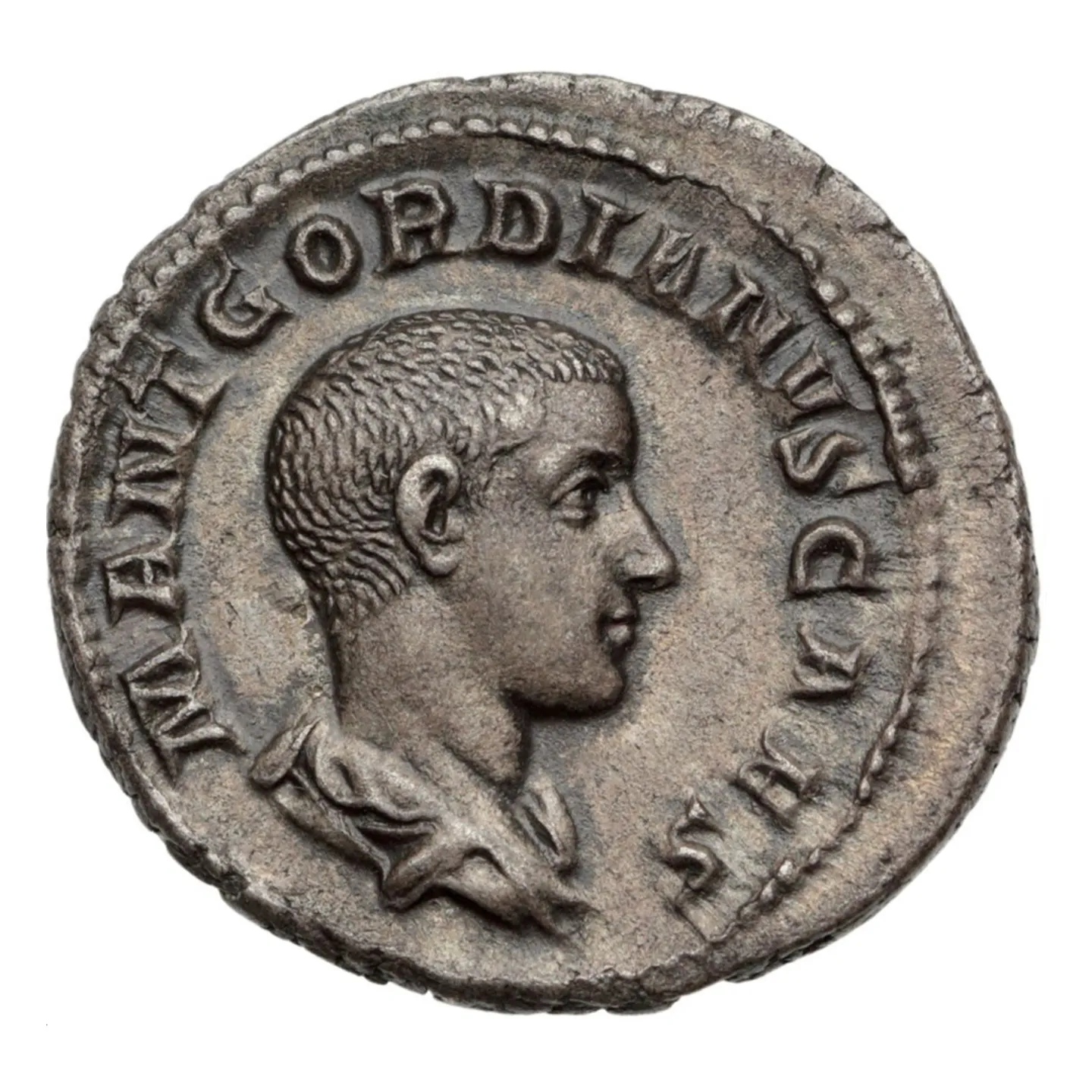
Obverse:Bust of Gordian III to the right, bare head, draped. M ANT GORDIANVS CAES
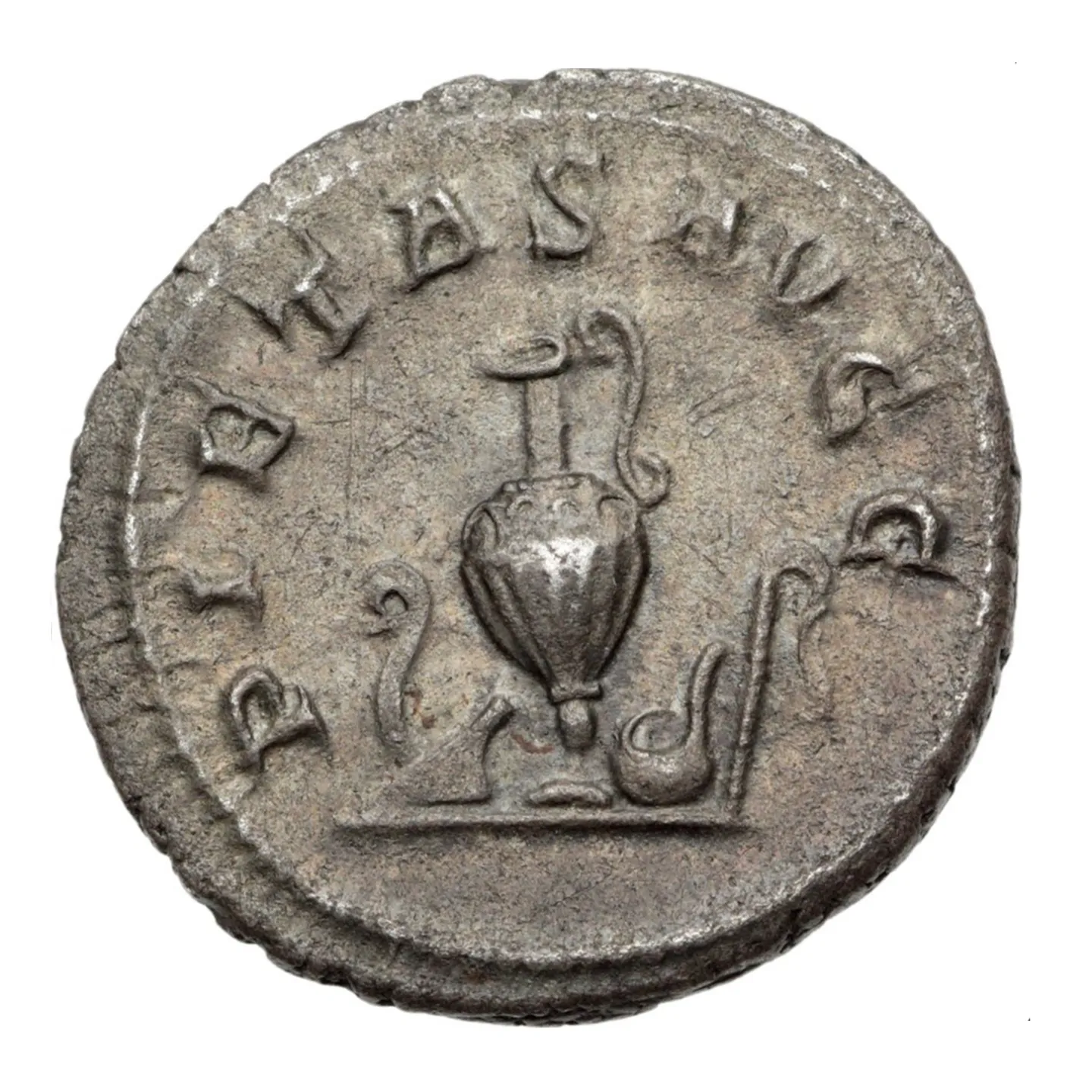
Reverse:Priestly emblems: pitcher between lituus and knife on the left and simpulum and sprinkler on the right. AVGG FEET
Grade:EF+ 2.93 g - 7h
Origin:Burgan Numismatique 2024
Comment:
Gordian III came from an aristocratic Roman family. His grandfather, Gordian I, and his uncle, Gordian II, had briefly been emperors in 238 AD. during a revolt against Maximinus the Thracian. Although Gordian III was only a child when he rose to power, his family was well connected with Roman elites, which facilitated his proclamation as emperor by the Senate upon the death of his relatives. This connection with the Roman aristocracy was key to its legitimacy in a period of great instability, known as the “Crisis of the Third Century.”
Gordian III was the youngest emperor in Roman history, assuming office at age 13 in 238 AD. His government, marked by his youth, was largely controlled by members of the Senate and his father-in-law, the Praetorian Prefect. During his reign, campaigns against the Persians were carried out, but his leadership was weak due to his inexperience.
The denarius was minted in 238 AD, a year of great change in Rome, known as the “Year of the Six Emperors.” The death of Gordian I and II, followed by the ascension of Gordian III, marked an attempt by the Senate to stabilize the Empire through a young leader, backed by the Roman elites. Although Rome faced external threats, Gordian’s rule was relatively calm in its early years.
On the obverse, the bust of Gordian III, without a crown, highlights his youth and the intention to present him as a humble and accessible ruler. The reverse features priestly emblems, such as the pitcher and the lituus, which reinforce the concept of piety and religious devotion. The legend “PIETAS AVGG” reflects the desire to project an image of stability and respect for traditions under their government.