Octavian
RIC I 255
Series: Empire - Octavian
Reference: RIC I 255
 |  |
Gens and monetary:Julia - Claudia - Octavian
Year and mint:From 39 BC to 32 BC - Italy
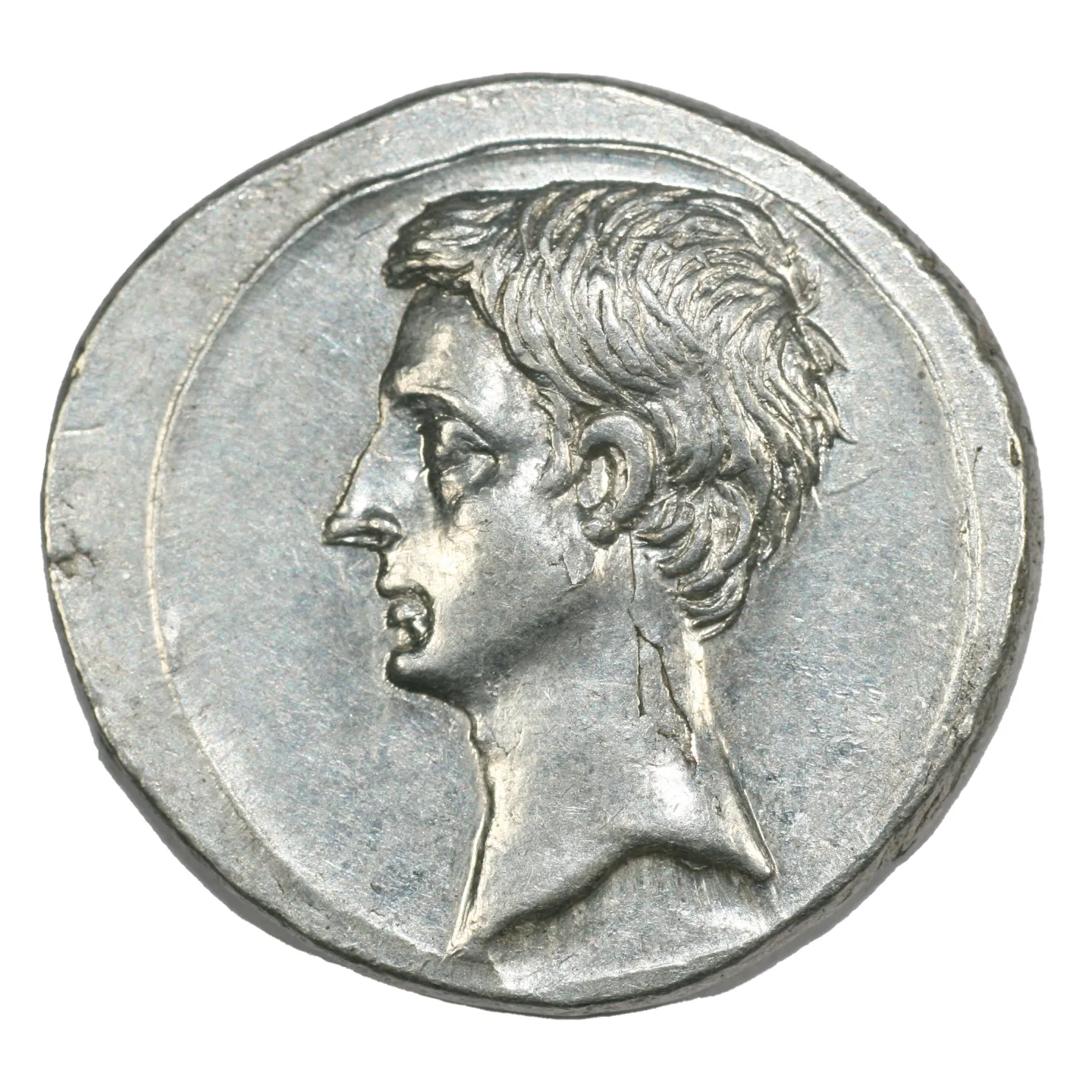
Obverse:Head of Octavian, bare, left. -
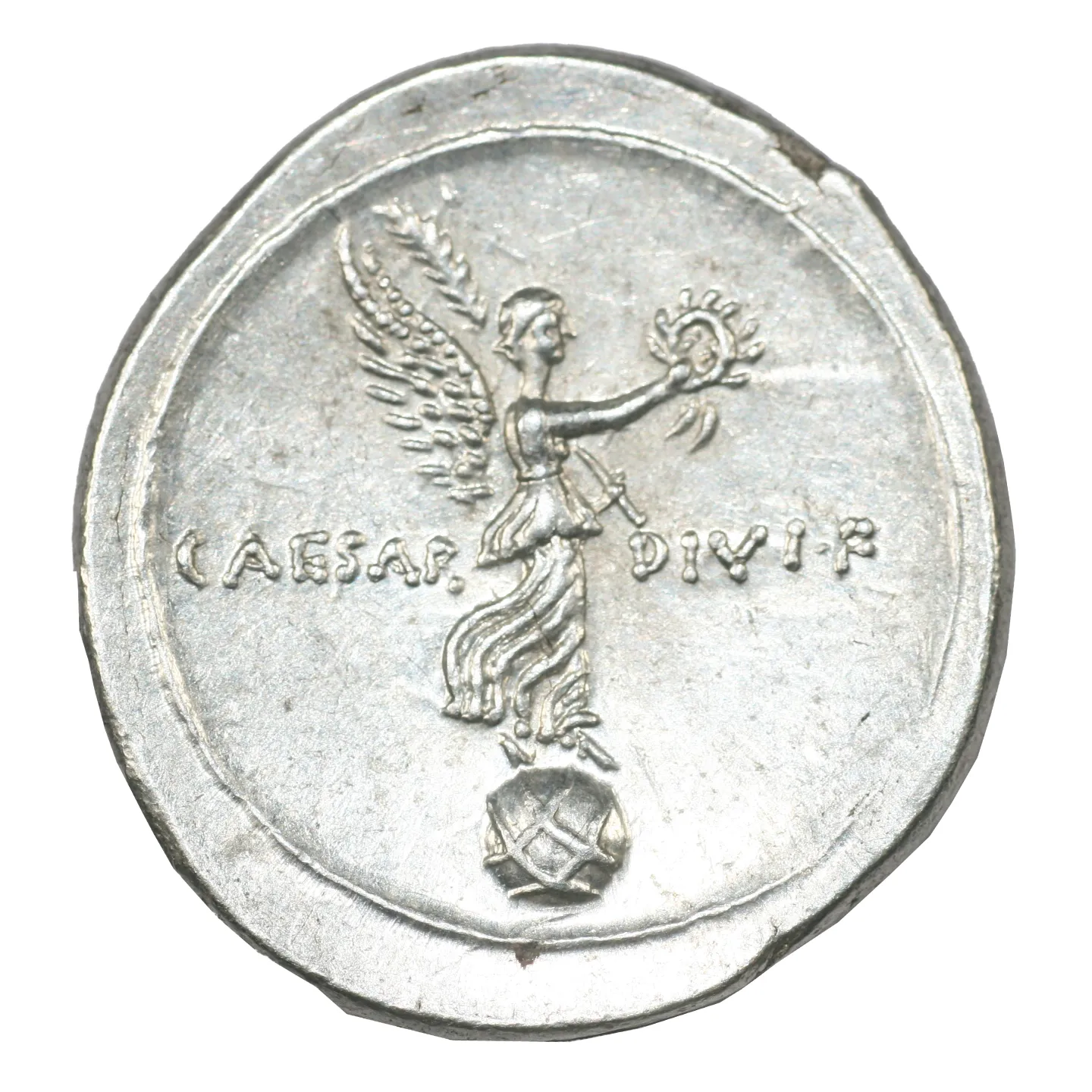
Reverse:Victoria, wrapped, standing to the right of the globe, holding a crown in her right hand and a palm in her left. CAESAR DIVI F
Grade:EF+ 3.85 g - 2h
Origin:CNG 2023
Comment:
The gens Julia was one of the oldest and most prestigious in Rome, tracing its lineage to important figures such as Lucius Julius Caesar, consul in 90 BC, who played a crucial role in the Social War by granting Roman citizenship to the Italian allies. Also notable were Gaius Julius Caesar, the dictator’s grandfather, who was consul in 91 BC, and his father, Gaius Julius Caesar, who was praetor and governor of Asia. Octavian, adopted by Julius Caesar, inherited this powerful family tradition.
Octavian was an ambitious young man in the years of coinage (39–32 BC), consolidating his power after the assassination of Caesar. As Caesar’s heir, Octavian used coins to reinforce his legitimacy. During these years, he was recognized for his ability to attract the support of the legions and manipulate Roman public opinion, projecting himself as the savior of the Republic in its fight against Mark Antony and Lepidus.
The denarius was minted during a period of increasing political tensions, when Octavian and Mark Antony shared control of Rome under the Second Triumvirate. This denarius was a propaganda tool to legitimize the power of Octavian, who promoted his image as a defender of Roman tradition and Caesar’s legacy. The conflict between Octavian and Mark Antony, which would culminate in the Battle of Actium in 31 BC, was in full swing.
On the obverse, Octavian’s head, without any adornment, represents his youth and his purity as a leader. The reverse is a powerful statement: Victory standing on a globe symbolizes the universal dominion that Octavian aspired to achieve. The palm in his left hand represents military triumph, while the laurel wreath in his right hand evokes the victory that Octavian strove to achieve in his struggle for supreme power in Rome. The legend “Caesar Divi F” reinforces the connection with the divine Julius Caesar, emphasizing his legitimacy as his adopted son and natural heir.