Neptune
Crawford RRC 420/1a
Series: Republican deities - Neptune
Reference: Crawford RRC 420/1a
 |  |
Gens and monetary:Plautia - P. Plautius Hypsaeus
Year and mint:From 60 BC to 60 BC - Rome
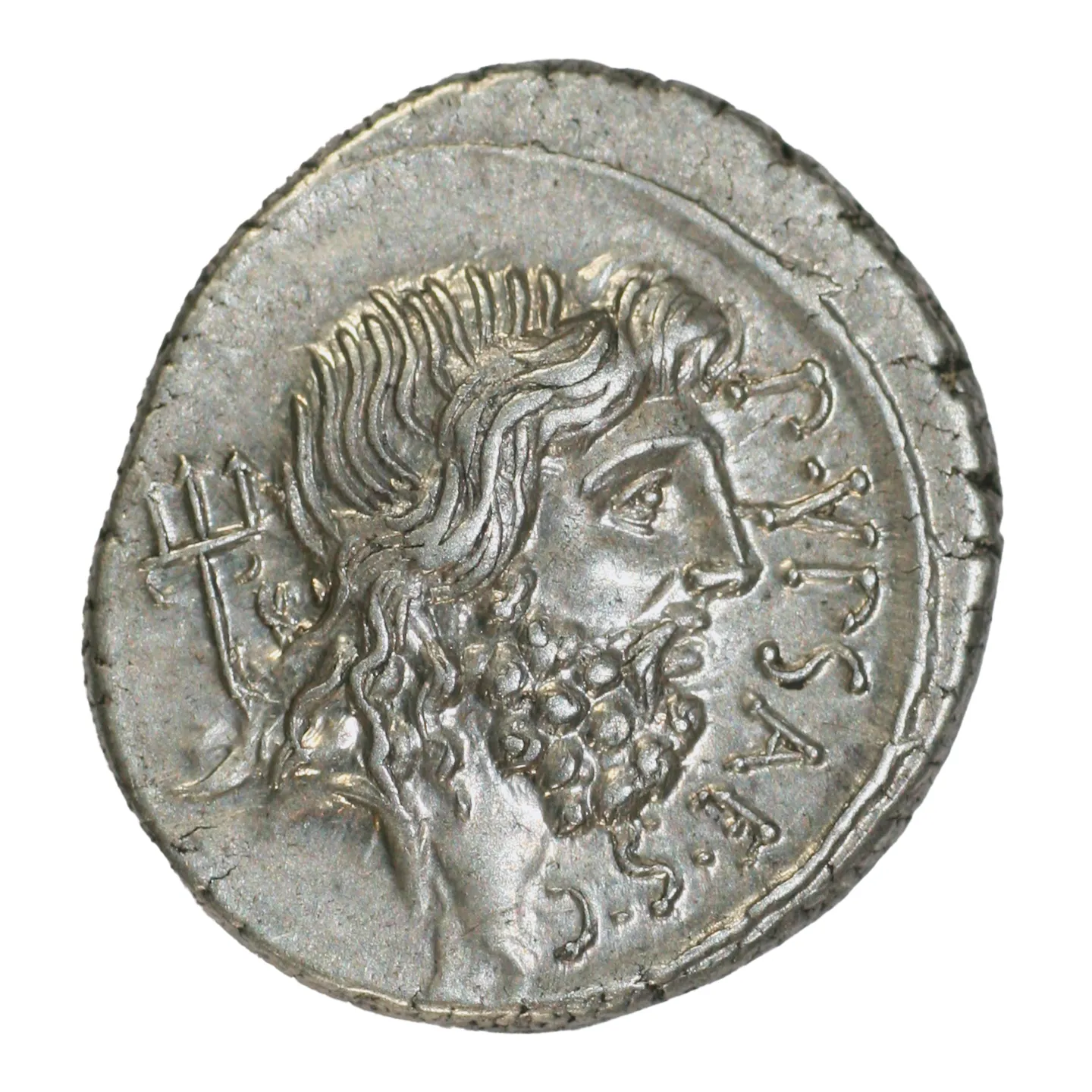
Obverse:Bust of Neptune, right; behind, Trident. Dotted border. P·YPSAE·S·C
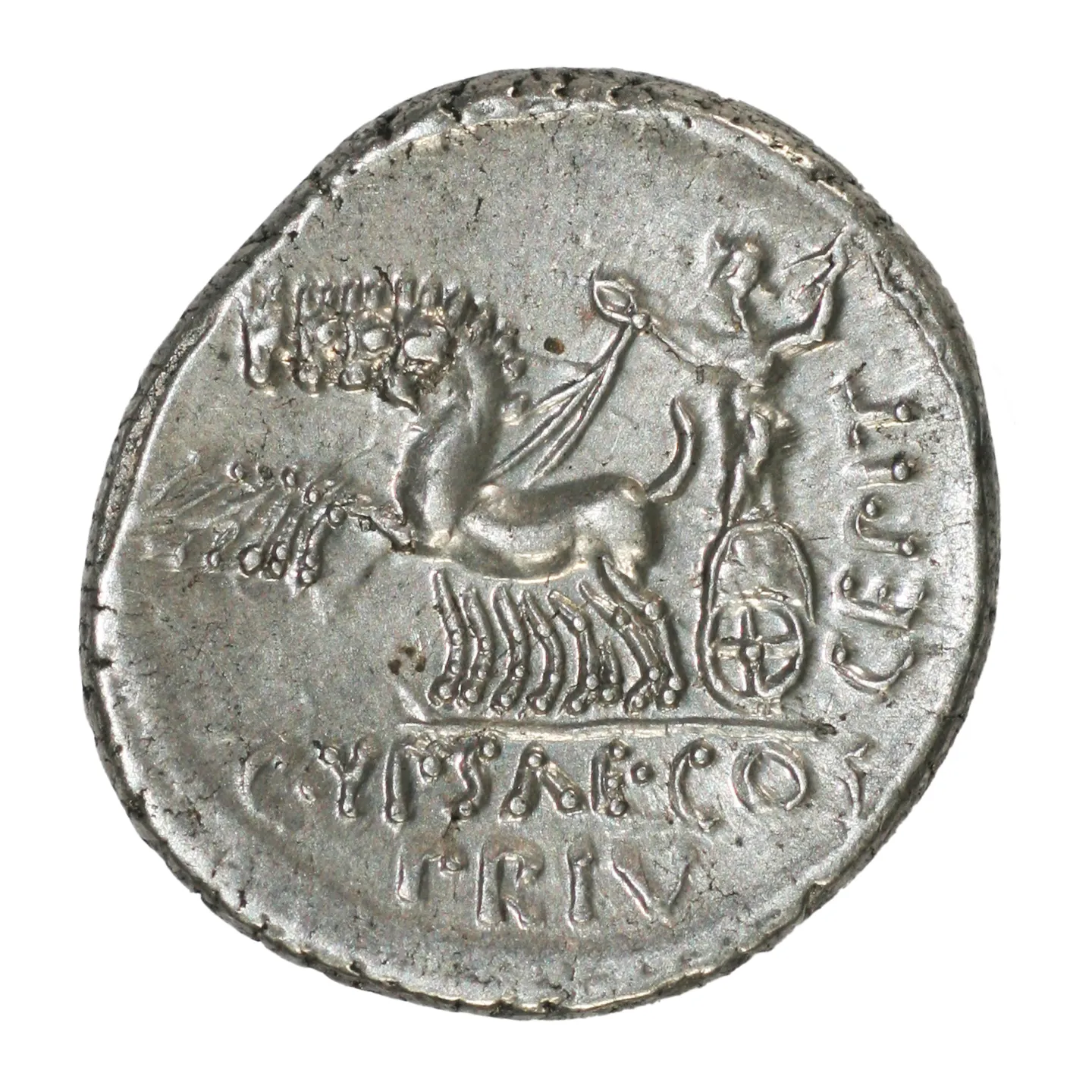
Reverse:Jupiter in quadriga, left, reins in left hand and throwing lightning with right. Dotted border. CEPIT C·YPSAE·COS / PRIV
Grade:FDC 4.09 g - 4h
Origin:Former Bertolami Fine Arts, 7, 2013; NAC sale 114, 2019, 456; NAC 143, 2024, Dioscurii Collection
Comment:
The gens Plautia was a plebeian family whose relevance dates back to the 4th century BC, after legal reforms that allowed plebeians access to the highest magistracies. For several generations the family held important positions, but their influence waned after the Punic Wars. In the imperial period, the Plaucians once again stood out, with several members reaching the consulate and forming alliances with the imperial family, which led them to be recognized as part of the patriciate. Its most prominent member was Aulus Plautius, who led the invasion of Britain under Emperor Claudius.
P. Plautius Hypsaeus had a notable political career. He was quaestor in 60 BC, curul aedile in 58 BC. and praetor in 55 BC, all with the support of Gnaeus Pompey the Great, with whom he maintained a close political relationship.
The year 60 B.C. It was a period of great political upheaval in Rome. The First Triumvirate was consolidated between Julius Caesar, Pompey and Crassus, an alliance that would profoundly modify the balance of power in the Republic. The growing influence of military figures such as Pompey and Caesar presaged the decline of the traditional republican structure.
On the obverse, the bust of Neptune, with his trident, is an emblem of Roman naval dominance, perhaps a reference to the maritime power that Pompey consolidated after his victories in the Mediterranean. On the reverse, Jupiter on a chariot, launching a lightning bolt, symbolizes the divine authority and military supremacy of Rome, reinforcing the idea of Rome’s destiny as an invincible power and under the protection of the gods.