Caligula
RIC I Gaius 14
Series: Empire - Caligula
Reference: RIC I Gaius 14
 |  |
Gens and monetary:Julia - Claudia - Caligula
Year and mint:From 37 AD to 38 AD - Lugdunum
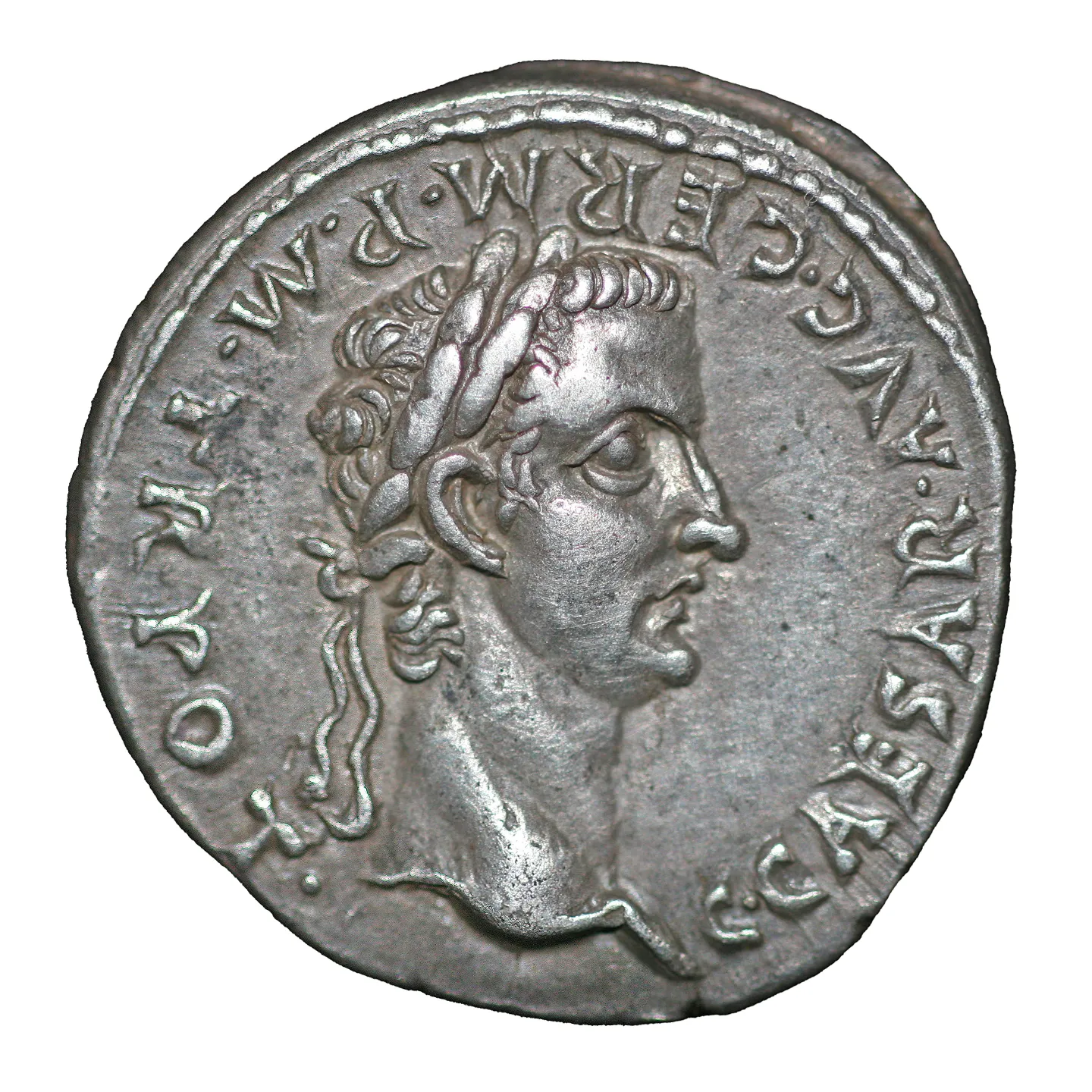
Obverse:Head of Caligula, laureate, right C CAESAR AVG GERM P M TR POT
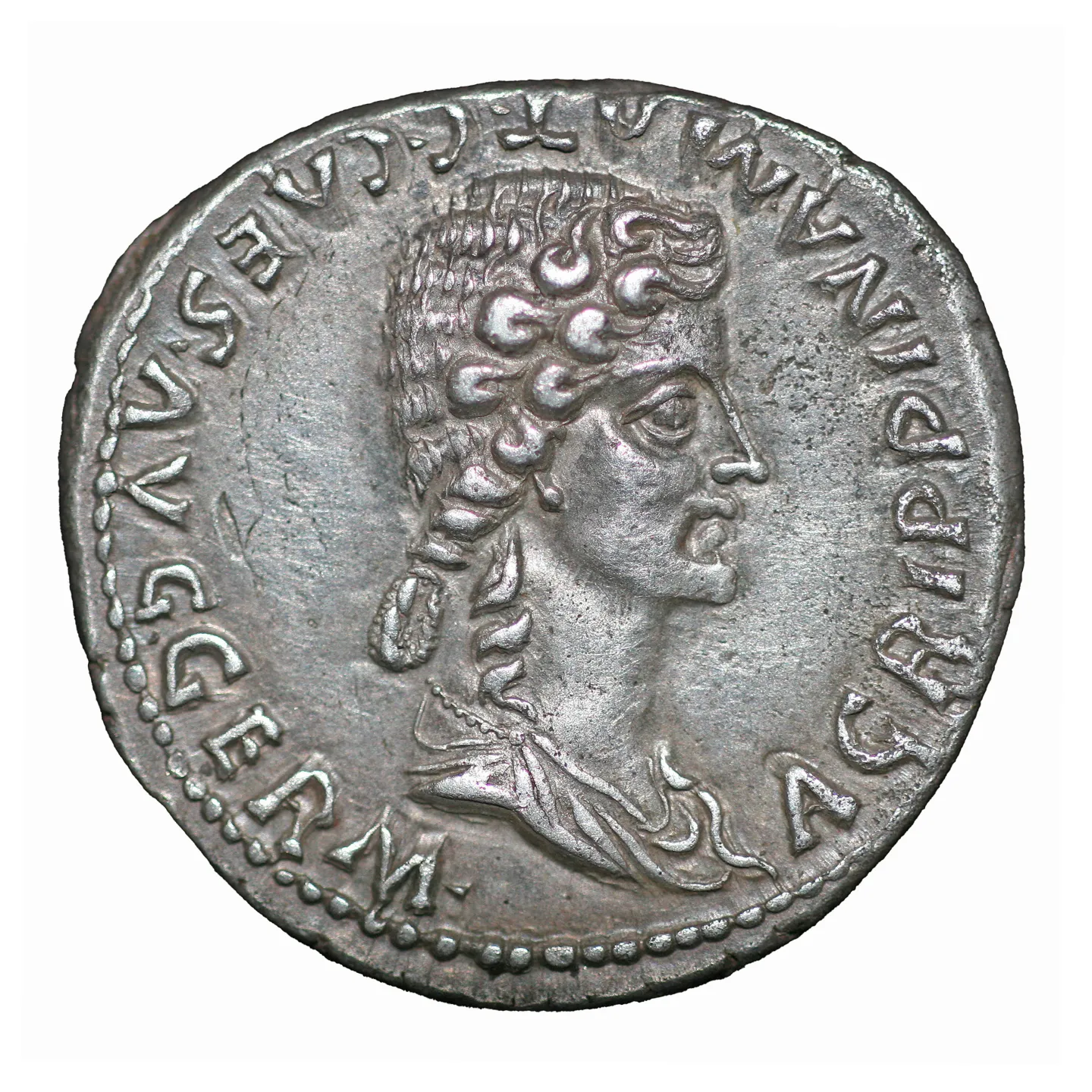
Reverse:Draped bust of Agrippina on the right, hair arranged in curls along the forehead line and gathered in a looped braid at the back. AGRIPPINA MAT C CAES AVG GERM
Grade:EF+ 3.71 g - 9h
Origin:(9/3/2009) Germany, Gorny & Mosch; (3/1/2012) USA, Freeman & Sear Manhattan III; (4/9/2012) USA, Goldberg 70; (12/12/2016) Switzerland, Ars Classica Numismatics; (7/1/2018) USA. Heritage Actions; (8/31/2024) San Marino, Nomisma.
Comment:
The Julia-Claudian dynasty was the first dynasty of the Roman Empire that ruled from Augustus to Nero. Its members united the families of Julius Caesar and Augustus on the one hand, and the Claudii, an ancient and aristocratic Roman gens, on the other. The dynasty began with Augustus and was consolidated by his stepson Tiberius.
Gaius Julius Caesar Augustus Germanicus (Caligula) assumed the throne in 37 AD. at the age of 25. At the beginning of his mandate, he was very well received by the people due to his relationship with the beloved General Germanicus, his father. However, he soon displayed authoritarian and eccentric tendencies, earning a reputation for his brutality and extravagances. His short life as emperor ended abruptly in 41 AD. when he was murdered in a plot orchestrated by members of the Praetorian Guard.
In 37 AD, Rome experienced significant change with the death on March 16 of Emperor Tiberius, who had ruled with an iron fist for more than two decades. That same year, Caligula was proclaimed emperor, and his promotion generated great hope among the citizens, who saw in him a charismatic young man. Caligula began his term by promising to restore the powers of the Senate and eliminate the treason trials instituted by Tiberius. He also made generous donations to the people and soldiers, consolidating his popularity in the first months of his reign.
The obverse of this coin features the laureate head of Caligula. The legend “C CAESAR AVG GERM P M TR POT” highlights his full name and the titles associated with his position, including “Germanicus”, an honorific title inherited from his father, who was a victorious general in campaigns against the Germanic tribes.
The reverse shows the bust of Agrippina the Elder, mother of Caligula, with a complex hairstyle that denotes her nobility and prestige. The legend “AGRIPPINA MAT C CAES AVG GERM” underlines her role as the emperor’s mother, highlighting the importance of the maternal figure in the political propaganda of Caligula, who used to evoke the memory of his mother to legitimize himself as a leader.
Ars Classica Commentary: All ancient historians agree that Agrippina the Elder, granddaughter of Augustus, was a model of righteousness and maternal virtue. She also went beyond the traditional role of a Roman wife by accompanying her husband Germanicus on dangerous military campaigns and foreign destinations. The Roman people admired his courage; However, he also had an imperious nature that irritated his peers and relatives, particularly the Emperor Tiberius. The mysterious death of Germanicus in the year 19 AD. C. caused more confrontations. Agrippina believed that Tiberius and/or Livia had had something to do with her disappearance and did not hide her suspicions. In the year 29 AD. C. was accused of treason and banished to a remote island; she suffered repeated abuse and was deprived of food; he died four years later. After Tiberius’ death, his son Gaius ‘Caligula’ became emperor and rehabilitated his mother’s reputation, ostentatiously depositing her ashes in the Mausoleum of Augustus and minting this attractive denarius that matches her portrait with his own.