The Roman Denarius and Inflation: an Ancient Story Still Alive Today
Almost two thousand years ago, Rome already suffered the consequences of making more money than it could sustain. Does it sound familiar to you?
The Roman denarius was the reference silver coin in Ancient Rome for more than five centuries. Throughout this long period, the denarius suffered a progressive devaluation in its metallic content: the coins went from being almost purely silver to containing more and more copper. We are going to trace the history of the devaluation of the denarius from its origin to its decline and we will see the economic, social and fiscal effects of this continuous devaluation.
Origins of the denarius (211 BC)
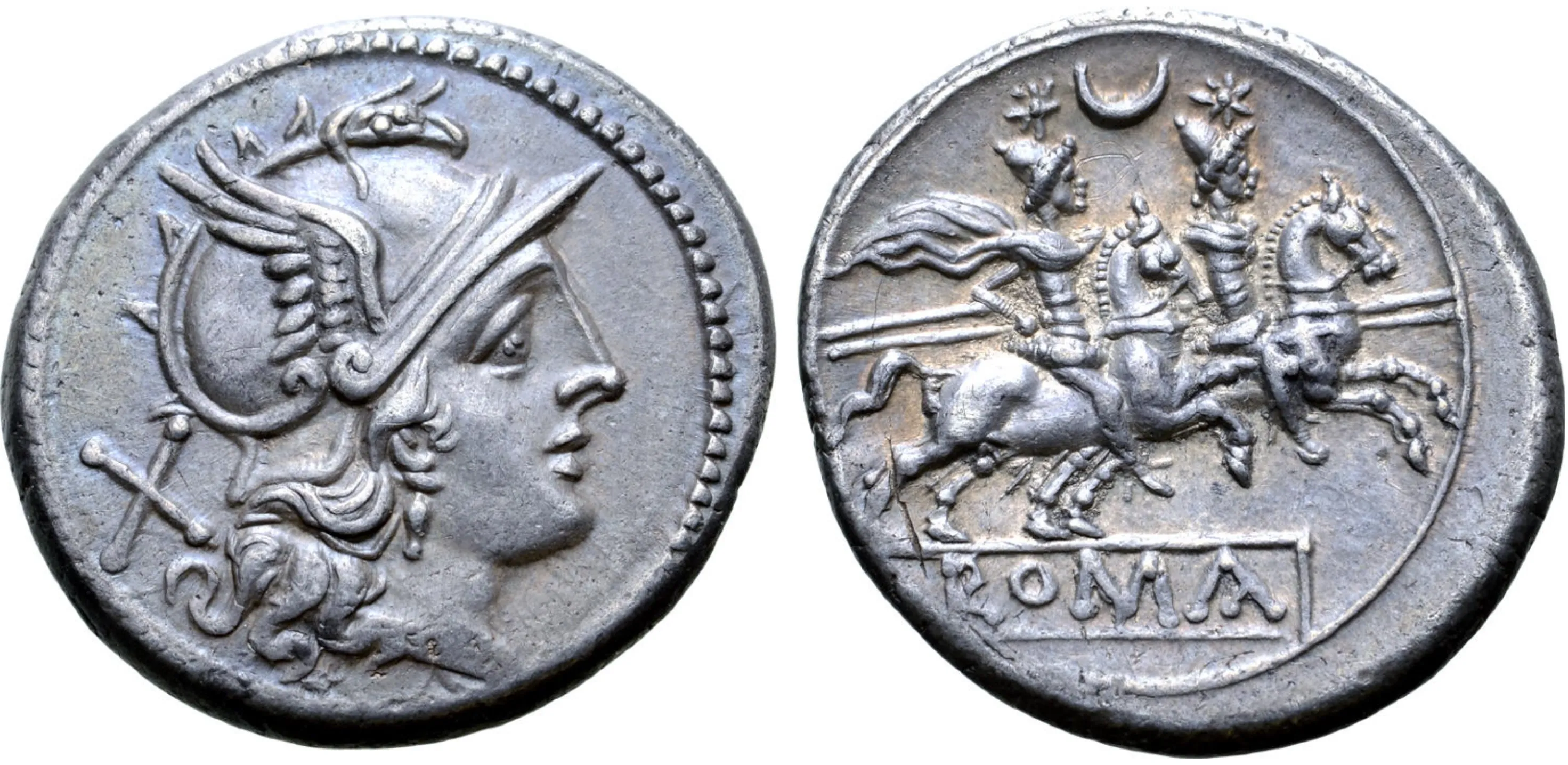
(DENARIUS WITH THE VALUE X FOR TEN ACES)
The denarius was born during the Roman Republic, in a context of great military activity and growing economic needs. Around 211 BC, Rome reformed its monetary system and issued the first denarius as a silver coin, whose name literally means “containing ten” (because it was initially equivalent to 10 bronze asses). It had an approximate weight of 4.5 grams and a very high purity, around 95-98% silver, about 72 denarii were struck from one pound of silver (approx. 327 grams).
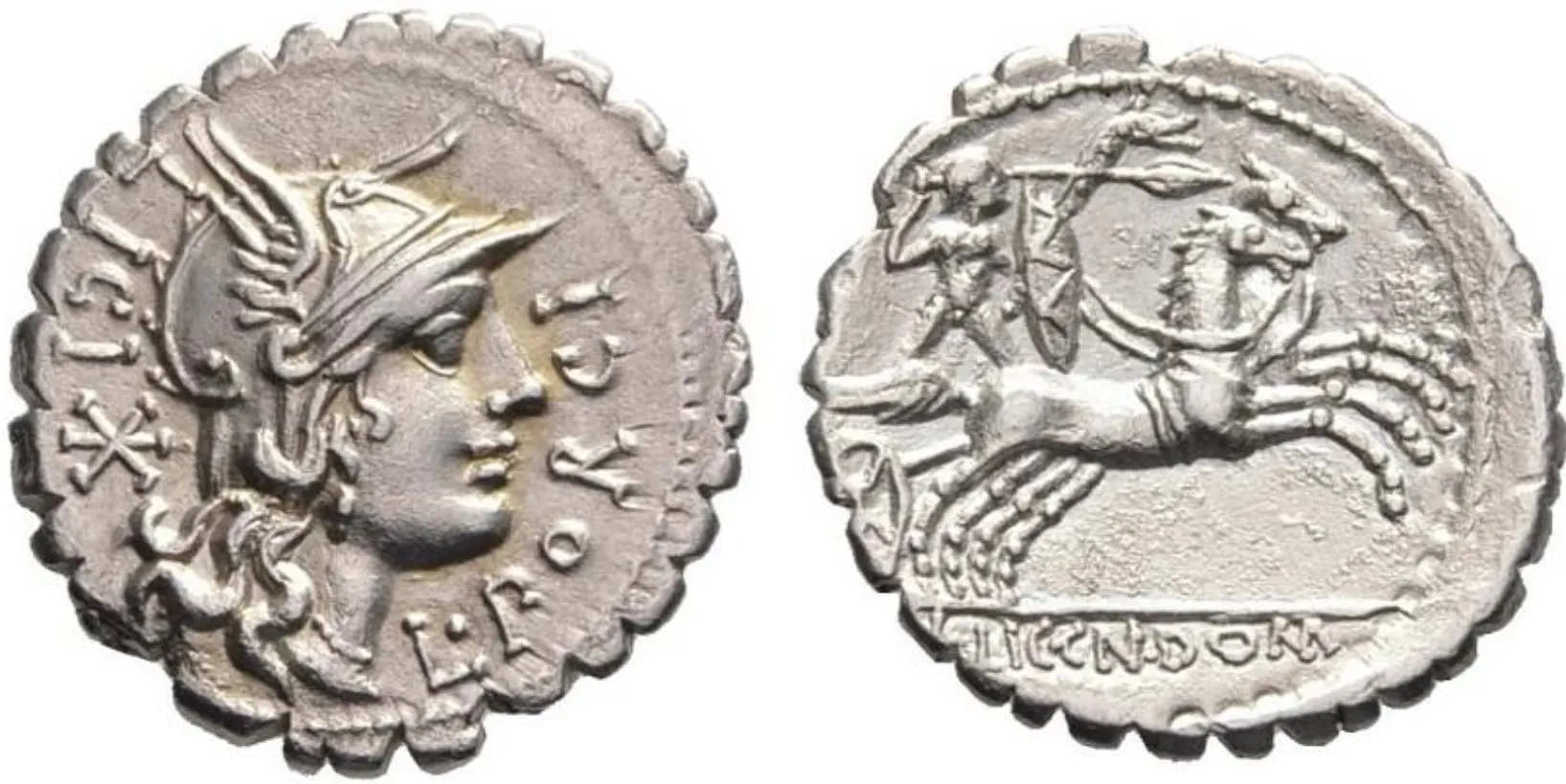
(DENARIUS WITH MONOGRAM OF XVI FOR SIXTEEN ASES)
Around 141 BC, its value was changed to 16 asses (instead of 10) after the weight of the bronze as was reduced. However, these changes did not substantially affect the purity or weight of the denarius itself.
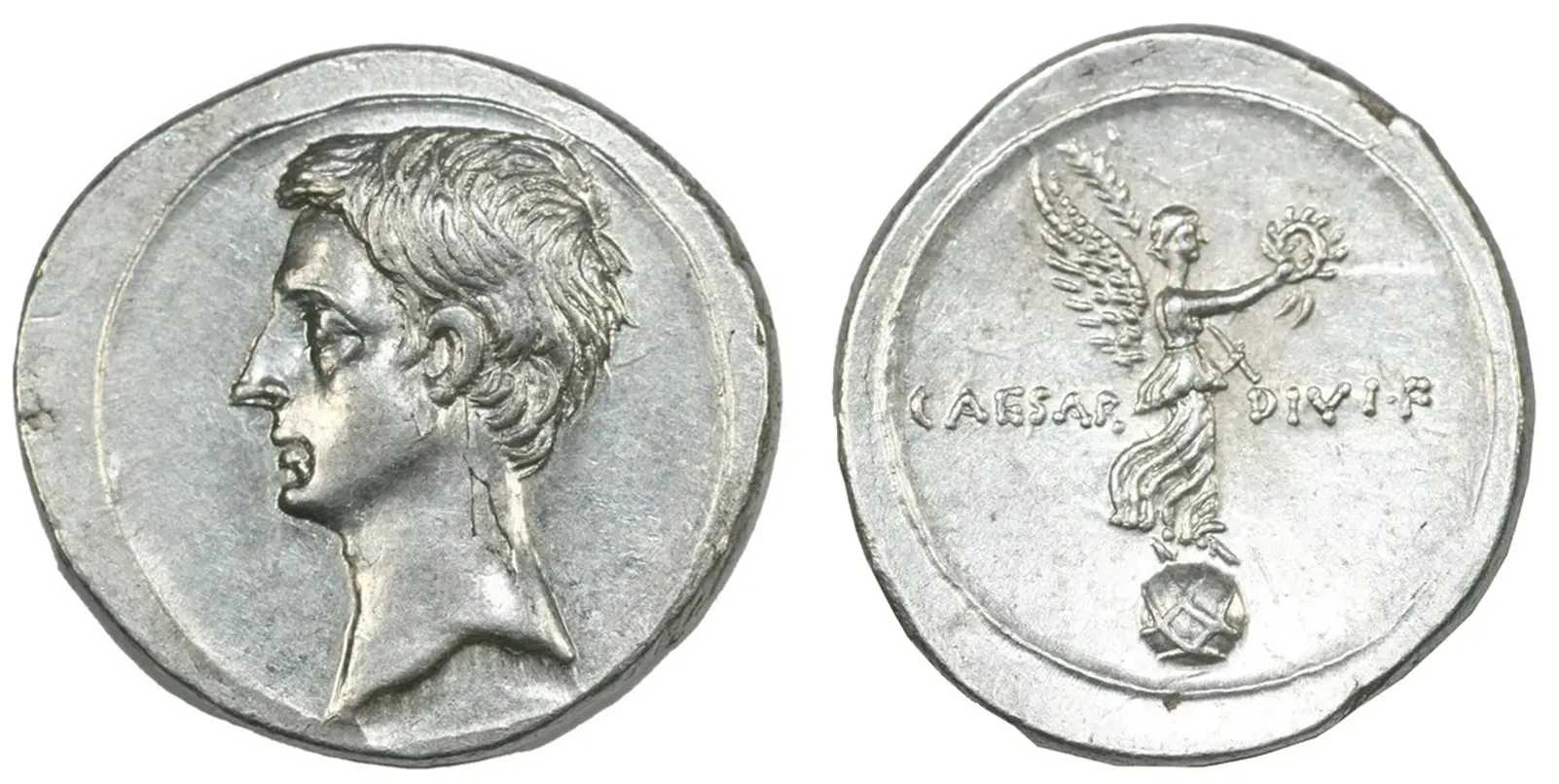
(DENARIUS OF AUGUSTUS)
Under Augustus (27 BC – 14 AD), the denarius remained a solid currency that was 98% silver and a theoretical weight close to 3.9 g (1/84 of a pound). In short, during the last years of the Republic and the beginning of the Empire, the denarius enjoyed great stability and public confidence, as it was a strong currency “backed” by its metallic content.
First great devaluation: Nero’s reform (64 AD)
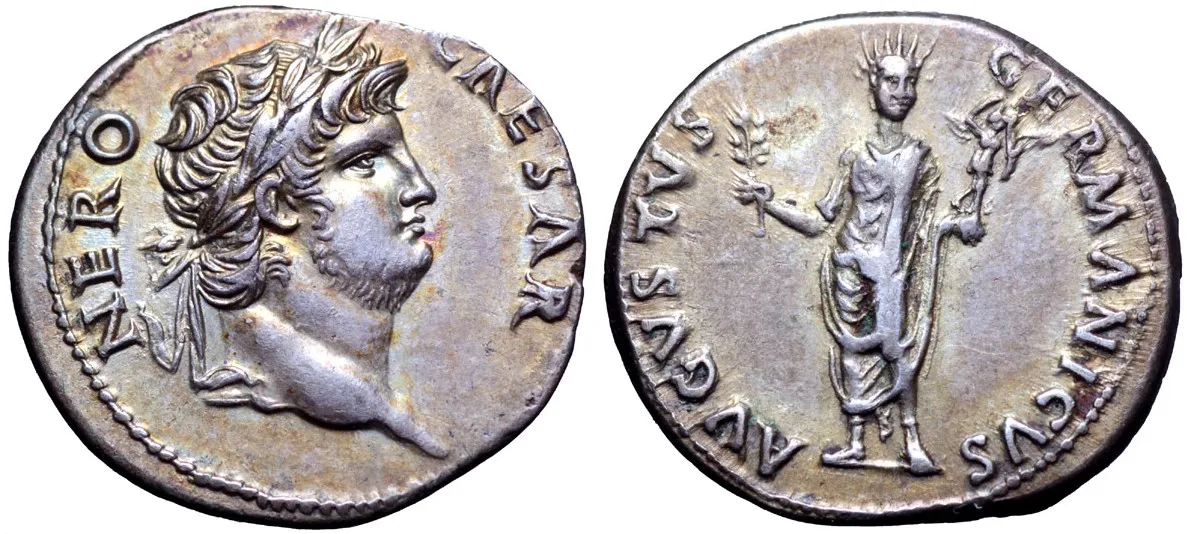
(DENARIUS OF NERO)
The first emperor to carry out a major devaluation of the denarius was Nero. In the year 64 AD, after the great fire of Rome, he needed to finance reconstruction and other expenses, so he recoined the coinage by reducing its silver content. This reform decreased the weight of the denarius from about 3.9 g to 3.3-3.4 g (going from 84 to 96 pieces per pound) and reduced the purity of the silver from 98% to 93-94%. In practice, each denarius contained only about 3.1 g of fine silver, down from 3.8 g previously.
Although the measure went relatively unnoticed at first—as the coin was still over 90% silver—it set a dangerous precedent: it opened the door to future devaluations as a fiscal tool. In addition, Nero also adjusted the content of the aureus (gold) and increased the issuance of bronze, showing an expansive monetary policy. In summary, the reform of 64 AD It was the first major cut in the intrinsic value of the denarius decided by the imperial power, to benefit the State coffers.
The Flavians (69 AD to 106 AD)
After Nero, the Empire went through a turbulent period (the year of the four emperors, 69 AD) and then the Flavian dynasty. These events also left their mark on the coinage.
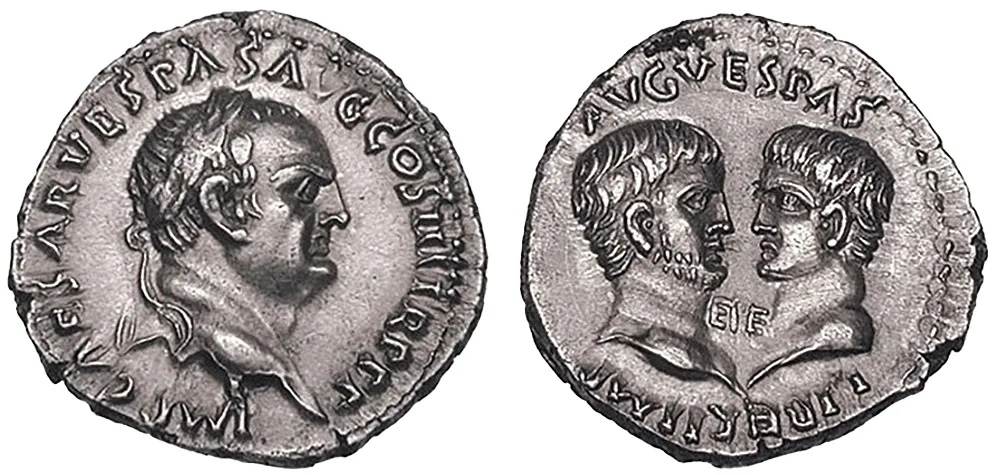
(DENARIUS OF VESPASIAN WITH TITUS AND DOMITIAN ON THE REVERSE)
Emperor Vespasian (69-79 AD), coming to power after the civil war, faced massive debts and, according to numismatic studies, further reduced the purity of the denarius from 93% to around 89%. However, something unusual happened shortly after: Domitian (81-96 AD), son of Vespasian, decided to partially reverse the devaluation. In 82 AD, Domitian made a brief monetary reform, restoring the purity of the denarius to levels close to the Augustan standard (98% silver). This short-lived restoration of purity (possibly to curry favor with public opinion or merchants) did not last long. Just three years later, in 85 AD, Domitian lowered the fineness again to around 93%, the same post-Nero level that had been established decades earlier. This episode demonstrates that the emperors were aware of the relationship between the quality of the coinage and public trust:
Trajan and the good emperors (107 AD to 192 AD)
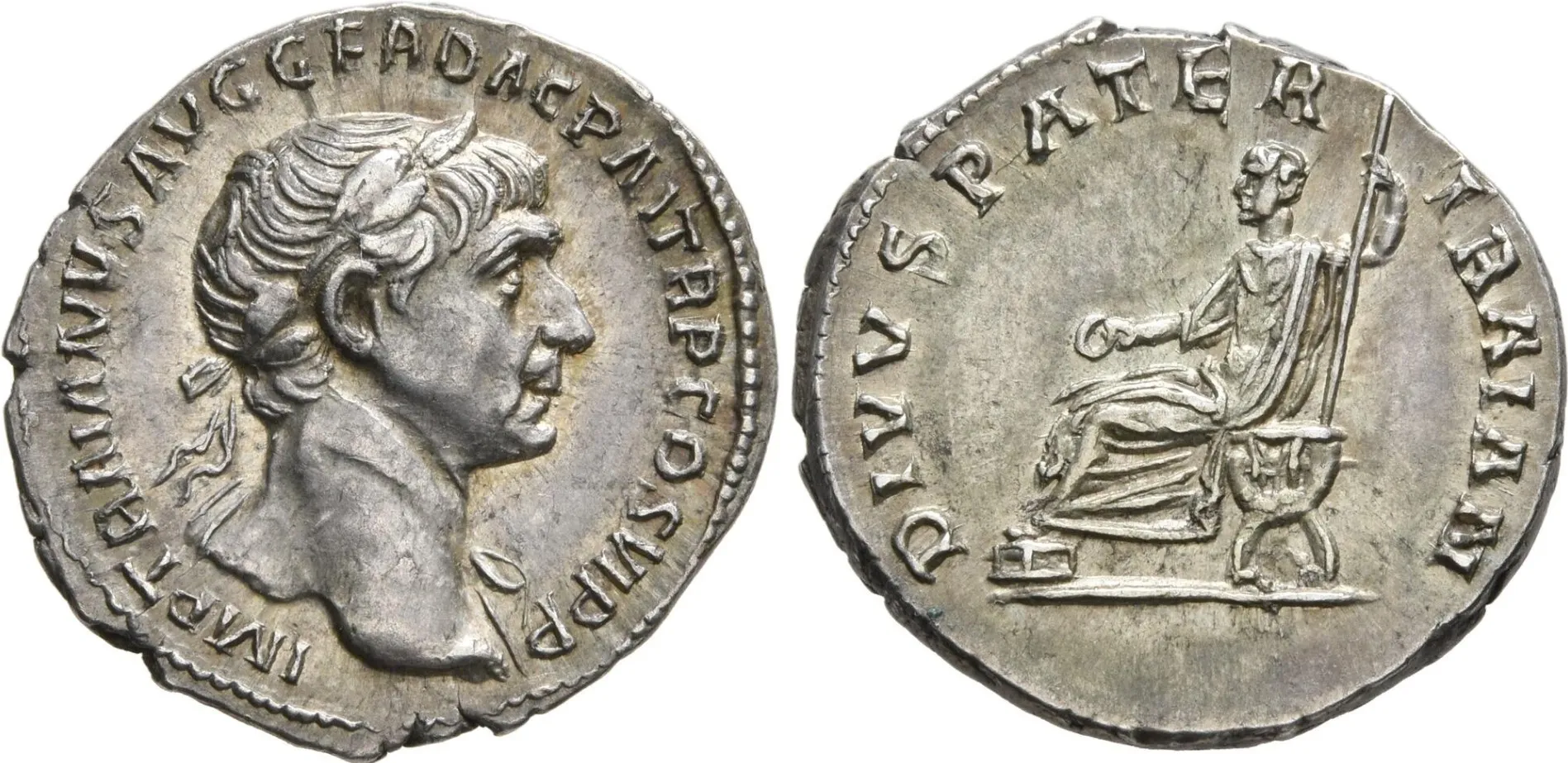
(DENARIUS OF TRAJAN)
Around 107 AD, after his Dacian wars, Trajan needed to pay for more legions and undertook great works such as his famous Trajan’s Forum. To defray these costs, he slightly devalued the denarius from 93% to 89.5% silver. That is, each coin contained a little more copper mixed in. This reduction, of just a few percentage points, may have gone unnoticed by many contemporaries (since the denarius still “looked” silver and weighed the same 3.3 g).
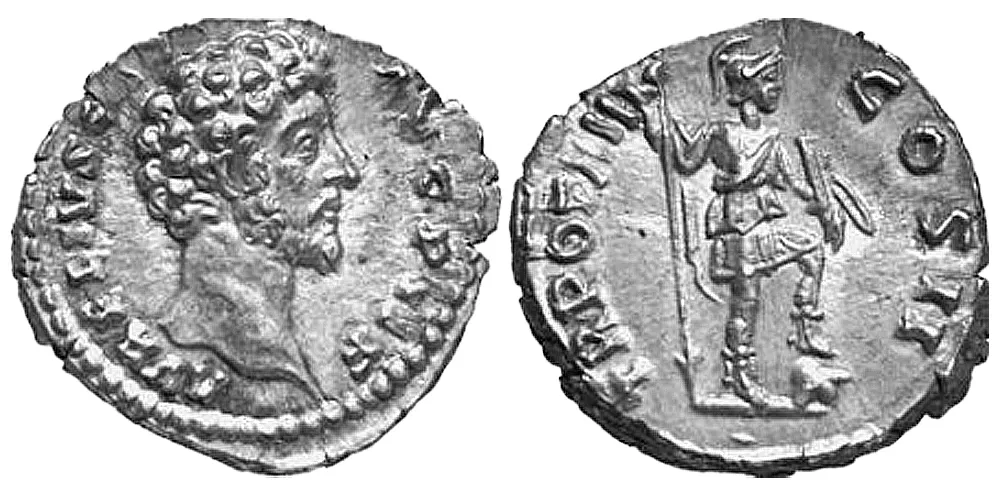
(DENARIUS OF ANTONINUS PIUS)
Under Antoninus Pius (138-161 AD), another drop in the grade of the coin is recorded: approximately 5% less silver than before, leaving the purity around 83-85%.
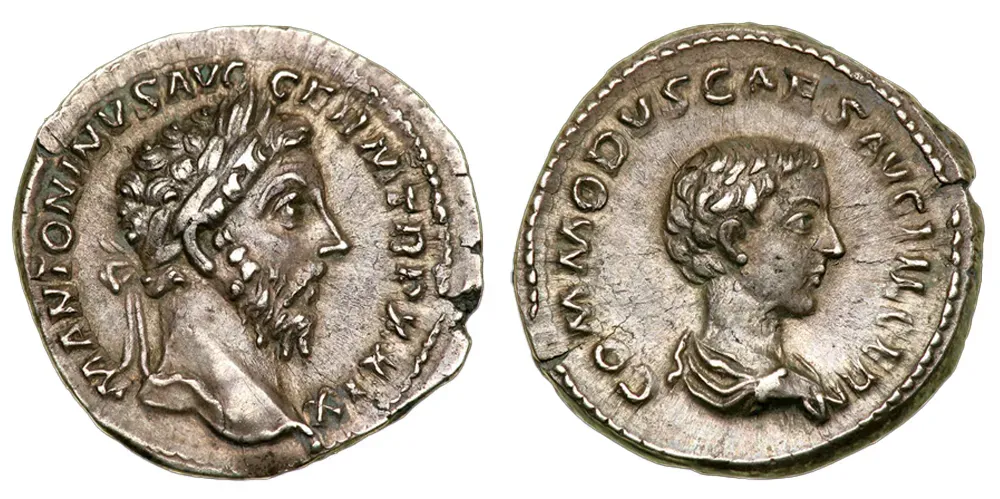
(DENARIUS OF MARCUS AURELIUS WITH COMMODUS ON THE REVERSE)
In the time of Marcus Aurelius (161-180 AD), who faced costly wars against the Germanic peoples and Parthians, the denarius reached only 75-80% silver. Emperor Commodus (180-192 AD) reduced the theoretical weight of the denarius by approximately one-eighth, raising the standard to 108 denarii per pound of metal (about 3.0 grams per coin).
Thus, after the era of Marcus Aurelius and Commodus, the average circulating denarius could weigh about 3.0 g and contain perhaps 2.3 grams of pure silver (calculating 75% fineness). Within a century, the coin had lost almost a third of its intrinsic silver content.
Upon the death of Commodus in 192 AD, his successor Pertinax (193 AD) wanted to revalue the denarius by increasing the purity of silver to around 87%, to restore confidence. Unfortunately, Pertinax was assassinated a few months later and that reform did not prosper. In short, at the end of the 2nd century, the denarius was still the coinage in common use throughout the Empire, but it no longer had the shine of yesteryear: from more than 95% silver in the time of Augustus, it had fallen to less than 80% under Commodus.
Caracalla and the antoninianus (211 AD)
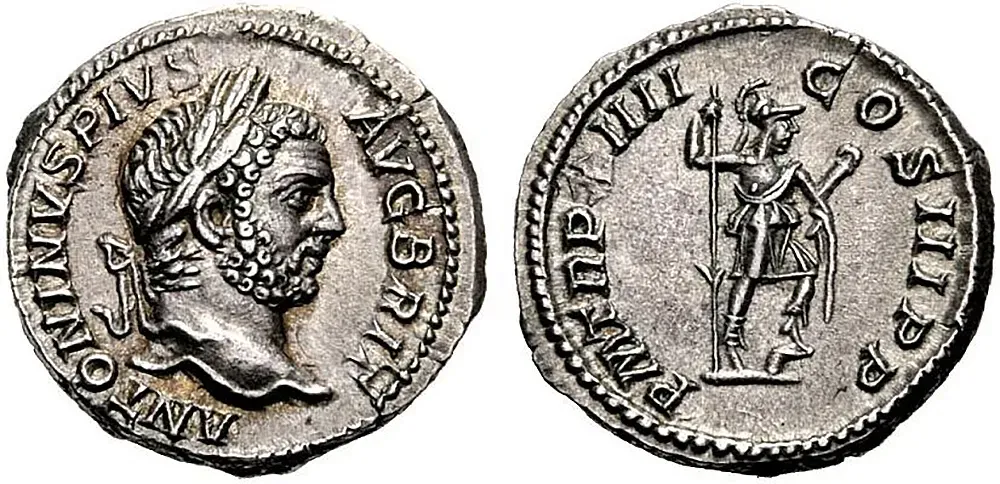
(DENARIUS OF Caracalla)
At the beginning of the 3rd century AD, Rome’s financial situation became critical. The constant increase in military expenses and the stagnation of conquests (therefore, less loot and new resources) pushed the Empire to drastic solutions. In this context, Emperor Caracalla (211-217 AD) made monetary decisions that deepened the devaluation of the denarius like never before. Between 212 and 215 he carried out a massive devaluation, lowering the denarius to approximately 50% silver, a proportion never seen before. In just a few decades, purity had gone from 75% to 50%, and the denarius had almost become a billon coin (alloy of silver and copper in equal parts).
But Caracalla’s most famous move was the introduction of a new currency in the year: the antoninianus (named after Caracalla’s official name, Marcus Aurelius Antoninus). The antoninianus was conceived as a “double denarius”, with a face value of 2 denarii, but its manufacture hid a hidden devaluation. The introduction of the antoniniano was a way to save metal: with the same amount of silver that previously made 8 denarii, now 5 antoniniani would be minted (equivalent to 10 denarii in value).
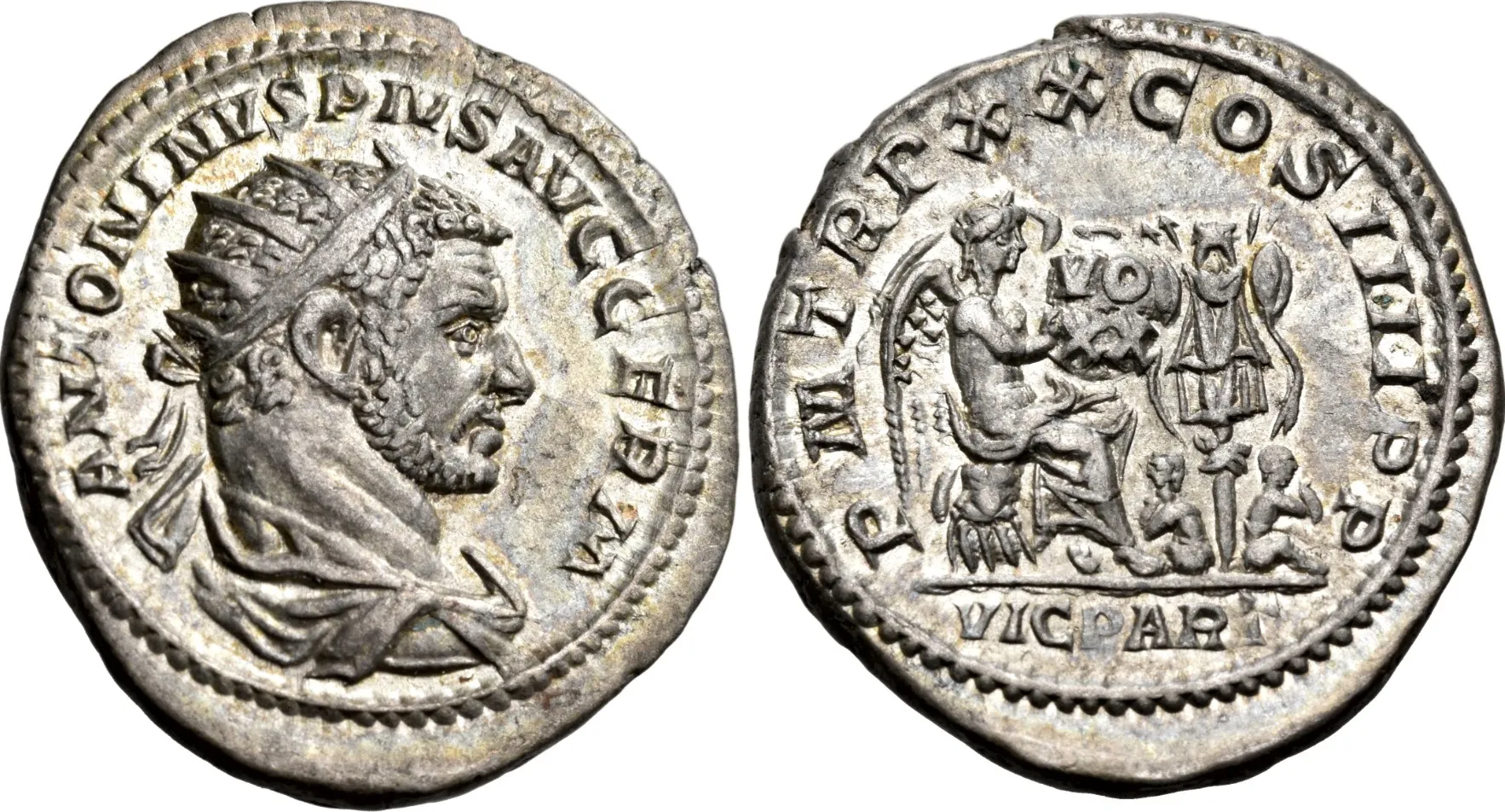
(ANTONINIAN OF Caracalla)
After Caracalla (217 AD to 270 AD)
The antoniniani began to circulate widely and the old denarius fell into disuse or became a unit of account. The quality of the antoninianus deteriorated even more rapidly than that of the denarius. The Emperor Elagabalus attempted to eliminate the antoninianus (219 AD), probably due to problems it caused in the economy, but its withdrawal was brief. In 238 AD, during the chaotic year of the six emperors, antoniniani were reminted and definitively established as the primary currency, displacing the denarius entirely.
By then, the silver in these coins was still falling: around 238 AD. fineness was around 48%. In the middle of the 3rd century, during the so-called 3rd Century Crisis, Gallienus (253-268 AD) issued enormous quantities of coinage with increasingly less silver content. In many cases, antoniniani had only a thin superficial silvery layer. According to numismatic data, around the AD 260s, the real silver content of the imperial currency fell to very low figures, around 5% or less. In fact, although the coins still showed a silver tone (due to silvering techniques), inside they were practically copper.
The loss of confidence in the coinage led to an inflationary spiral: more and more denarii/antoniniani were needed to purchase the same goods, reflecting the smaller amount of real silver they contained.
Diocletian’s reform (294 AD) and the end of the classical denarius
After decades of crisis, Emperor Diocletian (284-305 AD) undertook profound reforms to rescue the Empire, including a major monetary reform in AD 294, which put an end to the classical denarius.
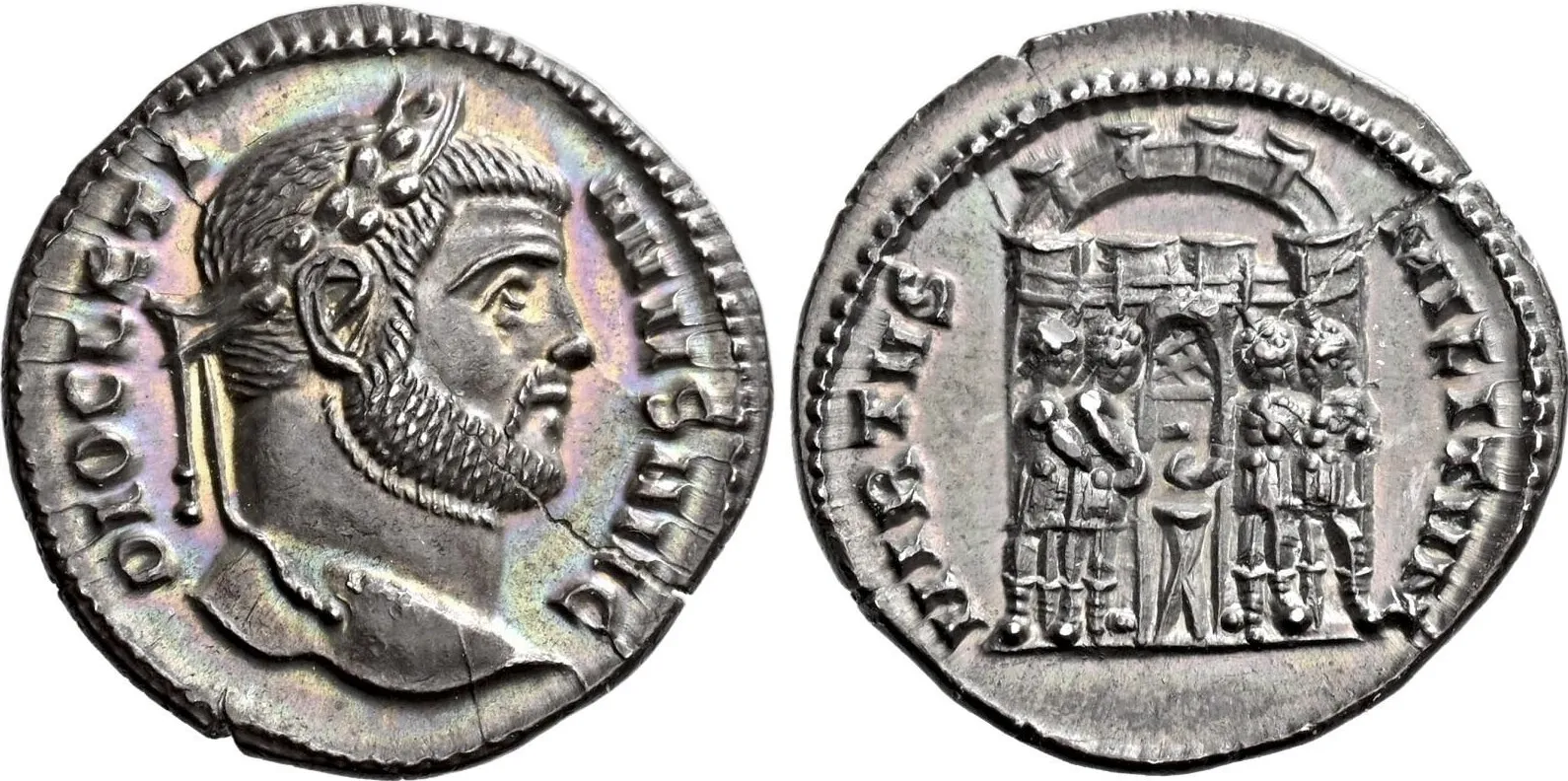
(ARGENTEUS OF DIOCLETIAN)
Diocletian introduced the argenteus, a coin made of almost pure silver (~95%) and weighing 3.4 g, which returned to the old standard to restore confidence. He also launched the follis, a large bronze coin (8-10 g) silvered, intended for daily use. The old antoninianuso was almost left out of the system, reduced to minor copper pieces and marking the end of its history. The denarius, for its part, survived only as a unit of account, not as physical currency.
The reform temporarily stabilized the economy by reintroducing coins with real metallic content, although it was accompanied by the Edict of Maximum Prices (301 AD), an authoritarian attempt to curb inflation that had limited success. Over time, the system would evolve again under Constantine, who would create the gold solidus, the basis of the financial system for centuries. The decline of the denarius in the 3rd century thus closed an era in which the value of Roman currency lay in its silver content.
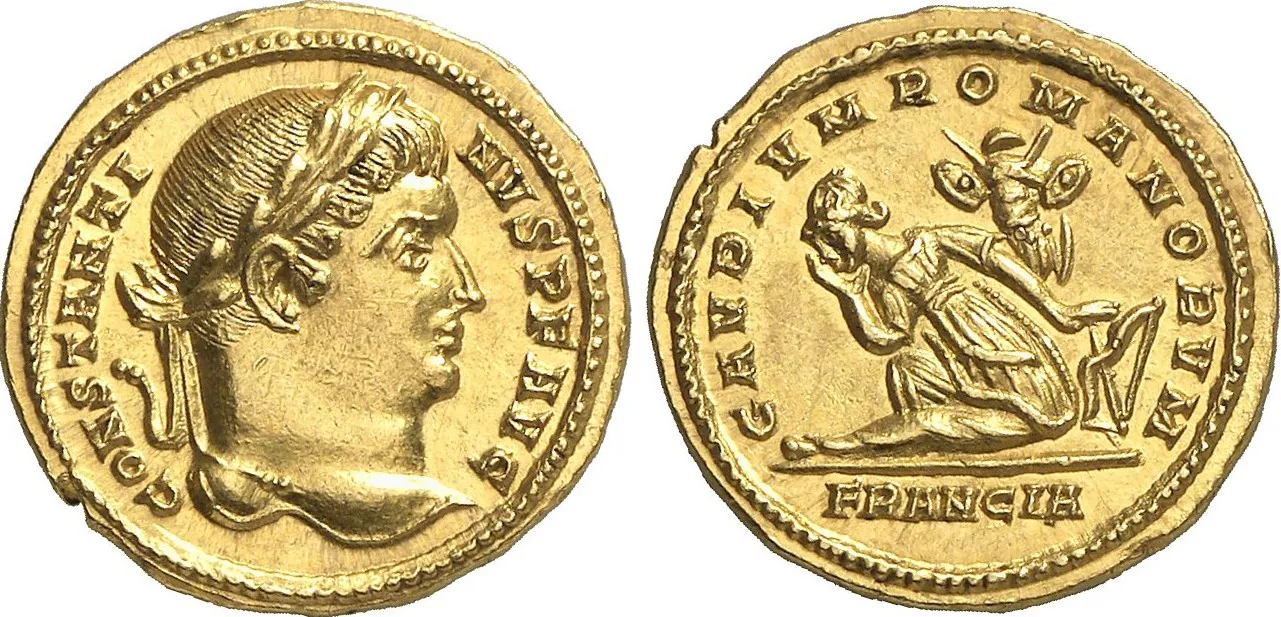
(SOLIDUS OF CONSTANTINE)
Economic, social and fiscal effects of the devaluation
The progressive devaluation of the denarius had profound impacts on the Roman economy and society, especially during the 3rd century AD.
- Rampant inflation: As the denarius contained less silver, its real value fell and prices rose. At first inflation was moderate, but then it became extreme, eroding savings and hitting the lower classes whose incomes did not grow at the pace of prices.
- Distrust and hoarding: The population began to save the old coins of high purity and use the new ones of poorer quality first (Gresham’s Law). Good coins disappeared, causing distrust and, in some places, a return to bartering or the use of foreign currencies.
- Social and military impact: Soldiers, paid in devalued currencies, saw their purchasing power reduced, which forced their salaries to increase and generated a vicious circle of more coinage and more inflation. This aggravated social and military discontent in an already convulsed empire.
- Fiscal effects: Although the devaluation gave immediate income to the State, in the long term it eroded the value of taxes collected in currency. In response, the Empire began to demand tribute in kind, which complicated administration and altered the economy.
In short, the devaluation policy, which seemed like an easy solution to cover expenses, ended up damaging the economy and weakening the State. The Roman experience shows the risks of a short-term monetary policy that generates inflation, loss of confidence and economic disorganization.
Lessons that the Romans left us about inflation
The history of the Roman denarius offers lessons that remain relevant today:
- Printing money in excess generates inflation: Just as Rome issued more coins with less silver, today creating money without productive backing reduces its purchasing power.
- Trust is key: The value of a coin depends on the public’s faith, not just its material. When trust is lost, it is difficult to regain it.
- Short-termism takes its toll: Devaluing to solve immediate problems usually generates future instability, as happened in Rome, and as has been seen in modern cases of hyperinflation.
List of consulted and recommended sources
- Encyclopedia Britannica: historical summary on the denarius
- Forum Ancient Coins: detail of reforms under Nero
- Oxford Review of Economic Policy: academic article on inflation and monetary collapse in Rome
- English Wikipedia: Full article on the antoninianus, its creation and deterioration
- English Wikipedia: Economic history of the Roman Empire, including Diocletian’s reform
- Wikipedia in Spanish: detail about Diocletian’s decree to control inflation
- Mises Institute: economic analysis of Roman devaluation and inflation
- Wikipedia in Spanish: explanation of Gresham’s Law and its historical application
- University of Chicago: study of agricultural prices such as wheat in Rome
- Denarios.org: site specialized in ancient Roman coins, with files, studies and articles
- ngccoin.com