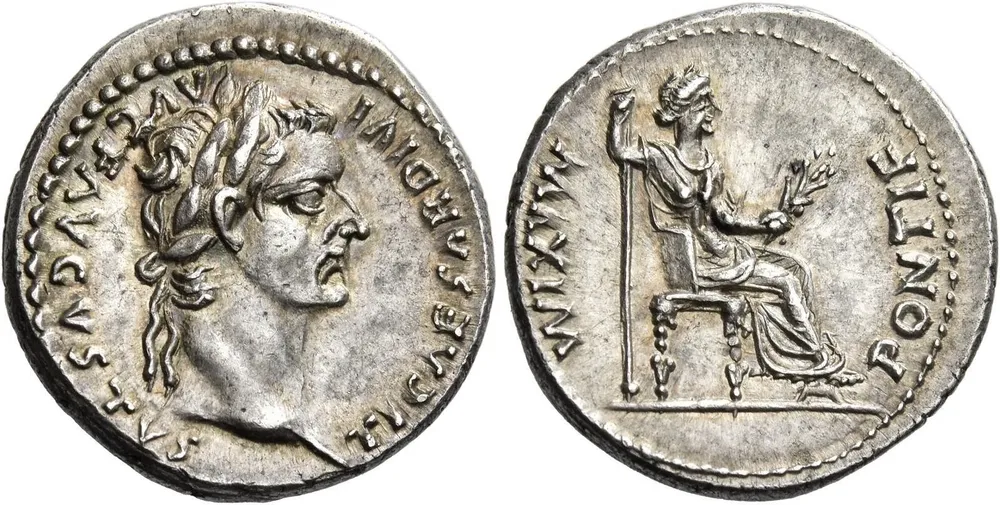
DI-286 | RIC I (SE) Tiberius 30
Tiberius
Tiberius
Dynasty: Julio-Claudian
Emperor: Tiberius
Authority: Tiberius
Date and mint: AD 14/AD 37 - Lugdunum
Obverse: Head of Tiberius, laureate, right
Legend: TI CAESAR DIVI AVG F AVGVSTVS
Reverse: Figura femenina, draped, right, seated, right holding branch and long scepter vertical, on chair with legs ornamentadas; below of the chair, a sola line
Legend: PONTIF MAXIM
Comment: The so-called Tribute Penny is one of the most celebrated coins of the Roman Empire, both for its wide circulation under Tiberius and for its traditional association with the Gospels. Struck continuously throughout his reign, it became the most characteristic silver issue of his government. Tiberius, the second Roman emperor and a member of the Julio-Claudian dynasty, pursued a restrained monetary policy: in more than two decades he authorized only two denarius types, one rare type with a triumphal quadriga and this much more common issue. The obverse bears the laureate portrait of Tiberius and the legend TI CAESAR DIVI AVG F AVGVSTVS, presenting him as son of the deified Augustus and legitimate heir to imperial dignity. The reverse shows a seated female figure with scepter and olive branch, interpreted either as Pax or as Livia personifying Augustan peace; PONTIF MAXIM stresses his supreme religious authority. Beyond its economic function, the coin conveyed dynastic continuity, legitimacy and peace. Its Gospel association comes from the episode in which Jesus asks to see the coin used for Caesar's tribute. Although the texts do not name the exact coin, tradition has linked the passage to this denarius, then circulating in Judaea, even if some scholars point to Tyrian shekels as more common for Temple payments. Whether or not it is the actual Gospel coin, it perfectly expresses Tiberius' monetary sobriety and message of inherited legitimacy.
Provenance: Ars Classica (2022)
Price: 6,340 €