Venus
Crawford 458/1
Series: Republican deities - Venus
Reference: Crawford 458/1
 |  |
Gens and monetary:Julia - Julius Caesar
Year and mint:From 47 BC to 46 BC - Africa
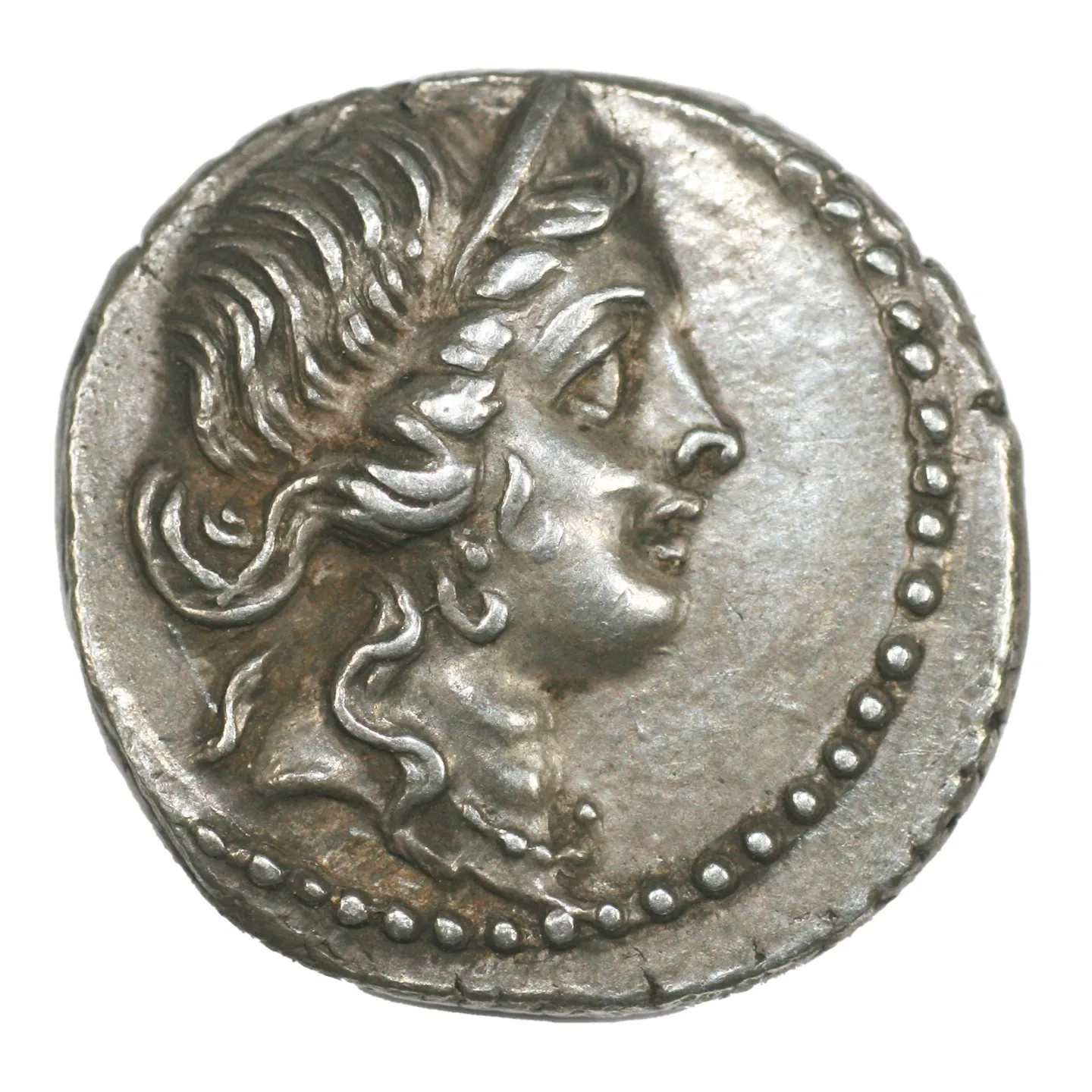
Obverse:Bust of Venus, right, diadem. Dotted border. -
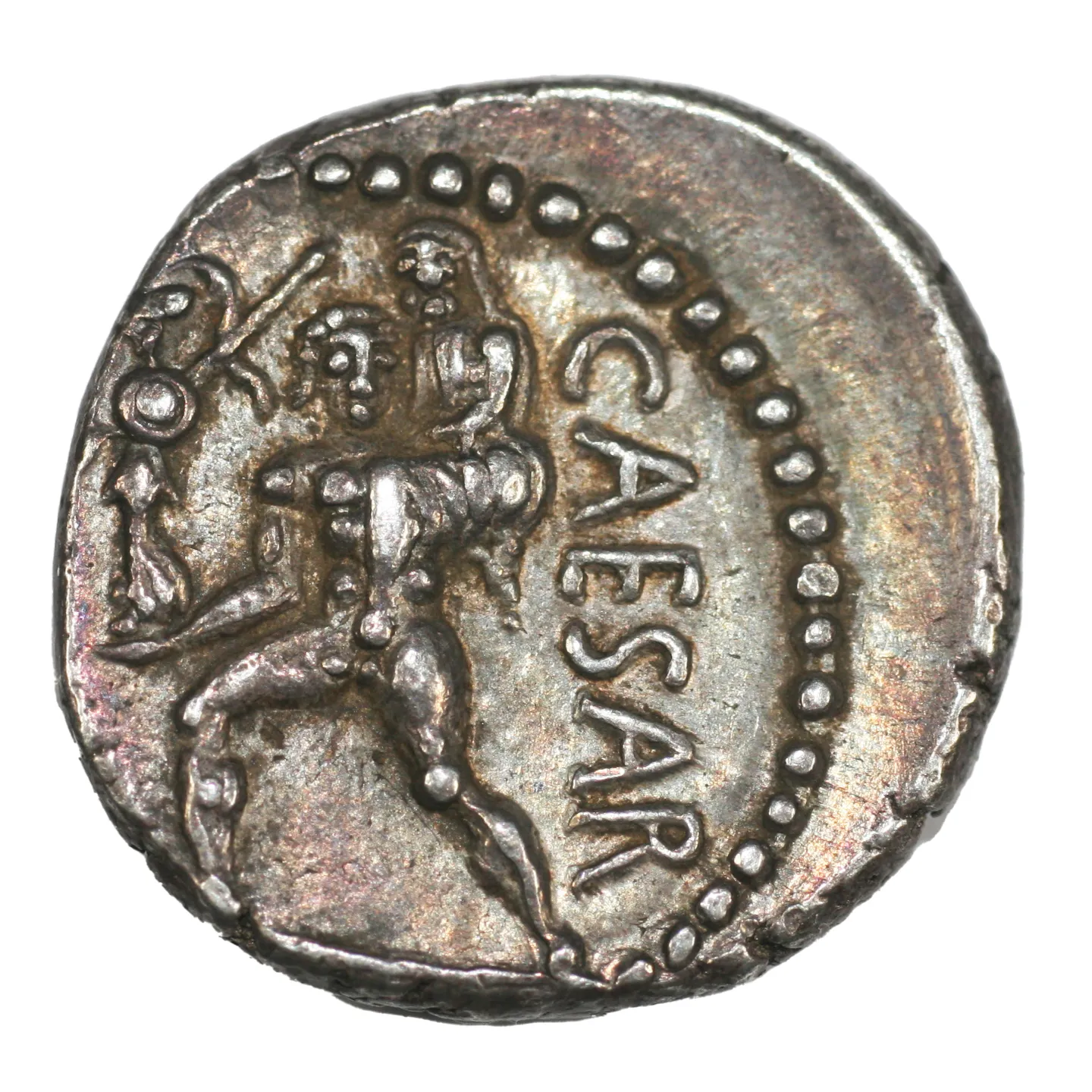
Reverse:Aeneas, left, carrying palladium in his right hand and Anchises on his left shoulder. Dotted border. CAESAR
Grade:EF 3.85 g - 6h
Origin:CNG 2023
Comment:
The gens Julia was one of the oldest and most respected patrician families in Rome. They were attributed a legendary lineage that connected them to Aeneas, the Trojan hero who, according to tradition, escaped from Troy and founded the dynasty that would eventually give rise to Rome. This connection caused the Julius to claim descent from the goddess Venus, mother of Aeneas.
Monetary: Julius Caesar minted this coin in Africa between the years 47 and 46 BC, during his campaign against the Pompeians who were resisting after their defeat at Pharsalia. This issuance of denarii is Caesar’s third and was used to finance his army.
After the victory at Pharsalia, Caesar continued his persecution of the Pompeians, first in Egypt and then in Africa, where he won a decisive victory at the Battle of Thapsus in 46 BC. This issuance of currency was part of his strategy to maintain the support of his troops and ensure his control over the western Mediterranean and Rome itself.
Obverse: The diademed bust of Venus, the goddess to whom Caesar attributed his ancestry, serves as a statement of her special relationship with the gods and her right to lead. Venus, protector of Caesar and Rome, reinforces the divine legitimacy that he claimed.
Reverse: The figure of Aeneas, carrying his father Anchises and holding the palladium (the sacred symbol of the city of Troy), is a direct representation of the founding myth of the Julia gens. This design is a way to remind the Romans that Caesar was not only a great military leader, but also a descendant of the founders of Rome, projecting himself as a savior and protector of the city.