Trajan
RIC II Trajan 337
Series: Empire - Trajan
Reference: RIC II Trajan 337
 |  |
Gens and monetary:Adoptives - Trajan
Year and mint:From 116 AD to 117 AD - Rome
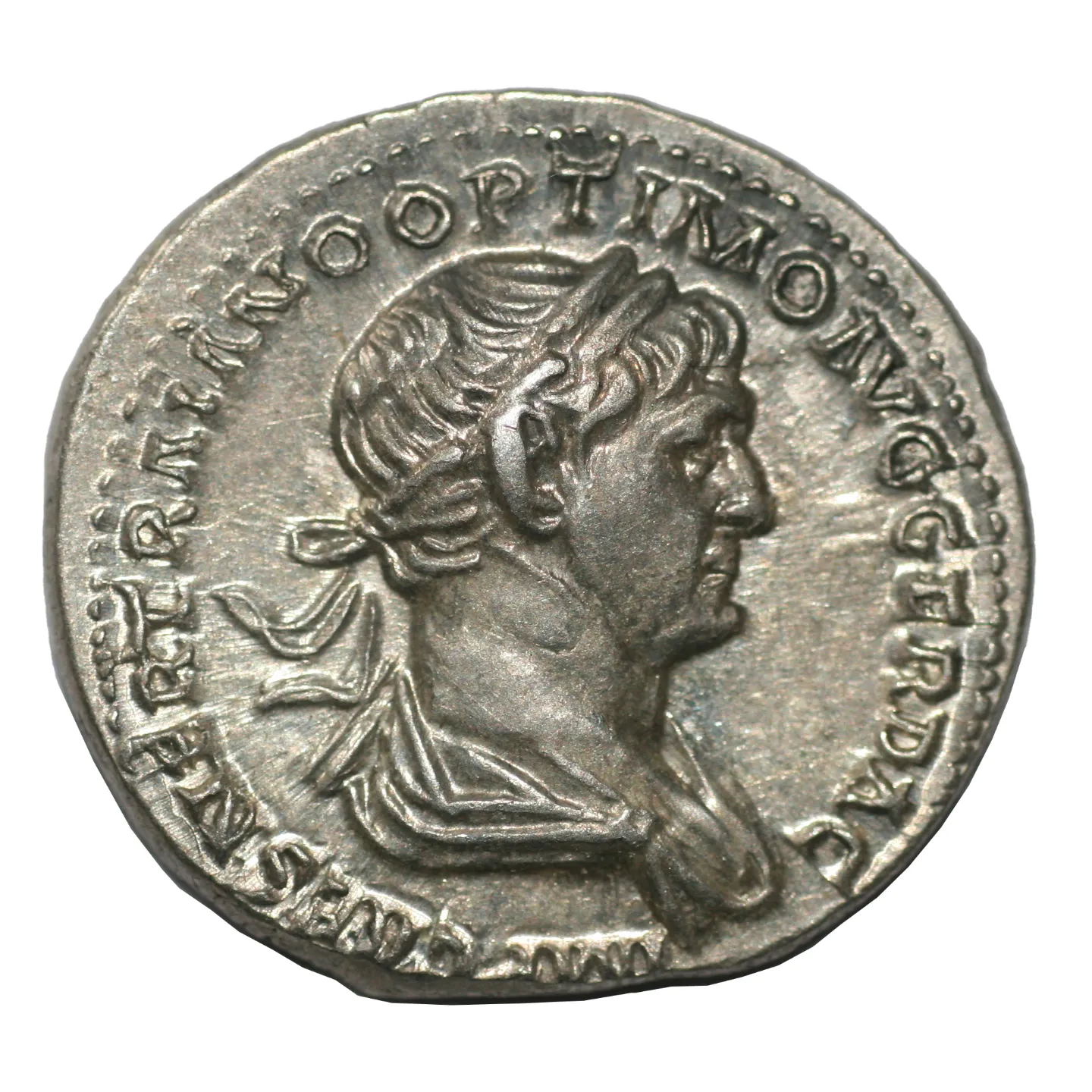
Obverse:Laureate and draped bust to the right. IMP CAES NER TRAIANO OPTIMO AVG GER DAC
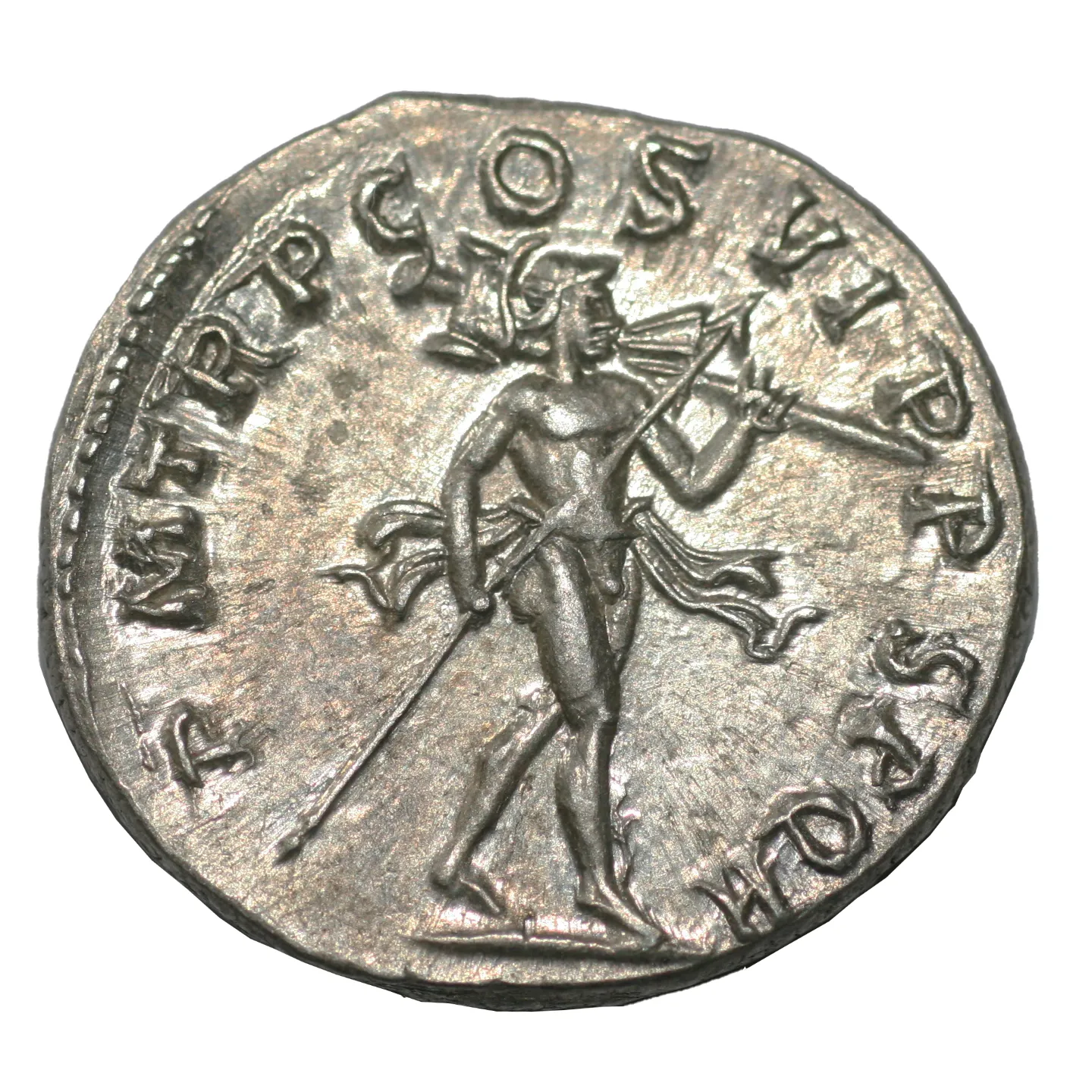
Reverse:Mars advancing to the right, carrying a spear and trophy. P M TR P COS VI P P SPQR
Grade:SC- 3.31 g - 6h
Origin:Tauler & Fau 2023
Comment:
The dynasty of adoptive emperors originated with Nerva, who, having no issue, adopted Trajan as his successor in 97 AD. This system of adoption allowed imperial power to fall to capable people, rather than relying solely on family inheritance. Trajan, originally from a Hispanic senatorial family, became the first non-Italian emperor, marking a change in the power structure in Rome. The dynasty was consolidated with a series of efficient and fair emperors, with Trajan standing out as one of the best administrators and soldiers of the Empire.
Trajan, who ruled from 98 to 117 AD, is remembered as one of Rome’s most successful and just emperors. During his reign, he considerably expanded the borders of the Empire, reaching its maximum territorial extension after the conquests in Dacia and the campaigns in the east against the Parthian Empire. Aside from his military achievements, Trajan also promoted important civil reforms, improving the infrastructure of Rome and the provinces, and showing great concern for the well-being of his subjects. The Senate granted him the title “Optimus Princeps”, recognizing his excellence as a ruler.
This denarius was minted between 116 and 117 AD, at the end of Trajan’s reign. In this period, Trajan was leading military campaigns in the East, where he had achieved great success by taking the city of Ctesiphon and temporarily subduing the Parthian Empire. However, his health began to decline, which would mark the end of his reign shortly after, in 117 AD. This was a period of military apogee, but also of transition towards the rule of his successor, Hadrian.
The obverse shows Trajan laureated and draped, a representation that emphasizes his status as a victorious and divinely favored leader. On the reverse, Mars, the god of war, advances carrying a spear and a trophy, clearly alluding to Trajan’s military campaigns and victories.