Mars
Crawford 388/1b
Series: Republican deities - Mars
Reference: Crawford 388/1b
 |  |
Gens and monetary:Satriena - P. Satrienus
Year and mint:From 77 BC to 77 BC - Rome
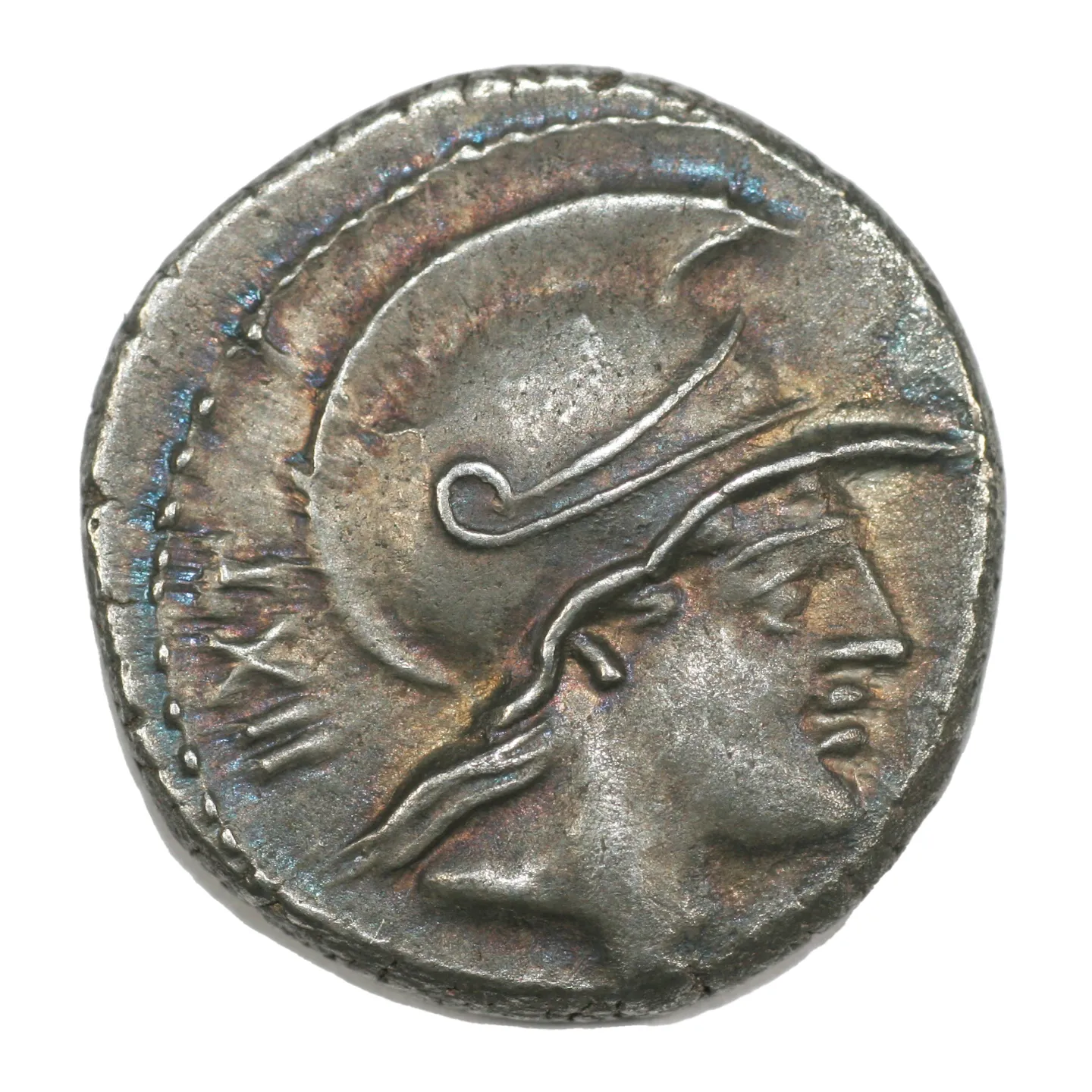
Obverse:Bust of Rome with helmet, right. Dotted border. LXII to the left as a control mark. -
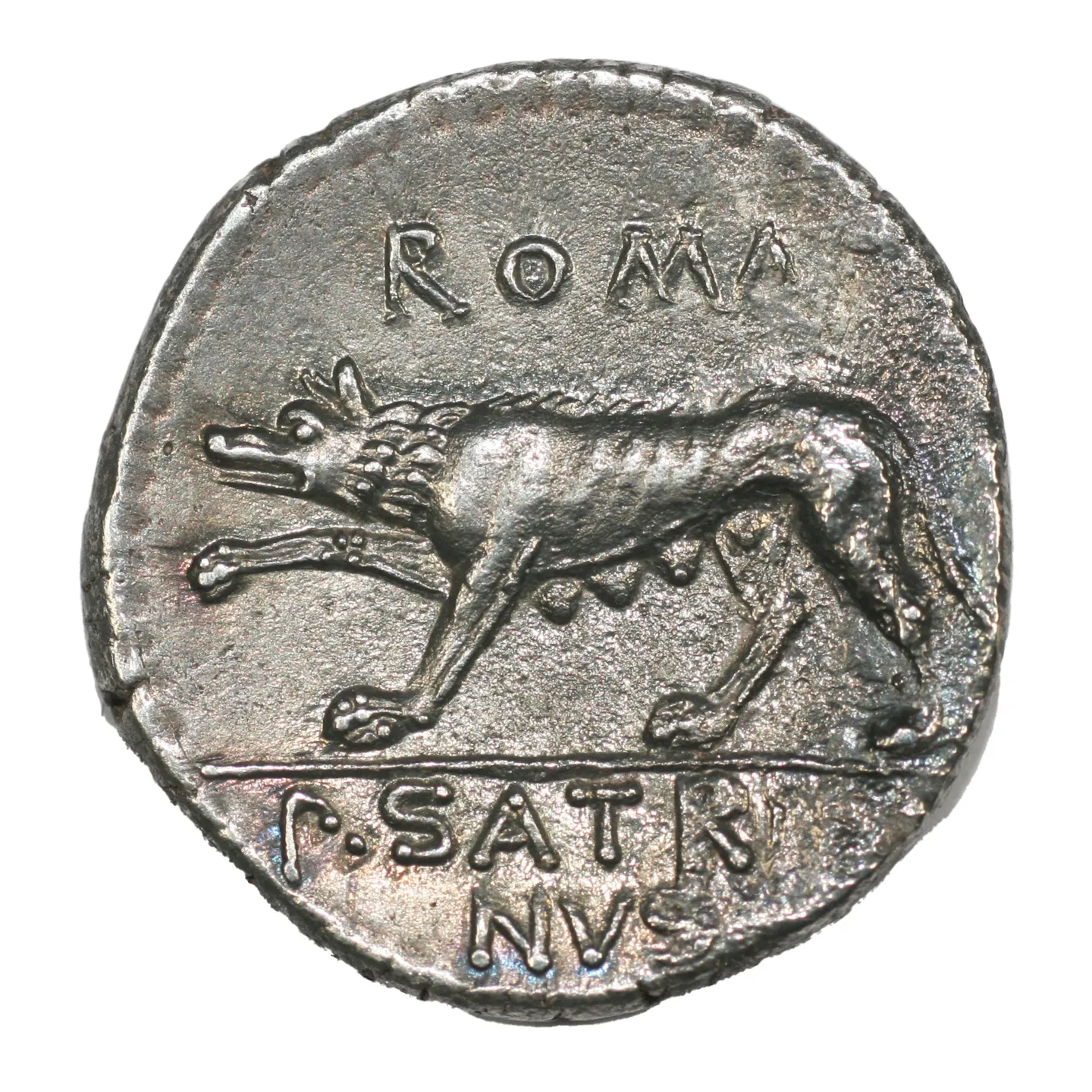
Reverse:Wolf, left. Dotted border. Rome / P·SATRIE/NVS
Grade:VF+ / EF- 3.64 g - 6h
Origin:Ex Chiltern Collection (Triton XVI, 8 January 2013). CNG 2023
Comment:
The Satriena gens is a little-known family of the Roman Republic, and P. Satrienus is one of its most notable members for his role as a monetary. There is not much information about the family’s political achievements, but their involvement in minting coins shows that they had a certain level of relevance in republican circles of the time.
P. Satrienus was the monetary man responsible for this denarius in the year 77 BC, a period characterized by political instability after civil wars between the followers of Marius and Sulla. Although Sulla had renounced the dictatorship and died in 78 BC, the aftermath of his rule and his reforms continued to deeply influence Rome. The year 77 B.C. It witnessed new revolts and disturbances, such as the rebellion of Marcus Aemilius Lepidus, who attempted to reverse some of Sulla’s reforms.
On the obverse of the coin appears the figure of Rome, personification of the city and Roman military power. It is common to see representations of Rome with a helmet and a stern expression, underlining the strength and authority of the Republic. The presence of Rome in Satrienus’s denarius reaffirms republican values and the dominant role of the city as the center of power.
The reverse shows a she-wolf walking to the left, in clear reference to the legend of Romulus and Remus, the founders of Rome, who were suckled by a she-wolf in Roman mythology. This symbol is a representation of the mythical origins of Rome and its connection with divinity.
This denarius was issued in a period of political tension following the dictatorship of Sulla and the subsequent reforms that profoundly altered the political structure of Rome. The choice of symbols such as Rome and the Capitoline she-wolf on the coin underlines the connection with the legendary origins of the city and the desire to reinforce republican identity and stability in times of crisis