Juno Sospita
Crawford 412/1
Series: Republican deities - Juno Sospita
Reference: Crawford 412/1
 |  |
Gens and monetary:Roscia - Lucio Roscio Fabato
Year and mint:From 64 BC - Rome
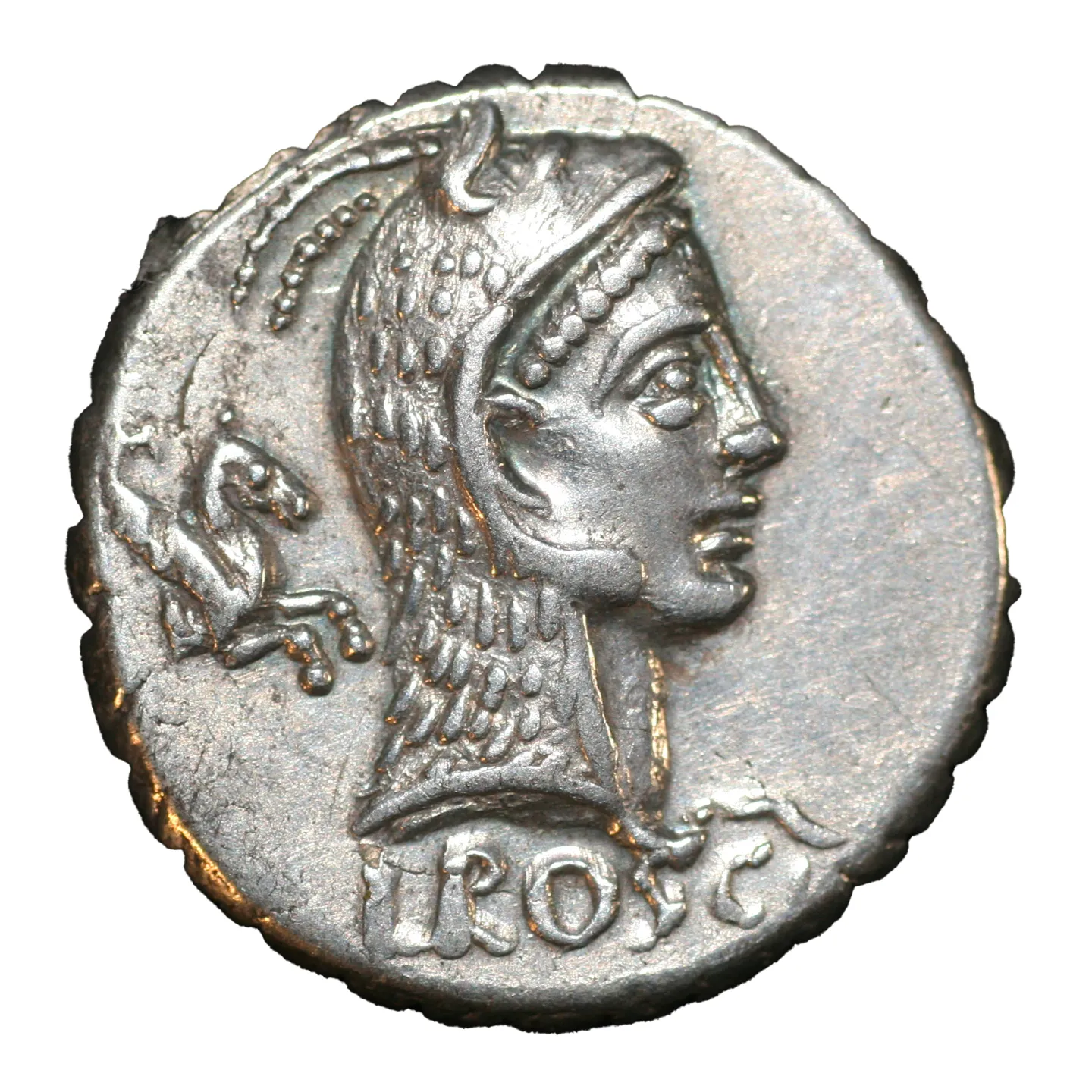
Obverse:Bust of Juno Sospita, right, wearing goatskin. - Legend: L ROSCI - Symbol: Pegasus
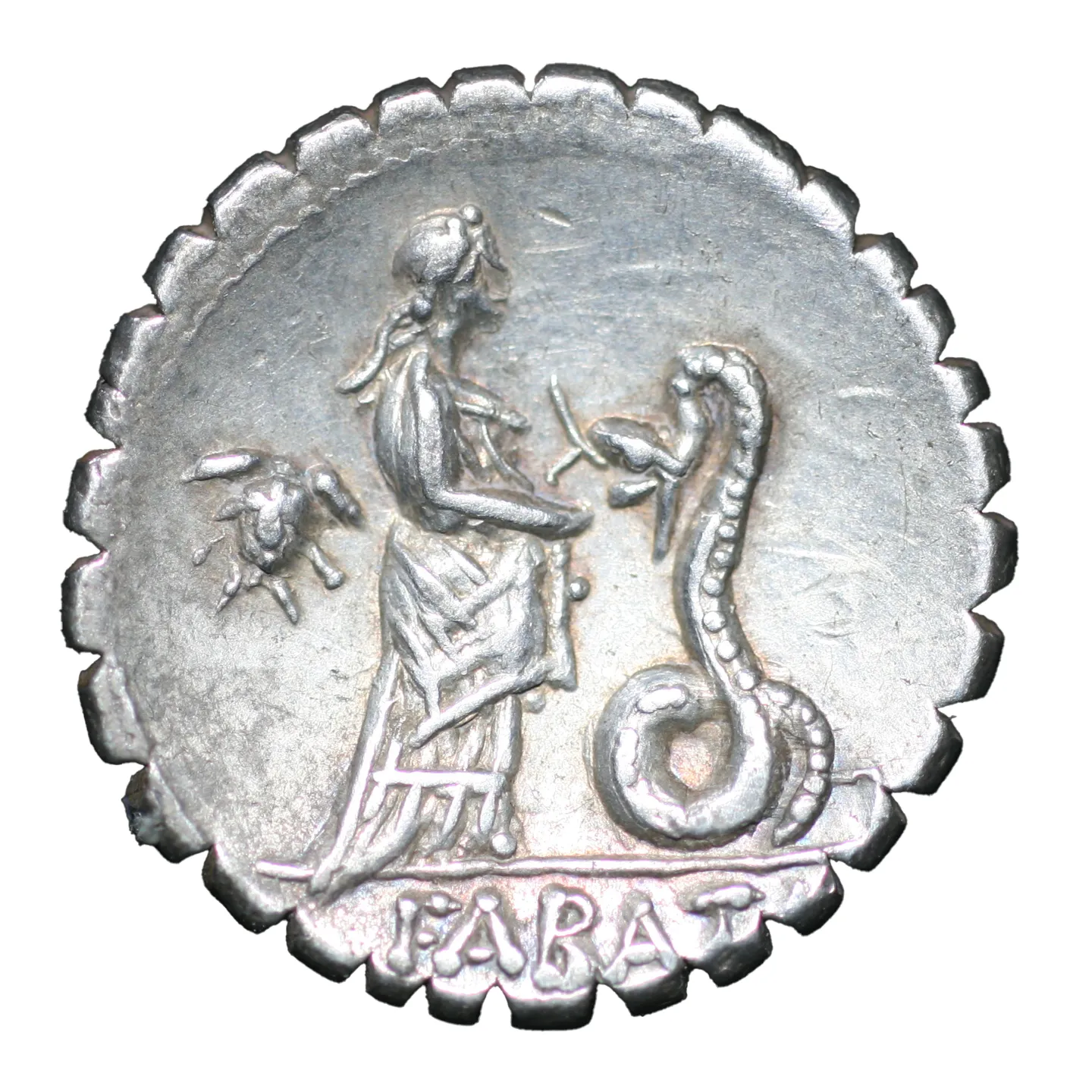
Reverse:Girl and snake face to face. Dotted border. Legend: FABATI - Scarab Symbol.
Grade:EF+ - 3.89 g - 6h
Origin:NOMISMA April 2025
Comment:
The Roscia gens was a plebeian family from Lanuvio, a city in Latium closely linked to the cult of Juno Sospita. Although they were not one of the great senatorial houses, some Roscios reached important positions in Roman politics. One of them was Lucio Roscio Otón, known for a law that reserved seats in the theater for knights. Also notable was Lucio Roscio Fabato, a monetary man and ally of Caesar, who left his mark with a rather unique denarius. Even the famous actor Roscio Galo could have belonged to this family, although it is not entirely clear.
Fabato began his career as a monetary man in 64 BC, when he minted this coin. Later he was tribune of the plebs, legate in Caesar’s campaigns in Gaul and praetor in very tense times. He was on Caesar’s side during the civil war and died shortly after Caesar’s assassination, at the Battle of Mutina in 43 BC. His career places him at the center of the last years of the Republic: reforms, wars, pacts… and coins with a message.
In 64 BC, Rome was a political hotbed. Pompey was still in the East winning wars and prestige, while there was nervousness in the city. The Senate was trying to control popular associations and Catiline, recently acquitted of corruption, was preparing for a campaign for the consulship. Although he was defeated by Cicero, social tension was evident: debts, inequality and much discontent. In this climate, the Fabato denarius seems a nod to religious tradition as an anchor in the face of uncertainty.
The obverse shows Juno Sospita, protector of Lanuvio, in her characteristic goat skin. It is not a casual choice: with this image Fabato connects with his roots and sends a message of protection and salvation for Rome. The legend L. ROSCI identifies him as the person responsible for the coinage, and behind the goddess a Pegasus sometimes appears, a symbol of control in the series. Although she is not part of the Juno myth, her presence provides a touch of heroism or divinity.
On the reverse we see an unusual scene: a young woman in front of a snake, alluding to a Lanupine ritual where a virgin fed the sacred snake. If she emerged unscathed, it was a sign that Juno was still watching over the city. Fabato puts it on his coin as a symbol of purity, renewal and faith in divine protection. The scarab that sometimes appears is another broadcast mark, but it could also have a deeper meaning: in the ancient world, it was associated with regeneration. Between Pegasus and beetle, heaven and earth, Fabato signs a coin that speaks of his people, his faith and his vision of Rome.