Janus
Crawford 281/1
Series: Republican deities - Janus
Reference: Crawford 281/1
 |  |
Gens and moneyer: Furia - Marcus Furius Philus
Date and mint: 119 BC - Rome
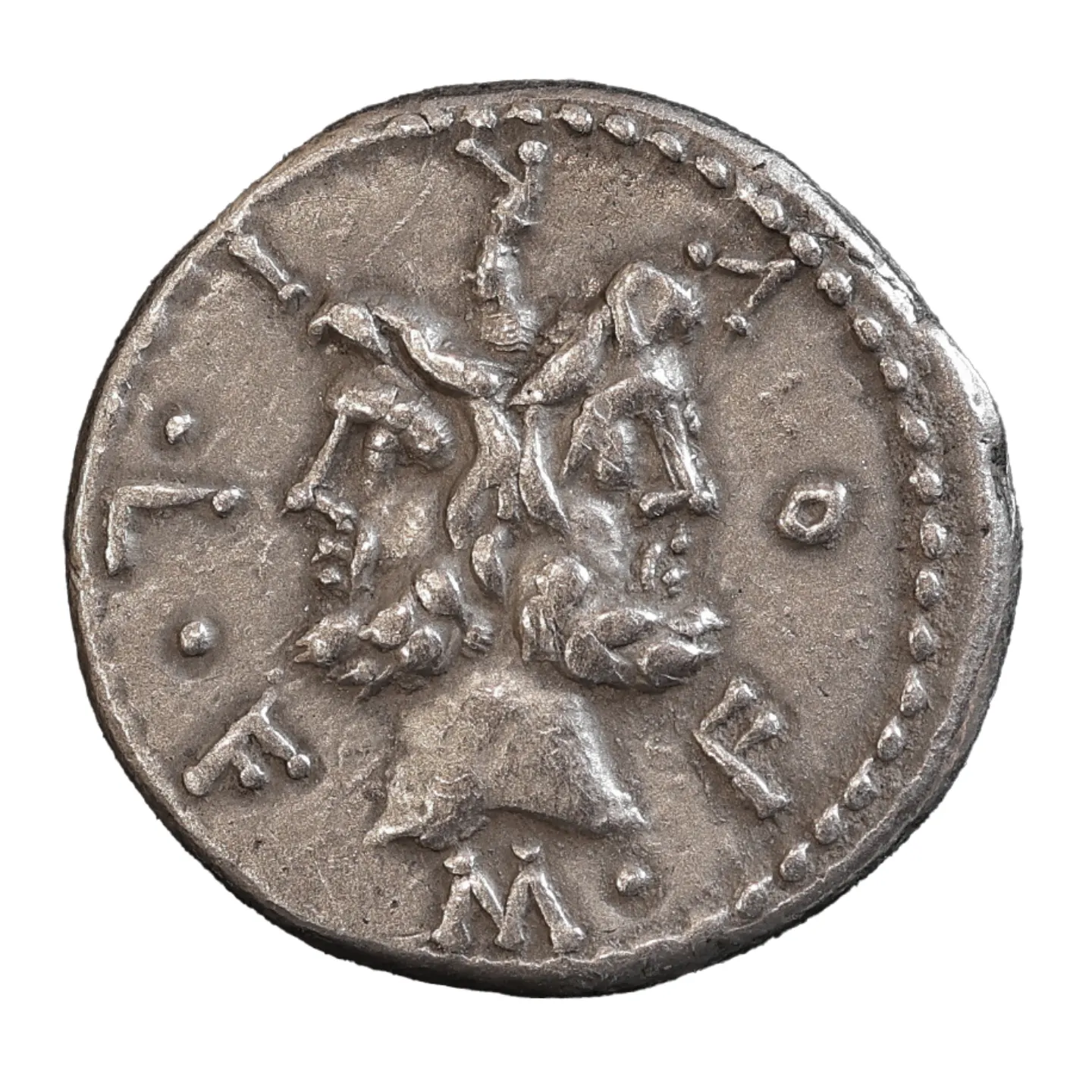
Obverse: Laureate head of Janus. Border of dots - M FOVRI L F
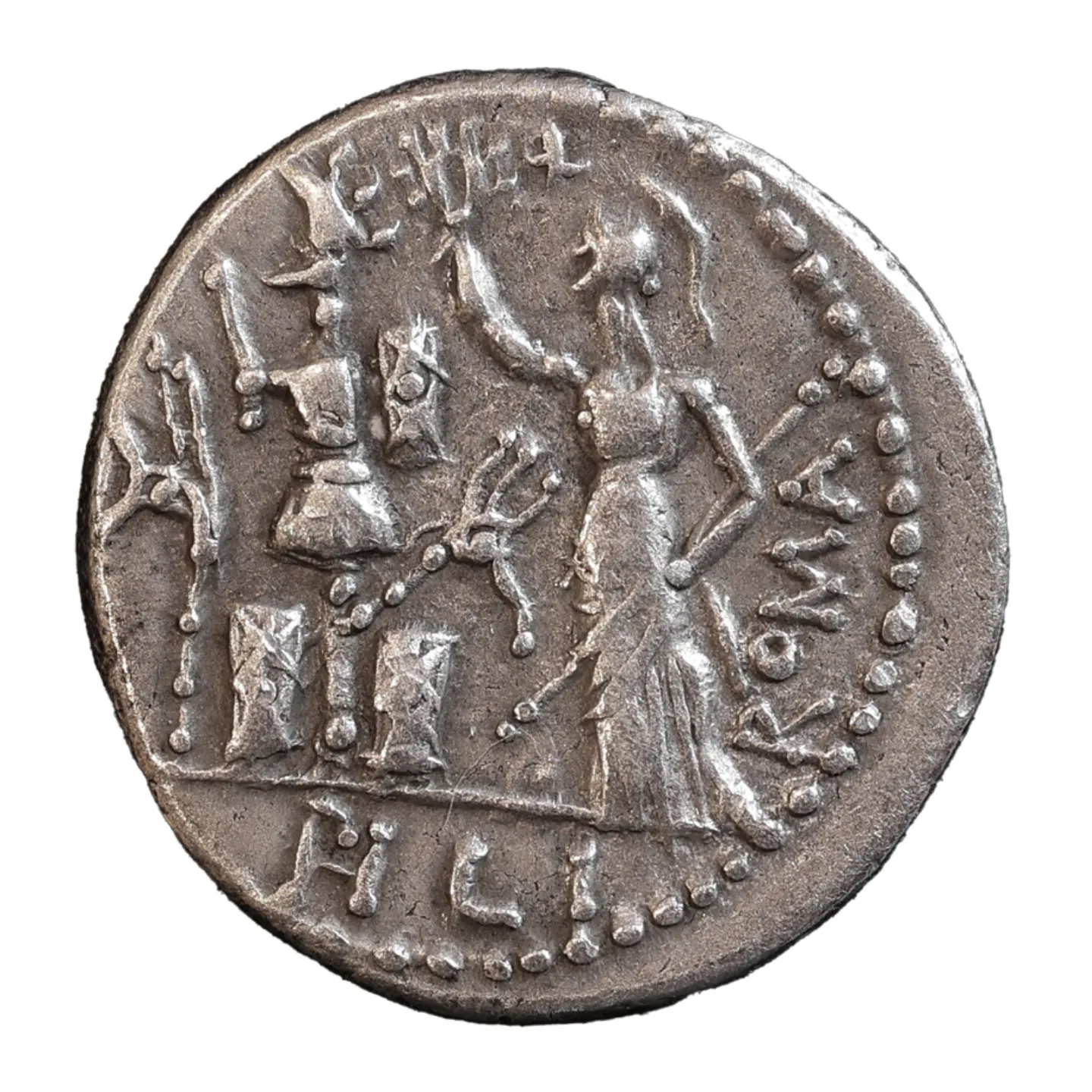
Reverse: Roma, wearing a Corinthian helmet, standing left, holding a sceptre in her left hand and a trophy in her right; above, star. The trophy is surmounted by a boar’s-head helmet and flanked by two carnyces and a shield on each side. Border of dots - ROMA PHILI
Grade: EF- / VF+ 4.01 g - 9
Provenance: Lucernae - December 2025
Commentary:
The gens Furia was one of Rome’s oldest patrician families, with origins reaching back to the period of the Roman monarchy. It stood out for important political figures such as Spurius Furius Medullinus, who was consul in the fifth century BC and played a key role in defending Rome against its enemies. Another notable member was Lucius Furius Purpurio, consul in 196 BC, known for successfully leading military campaigns against the Celts in northern Italy. Publius Furius Philus, a pontiff, also contributed to the city’s religious sphere, showing the influence of the gens in different areas of public life.
No detailed records are known for the political career of Marcus Furius Philus beyond his role as moneyer.
The year 119 BC was a period of tension and reform in Rome. Social inequality was increasing, and the Senate was beginning to face the challenges posed by rising leaders such as Gaius Marius, whose military and political influence was starting to grow.
Janus is a unique Roman deity, known as the god of beginnings, transitions, and doorways. He is typically represented with two opposite faces, one looking to the past and the other to the future, symbolising his ability to see both what has happened and what is yet to come. Janus also represented duality and change, and he was invoked at the beginning of each year, in religious ceremonies, and at the start of new undertakings.
The figure of Roma, standing with a Corinthian helmet, holding a sceptre and a trophy, exalts the military supremacy of the city and its power in defending its dominions. This reverse should probably be connected with a military victory achieved by some member of the family in Gaul.