Hercules
Crawford 426/4b
Series: Republican deities - Hercules
Reference: Crawford 426/4b
 |  |
Gens and monetary:Cornelia - Faustus Cornelius Sulla
Year and mint:From 56 BC to 56 BC - Rome
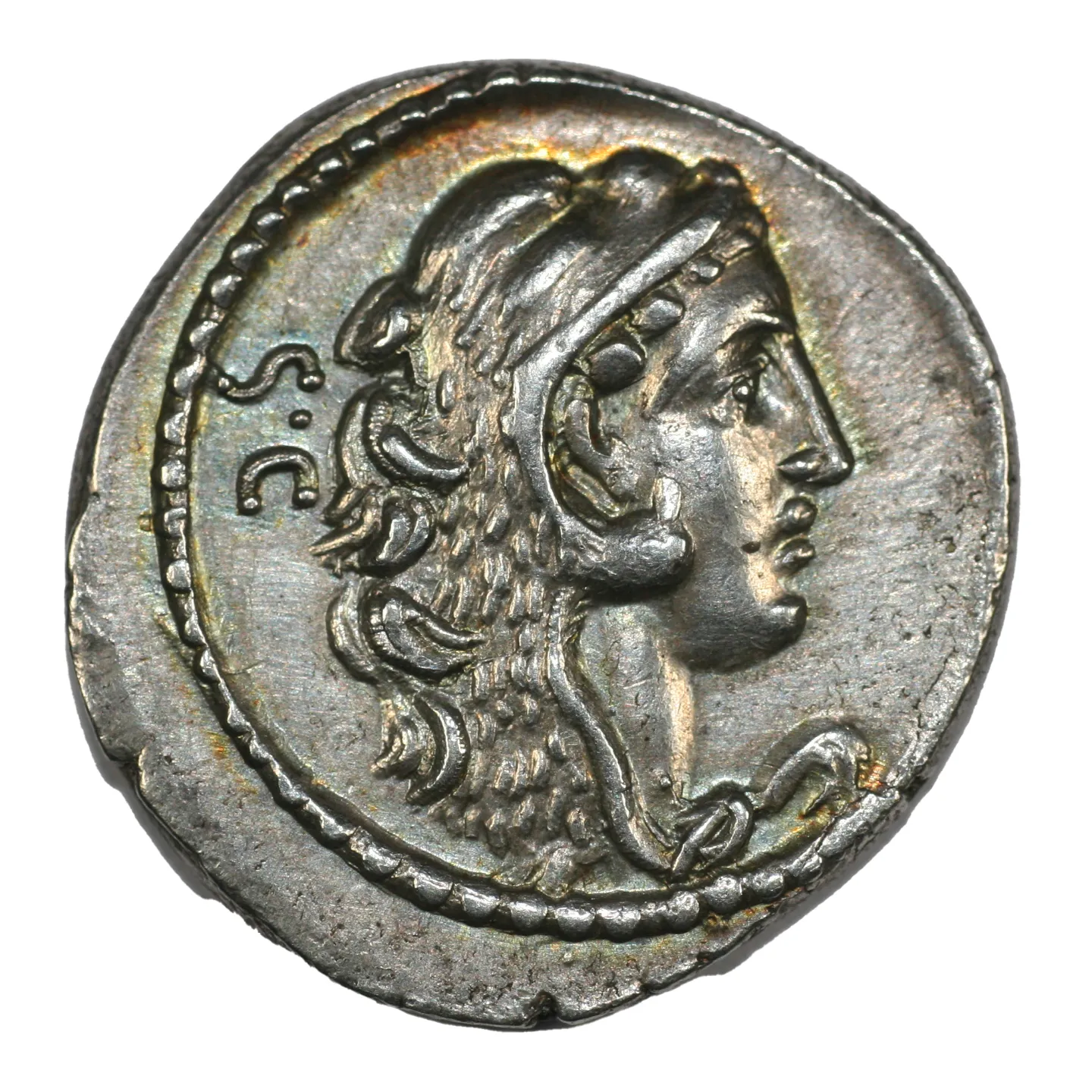
Obverse:Head of Hercules, right, with lion’s skin. Dotted border. S·C
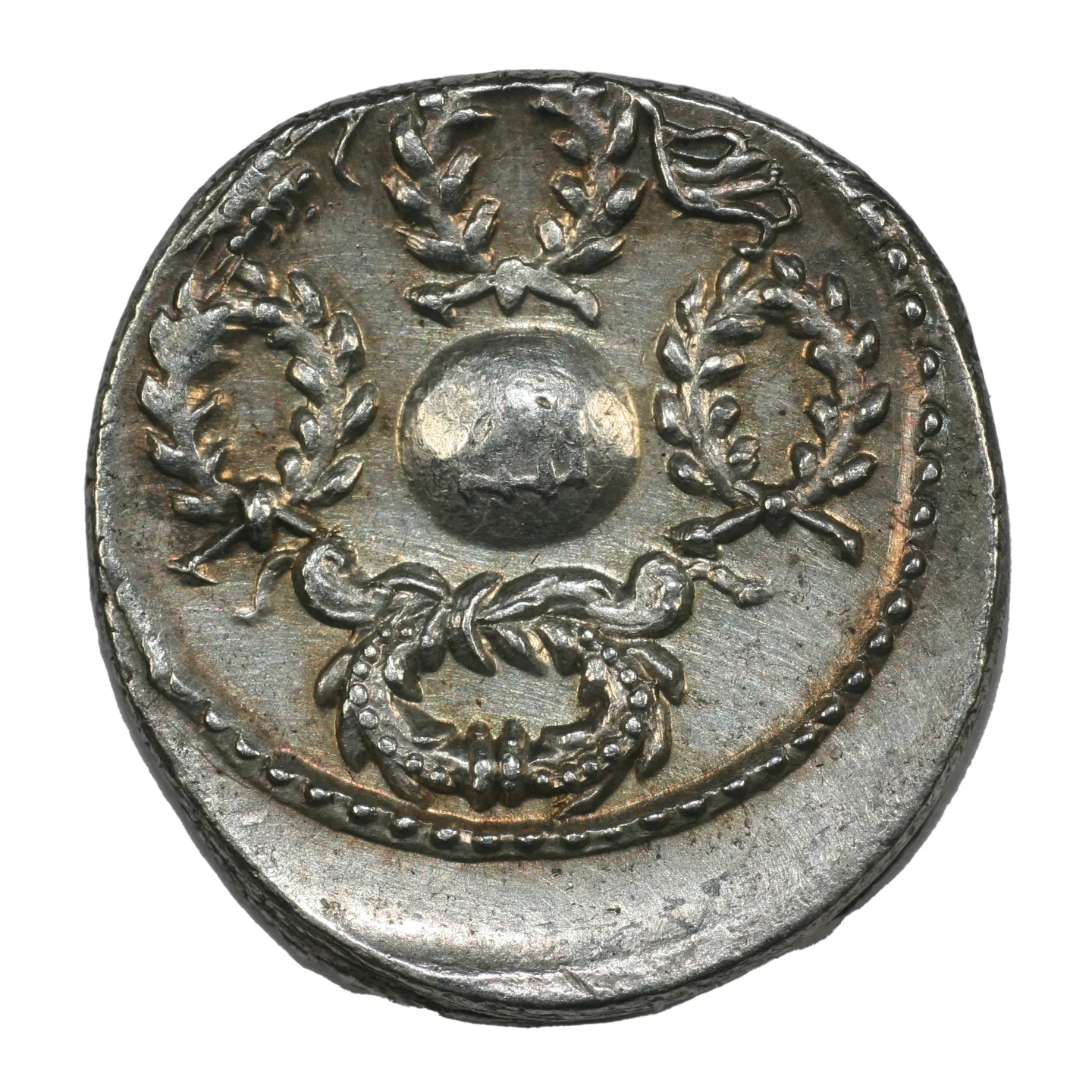
Reverse:Globe surrounded by three small crowns and one large crown; lower left, aplustre; bottom right, ear of wheat. Dotted border. -
Grade:EF 3.49 g - 6h
Origin:Jean Elsen 2023
Comment:
The Cornelia gens is one of the oldest and most prestigious families in Rome, with numerous consuls and key figures in its history. The most famous member of this family is Lucius Cornelius Sulla, dictator of Rome, whose reforms and authoritarian measures left a deep mark on the Republic.
Faustus Cornelius Sulla, son of the dictator Sulla, minted coins between 57 and 54 BC. He was known for his closeness to Pompey and for his support of policies that favored the aristocracy. Despite his prominent heritage, he did not reach his father’s levels of power.
The year 56 B.C. witnessed the renewal of the First Triumvirate at the conference of Luca, where Caesar, Pompey and Crassus consolidated their alliance to maintain control of Rome. Faustus Sulla, as an aristocrat, continued to support the republican system that his father had reinforced, although the Republic was increasingly weakened.
On the obverse, the head of Hercules with the lion’s skin represents strength and heroism, qualities that Faustus Sulla possibly sought to associate with his lineage and family legacy. Hercules is a symbol of power, and his relationship with the founding heroes of Rome and their divine pantheon underlines the idea of the Cornelia family as protectors of the city.
In the everse, the globe surrounded by crowns symbolizes Rome’s global domination, with the three small crowns representing Sulla’s military victories. The large crown reinforces the idea of Roman supremacy. The additional elements, the aplustre (naval decoration) and the corn cob, could represent Rome’s naval and agricultural wealth, two key sources of its power and stability.