Pescennius Niger
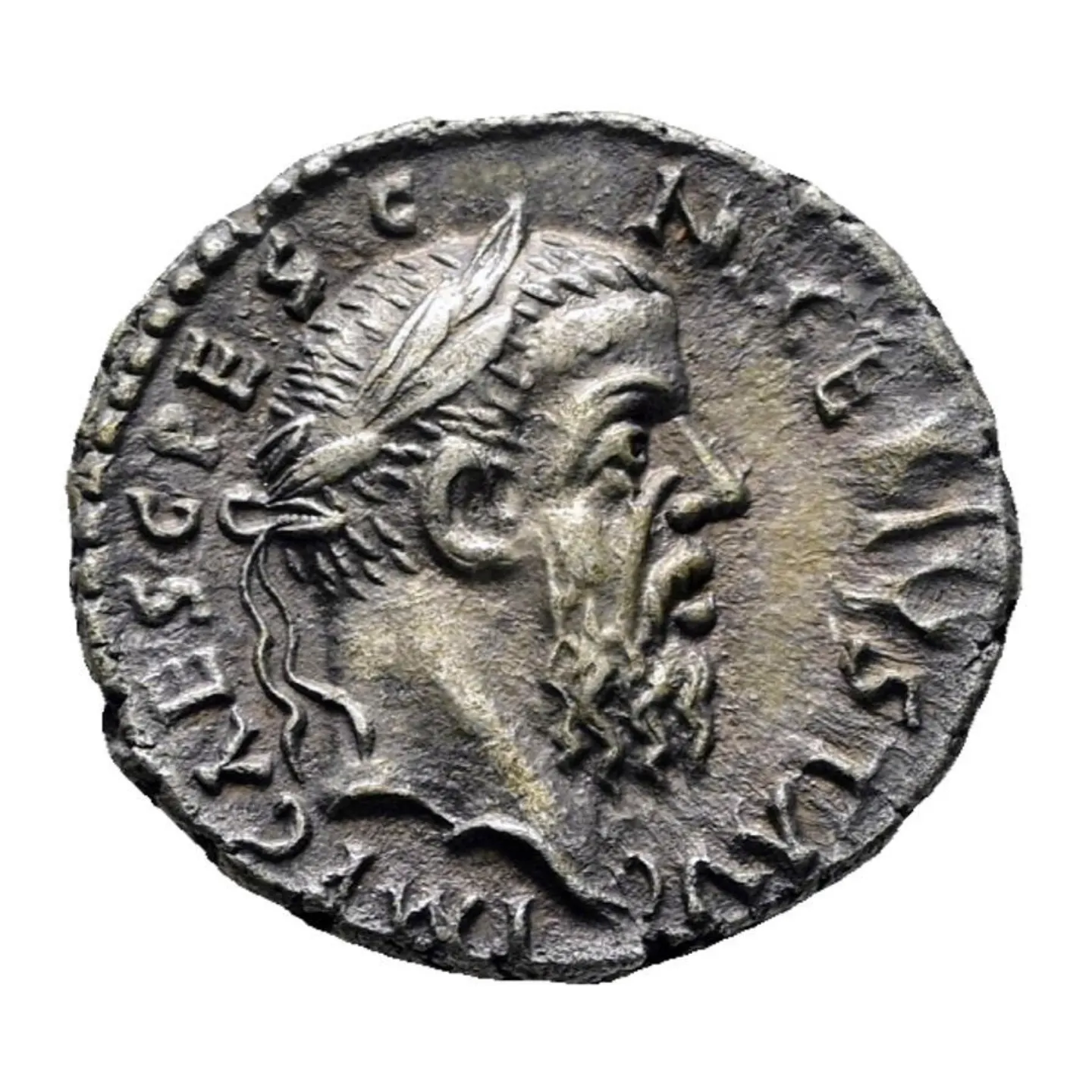
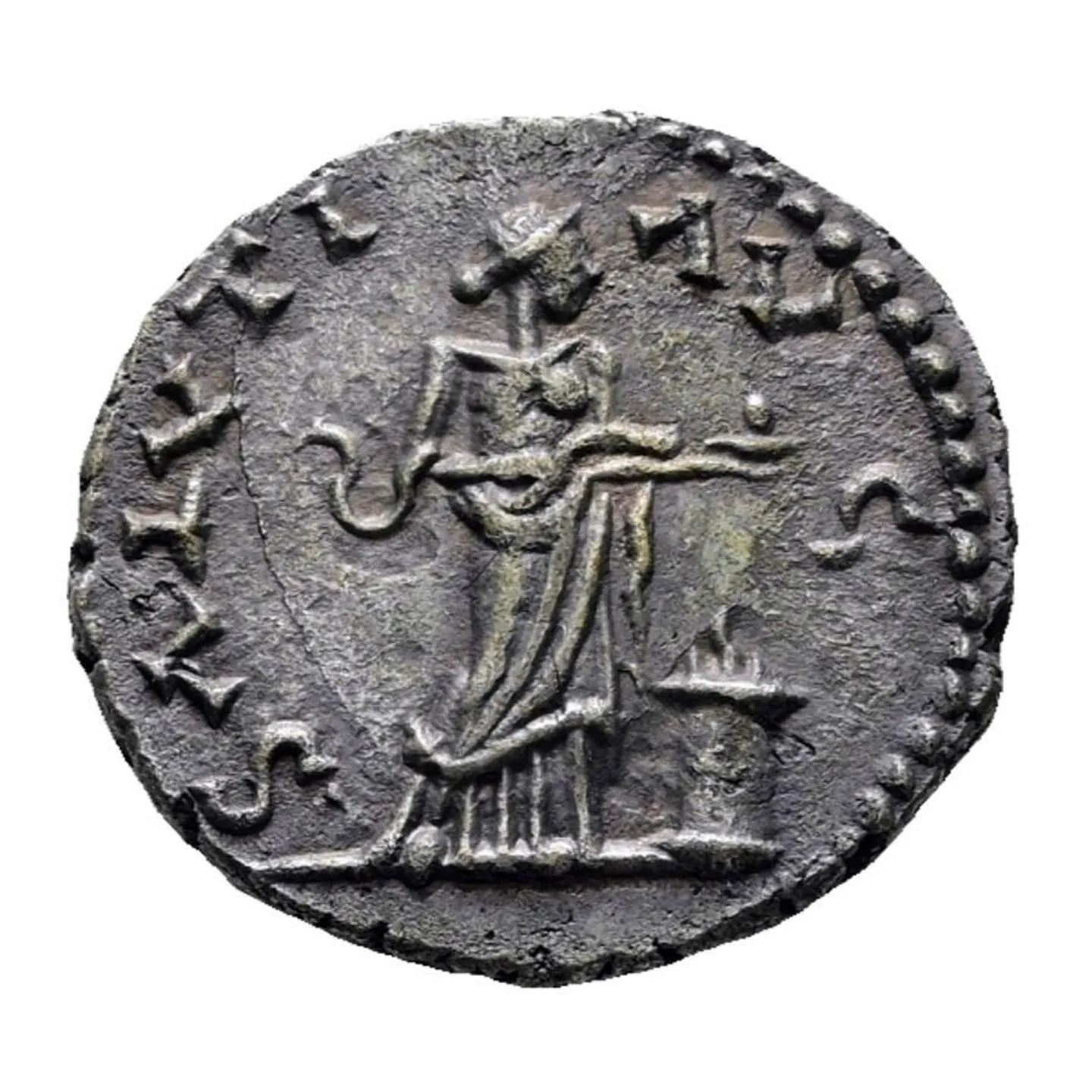
RIC 75b Pescennius Niger
Series: Empire – Year of the Five Emperors
Reference: RIC 75b Pescennius Niger
 |  |
Gens and moneyer: Year of the Five Emperors - Pescennius Niger
Year and mint: 193–194 AD - Antioch
Obverse: Head of Pescennius Niger, laureate, right - IMP CAES C PESC NIGER IVST AVG
Reverse: Salus, draped, standing right before an altar, feeding a serpent held in her arms from a patera in her right hand. SALVTI AVG
Grade: EF 2.89 g - 12h
Provenance: Roma Numismatics 2015, Savoca 2026.
Comment:
Pescennius Niger, whose full name was Gaius Pescennius Niger Justus, was a Roman general and usurper who proclaimed himself emperor in 193 AD and remained a claimant until 194 AD, during the chaotic Year of the Five Emperors.
He was born in Italy around 135 AD and rose through the ranks of the Roman military thanks to his ability and popularity among the soldiers. When Emperor Commodus was assassinated in 192, Niger was governor of the province of Syria, a strategic appointment that gave him control of the eastern legions.
After the death of Commodus, Pertinax briefly occupied the throne but was murdered by the Praetorian Guard, which subsequently auctioned off the imperial title to Didius Julianus. Outraged by this and fearing further instability, the eastern legions proclaimed Pescennius Niger emperor in 193 AD. His claim was supported by the wealth and military power of the eastern provinces, including Syria, Egypt and part of Asia Minor, where he enjoyed great popularity among both the population and the troops.
However, his bid for the throne was soon challenged by two other powerful generals who also sought imperial power: Septimius Severus in Pannonia and Clodius Albinus in Britain. Septimius Severus, commanding the Danubian legions, marched on Rome, deposed Didius Julianus and quickly took control of the capital. He then turned his attention to Niger, beginning a civil war between them.
The conflict culminated in a decisive battle at Issus in Cilicia in 194 AD, at the same place where Alexander the Great had defeated Darius III centuries earlier. Niger’s forces were ultimately defeated by Severus’s better-trained and more experienced army. Niger attempted to flee east but was captured and executed soon afterwards. Once established in power, Septimius Severus ruthlessly eliminated Niger’s supporters and punished the cities that had backed him.
Pescennius Niger’s brief claim to the throne reflects the profound instability affecting the Roman Empire at the time. His defeat demonstrated that success in the struggle for imperial power depended on both military strength and political position. After his death, Septimius Severus was able to found the Severan dynasty, which would rule the Roman Empire for the following decades.