HADRIAN
RIC II, 3SE, Hadrian 1482
Series: Empire – Hadrian
Reference: RIC II, 3SE, Hadrian 1482
 |  |
Dynasty and ruler: Antonine - Hadrian
Year and mint: 136 AD - Rome
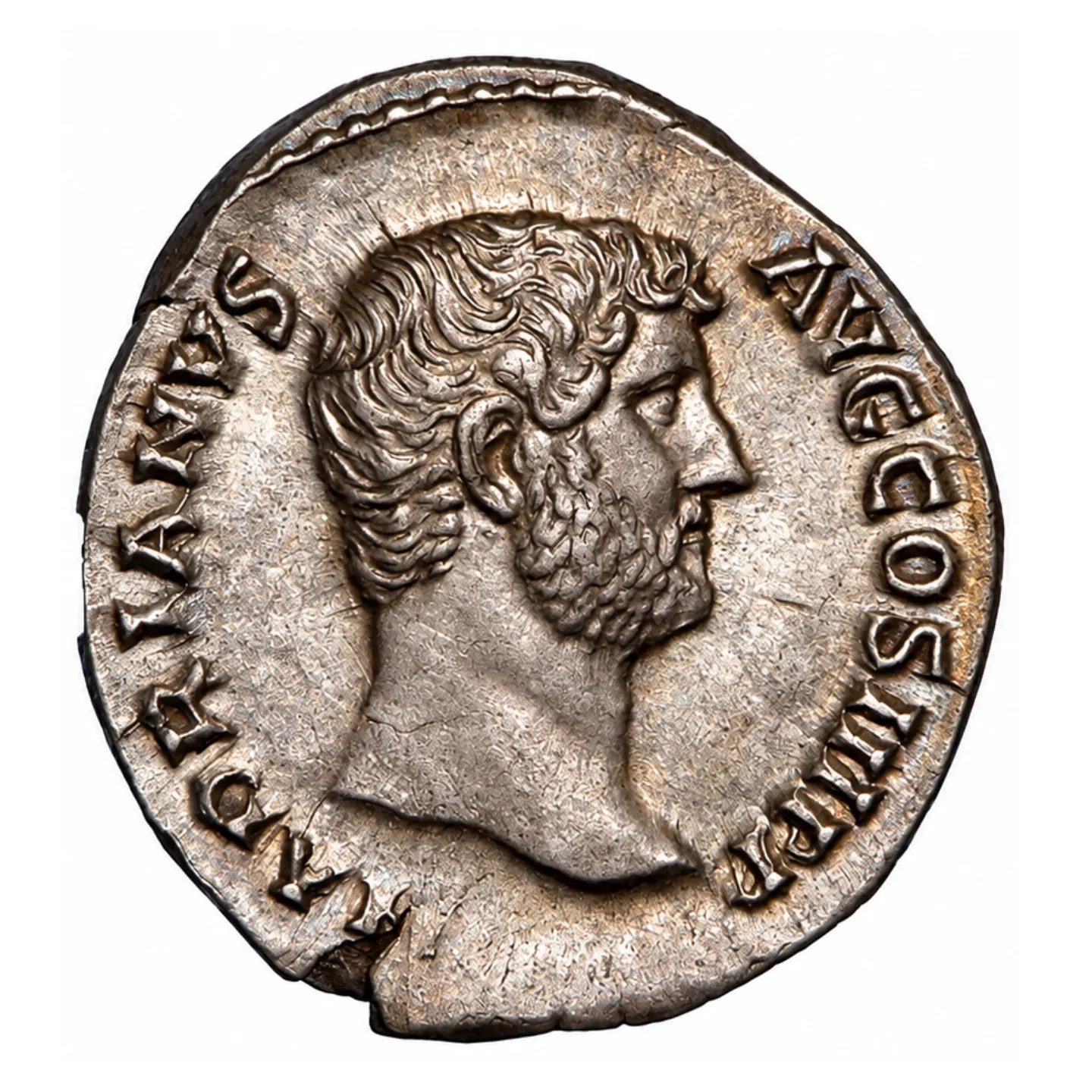
Obverse: Head of Hadrian right - Legend: HADRIANVS AVG COS III P P
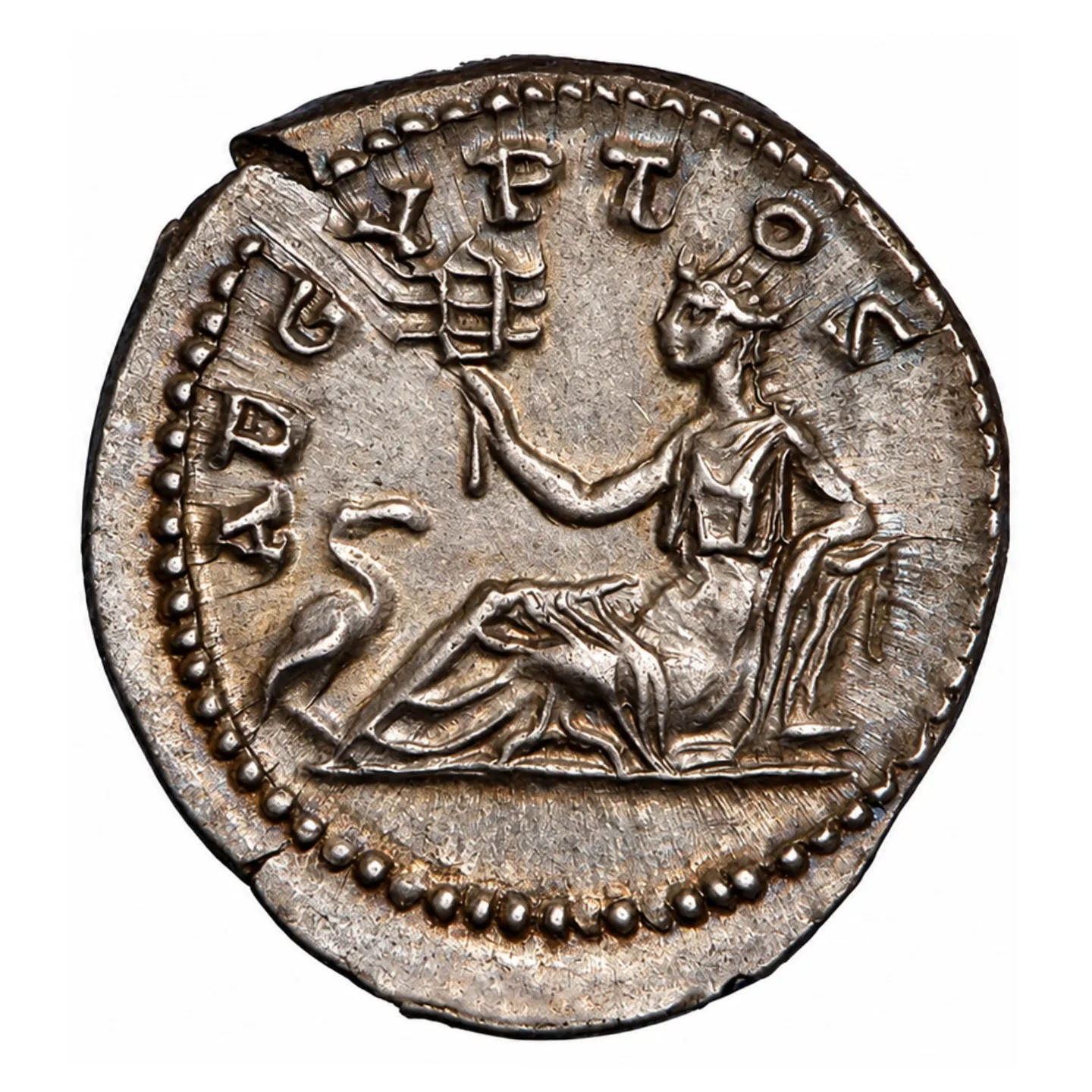
Reverse: Egypt reclining left, holding a sistrum and leaning on a basket of wheat; to the left, an ibis - Legend: AEGYPTOS
Grade: EF 3.37 g - 7h
Provenance: cgb.fr - SEP 2026
Comment:
The Antonine dynasty ruled the Roman Empire during the second century AD, a period known as the age of the good emperors. Beginning with Nerva (although formally with Antoninus Pius), it encompassed the reigns of Trajan, Hadrian, Antoninus Pius, Marcus Aurelius and Commodus. It was characterised by internal stability, economic prosperity and cultural expansion. Unlike earlier struggles for power, succession was based on adoption and merit, allowing capable administrators to be chosen. During this period, the Empire reached its greatest territorial extent and a high degree of social and legal cohesion, consolidating what would later be regarded as Rome’s “golden age”.
Publius Aelius Hadrianus was emperor from 117 to 138 AD and a distinctive figure among Rome’s rulers. Trajan’s great-nephew and heir, he abandoned the policy of military expansion to focus on consolidating the frontiers and strengthening the Empire from within. He was passionate about art, philosophy and Hellenistic culture. He is remembered for his love of travel—he visited almost every province—and for major architectural works such as the Pantheon, rebuilt during his reign, and Hadrian’s Villa at Tivoli. His legacy is that of a cultured, reforming emperor, more interested in balance and unity than conquest.
Rome, 130–133 AD. Hadrian was in the final stage of his travels through the eastern provinces. In 130 he visited Egypt, a territory vital to the grain supply and rich in religious tradition. It was there that his young lover Antinous drowned in the Nile, an event that profoundly affected the emperor. In his memory, Hadrian founded the city of Antinoopolis and promoted a cult that deified him. The period was also marked by tensions in Judaea, which would lead to the Bar Kokhba revolt (132–135). This context of personal grief, interest in Egypt and conflicts on the periphery is reflected in some of the coin issues of the period, such as this denarius dedicated to the River Nile.
The obverse shows Hadrian’s bust facing right, with serene features and the characteristic beard that he made fashionable among Roman emperors. The legend HADRIANVS AVG COS III P P identifies the emperor as Augustus (AVG), consul for the third time (COS III) and father of the fatherland (P P). These titles underline his authority and legitimacy, while the portrait presents an idealised image of prudence and dignity. The use of these elements on the coin had a strong propaganda value: it reminded citizens who guaranteed the Empire’s order and prosperity, even in provinces as distant as Egypt.
The reverse depicts the province of Egypt, reclining left and holding a sistrum, a ritual instrument particularly associated with the cult of Isis. The figure rests her arm on a basket of agricultural produce, an allusion to Egypt’s fertility and importance as the Empire’s granary, while an ibis appears at her feet, a bird closely linked to Egyptian religion and particularly to the god Thoth. The legend AEGYPTOS explicitly identifies the province depicted.